
Mori Atlas logo
Protected landscapeŻerkowsko-Czeszewski Park Krajobrazowy

Exploring the glacial valleys, riparian forests, and moraine hills of west-central Poland

Żerkowsko-Czeszewski Park Krajobrazowy: A Protected Landscape in Greater Poland Voivodeship

Żerkowsko-Czeszewski Park Krajobrazowy represents a distinct protected terrain within Greater Poland Voivodeship, defined by the contrast between the Warta River floodplains and the sharp moraine highlands of the Szwajcaria Żerkowska. This area preserves near-primeval oak-hornbeam and riparian forest communities that span ancient river channels and oxbow lakes. The complex geology of the park, featuring prominent ridges like Łysa Góra, offers a rare example of preserved lowland riverine ecosystems intertwined with centuries of cultural heritage.

lowland landscape parkglacial valleyriver floodplainoxbow lakesriparian forestoak-hornbeam forest
A stylized flat-design illustration of a tranquil river or pond scene with lily pads in the foreground, surrounded by lush green trees and soft-colored sky.

Żerkowsko-Czeszewski Park Krajobrazowy

Protected landscape

Park overview

Structured park overview, official facts, and landscape profile for Żerkowsko-Czeszewski Landscape Park

Żerkowsko-Czeszewski Landscape Park park facts, protected area profile, and essential visitor context

Review the core facts for Żerkowsko-Czeszewski Landscape Park, including designation, size, terrain, visitor scale, habitats, and operating context in one park-focused overview.

About Żerkowsko-Czeszewski Landscape Park

Żerkowsko-Czeszewski Landscape Park is one of the larger landscape parks of the Wielkopolska region and a defining protected area along the middle Warta. It stretches across a section of the Warsaw-Berlin Pradolina, a vast ice-age spillway that cuts through central Poland, and extends onto the higher ground south of the river where moraine ridges and the elongated Wał Żerkowski create striking relief within an otherwise lowland setting.

The park's ecological identity is built around its forests. South of the Warta, extensive oak-hornbeam (grąd) and floodplain ash-elm (łęg) forests form large, contiguous blocks with abundant deadwood and an almost primeval structure in the oldest reserves. These forest complexes rank among the most natural lowland deciduous stands in Wielkopolska, supporting rich communities of fungi, lichens, mosses, and invertebrates, including large charismatic beetles such as the stag beetle, oak longhorn beetle, and hermit beetle that depend on aging trees and decaying wood.

Alongside its forests, the park protects a remarkable mosaic of open habitats. The Warta floodplain retains numerous well-preserved oxbow lakes rich in aquatic plants, while traditionally managed meadows harbor rare species such as marsh violet, marsh pea, and narrow-leaved gentian. Together with the cultural estates of Śmiełów and Miłosław, the park forms a coherent landscape where natural river dynamics, old-growth forest patches, agricultural heritage, and historic architecture all coexist within a single regional protection framework.

Quick facts and research context for Żerkowsko-Czeszewski Landscape Park

Żerkowsko-Czeszewski Park Krajobrazowy lies in Wielkopolskie Voivodeship, within the gminas of Żerków, Miłosław, and Nowe Miasto nad Wartą. The protected area covers roughly 15,800 hectares and was designated in 1994 by the joint regulation of the Kalisz and Poznań voivodes.

It sits in the Warsaw-Berlin Pradolina, a major ice-age glacial valley, and spans several mesoregions: Kotlina Śremska, Równina Rychwalska, Równina Wrzesińska, Wysoczyzna Kaliska, and the locally distinctive Wał Żerkowski ridge. The park is overlaid with three nature reserves (Czeszewski Las, Dwunastak, Dębno nad Wartą) and overlaps with Natura 2000 sites and the Szwajcaria Żerkowska protected landscape area.

Protection and recognition

Terrestrial protected area classification, management scope, and international recognition details

Żerkowsko-Czeszewski Park Krajobrazowy Protection Status and Designated Area Record

Documented protection status and designation history define the conservation framework surrounding Żerkowsko-Czeszewski Park Krajobrazowy within the regional landscape. Structured records outline terrestrial management scope and international recognition sources for this protected natural area.

Protection details

Protection scope
Terrestrial
Transboundary protection
No
Park context

Deeper park guide and search-rich context for Żerkowsko-Czeszewski Landscape Park

Żerkowsko-Czeszewski Landscape Park history, landscape, wildlife, and travel context

Explore Żerkowsko-Czeszewski Landscape Park through its history, landscape character, ecosystems, wildlife, conservation priorities, cultural context, and seasonal travel timing in a structured park guide built for atlas discovery and search intent.

Why Żerkowsko-Czeszewski Landscape Park stands out

The park is best known for its unusually natural, near-primeval stands of riparian and oak-hornbeam deciduous forest growing on the floor of the ancient Warta glacial valley. These forests, rich in standing and fallen deadwood, sustain rare saproxylic beetles, mollusks, and an exceptionally high density of middle spotted woodpeckers. Equally distinctive is the moraine relief that gives part of the park its local nickname, Szwajcaria Żerkowska (the Swiss Żerków), where deeply cut valleys and steep hills like Łysa Góra and Góra Żerkowska contrast sharply with the flat floodplain below. The black stork serves as the unofficial emblem of the park, symbolizing the combination of old forest, quiet river corridors, and traditional rural landscapes that the protection is designed to sustain.
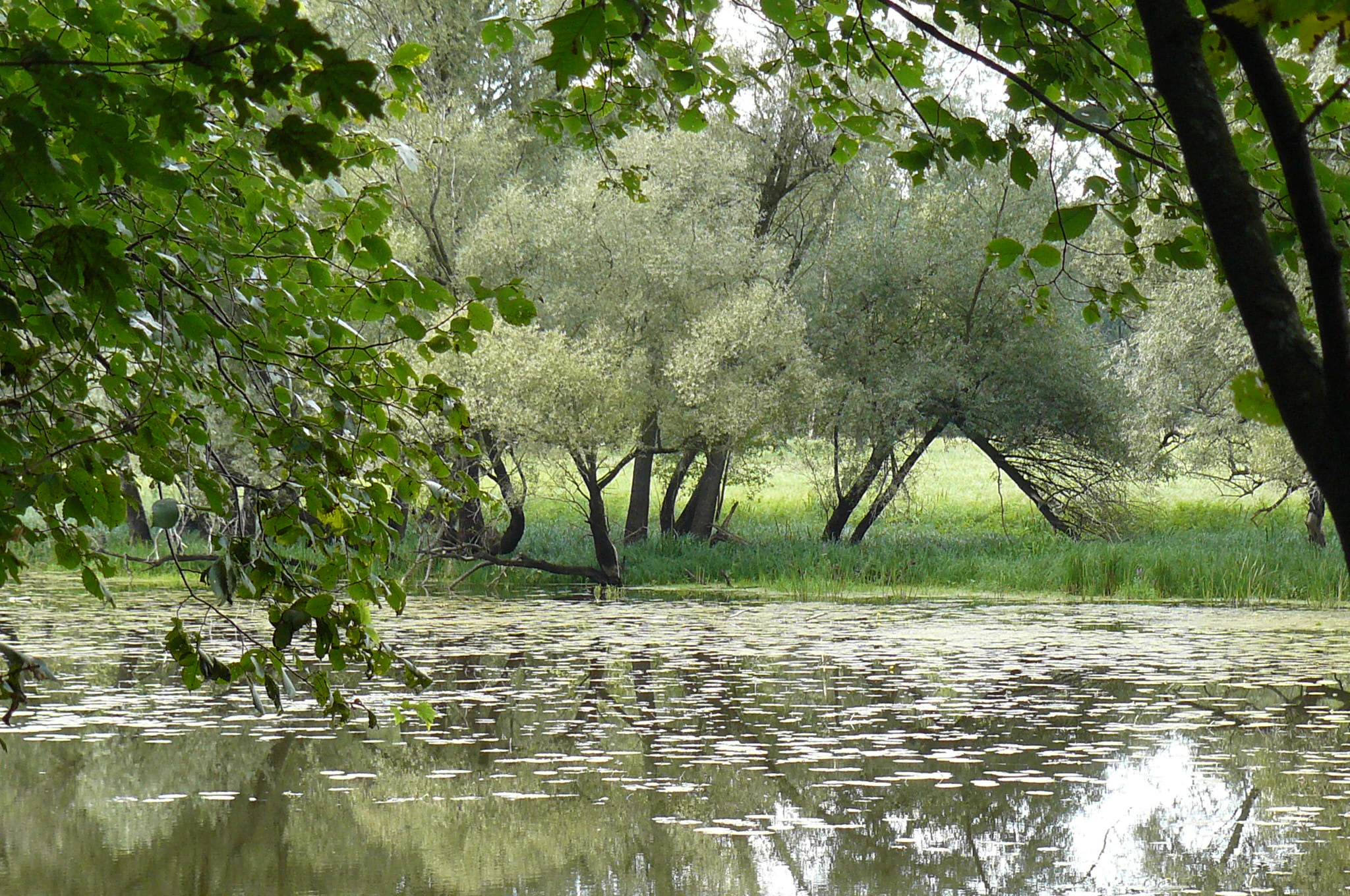
A calm, still pond covered with lily pads reflects the surrounding lush green floodplain forest and deciduous trees in the Zerkowsko-Czeszewski landscape.
A peaceful view of the wetlands in Debno nad Warta nature reserve, located within Zerkowsko-Czeszewski Park Krajobrazowy.

Żerkowsko-Czeszewski Landscape Park history and protected-area timeline

The landscape park was created in 1994 under a joint regulation (Nr 1/94) of the voivodes of Kalisz and Poznań, reflecting the desire to safeguard both the geological and ecological character of the middle Warta valley and its surrounding moraine uplands. The designation followed decades of growing awareness that the area's floodplain forests, oxbows, and hilly terrain formed an unusually rich and interconnected natural system under threat from intensifying forestry, drainage, and agricultural change.

Within the park, stricter protection had already been established earlier through nature reserves. The Czeszewski Las reserve protects one of the most natural stretches of deciduous forest in the region, the Dwunastak reserve preserves old oak-hornbeam woodland, and the Dębno nad Wartą reserve was created to safeguard rare mollusk assemblages as well as riverine habitats. The protected area was later recognized at the European level, overlapping with Natura 2000 sites for both birds (Dolina Środkowej Warty) and habitats (Lasy Żerkowsko-Czeszewskie).

Human history of the landscape long predates its formal protection. The Gothic church of Dębno, dating to the fifteenth century, and the late 18th-century palace at Śmiełów, where Adam Mickiewicz stayed in 1831 and which today houses a museum dedicated to the poet, both became integral parts of the park. The 19th-century neoclassical palace and park at Miłosław, former seat of the Miłłyński family, anchors the cultural heritage of the protected area and provides a counterpoint to the surrounding natural landscape.

Żerkowsko-Czeszewski Landscape Park landscape and geographic character

The landscape of Żerkowsko-Czeszewski Park is shaped by the contrast between a broad, flat glacial river valley and a sharply incised moraine highland. The Warta flows through the park in a wide pradolina, a flat-bottomed ice-age spillway edged with steep slopes that rise abruptly from the floodplain. Belted along the river are sweeping meadows and a chain of old oxbow lakes marking former channels of the Warta and Lutynia, many of them still holding water and surrounded by marshy vegetation.

Above the valley floor, the southern and central parts of the park rise into the rolling relief that has earned the area its local epithet, Szwajcaria Żerkowska. The Wał Żerkowski, an elongated moraine ridge, and two prominent hills, Łysa Góra reaching 161 meters and Góra Żerkowska reaching 155 meters, dominate the skyline. Their slopes are cut by small valleys and forested ravines, producing the unusual impression of a miniature hilly landscape embedded in the Polish lowlands.

Viewpoints at Brzostków and Wolica Kozia allow visitors to appreciate this juxtaposition of forested hillsides, agricultural lowlands, and winding river corridors. From the Wolica Kozia lookout, the floodplain forests and the Dębno nad Wartą reserve can be surveyed from above, offering a clear overview of how glacial history, river dynamics, and forest continuity have together produced a varied and visually distinctive protected terrain.

Żerkowsko-Czeszewski Landscape Park ecosystems, habitats, and plant life

Ecologically, the park belongs to a network of central European lowland ecosystems where natural processes still shape large tracts of floodplain and forest. The southern forest blocks, especially around the Czeszewski Las and Dwunastak reserves, contain mixed and broadleaf deciduous communities dominated by oak, hornbeam, lime, ash, and elm, with transitions into ash-elm floodplain forest closer to the Warta. The presence of large quantities of standing and fallen deadwood gives these forests a near-primeval character uncommon in modern Polish lowlands.

Open habitats form a significant share of the mosaic. Floodplain meadows along the Warta include remnants of the vegetation types that once dominated central European river valleys, such as tufted hair-grass meadows and selernicowe meadows, sustaining rare plants like narrow-leaved gentian, marsh pea, marsh violet, and several orchid species. Old oxbows provide refuge for white water lilies and other aquatic plants that have become scarce elsewhere in the region. The Orzechowo ecological use site protects valuable meadow habitats still harboring atypical plant species, including a unique Wielkopolska station of a small sedge.

The plant diversity recorded in the park exceeds 800 species, encompassing forest, meadow, wetland, and aquatic flora. This richness reflects the convergence of valley and upland habitats within a single protected area, supporting both thermophilous woodland plants on the slopes and moisture-dependent species in the wet depressions and old river channels below.

Żerkowsko-Czeszewski Landscape Park wildlife and species highlights

Wildlife is one of the defining attractions of Żerkowsko-Czeszewski Park. The black stork serves as the symbolic species of the protected area, having nested here regularly since its first recorded breeding attempt in 1965. Around 150 breeding bird species have been documented, and more than 200 species in total have been recorded across seasons. The diversity of woodland structure, with abundant deadwood, creates ideal conditions for woodpeckers, and the park is particularly notable for the high density of middle spotted woodpecker breeding pairs.

The mosaic of river, oxbows, and forest also supports a rich mammal community. The European beaver and the European otter are present along the Warta and its still-water habitats, while occasional moose observations highlight the value of the larger continuous forest blocks. At least nine bat species use the park's forests, caves, and old buildings, including the western barbastelle. Amphibians are well represented, with twelve recorded species including the great crested newt and the fire-bellied toad, supported by numerous breeding sites across the wetlands and oxbows.

Invertebrate diversity is exceptional. The park's old deciduous forests shelter threatened saproxylic beetles such as the stag beetle, oak longhorn beetle, and hermit beetle, alongside other deadwood-dependent species. The Dębno nad Wartą reserve was explicitly established to protect rare mollusks, including narrow-mouthed whorl snails and several Clausiliidae species that have some of their only Wielkopolska stations in this area. Fish fauna in the Warta and connected waters includes at least twenty species, including protected spined loach associated with oxbow habitats.

Żerkowsko-Czeszewski Landscape Park conservation status and protection priorities

Żerkowsko-Czeszewski Park was created to safeguard a combination of features that is rare in the Polish lowlands: near-natural floodplain forests, a highly varied glacial relief, and intact river dynamics expressed in oxbow lakes and meander scars. The protection regime rests on several layers: the landscape park as the umbrella designation, three nature reserves providing strictly protected core areas, and Natura 2000 sites adding European-level recognition of the park's bird and habitat values.

Conservation significance is concentrated in the southern forest complexes, where the Czeszewski Las and Dwunastak reserves protect deciduous forests of high naturalness, rich in deadwood and old trees. These reserves maintain habitat conditions for a guild of specialist species, from rare beetles and mollusks to middle spotted woodpeckers, that depend on the continuity of old-growth processes. The river corridor is no less important: the Warta and its floodplain sustain otter, beaver, black stork, and a network of protected oxbow-lake habitats increasingly threatened in surrounding regions.

The park also has an important role in preserving semi-natural meadow and pasture habitats that depend on traditional, low-intensity agriculture, a key element in sustaining both rare plant species and the cultural character of the Szwajcaria Żerkowska uplands. By combining strict reserves with broader landscape-scale management, the protected area functions as a regional stronghold for lowland biodiversity and as a reference site for natural floodplain and deciduous forest conservation in Wielkopolska.

Żerkowsko-Czeszewski Landscape Park cultural meaning and human context

The cultural fabric of the park is tightly woven into its natural setting. The most famous cultural site is the late 18th-century palace at Śmiełów, where Adam Mickiewicz spent part of the summer of 1831, and which now houses a museum dedicated to the poet. The estate remains a focal point of literary tourism and is integrated into the park's trail network, including the so-called Mickiewicz walking trail.

Other monuments reflect centuries of settlement along the Warta. The Gothic church of Dębno, dating from the fifteenth century, is among the most valuable historic buildings in the park, while the neoclassical palace of the Miłłyński family in Miłosław and its surrounding landscape park form an extensive aristocratic ensemble. The cultural landscape also includes historic pilgrimage paths, with the local section of the St. James Way running along the park's northeastern edge and through the Warta valley.

Beyond individual monuments, the park preserves a broader rural and estate heritage visible in village layouts, traditional farmsteads, small chapels, and the working agricultural mosaic of meadow, field, and woodland that still defines the southern uplands. Together, these elements provide a layered cultural context in which Mickiewicz, the aristocratic families of Miłosław, medieval parish communities, and contemporary rural life all share the same protected terrain.

Top sights and standout views in Żerkowsko-Czeszewski Landscape Park

Key highlights of Żerkowsko-Czeszewski Park include the dramatic moraine hills of the Szwajcaria Żerkowska, especially Łysa Góra and Góra Żerkowska, and the sweeping Warta floodplain with its well-preserved oxbow lakes. The near-primeval riparian and oak-hornbeam forests of the Czeszewski Las and Dwunastak reserves stand among the most natural lowland deciduous woodlands in Wielkopolska and are core to the park's conservation identity.

Wildlife highlights include thriving populations of black stork and middle spotted woodpecker, regular beaver and otter activity along the Warta, and a notable concentration of rare saproxylic beetles and mollusks in the protected reserves. Cultural highlights include the Mickiewicz palace and museum at Śmiełów, the Gothic church at Dębno, the neoclassical palace and grounds at Miłosław, and the region's historic pilgrimage routes, which together frame the natural landscape in a long regional heritage.

Best time to visit Żerkowsko-Czeszewski Landscape Park

Spring and early summer are particularly rewarding periods for visiting the park, when floodplain meadows reach peak flowering and oak-hornbeam canopy forests are fully leafed, supporting active birdlife including black stork and a chorus of warblers. Late spring also offers the best chances to hear amphibians breeding in the oxbow lakes and to observe woodland flowers such as orchids in the greener forest sections.

Summer provides the warmest conditions for exploring the network of cycling and walking routes, including the long eight-shaped bike loop and the Mickiewicz walking trail linking Śmiełów, Żerków, and Dębno, while viewpoints such as those at Brzostków and Wolica Kozia offer broad vistas of the moraine relief. Autumn brings rich forest colors and a strong seasonal display in the deciduous stands, making it a favored period for those interested in woodland scenery, mushroom hunting in line with local regulations, and quieter, cooler conditions for hiking the more hilly southern parts of the park.
Monthly climate preview

Long-term representative temperature and precipitation averages across the protected landscape

Żerkowsko-Czeszewski Park Krajobrazowy Climate Normals and Annual Weather Rhythm

Representative coordinate records show measured monthly temperature variations and precipitation patterns spanning from winter freezing lows to summer maximums. Reviewing the complete twelve-month climatology profile provides deeper insight into annual meteorological rhythms across the protected terrain.
Annual mean9 °C
-2 °C20 °C
Jan-2°
Feb-1°
Mar
Apr
May14°
Jun18°
Jul20°
Aug20°
Sep15°
Oct
Nov
Dec-1°
Warmest month
July

20.4 °C

Coolest month
January

-2.3 °C

Wettest month
July

2.5 mm/day

Driest month
April

1.1 mm/day

Park location guide

Geography guide, regional context, and park location map for Żerkowsko-Czeszewski Landscape Park

Żerkowsko-Czeszewski Landscape Park park geography, regions, and map view in Poland

Understand where Żerkowsko-Czeszewski Landscape Park sits in Poland through a broader geographic reading of the surrounding landscape, nearby location context, and its mapped position within the national park landscape.

How Żerkowsko-Czeszewski Landscape Park fits into Poland

Poland, officially the Republic of Poland, is a Central European country spanning from the Baltic Sea in the north to the Carpathian Mountains in the south. It borders Germany, Czech Republic, Slovakia, Ukraine, Belarus, Lithuania, and Kaliningrad Oblast. The country has a temperate climate, diverse landscapes, and is known for its rich history, cultural heritage, and strong economic position within the EU.

Wider geography shaping Żerkowsko-Czeszewski Landscape Park in Poland

Poland occupies 312,696 km2 in Central Europe, extending from the Baltic Sea coast in the north to the Sudetes and Carpathian Mountains in the south. It borders Germany to the west, Czech Republic and Slovakia to the south, Ukraine and Belarus to the east, and Lithuania and Kaliningrad Oblast to the northeast. The landscape includes lowland plains, uplands, and mountain ranges.

Map view of Żerkowsko-Czeszewski Landscape Park

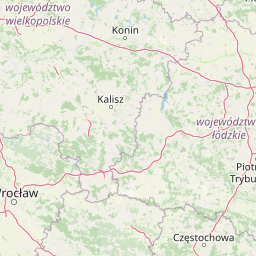
Use this park location map to pinpoint Żerkowsko-Czeszewski Landscape Park in Poland, understand its exact geographic position, and read its mapped placement within the surrounding landscape more clearly.

Pigeon | © OpenStreetMap contributors

Location context for Żerkowsko-Czeszewski Landscape Park

Greater Poland Voivodeship

Visual exploration of Warta river valleys, moraine hills, and ancient floodplain forests

Żerkowsko-Czeszewski Park Krajobrazowy Photos and Protected Scenery

Visual documentation reveals the striking contrast between broad glacial river flats and the steep moraine relief of Szwajcaria Żerkowska. Photographic records capture the structural diversity of ancient riparian forests, meandering oxbow lakes, and protected lowland habitats across the reserve.

A calm, still pond covered with lily pads reflects the surrounding lush green floodplain forest and deciduous trees in the Zerkowsko-Czeszewski landscape.

Park atlas

Compare nearby regional reserves and connected river valley ecosystems in west-central Poland

Parks Near Żerkowsko-Czeszewski Park Krajobrazowy and Surrounding Protected Landscapes

Browsing parks near Żerkowsko-Czeszewski Park Krajobrazowy reveals broader ecological patterns across the Warta River basin and surrounding lowland terrain. Continued exploration of nearby protected areas provides essential geographical context for comparing regional river valleys and ancient deciduous forests.
Nature reservePoland
About 5 km away#1 closest

North

Rezerwat przyrody Dwunastak: Protected Forest Reserve and Landscape Map

Ecological mapping in the Wielkopolska region of Poland.

Located in the Warta river corridor, Rezerwat przyrody Dwunastak protects a rare mosaic of riparian and oak-hornbeam forests. This small but significant nature reserve provides a critical study site for lowland woodland habitat connectivity and regional conservation efforts within the broader Żerkowo-Czeszewski Landscape Park framework.

Established
1959
A soft watercolor painting of a serene wetland landscape with scattered deciduous trees, low grassy banks, and calm water, rendered in light green and muted earth tones against a white background.
Nature reserveGreater Poland Voivodeship
About 5.3 km away#2 closest

Southwest

Dębno nad Wartą Nature Reserve: Geographic Profile and Protected Landscape Boundaries

Riparian forest sanctuary in the Warta river valley.

Located in the heart of the Greater Poland Voivodeship, this faunistic nature reserve protects a vital fragment of lowland floodplain forest. The site is defined by its complex oak, ash, and elm canopy, which supports rare invertebrate populations rarely found in the broader surrounding region. This atlas entry provides a detailed look at its protected boundaries, hydrologic landscape, and integral role within the Warta river corridor.

Area
0.217 km²
Established
1974
Relief
Lowland
Climate
Temperate
A horizontal watercolor painting depicting a wide river flowing through a lush landscape with distant rolling hills and a soft pink sky.
Nature reserveWielkopolska Voivodeship
About 20 km away#3 closest

West

Ostoja Rogalińska: Protected Nature Reserve and Glacial Terrain in Wielkopolska Voivodeship

Mapped riparian corridors, moraine ridges, and bird habitats.

Ostoja Rogalińska offers a detailed look at lowland glacial morphology, featuring twelve mapped lakes, wandering inland dunes, and the extensive Warta River floodplain. This protected area within Wielkopolska Voivodeship preserves ancient pedunculate oaks alongside diverse wetland and forest ecosystems, providing a clear geographic view of one of the region's most important Natura 2000 bird sanctuaries.

Area
217.63 km²
Established
2007
Relief
Lowland
Climate
Temperate
Nature reserveGreater Poland Voivodeship
About 32 km away#4 closest

North

Rezerwat przyrody Modrzew Polski w Noskowie: Protected Landscape and Regional Atlas

Floristic nature reserve in Greater Poland Voivodeship

Rezerwat przyrody Modrzew Polski w Noskowie stands as a landmark for botanical conservation in central Europe. The reserve protects a population of Polish larch within the lowland pine forests of the Wrzesnia Plain, providing a critical example of regional ecological protection efforts that have expanded significantly since the mid-twentieth century.

Area
0.01 km²
Established
1954
Relief
Lowland
Scope
Terrestrial
A soft, abstract watercolor painting showing rolling green hills, distant mountains, and a field under a white sky.
Protected areaGreater Poland Voivodeship
About 37 km away#5 closest

Northwest

Ostoja koło Promna Protected Area: Geography, Lakes, and Forest Habitat Map

A detailed look at the postglacial lowland landscape of Wielkopolska

Ostoja koło Promna serves as a primary example of protected lowland hydrology and broadleaf woodland in the Greater Poland Voivodeship. Integrating three distinct nature reserves, the site preserves essential aquatic and forest-interior habitats for rare amphibians and waterbirds. This overview provides a structured geographic analysis of the terrain and ecological boundaries forming this significant protected zone.

Area
13.99 km²
Established
2011
Relief
Lowland
Scope
Terrestrial
Watercolor painting of a calm pond with green trees on the banks, reeds in the foreground, and distant rolling hills.
Nature reservePoland
About 39 km away#6 closest

Southwest

Rezerwat przyrody Miranowo: Protected Peatland Ecosystem and Botanical Nature Reserve

A preserved wetland landscape in the Polish lake country

Located near the shores of Lake Dolskie Wielkie, Rezerwat przyrody Miranowo represents a significant protected area focused on the conservation of rare calcareous peatland habitats. The reserve sustains a dense collection of over 230 vascular plant species, offering a unique opportunity to study relict vegetation in a managed wetland environment within Poland.

Area
0.099 km²
Established
1972
Relief
Lowland
Climate
Temperate
National parkWielkopolska Voivodeship
About 47 km away#7 closest

West

Wielkopolski Park Narodowy: Protected Glacial Landscapes and Regional Geography in Poland

Post-glacial moraine systems and lake basins

Wielkopolski Park Narodowy captures a dense collection of post-glacial landforms, from rolling moraine uplands to clear kettle lakes and esker ridges. This protected area offers a deep look into the geomorphological history of the Wielkopolska region through its varied forest habitats and preserved terrain.

Area
75.84 km²
Established
1957
Visitors
1.2M annual
Relief
Lowland
Nature reserveWielkopolska Voivodeship
About 49 km away#8 closest

East

Rezerwat przyrody Mielno: Geography and Protected Landscape in Wielkopolska, Poland

A post-glacial forest and wetland reserve within the Gniezno Lake District.

Rezerwat przyrody Mielno serves as a protected window into the post-glacial history of central Poland. The reserve features a compact terrain of moraine hills and a changing lake ecosystem, supporting a diverse community of waterbirds and relict vegetation such as the dwarf birch. This area provides valuable context for understanding the ecological transition from open water to peat-forming plant communities in a forest-enclosed setting.

Area
0.943 km²
Established
1957
Relief
Lowland
Climate
Temperate

Common questions about visiting, size, designation, and location context for Żerkowsko-Czeszewski Landscape Park

Żerkowsko-Czeszewski Landscape Park FAQs for park facts, access, geography, and protected area context

Find quick answers about Żerkowsko-Czeszewski Landscape Park, including protected-area facts, park geography, trail and visitor context, and how the park fits into its surrounding country and regional landscape.
MoriAtlas Explorer

Continue Your Protected Areas Search Across the Global Atlas

Deepen your exploration by continuing the structured search for national parks and protected areas worldwide. Utilize the comprehensive filtering capabilities to compare different conservation landscapes and refine your understanding of global park geography. Discover more about the distribution and characteristics of protected natural areas.

Global natural geography