Mori Atlas logo
Natural monumentZhanazhol Pine Forest

Discover the unique biogeography of this isolated pine grove within the Ishim and Tobol river basins.

Zhanazhol Pine Forest: A Protected Relict Natural Monument in the North Kazakhstan Region

Zhanazhol Pine Forest is a protected natural monument of republican significance located in the Zhambyl district of the North Kazakhstan Region. This relict Scots pine grove survives far south of the species typical range on continental sandy-silty deposits. The site represents a vital reference point for understanding the history of woodland ecosystems in the Kazakh forest-steppe, showcasing a sharp ecological contrast between isolated boreal flora and the surrounding open plains.

pine forestrelict forestScots pineforest-steppekolok groveprotected natural monument

Zhanazhol Pine Forest

Natural monument

Park overview

Structured park overview, official facts, and landscape profile for Zhanazhol Pine Forest

Zhanazhol Pine Forest park facts, protected area profile, and essential visitor context

Review the core facts for Zhanazhol Pine Forest, including designation, size, terrain, visitor scale, habitats, and operating context in one park-focused overview.

About Zhanazhol Pine Forest

Zhanazhol Pine Forest is a compact protected woodland in the Zhambyl district of North Kazakhstan Region, recognized as a natural monument of republican significance and forming part of the Zhanazhol protected natural area. Although the protected footprint is modest, the site has outsized scientific interest because it preserves a relict population of Scots pine deep within the forest-steppe zone. The kolok (small isolated grove) lies southwest of the village of Blagoveshchenka, near the aul of Maybalyk, on light sandy-silty Oligocene sediments that mark the southern edge of the Ishim-Tobol interfluve.

The site's ecological value comes from its position at the geographic limits of pine survival in Kazakhstan. Its soils are grey forest soils of light mechanical composition, an unusual substrate in the surrounding steppe landscape, and the ground beneath the pines is carpeted by slowly decomposing coniferous litter that supports a distinctive boreal flora. This relict grove offers researchers a window onto the historical distribution of pine forests on the West Siberian-Kazakh forest-steppe boundary and onto the survival strategies of trees in marginal environments.

Because the forest exists in a physical-geographic zone that is naturally inhospitable to its dominant species, it depends on careful management and low external pressures. Its relative distance from large settlements has helped preserve it, and the protected designation reinforces that buffer. For visitors and scholars alike, Zhanazhol Pine Forest illustrates how small, geographically atypical stands can carry significant regional conservation weight.

Quick facts and research context for Zhanazhol Pine Forest

Zhanazhol Pine Forest is a republican-level natural monument situated in Zhambyl district of the North Kazakhstan Region. It is a relict Scots pine (Pinus sylvestris) grove occupying roughly nine hectares on Oligocene sandy-silty sediments in the Ishim-Tobol interfluve. The stand is dominated by pines averaging about 110 years old, with mature trees reaching around 20 meters in height. It lies on grey forest soils of light mechanical composition and forms part of the Zhanazhol protected natural area.

Protection and recognition

Documented terrestrial protection scope and conservation designation records

Zhanazhol Pine Forest Protection Status and International Recognition

Zhanazhol Pine Forest maintains a documented terrestrial protection scope within official conservation inventories. Structured records assemble verified designation details and international recognition data for this protected area.

Protection details

Protection scope
Terrestrial
Transboundary protection
No
Park context

Deeper park guide and search-rich context for Zhanazhol Pine Forest

Zhanazhol Pine Forest history, landscape, wildlife, and travel context

Explore Zhanazhol Pine Forest through its history, landscape character, ecosystems, wildlife, conservation priorities, cultural context, and seasonal travel timing in a structured park guide built for atlas discovery and search intent.

Why Zhanazhol Pine Forest stands out

Zhanazhol Pine Forest is best known as a small but scientifically notable relict stand of Scots pine that survives far south of the species' typical range, within the kolok forest-steppe of northern Kazakhstan. Its isolation on sandy substrates between the Ishim and Tobol river basins gives it a distinct biogeographic character, and its mature, even-aged pine canopy with a classic boreal ground layer makes it an important reference site for understanding the history of pine woodlands on the Kazakh steppe.

Zhanazhol Pine Forest history and protected-area timeline

The Zhanazhol pine grove has long been recognized as a biogeographic anomaly: a stand of Scots pine persisting in the kolok forest-steppe far from the main pine belt of Siberia and northern Kazakhstan. The site was formally designated a natural monument of republican significance, and it is now managed as part of the broader Zhanazhol protected natural area. The relatively undisturbed character of the stand, with mature pines averaging around 110 years of age and reaching back to roughly the late 19th to early 20th century, suggests that the grove has survived largely because of its isolation rather than through active planting on this scale.

Zhanazhol Pine Forest landscape and geographic character

The Zhanazhol site sits in a transitional landscape between true steppe and forest-steppe in the Ishim-Tobol interfluve, characterized by gently undulating terrain underlain by continental sandy-silty Oligocene deposits. Within this predominantly open setting, the pine grove forms a small island of closed-canopy forest, producing an abrupt visual and ecological contrast with the surrounding grasslands and agricultural land.

The light, sandy soils of the site and its grey forest soil profile are themselves a landscape feature, supporting the unusual persistence of pine in an environment that would otherwise be too dry for the species. The grove's compact size, its sharp boundary against the surrounding steppe, and its position within a broader protected natural area all contribute to its distinctive landscape character.

Zhanazhol Pine Forest ecosystems, habitats, and plant life

Ecologically, the pine grove is defined by a near-monoculture canopy of Scots pine (Pinus sylvestris) over a classic boreal ground flora, all set within a forest-steppe matrix. The canopy layer is dominated by pines averaging about 110 years old, with older individuals reaching 150 years; average tree height is about 20 meters and average trunk diameter around 30 centimeters. Grey forest soils of light mechanical composition form the substrate, and the ground is covered by a continuous layer of slowly decomposing needle litter, with isolated patches of tussock grasses in more open spots.

Beneath the denser parts of the canopy, the forest floor supports reindeer lichen (Cladonia), bracken fern, Solomon's seal, round-leaved wintergreen, cat's-foot, and lingonberry, species more typical of northern boreal forests than of the Kazakh steppe. Some small-leaved broadleaf species, notably birch and aspen, have entered the stand and add a secondary layer to what is otherwise a strongly pine-dominated system.

Zhanazhol Pine Forest conservation status and protection priorities

Zhanazhol Pine Forest is protected as a natural monument of republican significance and is integrated into the Zhanazhol protected natural area. Its conservation importance lies in its role as a relict Scots pine grove well south of the species' typical range, preserving an unusual combination of pine canopy, light grey forest soils, and boreal understory plants in an otherwise steppe-dominated region.

Because the stand persists in a physical-geographic zone that is climatic and edaphic marginal for pine, it is considered especially sensitive and requires careful protection. The relatively remote location away from major settlements is viewed as a favorable factor for its long-term survival, while the formal protected designation provides the institutional framework for limiting disturbance and maintaining the grove as a reference site for regional forest-steppe ecology.

Top sights and standout views in Zhanazhol Pine Forest

Zhanazhol Pine Forest stands out as one of the southernmost relict Scots pine groves in the Kazakh forest-steppe, a compact 9-hectare stand of mature pines averaging about 110 years old. Its ground flora, including reindeer lichen, bracken, and boreal herbs on light grey forest soils, mirrors conditions much farther north and gives the site strong scientific and conservation value. As a republican-level natural monument within the Zhanazhol protected area, it represents a quietly important example of how small, geographically atypical woodlands can anchor regional forest-steppe heritage.

Best time to visit Zhanazhol Pine Forest

The grove can be appreciated across the warm season, with late spring and early summer offering the freshest green of the understory herbs and ferns beneath the mature pines. Summer visits showcase the contrast between the dark coniferous canopy and the surrounding bright steppe, while early autumn brings a pronounced change in the color of the needle litter and any birch or aspen foliage mixed into the stand. Winter visits, where accessible, reveal the structural dominance of the pines most clearly against the snowy steppe landscape.

Monthly climate preview

Long-term representative point measurements tracking monthly temperature and precipitation variation

Zhanazhol Pine Forest Climate Normals and Annual Weather Rhythm

Zhanazhol Pine Forest displays a recorded annual temperature and precipitation rhythm across twelve measured monthly intervals at a representative coordinate elevation of 147 meters. Accessing the complete monthly profile provides detailed historical baseline metrics for comparing long-term temperature ranges and precipitation patterns across the conservation area.
Annual mean2 °C
-18 °C21 °C
Jan-18°
Feb-15°
Mar-7°
Apr
May13°
Jun19°
Jul21°
Aug18°
Sep11°
Oct
Nov-7°
Dec-15°
Warmest month
July

20.6 °C

Coolest month
January

-17.8 °C

Wettest month
July

1.8 mm/day

Driest month
February

0.6 mm/day

Park location guide

Geography guide, regional context, and park location map for Zhanazhol Pine Forest

Zhanazhol Pine Forest park geography, regions, and map view in Kazakhstan

Understand where Zhanazhol Pine Forest sits in Kazakhstan through a broader geographic reading of the surrounding landscape, nearby location context, and its mapped position within the national park landscape.

How Zhanazhol Pine Forest fits into Kazakhstan

Kazakhstan is a Central Asian country spanning vast steppes and plains, bordered by Russia, China, Kyrgyzstan, Uzbekistan, and Turkmenistan, with a coastline along the Caspian Sea. It gained independence from the Soviet Union in 1991 and has a population of approximately 20.5 million people. The country is officially secular but predominantly Muslim, with Kazakh and Russian as official languages.

Wider geography shaping Zhanazhol Pine Forest in Kazakhstan

Kazakhstan occupies a vast territory in Central Asia, extending into Eastern Europe. Its terrain consists largely of hilly plateaus and plains, with lowlands covering about a third of the area. The southern and eastern regions are mountainous. The country borders Russia to the north and west, China to the east, Kyrgyzstan to the southeast, Uzbekistan to the south, and Turkmenistan to the southwest. It has a coastline along the Caspian Sea.

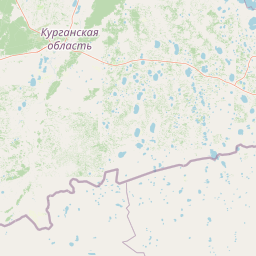
Map view of Zhanazhol Pine Forest

Use this park location map to pinpoint Zhanazhol Pine Forest in Kazakhstan, understand its exact geographic position, and read its mapped placement within the surrounding landscape more clearly.

Pigeon | © OpenStreetMap contributors

Location context for Zhanazhol Pine Forest

North Kazakhstan Region
Park atlas

Compare nearby forest-steppe landscapes and regional conservation units

Parks Near Zhanazhol Pine Forest and Surrounding Protected Natural Areas

Continue exploring regional forest-steppe ecosystems and protected natural areas adjacent to Zhanazhol Pine Forest. Comparing nearby reserves provides broader geographic context for relict pine woodlands in northern Kazakhstan.
Watercolor illustration of a landscape with green hills, a body of water, and grassy foreground under a pink-hued sky
National parkAqmola Region
About 87 km away#1 closest

Southeast

Kokshetau National Park: A Protected Granite Mountain and Forest-Steppe Landscape in Kazakhstan

Explore Aqmola Region's unique protected geography and mapped terrain.

Kokshetau National Park stands as a remarkable protected landscape within Kazakhstan, defined by its ancient granite mountains and its unique position as a forest-steppe island surrounded by open plains. This national park preserves a rich tapestry of boreal forests, lake-filled depressions, and geological wonders, including some of the planet's most ancient rock formations. MoriAtlas provides a structured view of Kokshetau National Park, detailing its mapped boundaries and geographic context within the Aqmola Region, offering users a deep dive into its protected area identity and ecological significance.

Area
1,821 km²
Established
1996
IUCN
II
Relief
Upland
Protected areaKostanay Region
About 190 km away#2 closest

Southwest

Koibagar-Tyntyugur Lakes: Protected Wetland Geography in Northern Kazakhstan

Steppe-wetland mosaic and Ramsar-recognized migratory habitat

Located in the Kostanay Region, the Koibagar-Tyntyugur Lakes represent a complex system of shallow, interconnected basins. These protected landscapes illustrate the dramatic hydrological cycles of the Saryarka edge, shifting from open water to reed-filled marshes. The region remains a benchmark for conservation, featuring essential waterbird habitats and rare fragments of pristine feather-grass steppe.

Area
623.45 km²
Established
2005
Relief
Lowland
Scope
Terrestrial
Watercolor painting of a landscape with green forests, hills, and a body of water
National parkAqmola Region
About 249 km away#3 closest

Southeast

Burabay State National Nature Park: Mapped Granite Hills and Forested Terrain Atlas

Explore protected landscapes in Kazakhstan's Aqmola Region.

Burabay State National Nature Park presents a unique protected landscape within the Kokshetau Massif of Kazakhstan's Aqmola Region. This atlas-focused entry details the park's distinctive terrain, featuring ancient granite outcrops and rolling hills draped in pine and birch forests. Understand the mapped boundaries and geographic setting of this national park, renowned for its scenic lakes and significant geological formations, offering rich context for protected-area discovery.

Area
1,299.35 km²
Established
2000
IUCN
II
Relief
Mixed relief
Wildlife reserveAkmola Region
About 341 km away#4 closest

South

Atbasar Wildlife Reserve: Protected Steppe Grasslands and Wildlife Habitat in the Akmola Region

Mapping conservation landscapes of northern Kazakhstan

Explore the geographic scope of Atbasar Wildlife Reserve, a significant sanctuary in northern Kazakhstan. This protected area preserves key steppe ecosystems and habitat for marmots and migratory birds within a unique terrain of rocky spurs and open feather grass plains.

Area
751 km²
Established
1976
IUCN
IV
Relief
Upland
Wildlife reserveKostanay Region
About 352 km away#5 closest

West

Mikhaylovsky Zakaznik: Geographic Overview of the Kostanay Region Wildlife Reserve

A protected forest steppe sanctuary in northern Kazakhstan.

Mikhaylovsky Zakaznik acts as an enduring zoological refuge within the Kostanay Region, protecting a rich tapestry of woodland and meadow steppe environments. This reserve supports native ungulates and game birds by maintaining a stable, low-profile landscape of birch and pine groves that function as critical corridors for biodiversity across the borderlands.

Area
768 km²
Established
1967
Relief
Upland
Access
Access unknown
Watercolor painting of a coastal landscape featuring rolling hills, green vegetation, and a body of water under a soft sky
National parkSverdlovsk Oblast
About 360 km away#6 closest

Northwest

Pripyshminskiye Bory National Park: Explore its Protected Landscape and Geographic Setting

National Park with mapped boundaries in Sverdlovsk Oblast.

Pripyshminskiye Bory National Park stands as a notable protected area within the vast geography of Sverdlovsk Oblast, Russia. This page serves as a dedicated atlas entry for the park, detailing its protected landscape identity and its placement within the broader regional context. Users can investigate the park's mapped boundaries and understand its significance as a distinct national park, facilitating structured geographic discovery.

Area
490 km²
Established
1993
IUCN
II
Relief
Lowland
Protected areaKostanay Region
About 456 km away#7 closest

Southwest

Taldykol Protected Area: Geographic Atlas and Wetland Landscape Analysis

A vital Ramsar-listed freshwater steppe habitat in Kostanay Region

Taldykol acts as a critical freshwater sanctuary within the dry climate of northern Kazakhstan. This protected area, defined by its central island and willow-fringed margins, forms an essential part of the Kulykol-Taldykol lake system. The basin provides a necessary stopover and breeding site for waterbirds, demonstrating how local water features define the ecological character of the surrounding Kostanay Region steppe terrain.

Area
10.5 km²
Relief
Lowland
Scope
Terrestrial
Water
Water-dominated
Protected areaKostanay Region
About 463 km away#8 closest

Southwest

Kulykol Protected Area: Mapping the Shallow Steppe Wetlands of Northern Kazakhstan

Geography of the Kostanay Region saline lake systems

Trace the landscape of Kulykol, a sprawling shallow-water ecosystem situated in the Kamysty District. This protected wetland, defined by its saline chemistry and expansive reed-lined margins, represents a core element of the Kulykol-Taldykol lake system. The data provides a detailed look at the lake's basin topography, its intermittent connection to surrounding water bodies, and its status as a managed habitat within the open grasslands of the Tobil basin.

Area
33 km²
Established
2009
Relief
Lowland
Water
Water-dominated

Common questions about visiting, size, designation, and location context for Zhanazhol Pine Forest

Zhanazhol Pine Forest FAQs for park facts, access, geography, and protected area context

Find quick answers about Zhanazhol Pine Forest, including protected-area facts, park geography, trail and visitor context, and how the park fits into its surrounding country and regional landscape.
MoriAtlas Explorer

Continue Your Protected Areas Search Across the Global Atlas

Deepen your exploration by continuing the structured search for national parks and protected areas worldwide. Utilize the comprehensive filtering capabilities to compare different conservation landscapes and refine your understanding of global park geography. Discover more about the distribution and characteristics of protected natural areas.

Global natural geography