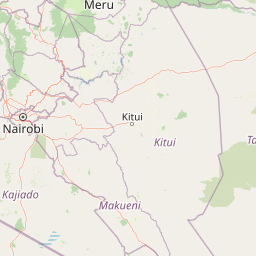
Why Aberdare National Park stands out
Aberdare National Park is best known for its exceptional biodiversity and dramatic highland scenery. The park protects one of the few remaining strongholds of the eastern black rhinoceros in Kenya, supporting a significant population of this endangered species. The Aberdare range also harbors over 250 bird species, including the endangered Aberdare cisticola and Jackson's spurfowl, found nowhere else in the world. The park's multiple ecological zones, ranging from montane rainforests through bamboo zones to moorland, support an extraordinary variety of mammals including elephants, leopards, lions, and the rare African golden cat and bongo. Historically, the park gained global recognition as the place where Princess Elizabeth became Queen of the United Kingdom in 1952 while staying at the Treetops Hotel.
Aberdare National Park history and protected-area timeline
Aberdare National Park was established in May 1950 with the primary aim of conserving and protecting the Aberdare Mountains and their unique ecosystems. The protected area was created during a period when Kenya was beginning to formalize its national park system, building on earlier conservation efforts that had begun in the colonial era. The park gained international historical significance in February 1952 when Princess Elizabeth, staying at the Treetops Hotel within the park boundaries, learned of the death of her father King George VI and subsequently ascended to the throne as Queen Elizabeth II. This event, described as the moment the sun never set on the British Empire, transformed both the hotel and the park into symbols of constitutional history. The park has expanded and evolved since its establishment, growing to cover approximately 767 square kilometers of mountain terrain. Management responsibility rests with the Kenya Wildlife Service, which oversees protection, tourism operations, and conservation programs within the park.
Aberdare National Park landscape and geographic character
The Aberdare National Park encompasses a remarkable variety of terrain within its 767 square kilometer boundary. The landscape is dominated by the Aberdare Range, a compact mountain mass with peaks reaching elevations of 4,000 meters above sea level. The mountains feature dramatic V-shaped valleys carved by streams and rivers that descend from the higher zones. These valleys contain numerous waterfalls where mountain streams tumble over cliff faces, creating scenic focal points throughout the park. The terrain transitions through distinct altitudinal zones as visitors ascend from the lower boundaries to the summits. The lower elevations support dense rainforest vegetation, while middle elevations are characterized by extensive bamboo forests that form a nearly continuous belt across the range. Above the bamboo zone, the forest gives way to open moorland characterized by heath-like vegetation and grassy clearings. The highest peaks feature rocky outcrops and alpine-style vegetation adapted to the cooler, harsher conditions. This vertical arrangement of habitats creates a visually striking landscape that changes dramatically with elevation.
Aberdare National Park ecosystems, habitats, and plant life
The ecological diversity of Aberdare National Park is one of its most significant characteristics, driven by the dramatic elevation range and corresponding climatic zones. The park contains at least four distinct vegetation zones that support different assemblages of species. The lowest elevations feature tropical rainforest characterized by tall trees, dense undergrowth, and high humidity. Above this zone, the bamboo forest creates a nearly continuous monoculture of dense bamboo thickets covering the middle slopes. The bamboo zone transitions into montane forest with more open canopy and diverse tree species before giving way to heath and moorland at the highest elevations. These vegetation zones create a vertical stratification of habitats that supports remarkable biodiversity. The park also contains numerous wetlands, streams, and small lakes that add to the ecological complexity. The Aberdare Range serves as a critical water catchment, with rivers originating in the park providing water for surrounding agricultural areas and communities.
Aberdare National Park wildlife and species highlights
Aberdare National Park supports an impressive array of mammal species across its multiple habitat zones. The park is particularly notable for its population of eastern black rhinoceros, one of the few remaining viable populations of this endangered subspecies in Kenya. Large mammals include African elephants, African buffaloes, and various antelope species such as waterbuck, mountain reedbush, bushbuck, duiker, and eland. Predators present in the park include lions, leopards, and the endangered African wild dog. The forests are home to several primate species including olive baboons, black and white colobus monkeys, and Sykes monkeys. The rare African golden cat and bongo antelope represent some of the more elusive species that inhabit the denser forest areas. The park also supports smaller mammals such as the suni, side-striped jackal, and giant forest hog. The avian fauna is equally impressive, with over 250 bird species recorded including the endangered Aberdare cisticola and Jackson's spurfowl, both of which are endemic to this region. Raptors including African fish eagles, African goshawks, and sparrowhawks soar above the forest canopies, while smaller birds such as sunbirds and plovers inhabit the understory and open areas.
Aberdare National Park conservation status and protection priorities
Aberdare National Park plays a critical role in Kenya's conservation landscape, protecting a unique highland ecosystem that faces multiple pressures. The park's designation as an IUCN Category II protected area reflects its national park status and the importance placed on preserving its natural values. The eastern black rhinoceros population represents a key conservation priority, as this subspecies remains endangered despite decades of protection efforts. The park's location between agricultural areas and its role as a water catchment for surrounding communities creates both opportunities and challenges for conservation. The Kenya Wildlife Service manages anti-poaching patrols and habitat management programs within the park boundaries. The presence of endemic bird species such as the Aberdare cisticola adds to the park's conservation significance, as these species depend on specific habitat conditions found only within the Aberdare Range.
Aberdare National Park cultural meaning and human context
The Aberdare region holds cultural significance for the local Kikuyu communities who have historically inhabited the foothills and surrounding areas. The mountain range takes its name from the town of Aberdare, which itself derived from a colonial misinterpretation of the local name. The establishment of the park created a protected area within traditional lands, affecting local communities who had used the mountain resources for generations. The Treetops Hotel, built originally in the 1930s and rebuilt after a fire, became associated with royal visits and remains a point of historical interest. The park boundaries encompass areas that were previously communally managed and later incorporated into the formal protected area system.
Best time to visit Aberdare National Park
The best time to visit Aberdare National Park depends on what visitors hope to experience. The dry seasons from December through March and June through September generally offer easier access to trails and more comfortable conditions for game viewing, though the park can be visited year-round. The wet seasons bring lush vegetation and dramatically full waterfalls but may make some roads difficult to traverse. The higher elevations can be cold and misty regardless of season, so warm clothing is recommended. The park's forest and moorland environments offer different experiences depending on the time of year, with clearer visibility in drier months allowing for better wildlife viewing and panoramic views from the higher points.