
Why Allonby Bay stands out
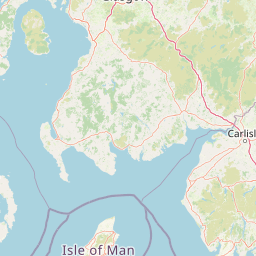
Allonby Bay is best known for the unusual overlap of seascape, protected habitats, and ancient archaeology found along a single stretch of Cumbrian coast. Its subtidal sediments are recognised spawning and nursery grounds for plaice, skate, and thornback rays, while reefs built by honeycomb worms at the northern edge of the species' range have become one of the defining marine features of the bay. Onshore, the bay is distinguished by sweeping dune systems, saltmarshes, and the saline wetland complex of Salta Moss, where rare plants and Britain's only native venomous snake, the adder, coexist. Equally defining is the bay's archaeological footprint. A near-complete chain of Roman milefortlets, including the unusually well-preserved Milefortlet 21, runs along the shoreline, extending the defensive vision of Hadrian's Wall west into the Solway. Combined with its placement inside the Solway Coast Area of Outstanding Natural Beauty and its Highly Protected Marine Area status, this layering of marine, terrestrial, and historical protection makes Allonby Bay stand out among the protected coastal landscapes of north-west England.
Allonby Bay history and protected-area timeline
The human story of Allonby Bay stretches back well beyond the Roman era. Archaeological investigations along the small communities fringing the bay have uncovered evidence of activity dating to the Neolithic period, suggesting that the coastal zone has long attracted settlement. A more tangible early find came on Salta Moss, near the northern end of the bay, where a Bronze Age rapier was unearthed in the 1980s and later entered the collections of the Tullie House museum in Carlisle. Together, these finds point to a long continuity of human presence along the Solway shore.
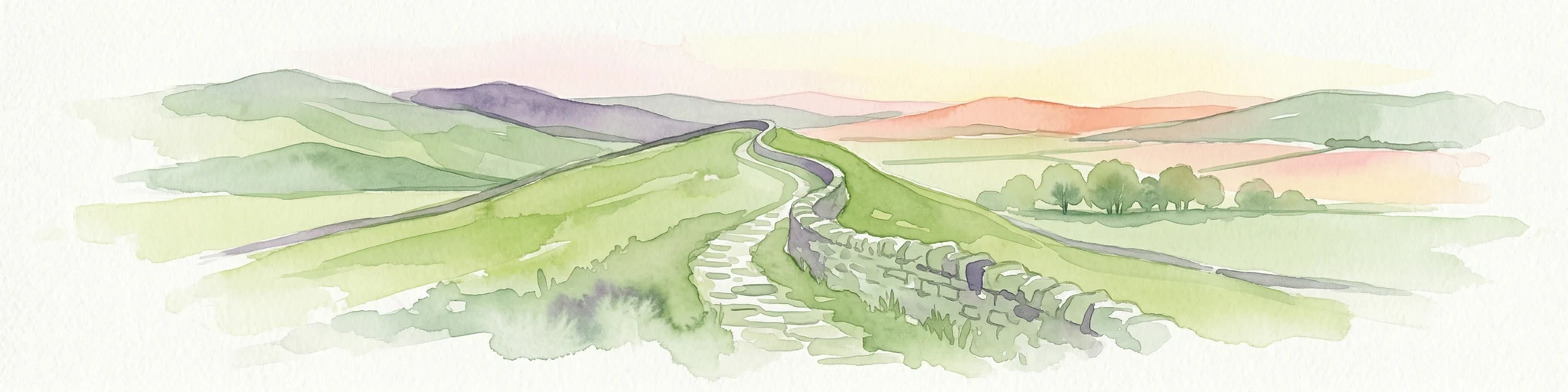
The most visually dramatic historical layer belongs to the Roman period. Allonby Bay was a key stretch of coastline beyond the western end of Hadrian's Wall, guarded by a series of small fortifications known as milefortlets. Milefortlets 17 through 22 ran along the bay's shoreline, forming part of a wider frontier defence against incursions from across the Solway. Among them, Milefortlet 21, near Crosscanonby, is the best preserved and remains a striking archaeological landmark visible from the surrounding coast road.
Long after Roman rule ended in Britain, the vulnerability of this coastline did not disappear. Scottish raids continued to trouble communities along the Solway for centuries, and by the 1550s incidents such as the abduction of William Osmotherly of Dubmill Point, near Salta, for ransom were still being recorded. In response, a coastal watch system known as the 'seawake' was established, organising a nightly guard along the shore. The persistence of such defensive arrangements illustrates how the bay's identity as a working, inhabited coastline has remained inseparable from its wider history as a frontier zone between England and Scotland.
Allonby Bay landscape and geographic character
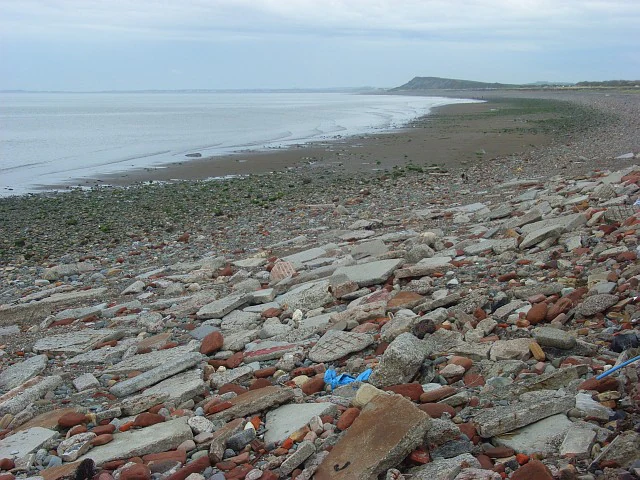
Allonby Bay presents a soft, curving coastal landscape typical of the Solway shore, where the boundary between land and sea is marked by long beaches, dune ridges, and broad saltmarshes rather than by cliffs or rocky headlands. The bay sweeps in a wide crescent, roughly 5.5 miles across, with its northern horn at Dubmill Point and its southern end tapering toward Crosscanonby and Maryport. Inland, the coastal strip gives way to low farmland and gently rising terrain that forms the backdrop to the shoreline. Streams and becks, often fed by traditional irrigation channels, drain into the bay and help shape the patchwork of wetland, dune slack, and saltmarsh habitats along its edge.
The dune systems themselves are a defining feature of the bay, providing both scenic interest and ecological structure. Behind these dunes lie more sheltered habitats such as Salta Moss, a saline wetland complex where specialised plant communities thrive in nutrient-poor, salt-influenced soils. The combination of open beach, dune ridges, saltmarsh, and inland bog-like depressions creates a varied coastal topography within a relatively narrow band of land. The whole of this southern stretch of the Solway coast, including the bay's shoreline, sits within the Solway Coast Area of Outstanding Natural Beauty, recognising the visual and ecological coherence of the landscape.
Allonby Bay ecosystems, habitats, and plant life
The ecological character of Allonby Bay is shaped by the meeting of marine, estuarine, and terrestrial systems within a small coastal area. The bay's subtidal sediments and sands form important spawning and nursery grounds for fish such as plaice, skate, and thornback rays, while reefs built by honeycomb worms along the northern part of the bay add a distinctive biogenic habitat at the edge of the species' range. These reefs, in turn, host a community of other marine organisms, making them one of the most ecologically significant features of the local inshore environment.
Above the tideline, the bay's nature takes on a more transitional character. The dune systems are interspersed with dune slacks and coastal grasslands, while the saline wetlands around Salta Moss support rare plant assemblages, including the bog bean, Menyanthes trifoliata. The mosaic of beach, dune, saltmarsh, and coastal freshwater seepage gives the bay a layered habitat structure that supports a wide range of invertebrates, breeding and wintering birds, and small mammals. The Solway coast as a whole is widely recognised for its bird populations, and Allonby Bay sits within some of the most important areas for waders and wildfowl on England's north-western seaboard.
Because the bay spans freshwater, brackish, and marine influences, it also functions as a transitional zone in ecological terms: a place where species typical of upland, lowland, coastal, and marine environments can be found in close proximity. This blending of habitats is one of the reasons the bay is recognised through both terrestrial designations, such as the Solway Coast AONB and the Salta Moss SSSI, and marine protections, including its Marine Conservation Zone and Highly Protected Marine Area.
Allonby Bay wildlife and species highlights
Although Allonby Bay is perhaps better known for its scenery and archaeology than for charismatic megafauna, it supports a varied and ecologically meaningful wildlife community. The bay's interior and offshore waters are important for fish life, particularly as spawning and nursery habitat for plaice, skate, and thornback rays. The honeycomb worm reefs along the northern edge of the bay add a distinctive structural habitat that, despite their small size, host a specialised community of associated marine invertebrates and other fauna.
On land, the saline wetland of Salta Moss stands out for its botanical and faunal interest. Rare plant communities grow alongside animal life that includes the adder, Britain's only native venomous snake, which is found in this part of the Solway coast. Insects, especially those tied to dune and mossland habitats, contribute to the ecological richness of the area, while the wider Solway shore is well known for its bird populations, including waders and waterfowl that use the tidal flats and saltmarshes. Together, these features give Allonby Bay a wildlife profile defined more by habitat diversity and ecological function than by single flagship species, but one that is nonetheless recognised through a stack of formal conservation designations.
Allonby Bay conservation status and protection priorities
Allonby Bay stands out as a coastal landscape protected at multiple, overlapping levels, reflecting an unusual concentration of ecological value. The shoreline forms a major part of the southern section of the Solway Coast Area of Outstanding Natural Beauty, a designation that recognises the scenic, geological, and ecological qualities of the coast. Onshore, parts of the bay are anchored by sites such as the Salta Moss Site of Special Scientific Interest, where rare plant species and sensitive wetland habitats are formally protected.
In the marine environment, the bay's conservation profile has grown significantly in recent years. In 2016, Allonby Bay was designated as a Marine Conservation Zone, with the stated aim of maintaining important subtidal sediments and sands used as spawning and nursery grounds for species such as plaice, skate, and thornback rays, alongside the locally distinctive honeycomb worm reefs. By July 2023, after a period in which the bay was proposed by Defra as one of five Highly Protected Marine Areas, Allonby Bay received that stronger form of protection, placing it among the first HPMAs in English waters. The progression from MCZ to HPMA illustrates an escalating recognition of the bay's marine ecological importance, even as earlier concerns, including the temporary risk of losing beach quality recognition in 2012, illustrated how vulnerable the area's identity as a clean, attractive coast can be to pressure on water quality and management planning.
Allonby Bay cultural meaning and human context
Although Allonby Bay is framed first and foremost as a natural coastal landscape, it carries a rich human and cultural memory that is unusually legible along the shore. The underlying farmland and small villages, including Allonby itself, Mawbray, Salta, and Crosscanonby, are part of a wider Solway coastal community whose history has long been shaped by proximity to the Scottish border and the rhythms of the Irish Sea. Tourism, fishing, and small-scale agriculture remain important threads of this local economy.
The bay's archaeological landmarks, particularly the string of Roman milefortlets and the well-preserved Milefortlet 21, anchor the coast to a deeper frontier history. These ruins are not isolated monuments but a clear extension of Hadrian's Wall into the Solway landscape, marking the bay as a working frontier zone in the Roman period. Later episodes, such as the 16th-century Scottish raid at Dubmill Point and the medieval 'seawake' coastal watch tradition, reflect how the shoreline continued to be a contested and watched-over edge long after Rome's influence faded. The presence of the Lake District Coast Aquarium in nearby Maryport adds a more contemporary cultural layer, interpreting the bay's marine life for visitors and reinforcing the area's identity as a coastal educational and tourism destination.
Top sights and standout views in Allonby Bay
Allonby Bay's strongest highlights lie in the way a single stretch of coast compresses marine protection, dune and saltmarsh habitats, and Roman frontier archaeology into one accessible landscape. Few coastal sites in north-west England combine the conservation weight of an Area of Outstanding Natural Beauty, a Marine Conservation Zone, and a Highly Protected Marine Area with such a visible archaeological trail. The honeycombed worm reefs at the northern edge of the bay and the chain of milefortlets from Milefortlet 17 to Milefortlet 22 make the shoreline read almost like an open-air archive of the Solway.
Equally striking is the bay's identity as a transitional landscape: a place where the tidal flats, dune ridges, saline mires of Salta Moss, and rolling inland farmland meet within a few hundred metres of each other. Whether approached as a place for beachgoing, birdwatching, marine and ecological interest, or Roman archaeology, the bay offers a layered experience that rewards both casual visits and more focused exploration.
Best time to visit Allonby Bay
The character of Allonby Bay shifts meaningfully with the seasons, although it remains a place of interest throughout the year. Late spring and summer tend to bring the warmest beach conditions and the busiest atmosphere, with longer daylight hours and more stable weather drawing visitors to the shoreline, the dunes, and the villages of Allonby, Mawbray, and Crosscanonby. These months are typically the most comfortable time for activities along the open beach and for exploring the dune and saltmarsh habitats on foot.
Autumn and winter, by contrast, often bring richer conditions for those interested in birdlife and atmospheric scenery. The Solway coast is well known for its wintering and migratory waders and waterfowl, and the bay's saltmarshes, mudflats, and saline wetlands tend to be at their most dynamic when colder weather brings movement of birds inland and along the coast. Stormier winter weather also accentuates the curvature of the bay and the long views across the Irish Sea, while the quieter tourist season gives the village of Allonby and its surrounding archaeological sites a more tranquil feel. For visitors whose primary interest is birdwatching, marine life, or photography of dramatic skies, the colder months can be especially rewarding.