Why Anyuysky National Park stands out
Anyuysky is best known for protecting one of the least human-disturbed sections of the central Sikhote-Alin range, where broadleaf and dark coniferous forests still blend along the Anyui River valley. The park is also associated with the dramatic Nadge rock formations, locally known as the Anyui Pillars, a line of weathered sandstone crests along the river that have become a signature landscape feature. Wildlife is another defining element of the park's identity: brown and Himalayan bears, wild boar, and Manchurian wapiti share the same forests with rare species like Blakiston's fish owl and the mandarin duck, giving Anyuysky a strongly East Asian ecological character.
Anyuysky National Park history and protected-area timeline
Anyuysky National Park was formally established on December 15, 2007 as part of the Russian Federation's program of expanding its protected-area network across the Far East. The site was chosen for its unusually intact forest cover and the limited degree of human modification across the local Sikhote-Alin ridges and Anyui River valley.
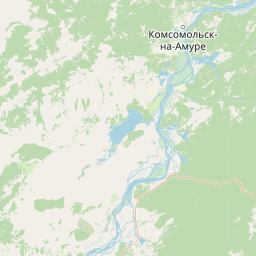
The federal state institution responsible for managing the park was created on March 13, 2009, giving the reserve its operational administrative structure. Park administration is based in the village of Troitskoye in the Nanaysky District, while the only settlement within the park's own boundaries remains the small village of Verkhnyaya Manoma.
A long-standing cultural reference for the area comes from the early twentieth-century explorer Vladimir Arsenyev, who described the dramatic rock formations along the Anyui in his account of travel through the Sikhote-Alin, recording local traditions that viewed the eroded pillars as sites of ancient shamanic significance.
Anyuysky National Park landscape and geographic character
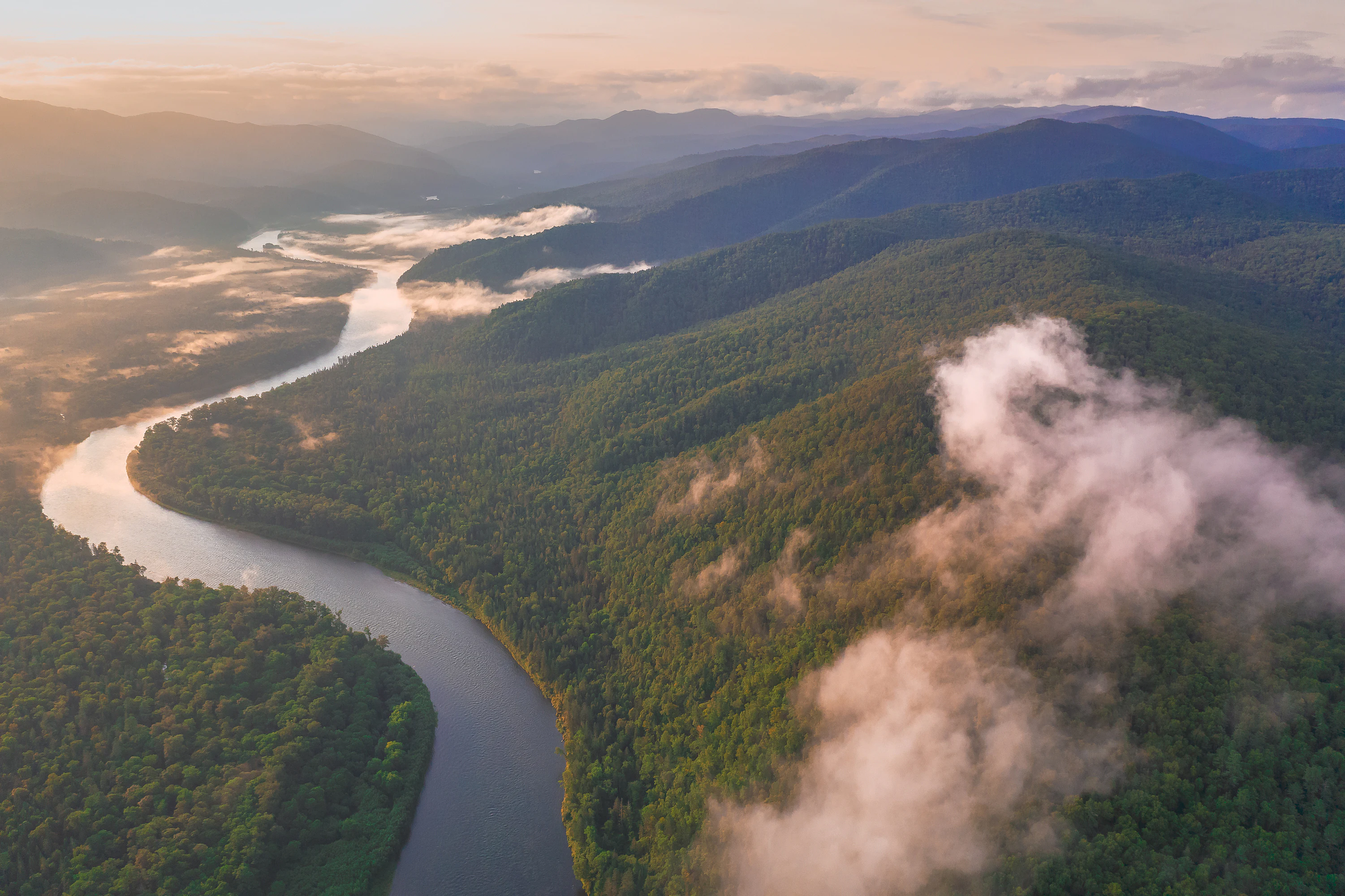
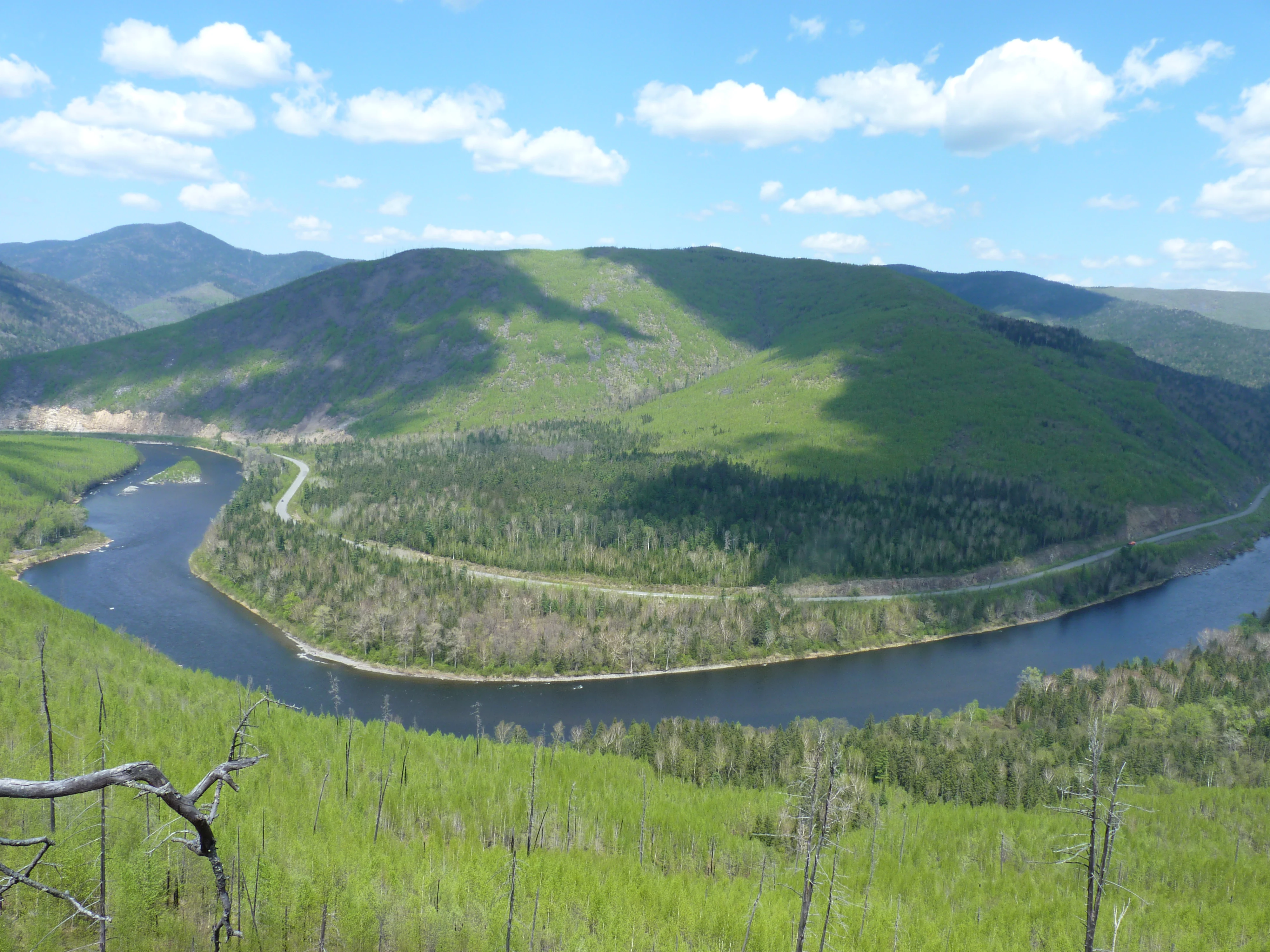
The landscape of Anyuysky National Park is defined by the central Sikhote-Alin mountains as they descend toward the Amur River. Forested ridges, river valleys, and exposed rocky crests combine to form a varied terrain, with the Anyui River corridor acting as the main organizing feature of the park. Elevation drops from the uplands of the range down to the lowland Amur floodplain, creating a layered topography of slopes, benches, and valley floors.
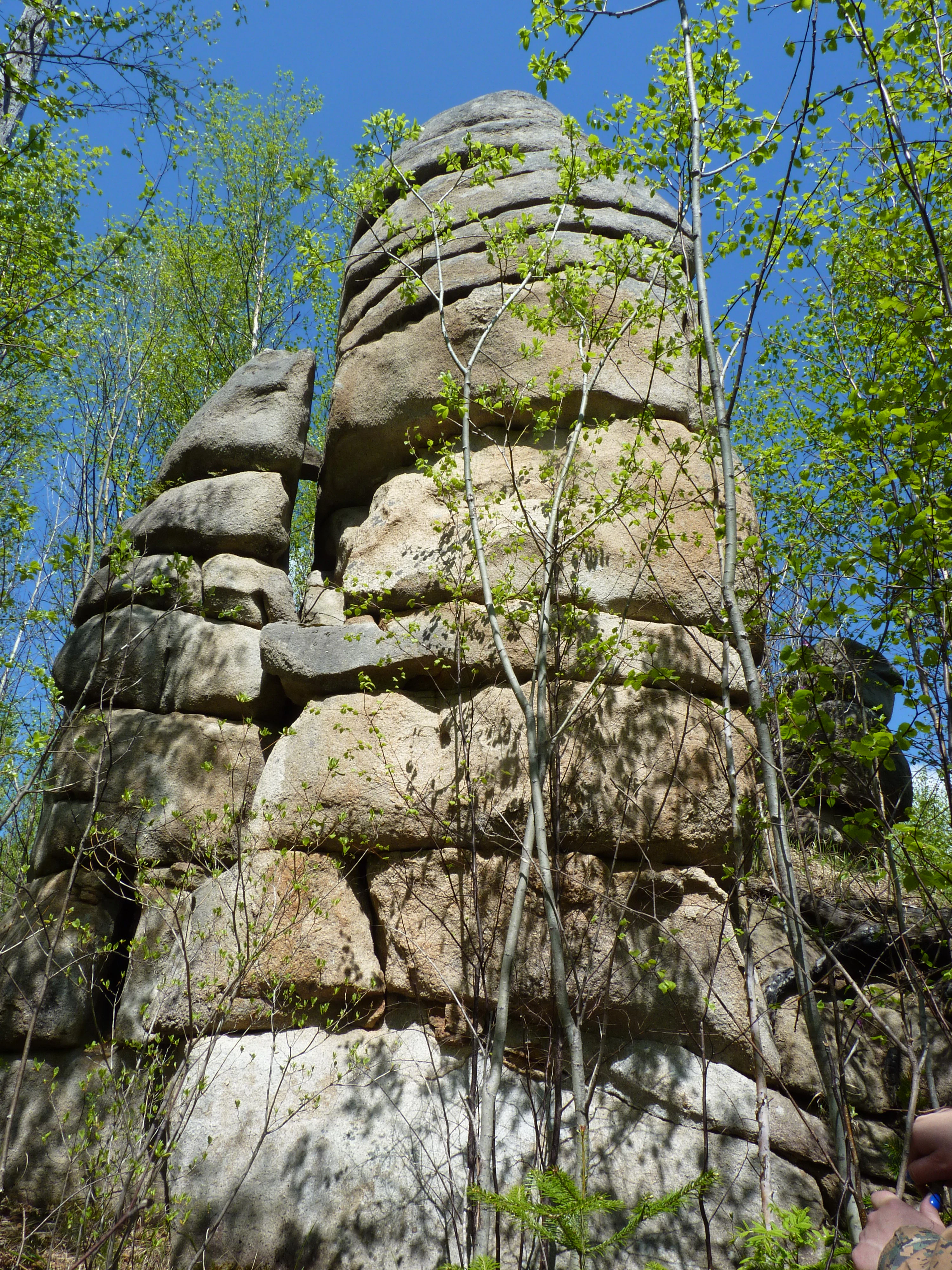
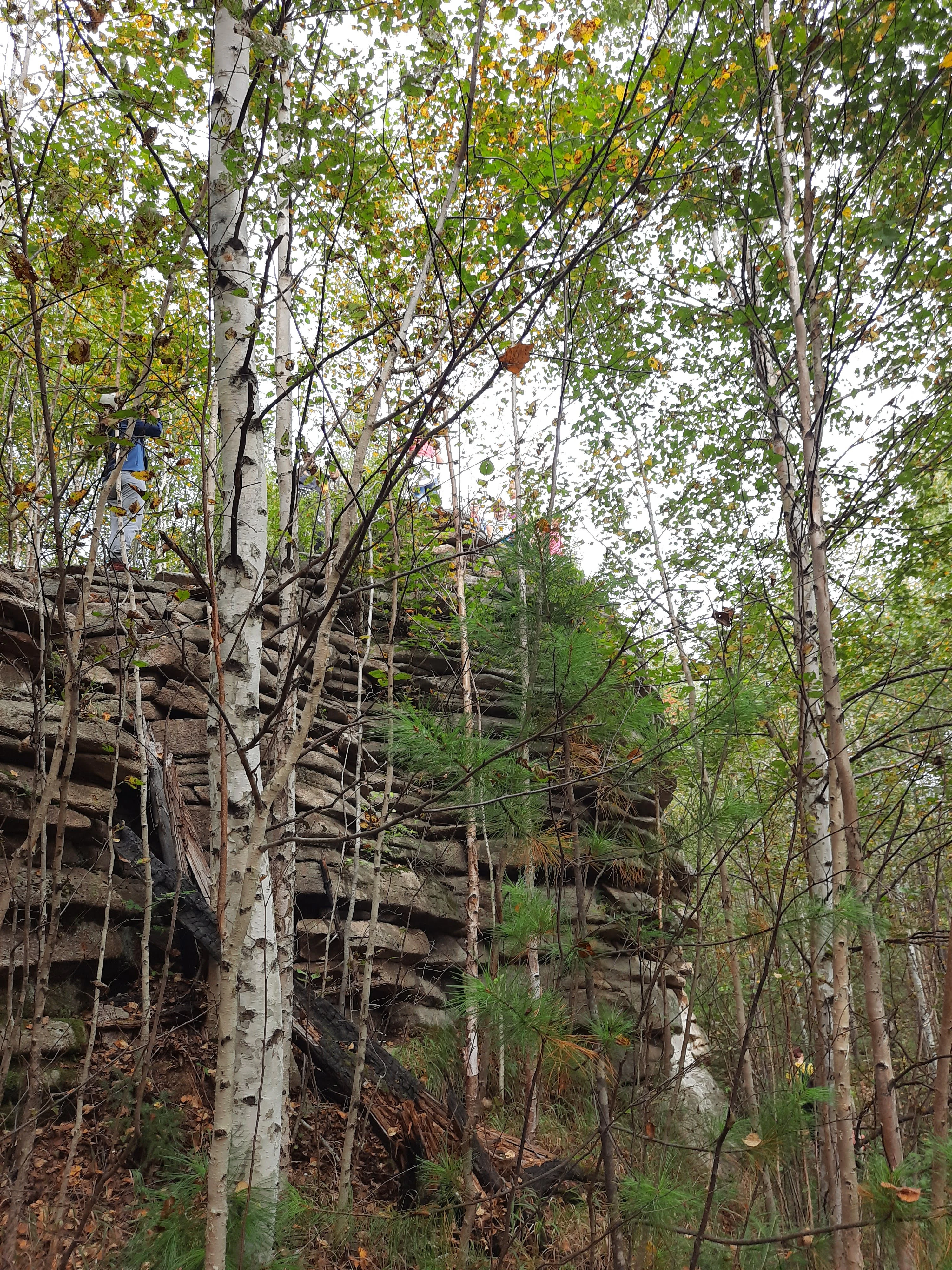
The most visually distinctive landscape element is the line of sandstone formations known as the Nadge rocks, also referred to as the Anyui Pillars. Sitting above the forested Anyui valley, they present a striking silhouette of weathered columns and pinnacles, locally associated with shamanic legend and described by early explorers as resembling ruined ancient fortresses. Below these formations, the river winds through dense forest, while the foothills and lower slopes rise back up into rolling, tree-covered ridges.
The hydrological setting also shapes the park's surface character. Streams flowing from the Sikhote-Alin peaks feed the Anyui and contribute to broad riparian zones, and the proximity to the Amur adds a lowland influence near the park's southern boundary. Together these features create a landscape that is at once mountainous, riverine, and forest-covered, with limited evidence of large-scale human modification.
Anyuysky National Park ecosystems, habitats, and plant life
Anyuysky protects a transition between two major forest types of the southern and central Far East: broadleaf forest and dark coniferous taiga. Korean cedar is a defining species of the coniferous component, giving the upper canopy a distinctive East Asian character, while broadleaf species contribute to a layered structure beneath and alongside the conifers. This forest mosaic is one of the defining ecological features of the park and a key reason it was designated for protection.
The vegetation patterns reflect both elevation and proximity to the Amur. Lower elevations and river corridors support humid broadleaf and mixed stands, while slopes and higher terrain increasingly favor coniferous dominance. Because the park lies at the boundary between these forest zones, it preserves an unusually complete gradient from riverside vegetation to upland taiga in a relatively compact area.
The combination of intact forest, varied topography, and limited human disturbance supports a stable and diverse animal community, including large mammals such as brown bears and Himalayan bears, as well as regionally rare birds and insects characteristic of the Amur region.
Anyuysky National Park wildlife and species highlights
Anyuysky's wildlife reflects the meeting of northern taiga and East Asian broadleaf forest influences. Brown bears and Himalayan bears both occur within the park, sometimes sharing overlapping ranges, and the area supports populations of wild boar and Manchurian wapiti, also known as izyubr. These species together indicate a functional, mammal-rich forest ecosystem with both food and seasonal habitat resources intact.
The bird community is one of the most distinctive elements of the park. Blakiston's fish owl, a globally rare species associated with riverside forests of the Far East, has been recorded here, along with mandarin ducks along the forested watercourses. Reptiles and amphibians typical of the southern Far East also occur, including the Amur rat snake.
The park also supports a notable insect fauna, including several of the largest moth and butterfly species found in Russia. Species such as Schrenk's purple emperor, the Japanese oak silkmoth, and the red Japanese silkmoth are mentioned as occurring within the park, reflecting the intact mosaic of broadleaf and coniferous forest that supports such large Lepidoptera.
Anyuysky National Park conservation status and protection priorities
The primary conservation purpose of Anyuysky National Park is to protect one of the least-disturbed forest landscapes in the central Sikhote-Alin mountains. Because logging, road-building, and settlement expansion have altered much of the surrounding region, the park's relatively intact character gives it significance beyond its own boundaries as a reference area for what the regional forest once looked like.
The park also serves as a refuge for species that depend on continuous forest cover and clean river systems, including large carnivores, deer, and rare riparian birds such as Blakiston's fish owl. Its inclusion of both broadleaf and dark coniferous forest within a single protected unit helps preserve a greater range of microhabitats and seasonal resources than a narrower designation would.
The park's IUCN Category II designation reflects its status as a protected landscape managed primarily for ecosystem conservation and recreation. By combining ridge, slope, and riverside habitats within one boundary, Anyuysky helps maintain ecological connectivity in the lower Anyui basin, an important consideration for wide-ranging mammals and migratory bird populations connected to the wider Amur watershed.
Anyuysky National Park cultural meaning and human context
The cultural context of Anyuysky is closely tied to the indigenous Nanai communities and other peoples of the Amur valley who have long inhabited the lower Anyui region. Local oral traditions associate the eroded Nadge rock formations with shamanic beliefs, describing them as places once inhabited by winged spirits in older narratives of the area.
The early twentieth-century Russian explorer Vladimir Arsenyev, who traveled through the Sikhote-Alin, recorded these associations in his writings on the region, noting that local inhabitants referred to the formations as shamanic stones and embedded them in stories of a more mythic past. His descriptions remain one of the most widely cited cultural references for the landscape of the Anyui valley.
Today, the park's only permanent settlement is the small village of Verkhnyaya Manoma, which reflects the continuing human presence within an otherwise overwhelmingly natural landscape, and underscores the park's role in maintaining traditional land use alongside active conservation.
Top sights and standout views in Anyuysky National Park
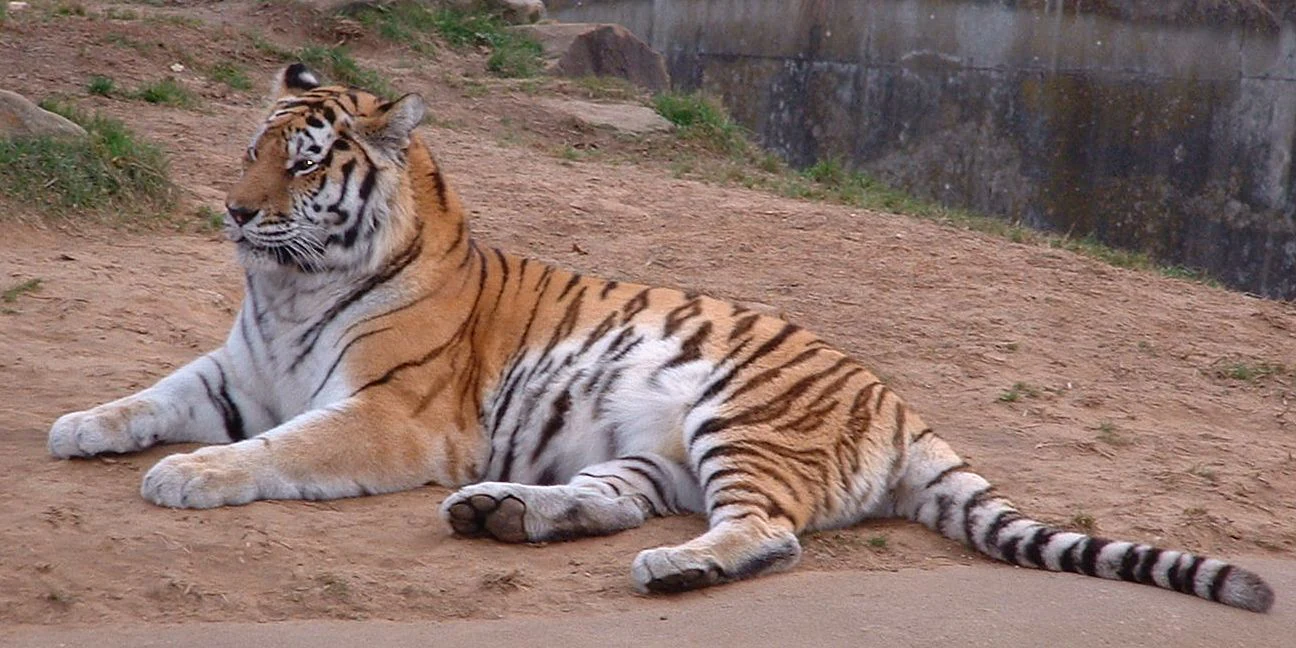
Anyuysky stands out for the combination of an intact central Sikhote-Alin forest block, a strong population of large mammals including both brown and Himalayan bears, and the dramatic Nadge rock formations along the Anyui River. Its status as one of the least human-modified forests in Khabarovsk Krai makes it a key reference site for regional conservation.
Highlights of the park also include rare and emblematic species such as Blakiston's fish owl and the mandarin duck, alongside the Korean cedar-dominated dark coniferous taiga that gives the upper canopy its distinctive character. Together these features define a protected area that is unusually rich in both ecological and landscape value for the southern Russian Far East.
Best time to visit Anyuysky National Park
The character of a visit to Anyuysky is shaped heavily by the climate of the Amur region. Summer generally brings the most accessible conditions in the river valleys, when vegetation is fully leafed and wildlife is active across the forest slopes. This is also a productive period for observing mammals and watching riverside birdlife along the Anyui and smaller tributaries.
Late spring into early summer, when water levels on the Anyui are still high and broadleaf foliage is young and vivid, often produces the most visually striking scenery and is favorable for viewing species such as mandarin ducks along the forested watercourses. Autumn can also be rewarding, particularly for landscape photography, as the mixed broadleaf and coniferous forests shift color and the rocky formations above the valley become more visible against the forest backdrop.
Given the park's remote character, the lower Anyui basin, and the limited infrastructure beyond the peripheral R454 highway, weather and seasonal access strongly influence any on-the-ground experience, and visitors generally plan around the warmer months when rivers, forest trails, and viewpoints are most accessible.