Why Bandhavgarh National Park stands out
Bandhavgarh is best known for its exceptional tiger population density, considered among the highest in any Indian national park. The park's abundance of forest and wild animals, particularly tigers, has made it a flagship destination for wildlife tourism and conservation in India. The rugged, hilly terrain with dense sal and bamboo forests creates ideal tiger habitat, supporting approximately 135 tigers according to the 2022 census. Beyond tigers, the park is noted for its diverse mammalian fauna including leopards, dhole, gaur, and several deer species. The presence of the ancient Bandhavgarh Fort within the park adds a unique historical and cultural layer to the wildlife experience.
Bandhavgarh National Park history and protected-area timeline
Bandhavgarh holds significant historical heritage as part of the princely state of Rewa, where it served as the royal hunting grounds for generations of rulers. The park derives its name from Bandhavgarh Fort, an ancient fortification whose name combines 'Bandhav' meaning brother and 'garh' meaning fort, referencing the mythological tradition that Lord Rama gave this fort to his brother Lakshmana. This cultural connection adds depth to the park's identity beyond its ecological significance. The area was designated as a national park in 1968, formalizing protection for its wildlife and forest resources. In 1993, it was officially declared a Tiger Reserve, recognizing its critical importance for tiger conservation. The establishment of the tiger reserve brought additional resources and management focus to protecting the tiger population and its habitat. In recent decades, conservation efforts have included species reintroduction programs, notably the gaur reintroduction project in 2012 that brought 50 animals from Kanha National Park to bolster the small existing population, which had been decimated by disease transmitted from cattle.
Bandhavgarh National Park landscape and geographic character
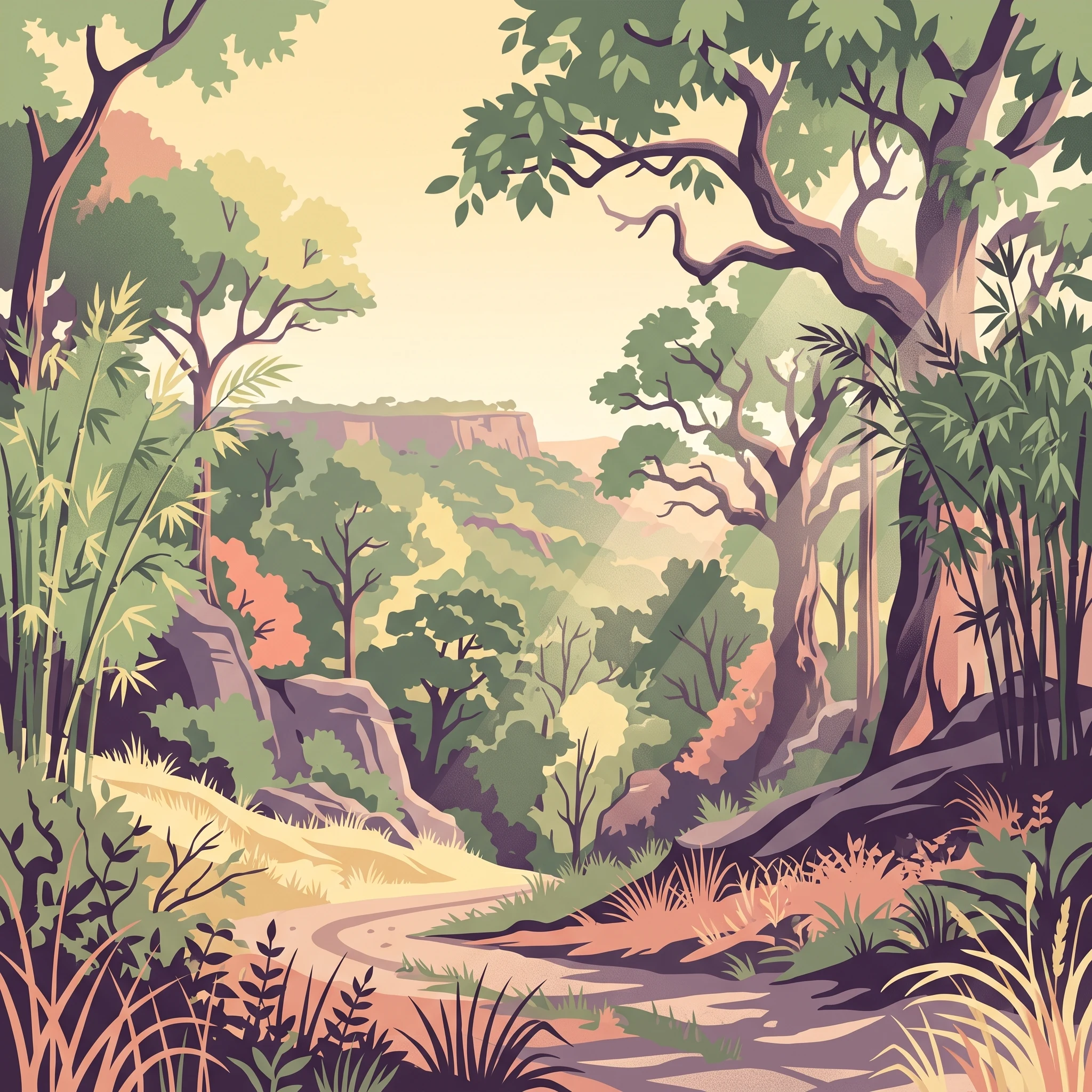
The landscape of Bandhavgarh National Park is defined by its rugged, hilly terrain with steep ridges and valleys creating a diverse topography. The area features predominantly moist deciduous forest cover, with sal trees forming the dominant canopy species across much of the park. Dense bamboo forests add to the vertical structure of the vegetation, creating ideal cover for wildlife. The terrain includes rocky outcrops, small streams, and natural waterholes that provide critical water sources for wildlife during the dry season. The park's elevation varies across its hilly sections, with the landscape transitioning from steep slopes to more gentle valleys. The presence of Bandhavgarh Fort atop one of the hills adds a historical landmark to the natural landscape. The three zones of the park, Tala, Magdhi, and Khitauli, each offer somewhat different landscape characteristics, with Tala being more undulating and forested, while other zones include more open grassland areas and different forest types.
Bandhavgarh National Park ecosystems, habitats, and plant life
The natural environment of Bandhavgarh consists of moist deciduous forest ecosystems that support exceptional biodiversity. The vegetation includes sal mixed forest, northern dry mixed deciduous forest, dry deciduous scrub, dry grassland, and west Gangetic moist mixed deciduous forest. The combination of sal trees and bamboo creates a distinctive forest character that provides ideal habitat for large mammals. The park's location in central India places it at the intersection of several ecological zones, contributing to its species diversity. The forest structure varies from dense, closed canopy areas to more open sections, creating varied habitat conditions. Water availability through streams and artificial waterholes supports wildlife throughout the year, particularly during the dry winter months when wildlife concentrates around remaining water sources. The park's protected status has allowed natural processes to continue relatively undisturbed, maintaining ecological functions and supporting viable populations of key species.
Bandhavgarh National Park wildlife and species highlights
Bandhavgarh supports an impressive array of wildlife, with tigers being the premier attraction. The 2022 tiger census recorded approximately 135 tigers in the park, representing one of the highest densities in India. Beyond tigers, the park is home to leopards, dhole (Indian wild dog), gaur (Indian bison), chital (spotted deer), sambar deer, nilgai, chinkara, four-horned antelope, wild boar, sloth bear, striped hyena, Indian wolf, golden jackal, and various smaller carnivores including jungle cat, Asiatic wildcat, fishing cat, and rusty-spotted cat. The gaur population was strengthened through a reintroduction program in 2012 that brought 50 animals from Kanha National Park, with the population growing to around 170 individuals by 2025. A notable development was the arrival of elephants from Chhattisgarh in 2018, marking the return of resident elephants to Madhya Pradesh after more than a century. The park also supports over 250 bird species, including red jungle fowl, Indian peafowl, various eagles, vultures, hornbills, and kingfishers.
Bandhavgarh National Park conservation status and protection priorities
Bandhavgarh's conservation significance is underscored by its designation as a Tiger Reserve, reflecting India's commitment to protecting the endangered tiger and its habitat. The park forms part of India's network of critical tiger habitats, known as tiger reserves, which are managed with special focus on tiger conservation and habitat protection. The Madhya Pradesh Forest Department oversees management activities including anti-poaching patrols, habitat management, and wildlife monitoring. The gaur reintroduction project demonstrates active conservation intervention, addressing population declines caused by disease. The return of elephants to the area represents a positive development in restoring ecological processes. Conservation challenges include managing human-wildlife conflict, addressing disease risks to wildlife populations, and maintaining habitat quality amid climate pressures. The park's tourism program is managed to balance visitor access with wildlife protection, with safari zones designed to minimize disturbance to sensitive species.
Bandhavgarh National Park cultural meaning and human context
Bandhavgarh carries cultural significance through its historical association with the princely state of Rewa and its royal hunting traditions. The Bandhavgarh Fort provides a tangible link to ancient history and mythology, with its name rooted in the epic Ramayana's narrative of brothers Rama and Lakshmana. The fort's presence within the park creates a unique blend of natural and cultural heritage. Local communities in the surrounding area have traditional connections to the landscape, though the park itself is managed as a protected area with restricted access. The cultural narrative of the fort adds an interpretive dimension to the wildlife experience, inviting visitors to appreciate both natural and historical heritage. This combination of ecological and cultural elements distinguishes Bandhavgarh from purely natural protected areas.
Top sights and standout views in Bandhavgarh National Park
Bandhavgarh offers exceptional tiger viewing opportunities in a scenic setting of hilly terrain and dense forests. The ancient Bandhavgarh Fort provides a unique historical landmark within the park boundaries. The park's three tourism zones allow visitors to experience varied landscapes and wildlife concentrations. The high density of tigers, combined with the park's manageable size, makes it one of the most reliable places in India for tiger sightings. The landscape of sal forests and bamboo thickets creates a quintessentially Indian forest atmosphere. Birdwatching opportunities are abundant, with over 250 species recorded. The recent presence of elephants adds another dimension to wildlife viewing. The park's accessibility from major cities in Madhya Pradesh makes it a viable destination for both dedicated wildlife enthusiasts and general tourists.
Best time to visit Bandhavgarh National Park
The optimal time to visit Bandhavgarh is during the winter months from October to March, when the weather is comfortable and wildlife is more easily spotted as vegetation thins and animals concentrate around water sources. The summer months from April to June offer excellent tiger sighting opportunities as animals become more active around diminishing waterholes, though temperatures can be quite high. The monsoon season from July to September brings heavy rainfall to the region, and the park is typically closed during this period to allow for natural regeneration and to minimize disturbance during breeding season. November and December are particularly popular months when visitor numbers increase, and advance booking of safari permits is recommended. The park's closed season generally runs from July to mid-October, though exact dates can vary annually based on monsoon conditions.