
Why Beerenbusch Nature Reserve stands out
Beerenbusch is best known as a refuge for near-natural deciduous forest in an otherwise heavily altered region of Brandenburg. Its core ecological value lies in the surviving stands of oak-hornbeam woodland and alder swamp forest, two habitat types that have become increasingly fragmented around Berlin and the Spree lowlands. The reserve is also noted among visitors for the Königskiefer, a celebrated old pine tree with a direct connection to Prussian royal hunting history, and for its role as an accessible forest education site near Fürstenwalde.
Beerenbusch Nature Reserve history and protected-area timeline
Beerenbusch was formally designated as a nature reserve (Naturschutzgebiet) in 1967, recognizing the area's exceptional forest character at a time when Brandenburg's natural woodlands were under significant pressure from agricultural expansion and forestry intensification.
The reserve had already acquired a cultural significance before its formal protection. The so-called Königskiefer, a striking pine tree within the forest, served as a stand during a driven hunt (Treibjagd) attended by the later Kaiser Wilhelm I, who reportedly admired the tree so much that he wished to have it transplanted to his Babelsberg Park in Potsdam. Whether fully transplanted or not, the historical reference ties the forest to nineteenth-century Prussian royal hunting traditions that shaped many woodland areas around Berlin and Brandenburg.
Integration into the Fürstenwalde city forest (Stadtforst Fürstenwalde) has given the reserve a dual identity over time, functioning both as a strictly protected ecological area and as a working municipal forest. The later addition of a forest experience trail (Walderlebnispfad) with interpretive stations reflects a more recent emphasis on public environmental education, allowing visitors to engage directly with the forest's ecological themes.
Beerenbusch Nature Reserve landscape and geographic character
The landscape of Beerenbusch is shaped almost entirely by woodland. As part of the Stadtforst Fürstenwalde and the broader lowland forest belt east of Fürstenwalde/Spree, the terrain is gentle, typically consisting of low-relief glacial lowland rather than dramatic topography. The forest sits within a region that transitions between the Spree lowlands and the more open landscapes toward the Oder.
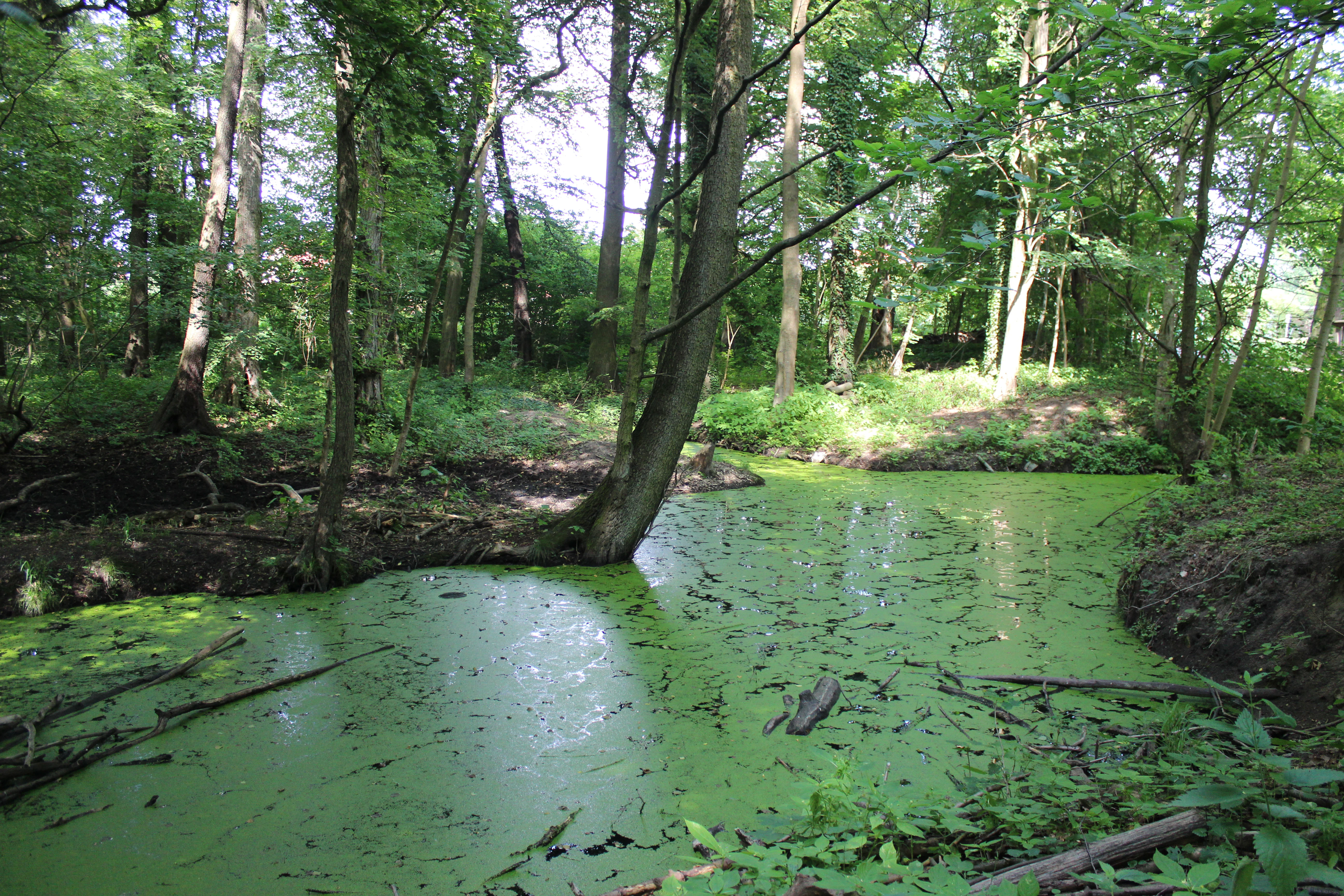
Two contrasting woodland environments define the reserve. The oak-hornbeam stands occupy the more typical, moderately moist forest soils and produce a dense, multi-layered canopy with understory shrubs and a rich herb layer. The alder swamp forests occur in the wetter pockets and along low-lying, periodically saturated ground, creating darker, more humid woodland with a distinct character and ground flora.
Among the reserve's most recognized individual landscape features is the Königskiefer, a tall pine of cultural and visual prominence. The presence of an educational forest trail marked by interpretive stations adds a human-scale layer to the landscape, allowing visitors to traverse and read the forest as a structured environment rather than a uniform block of trees.
Beerenbusch Nature Reserve ecosystems, habitats, and plant life
The ecological profile of Beerenbusch is anchored in two structurally rich and increasingly rare lowland forest types. The pedunculate oak-hornbeam woodland (Stieleichen-Hainbuchenwald) is the dominant formation on better-drained ground, while the alder swamp woodland (Erlenbruchwald) occupies the wetter zones, producing a mosaic of dry-mesic and moist forest within a relatively small total area.
This juxtaposition of habitats is ecologically significant. Oak-hornbeam forests support a diverse community of broadleaf trees and an understory of shade-tolerant herbs, while alder swamp forests are home to moisture-loving species and serve as important hydrological buffers. The combination of the two within one reserve makes Beerenbusch disproportionately valuable for conservation compared to its modest size.
For plants, the reserve functions as a refuge for rare native species, with documented occurrences such as the so-called Bleitblättriger Sitter and the Weiße Waldhyazinthe, two plants of conservation interest in Brandenburg. Such species occurrences reflect the continuing presence of near-natural forest conditions and emphasize the reserve's role in safeguarding botanical diversity on the edge of the Berlin-Brandenburg metropolitan region.
Beerenbusch Nature Reserve wildlife and species highlights
Wildlife in Beerenbusch reflects the reserve's woodland and swamp forest character. The most prominently mentioned species is the stag beetle (Hirschkäfer), a charismatic insect strongly associated with mature deciduous forests containing old oak trees and dead wood, both of which the reserve provides.
The mixture of dry-mesic oak-hornbeam and wet alder forest supports a variety of woodland invertebrates, amphibians adapted to damp forest pools and swampy ground, and typical lowland forest birds. Although the reserve is small, its structural diversity offers habitat niches that have largely disappeared from more uniformly managed forests nearby.
The presence of the stag beetle in particular highlights Beerenbusch's conservation relevance at a landscape scale, since this species requires long continuity of old trees and undisturbed decaying wood, conditions that the reserve continues to maintain.
Beerenbusch Nature Reserve conservation status and protection priorities
Beerenbusch carries formal nature reserve status (Naturschutzgebiet) under Brandenburg law and is classified internationally as an IUCN Category IV protected area, corresponding to a Habitat/Species Management Area. Its designation in 1967 marked a long-term recognition of the site's forest values at a time of substantial land-use change in the surrounding region.
The reserve's conservation value centers on the protection of near-natural Stieleichen-Hainbuchen and Erlenbruchwälder, habitat types that have become highly fragmented across Brandenburg and eastern Germany more broadly. By safeguarding such woodland within its borders, Beerenbusch contributes to the persistence of plant species of conservation concern, including the Bleitblättriger Sitter and the Weiße Waldhyazinthe, and supports wildlife such as the stag beetle that depends on old-growth forest features.
Its location within the larger Stadtforst Fürstenwalde means the reserve also plays a role in broader landscape-level forest management planning, providing a benchmark against which surrounding, more intensively used forest areas can be measured. The integrated designation approach, combining strict ecological protection with public education through the Walderlebnispfad, illustrates a typical Brandenburg model of managing small but ecologically rich forest reserves for both biodiversity and outreach.
Beerenbusch Nature Reserve cultural meaning and human context
Although Beerenbusch is primarily an ecological site, it carries a notable cultural heritage element in the Königskiefer. This old pine tree is associated with Kaiser Wilhelm I, who used the tree as a stand during a Treibjagd and reportedly admired it so much that he wished to have it moved to his Babelsberg Park in Potsdam. The story links the forest directly to nineteenth-century Prussian royal hunting culture that shaped much of the woodland landscape around Berlin and Potsdam.
The presence of a forester's house, Forsthaus Beerenbusch, at the eastern edge of the reserve also reflects the long-standing role of the area as a working municipal forest. The Walderlebnispfad running through the woodland represents a more contemporary layer of cultural engagement, framing the reserve as a site for environmental learning rather than only as a strict conservation zone.
The reserve is also part of the broader cultural geography of Brandenburg, where small forest reserves around towns like Fürstenwalde have shaped local identities tied to woodland traditions, hunting heritage, and the rural-forest character of the eastern Brandenburg countryside.
Top sights and standout views in Beerenbusch Nature Reserve
Among the most distinctive features of Beerenbusch is the survival of a near-natural oak-hornbeam and alder swamp forest mosaic, a habitat combination rare in such a compact area. The reserve's role as a refuge for rare plant species, including the Weiße Waldhyazinthe and the Bleitblättriger Sitter, underscores its botanical importance.
The Königskiefer gives the reserve a tangible cultural anchor, connecting Brandenburg lowland forest to Prussian royal hunting history. The presence of stag beetles and other old-forest wildlife adds a further layer of ecological significance, while the integrated Walderlebnispfad makes the reserve accessible and educational for visitors exploring the forests east of Fürstenwalde.
Best time to visit Beerenbusch Nature Reserve
Beerenbusch is a lowland Brandenburg forest, so seasonal character matters. Spring and early summer are typically the most rewarding periods for visitors interested in the woodland flora, when the understory plants and rare species such as the Weiße Waldhyazinthe emerge and the forest feels visually alive. Bird activity is also strong in this period.
Autumn brings a different kind of appeal, with broadleaf forest displays and a quieter atmosphere after the main tourist season, while walks along the Walderlebnispfad are pleasant year-round outside of prolonged wet or icy conditions. Because the reserve is a protected forest rather than a developed visitor attraction, seasonal conditions primarily affect scenery and flora rather than accessibility.