Why Bieszczady National Park stands out
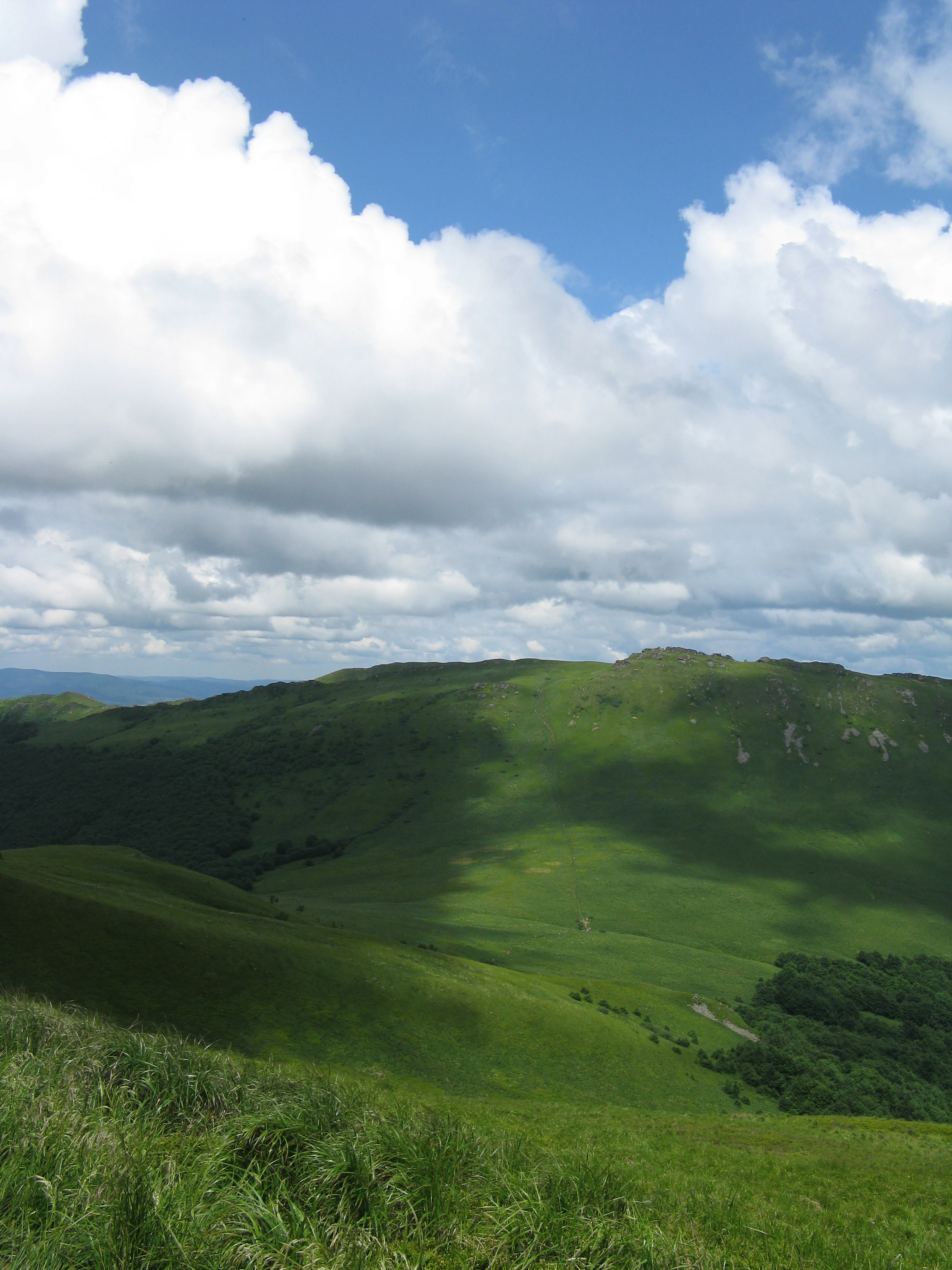
Bieszczady National Park is known above all for its połoniny, the sweeping open grasslands that crown the high ridges above the tree line and are otherwise unique to the eastern Carpathian landscape in Poland. These grassy highland plateaus, combined with deep forested valleys, give the park its signature scenery of treeless green summits rising above sea of forest. The park is equally recognized for its recovery from extensive post-war depopulation, when former agricultural land was gradually reclaimed by nature, producing one of Poland's most important areas of near-natural forest, including some of the country's most valuable old-growth beech stands. Its rich fauna, including brown bear, wolf, lynx, wild European bison, and Carpathian red deer, has made the park an iconic refuge for large Carpathian mammals.
Bieszczady National Park history and protected-area timeline
Plans to create a national park in the Polish Bieszczady emerged as early as the mid-1950s, although the area's high meadows had already been under the administration of the Tatra National Park directorate while new pasture was sought for highland sheep displaced from strictly protected Tatra meadows. When the park was formally designated in 1973, its territory was small, concentrated around the Tarnica, Krzemień, and Halicz massif and the upper parts of Połonina Caryńska.
The park expanded four times, in 1989, 1991, 1996, and 1999, incorporating much of the so-called High Bieszczady along with several enclaves, the largest of which lies in the upper San river valley where former state-farm meadows were taken over for conservation. Demographic history shaped these landscapes profoundly: between 1944 and 1947, the Ukrainian population of the borderland was resettled, leaving overgrown villages and re-emerging wildlife populations behind.
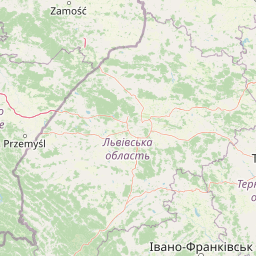
In 1992, the park became part of the East Carpathians International Biosphere Reserve, coordinated under UNESCO auspices together with Poloniny National Park in Slovakia and Uzhanskyi National Park in Ukraine. In 1998, the park received the European Diploma from the Council of Europe, becoming only the second protected area in Poland to earn this recognition after Białowieża National Park. Since 2021, around 11 percent of the park's area has been inscribed on the UNESCO World Heritage List as part of the ancient and primeval beech forests of the Carpathians and other European regions.
Bieszczady National Park landscape and geographic character
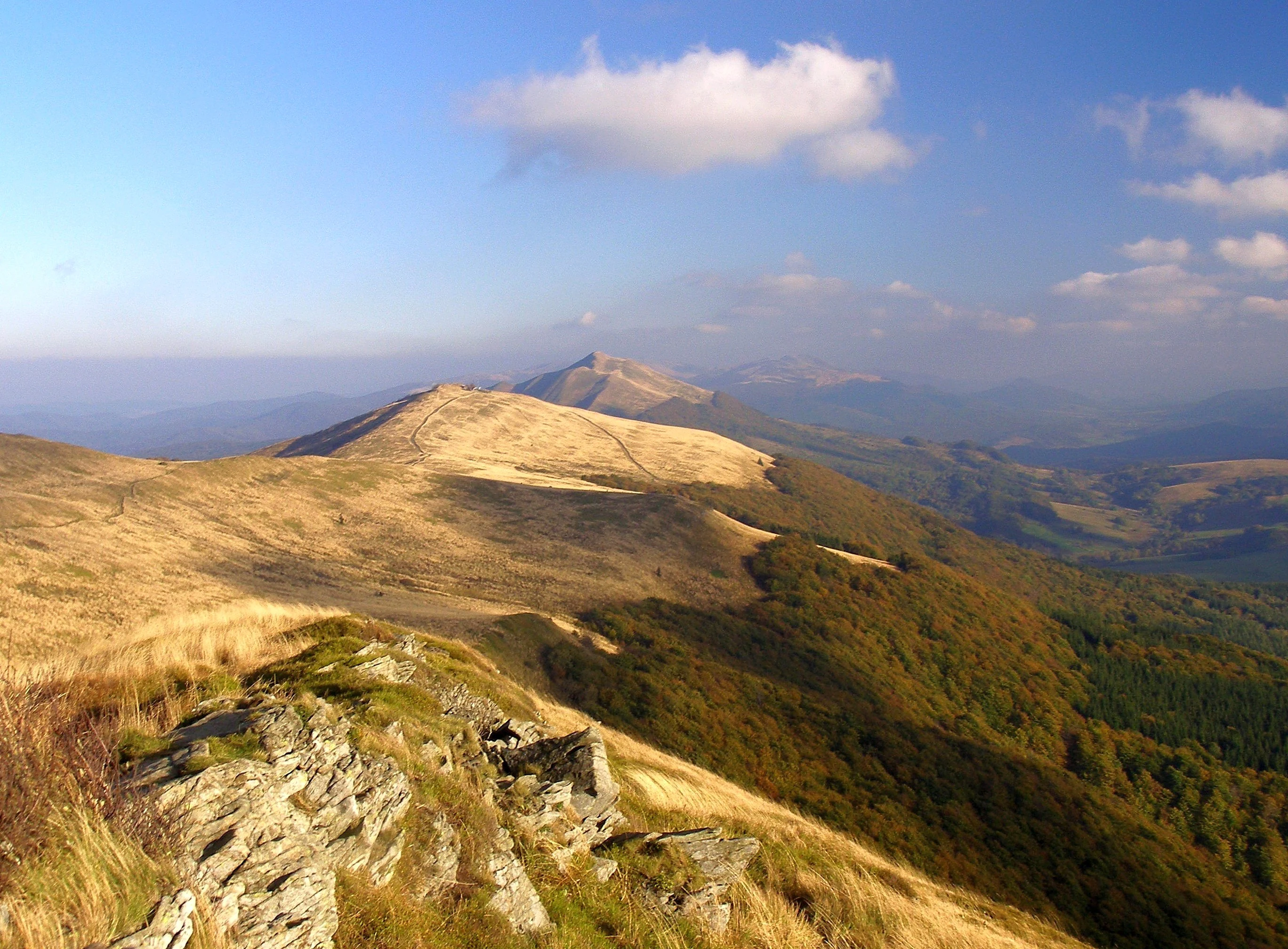
The landscape of Bieszczady National Park is shaped by parallel ridges of the Western Bieszczady, with summits such as Tarnica, Krzemień, and Halicz forming a distinctive high-mountain skyline above the upper San river valley. The terrain rises from forested valleys and streams in the north to broad, rounded highland plateaus in the south, where eroded sandstone and similar Carpathian bedrock shape the smoother hill silhouettes typical of this part of the Carpathians.
Above the closed forest line, generally between roughly 1150 and 1250 meters of elevation, the landscape opens into the distinctive połoniny, sweeping montane grasslands that are otherwise nearly absent in Poland's other mountains. These high open meadows occupy about 1800 hectares of the park, almost entirely under strict protection, and give the Bieszczady their characteristic appearance of smooth green summits standing above dark forest.
In the northern half, the landscape is dominated by deeply forested valleys, old settlement clearings, and the meandering upper San and Solinka river systems. Far from the alpine relief of the Tatra Mountains, the Bieszczady instead present a softer, rounder, more rolling Carpathian character, with the past imprint of villages, terraces, and meadows still visible in many side valleys.
Bieszczady National Park ecosystems, habitats, and plant life
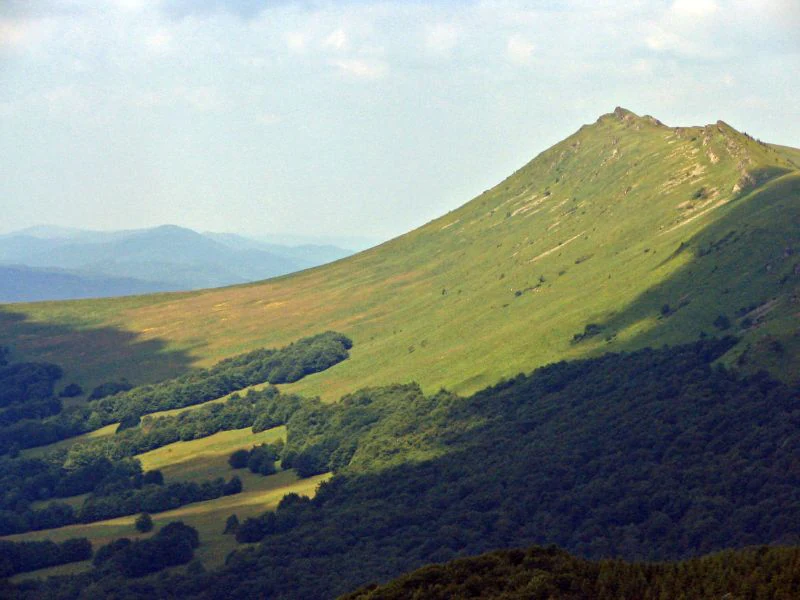
Ecologically, Bieszczady National Park is recognized for preserving one of the largest and most natural forest complexes in the Polish Carpathians. About 80 percent of its area is covered by deciduous and mixed forests dominated by European beech, with grey alder, sycamore maple, spruce, and fir sharing the canopy, and roughly 15 percent of the forested area qualifies as old-growth, near-primary stands. The largest of these tracts survive on the southwestern slopes of Mała and Wielka Rawka and on the northern slopes of Smerek.
The park's flora includes nearly 780 species of vascular plants, among them more than 30 eastern Carpathian species such as Aconitum species associated with the eastern Carpathians, Carpathian campion (Silene carpatica), white cow-wheat (Melampyrum saxosum), and several narrow endemics of the Eastern Carpathians. Bryophytes, lichens, and fungi are also abundantly represented, reflecting the continuity of forest and meadow habitats and the long ecological stability of the highland landscapes.
Above the upper forest line, the połoniny harbor a distinct alpine-subalpine flora that differs from that of the Tatra Mountains, hosting Carpathian endemics such as Aconitum species of the eastern Carpathians, Romanian pansy, eastern Carpathian thistles, and other grassland specialists, while early spring along park streams brings dense blooms of the Carpathian subspecies of spring snowflake (Leucojum vernum). Although non-native and invasive species also occur and require active management, the natural vegetation patterns of the park remain a key reference point for understanding eastern Carpathian ecology in Poland.
Bieszczady National Park wildlife and species highlights
Bieszczady National Park is one of the most important strongholds for large mammals in Poland, supporting all of the country's major predator species plus significant herbivore populations. Brown bear, wolf, Eurasian lynx, and European wildcat are present alongside red deer, roe deer, and a population of European bison introduced from breeding centers in Pszczyna and Niepołomice in the 1960s. Bison now number in the low hundreds, with several dozen regularly using the park itself, making this the largest truly wild mountain herd of European bison in the world.
The park's breeding avifauna exceeds 140 species and includes an unusually rich set of large raptors and owls. Golden eagle, lesser spotted eagle, short-toed snake eagle, and white-tailed eagle have all been recorded as breeders, along with very rare Egyptian vulture, while Tengmalm's owl, pygmy owl, eagle owl, and Ural owl nest in the forests, with Ural owl reaching some of the highest densities recorded in Europe. White-backed woodpecker and three-toed woodpecker, both listed in the Polish Red Data Book of Animals, breed in the primeval forest stands, and in the high open grasslands high-mountain species such as water pipit and Alpine accentor are typical, with wallcreeper appearing occasionally.
Reptiles include widespread species such as the common European adder and, more unusually for Poland, Aesculapian snake. Beyond vertebrates, the park's invertebrate fauna of earthworms, insects, and arachnids is characterized as exceptionally rich, contributing to a broader picture of relatively undisturbed Carpathian food webs.
Bieszczady National Park conservation status and protection priorities
Bieszczady National Park has a particularly strong conservation profile because of its high share of strictly protected area and its importance for the continuity of eastern Carpathian forest ecosystems. Roughly 70 percent of the park lies under strict protection, the highest proportion of any national park in Poland, and includes some of the country's most valuable old-growth beech and mixed forests.
The park is part of the larger East Carpathians International Biosphere Reserve under UNESCO, linking protected areas in Poland, Slovakia, and Ukraine, and joins the European Natura 2000 network through much of the broader Western Bieszczady region. In 1998, it received the European Diploma from the Council of Europe in recognition of its conservation of values unique at the European scale, the second protected area in Poland to do so after Białowieża. A portion of its ancient beech forest has also been inscribed on the UNESCO World Heritage List as part of the transboundary ancient and primeval beech forests of the Carpathians.
Conservation management focuses on maintaining open habitats in the valley landscape through traditional mowing and the grazing of Hucul horses, originally a Carpathian breed maintained at Wołosate and Tarnawa Niżna, while also controlling invasive species such as Sosnowski's hogweed, which has been the subject of intensive removal campaigns in recent years.
Bieszczady National Park cultural meaning and human context
The cultural dimension of Bieszczady National Park is inseparable from the demographic upheaval of the mid-twentieth century. Between 1944 and 1947, the Ukrainian population of the borderland area now within the park was resettled, and abandoned villages, field terraces, wells, cellars, and orchards gradually became part of a returning natural landscape, producing what is locally known as the land of valleys. Walking through these valleys today, visitors can still find traces of old settlements softened by forest and meadow.
Maintaining this open, human-shaped valley landscape is an explicit cultural-ecological strategy. Park staff manage selected meadows through regular mowing and reintroduced grazing by Hucul horses, an old Carpathian breed kept at Wołosate and Tarnawa Niżna, allowing the park both to preserve traditional land use and to sustain open habitats for wildlife. The strong association of the park with Carpathian highland identity, including the symbolic role of the lynx, lynx being the emblematic species of the park, frames the broader regional identity tied to the Bieszczady.

Top sights and standout views in Bieszczady National Park
Bieszczady National Park stands out for the rare combination of eastern Carpathian high-mountain grasslands, large tracts of natural Carpathian beech and mixed forest, and a recovered wilderness quality shaped by post-war depopulation. Its połoniny, the only extensive such landscape in Poland, define a unique highland visual identity, while the strictly protected forest areas preserve some of the most ecologically valuable old-growth stands in the Carpathians.
At the same time, the park supports an exceptional concentration of large mammals, including Europe's largest wild mountain herd of European bison alongside brown bear, wolf, and lynx, and an unusually rich community of raptors and owls. The combination of UNESCO-linked forest protection, transnational biosphere cooperation, and traditional valley-landscape management gives the park a layered identity that blends ecological, cultural, and transboundary significance.
Best time to visit Bieszczady National Park
The character of Bieszczady National Park shifts notably with the seasons, although late spring through early autumn is generally the most rewarding time for broader exploration. Late spring brings the dense flowering of spring snowflake along park streams and the fresh green of expanding beech canopy, while summer reveals the full sweep of the połoniny grasslands in flower and is considered the most dependable period for hiking the higher ridges. High summer is also the most favorable window for observing large mammals and birds in the open valleys and meadows.
Autumn transforms the park's beech and mixed forests into vivid displays of color, drawing visitors interested in forest landscapes and quieter trails. Winter brings heavy snowfall across the highlands and considerably more demanding conditions, with many high routes accessible only to experienced winter hikers, though the snow-covered połoniny and forested valleys are visually striking. Because conditions vary strongly with elevation and the season, the park's appeal shifts from high-mountain ridge walking in summer to quieter forest and valley experiences in the shoulder seasons, and to a more specialized winter landscape under snow.