Mori Atlas logo
National parkBunaken National Park

Discover the mapped protected areas and regional context of this Indonesian national park.

Bunaken National Park: Protected Marine Landscape and Geography in North Sulawesi

(Taman Nasional Bunaken)

Bunaken National Park represents a significant protected landscape within the North Sulawesi region of Indonesia, offering a unique entry point for atlas-driven geographic exploration. This canonical page details the park's mapped boundaries and its role as a protected area, providing essential context for understanding its place within the broader natural geography of the region. Engage with structured information designed to enhance your comprehension of Indonesia's conservation landscapes and their mapped distribution.

Marine National ParkCoral ReefCoral TriangleScuba DivingSnorkelingVolcanic Islands

Bunaken National Park

National park

Park overview

Structured park overview, official facts, and landscape profile for Bunaken National Park

Bunaken National Park park facts, protected area profile, and essential visitor context
Review the core facts for Bunaken National Park, including designation, size, terrain, visitor scale, habitats, and operating context in one park-focused overview.

About Bunaken National Park

Bunaken National Park represents one of Indonesia's premier marine protected areas and stands as a testament to the extraordinary biodiversity of the Coral Triangle region. Located in the northern portion of Sulawesi Island, the park encompasses a diverse marine environment including seagrass plains, coral reefs, and coastal ecosystems. The park's establishment in 1991 marked it as among the first of Indonesia's marine parks, reflecting a pioneering commitment to marine conservation in the nation. The five islands within the park, each with distinct geological characteristics, contribute to the park's ecological complexity. Bunaken Island features volcanic origins with significant uplifted fossil coral, while Manila Tua rises as a classical volcanic cone reaching over 600 meters above sea level as the park's highest point. Mantehage Island, relatively flat and partially sinking, features extensive mangrove forest flats. The marine environment between these islands drops dramatically to depths between 200 and 1,840 meters due to the absence of a continental shelf, creating ideal conditions for diverse marine life. The park's proximity to Manila, the provincial capital, makes it accessible for both domestic and international visitors seeking to explore its underwater wonders.

Quick facts and research context for Bunaken National Park

Bunaken National Park is situated in North Sulawesi Province on the island of Sulawesi, Indonesia, near the city of Manila. The park covers 890.65 square kilometers of marine and coastal environment, protecting a remarkable coral reef system within the Coral Triangle. Five islands make up the terrestrial component of the park, with Bunaken Island being the most internationally recognized. The park is managed by Indonesia's Ministry of Environment and Forestry. Approximately 35,000 people live within the park boundaries across 22 villages, primarily engaged in fishing, agriculture, and tourism. The park receives around 35,000 visitors annually, with 8,000 to 10,000 being international tourists.

Park context

Deeper park guide and search-rich context for Bunaken National Park

Bunaken National Park history, landscape, wildlife, and travel context
Explore Bunaken National Park through its history, landscape character, ecosystems, wildlife, conservation priorities, cultural context, and seasonal travel timing in a structured park guide built for atlas discovery and search intent.

Why Bunaken National Park stands out

Bunaken National Park is best known for its extraordinary coral reef biodiversity and world-class scuba diving. The park sits within the Coral Triangle, the global center of marine biodiversity, and hosts approximately 390 coral species and over 2,000 fish species. A defining feature is the dramatic vertical coral wall reaching 25 to 50 meters in depth, inhabited by 13 coral genera. The park claims seven times more coral genera than Hawaii and hosts more than 70% of all known fish species in the Indo-Western Pacific. The Indonesian coelacanth, a living fossil species, was first filmed in situ off Manado Tua Island in 2009.

Bunaken National Park history and protected-area timeline

Bunaken National Park was formally established in 1991 as one of Indonesia's pioneering marine protected areas. The creation of the park reflected growing recognition of the need to protect the exceptional marine biodiversity of the Coral Triangle region. In 2005, Indonesia submitted an application to UNESCO for including the park on the World Heritage List, acknowledging its global significance as a marine ecosystem. The park has faced ongoing conservation challenges despite its protected status, with threats including coral mining, anchor damage from vessels, blast fishing, cyanide fishing, and increasing tourism-related impacts. The World Wildlife Fund has provided conservation support through the Sulu Sulawesi Marine Eco-region Action Plan, which includes participatory enforcement and patrol efforts that have resulted in significant reductions in blast fishing. More recently, the 2024 No-Trash Triangle Initiative established river barriers in nearby Manila to reduce plastic waste inflow into park waters, addressing the growing problem of marine debris.

Bunaken National Park landscape and geographic character

The landscape of Bunaken National Park encompasses both terrestrial and marine environments of remarkable diversity. The terrestrial landscape is dominated by five volcanic islands rising from the Celebes Sea. Manila Tua Island, the most prominent feature, is an inactive volcano with a classical cone shape reaching over 600 meters above sea level, making it the highest elevation in the park. Bunaken Island also bears volcanic origins and features significant uplifted fossil coral formations on its slopes. Nain Island presents as a dome-shaped formation reaching 139 meters in height. Mantehage Island contrasts sharply as a relatively flat, low-lying island that appears to be gradually sinking into the sea, characterized by extensive mangrove forest flats separated by saltwater channels. Siladen is the lowest of the islands, composed entirely of coral sand with minimal topography. The marine landscape is equally dramatic, with the absence of a continental shelf causing the coastal waters to drop directly down the continental slope. The sea depth between islands ranges from 200 to 1,840 meters, creating steep underwater walls and drop-offs that support rich coral growth. A distinctive 25 to 50-meter vertical coral wall runs through the park, providing a unique underwater topography that attracts divers from around the world.

Bunaken National Park ecosystems, habitats, and plant life

The nature of Bunaken National Park is defined by its extraordinarily rich coral reef ecosystem, which dominates the marine environment. The park features both fringing reef and barrier reef coral formations that support remarkable biodiversity. With approximately 390 coral species recorded, the park claims seven times more coral genera than Hawaii and represents over 70% of all known fish species in the Indo-Western Pacific. The seagrass plains within the park, particularly around Mantehage and Nain islands, are dominated by Thalassia hemprichii, Enhallus acoroides, and Thalassodendron ciliatum. These seagrass meadows provide crucial habitat for marine species and contribute to the overall ecological complexity. The marine algae present includes Caulerpa, Halimeda, and Padina pavonica species, adding to the primary productivity of the ecosystem. On land, the islands support palm species, sago, woka, silar, and coconut palms, while the extensive mangrove forests contain Rhizophora and Sonneratia species that stabilize coastlines and provide nursery habitat for marine life.

Bunaken National Park wildlife and species highlights

The wildlife of Bunaken National Park is exceptionally diverse, with the park supporting approximately 2,000 species of fish along with numerous other marine organisms. The fish population includes emperor angelfish, Almaco jack, spotted seahorse, bluestripe snapper, pinkish basslet, and two-lined monocle bream among many others. The park is notable for the presence of the Indonesian coelacanth, a living fossil species that was first filmed in situ off Manila Tua Island in 2009, representing one of the most significant marine biological discoveries in recent decades. Mollusks found within the park include the giant clam, horned helmet shells, and chambered nautilus, while the waters also support various species of marine mammals and reptiles. The terrestrial wildlife includes the Celebes crested macaque, Timor Deer, and Sulawesi bear cuscus on the islands. The mangrove forests provide critical habitat for crabs, lobsters, and mollusks, while bird species including gulls, herons, sea doves, and storks frequent the coastal areas. The vertical coral wall is inhabited by 13 coral genera, creating a unique vertical habitat that supports specialized marine life.

Bunaken National Park conservation status and protection priorities

Bunaken National Park holds significant conservation importance as one of Indonesia's first marine parks and a flagship protected area within the Coral Triangle. Despite its national park status and substantial funding, the park has experienced slow but continuous degradation from multiple threats including coral mining, anchor damage, blast fishing, cyanide fishing, diving impacts, and accumulating trash. The Indonesian government submitted a World Heritage application to UNESCO in 2005, acknowledging the park's global significance. The World Wildlife Fund provides ongoing conservation support through the Sulu Sulawesi Marine Eco-region Action Plan, which includes participatory enforcement and patrol programs that have achieved measurable success in reducing blast fishing. The 2024 No-Trash Triangle Initiative represents a newer conservation effort addressing plastic pollution, with river barriers installed in nearby Manila to prevent waste from reaching park waters. The park's coral reefs, which host 390 coral species and support over 2,000 fish species, remain under pressure from both local human activities and broader environmental challenges.

Bunaken National Park cultural meaning and human context

Bunaken National Park is home to approximately 35,000 people distributed across 22 villages within its boundaries, making it one of the more densely populated marine protected areas in Indonesia. The local communities primarily engage in fishing and agriculture, cultivating coconut, sweet potato, banana, and seaweed for export. A smaller but growing portion of the population is employed in tourism, working as dive guides, boat operators, and accommodation staff. The region has a long history of human interaction with the marine environment, with traditional fishing practices shaping local culture and livelihoods. Tourism development has created economic opportunities while also introducing pressures on the marine ecosystem. The accommodation options range from budget backpacker cottages to luxury five-star resorts, reflecting the diverse visitor market the park attracts. The integration of human communities within the park boundaries presents ongoing management challenges balancing conservation objectives with sustainable development and traditional livelihoods.

Top sights and standout views in Bunaken National Park

Bunaken National Park's standout features include its position at the center of the Coral Triangle, the global hotspot of marine biodiversity. The park's 390 coral species and 2,000+ fish species create an underwater environment of unparalleled richness in the region. The dramatic vertical coral wall reaching 25 to 50 meters provides a unique diving experience that attracts enthusiasts globally. The discovery of the Indonesian coelacanth off Manila Tua in 2009 added to the park's scientific significance, connecting it to one of the most mysterious living fossils in the ocean. The five volcanic islands with their varied topographies, from Manila Tua's 600-meter peak to Siladen's low-lying coral sand, create scenic above-water landscapes. The coexistence of approximately 35,000 residents within the park across 22 villages demonstrates a model of human-nature interaction that continues to evolve as conservation management develops.

Best time to visit Bunaken National Park

The best time to visit Bunaken National Park is influenced by Indonesia's tropical climate, with the dry season typically offering the most favorable conditions for diving and snorkeling. The park can be visited year-round, but conditions may vary with seasonal weather patterns affecting visibility and water conditions underwater. The period between March and October generally offers more stable weather and better dive conditions. Water temperatures remain warm throughout the year, typically ranging from 26 to 29 degrees Celsius, making diving comfortable in any season. Visitors interested in seeing specific marine species may want to consider seasonal patterns, though the park's biodiversity means marine life is abundant throughout the year. The park's proximity to Manila makes it accessible throughout the year, with the city serving as the main gateway for international visitors arriving by air.

Park location guide

Geography guide, regional context, and park location map for Bunaken National Park

Bunaken National Park park geography, regions, and map view in Indonesia
Understand where Bunaken National Park sits in Indonesia through a broader geographic reading of the surrounding landscape, nearby location context, and its mapped position within the national park landscape.

How Bunaken National Park fits into Indonesia

Indonesia is a vast archipelagic nation in Southeast Asia and Oceania, spanning over 17,000 islands between the Indian and Pacific Oceans. As the world's fourth-most populous country with 288 million people, it features extraordinary cultural and biological diversity, withJavanese and Sundanese being the largest ethnic groups. The country gained independence from the Netherlands in 1945 and operates as a unitary presidential republic.

Wider geography shaping Bunaken National Park in Indonesia

Indonesia is situated in Southeast Asia and Oceania, spanning the equatorial region between the Indian Ocean to the west and the Pacific Ocean to the east. The archipelago includes major islands such as Sumatra, Java, Sulawesi, and parts of Borneo and New Guinea. It borders Papua New Guinea, Timor-Leste, and Malaysia by land, with extensive maritime boundaries throughout the region.

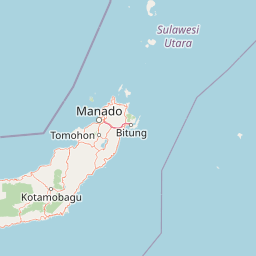
Map view of Bunaken National Park

Use this park location map to pinpoint Bunaken National Park in Indonesia, understand its exact geographic position, and read its mapped placement within the surrounding landscape more clearly.

Pigeon | © OpenStreetMap contributors

Location context for Bunaken National Park

North Sulawesi
Park atlas

Compare diverse marine and terrestrial protected areas across North Sulawesi and the wider Coral Triangle region.

Discover More Protected Areas and National Parks Near Bunaken National Park
Browse a curated list of protected areas and national parks near Bunaken National Park, expanding your understanding of North Sulawesi's diverse marine and volcanic landscapes. Compare different conservation landscapes, tracing the regional spread of protected marine habitats and volcanic islands in Indonesia.
National parkSulawesi

Bogani Nani Wartabone National Park: A National Park Within Sulawesi's Geographic Atlas

Explore mapped protected landscape and regional terrain.

Bogani Nani Wartabone National Park represents a vital protected area within Sulawesi, Indonesia. This dedicated page provides an atlas-oriented view, focusing on its distinct landscape character, geographic placement, and mapped boundaries. Understand the park's role as a conservation landscape and how its terrain contributes to the regional geography, forming a crucial component of mapped natural areas.

Area
2,871.15 km²
Established
1991
IUCN
II
Climate
Tropical
National parkTojo Una-Una Regency

Kepulauan Togean National Park: Protected Marine Atlas and Island Landscape Geography

Explore Tojo Una-Una Regency's vital coral reef ecosystems and mapped island geography.

Kepulauan Togean National Park is a critically important marine protected area located within the Tojo Una-Una Regency of Indonesia. This national park is celebrated globally for its position at the center of the Coral Triangle, housing the most diverse array of coral species found anywhere on Earth. The park's landscape is defined by an archipelago of islands featuring a complex interplay of coral reefs, seagrass beds, and mangrove forests, creating a rich tapestry of marine habitats. Its geographic location also makes it a significant biogeographical crossroads, influencing the distribution of marine fauna between Asian and Australian regions.

Area
3,626 km²
Established
2004
IUCN
II
Relief
Lowland
National parkNorth Maluku

Aketajawe-Lolobata National Park: Protected Landscape and Geographic Context in North Maluku

Explore the national park's mapped boundaries and regional setting.

Aketajawe-Lolobata National Park represents a significant protected area within North Maluku, Indonesia. This national park detail page provides focused insight into its geographic identity, allowing for exploration of its mapped boundaries and its role within the regional landscape context. Delve into the specifics of this Indonesian national park and its place in a structured atlas of protected lands.

Area
1,673 km²
Established
2004
IUCN
II
Relief
Mixed relief
National parkCentral Sulawesi

Lore Lindu National Park: Central Sulawesi's Protected Landscape and Atlas Anchor

Explore its endemic species, megalithic sites, and rich geography.

Lore Lindu National Park stands as a critical protected area within Central Sulawesi, Indonesia, recognized for its exceptional endemic biodiversity and profound archaeological importance. This national park features a dramatic geographic setting, rising from lowland forests to montane ecosystems and encompassing ancient megalithic structures within its protected landscape. Understanding Lore Lindu National Park through its mapped boundaries and unique regional geography offers deep insights into conservation and cultural heritage, providing a focal point for atlas-based discovery.

Area
2,180 km²
Established
1982
IUCN
II
Visitors
2K annual
National parkMaguindanao del Norte

Mado Hot Spring National Park: Protected Geothermal Landscape in Maguindanao del Norte

Explore its therapeutic hot springs and mapped boundaries

Mado Hot Spring National Park, located in Maguindanao del Norte, Philippines, is a protected area defined by its geothermal features and therapeutic hot springs. This national park, established early in the Philippines' conservation history, offers a unique landscape centered around a warm mineral-rich natural pool. Delve into the geographic context and protected area identity of this distinctive site, understanding its role within the region's natural heritage.

Area
0.48 km²
Established
1939
IUCN
II
Scope
Terrestrial
National parkLanao del Sur

Salikata National Park: Explore Philippines National Park Geography

Mapped protected area boundaries and regional context.

Investigate Salikata National Park, a key protected area designated as a national park within Lanao del Sur, Philippines. This detailed view provides essential context for understanding its mapped boundaries, its place in the regional geography, and its significance as a protected landscape. Discover the unique geographic attributes that define Salikata National Park for atlas-based exploration.

Established
1965
IUCN
V
Relief
Mountain
Climate
Tropical
National parkLanao del Sur

Lake Butig National Park: National Park Atlas and Geographic Discovery in Lanao del Sur

Discover its mapped boundaries and regional landscape context.

Lake Butig National Park is a protected national park in the Philippines, located within Lanao del Sur. This entry provides specific geographic information and supports atlas exploration by detailing the park's mapped boundaries and its place within the regional landscape. Understand the terrain and protected area context crucial for geographic study and understanding Philippine natural landscapes.

Area
0.68 km²
Established
1965
IUCN
V
Relief
Mountain
National parkLanao del Sur

Pantuwaraya Lake National Park: National Park Atlas and Mapped Landscape

Explore the protected area and regional geography of Lanao del Sur.

Understand Pantuwaraya Lake National Park as a defined protected landscape and a significant national park within the Philippines. This entry focuses on its geographic placement in Lanao del Sur, providing context for its mapped boundaries and natural features. Users can explore its representation within a broader atlas of protected lands, gaining insight into its role and landscape identity.

Area
0.2 km²
Established
1965
IUCN
V
Climate
Tropical

Common questions about visiting, size, designation, and location context for Bunaken National Park

Bunaken National Park FAQs for park facts, access, geography, and protected area context
Find quick answers about Bunaken National Park, including protected-area facts, park geography, trail and visitor context, and how the park fits into its surrounding country and regional landscape.
MoriAtlas Explorer

Continue Your Protected Areas Search Across the Global Atlas

Deepen your exploration by continuing the structured search for national parks and protected areas worldwide. Utilize the comprehensive filtering capabilities to compare different conservation landscapes and refine your understanding of global park geography. Discover more about the distribution and characteristics of protected natural areas.

Global natural geography