

Mori Atlas logo
National parkCusuco National Park

Discover the mapped boundaries and natural terrain of this key national park in Central America.

Cusuco National Park: Protected Landscape Atlas and Geographic Context in Honduras

Cusuco National Park stands as a significant protected area within Honduras, offering a unique lens through which to explore national park geography and landscape identity. This page provides detailed atlas-style information, focusing on the park's mapped boundaries and its place within the natural terrain of Central America. Understand the geographic context that defines this important conservation landscape, serving as a gateway to structured discovery of protected lands.

Cloud forestProtected areaKey Biodiversity AreaCentral American biodiversityDwarf forestMontane forest

Cusuco National Park

National park

Park overview

Structured park overview, official facts, and landscape profile for Cusuco National Park

Cusuco National Park park facts, protected area profile, and essential visitor context
Review the core facts for Cusuco National Park, including designation, size, terrain, visitor scale, habitats, and operating context in one park-focused overview.

About Cusuco National Park

Cusuco National Park occupies a critical position in Central American conservation as part of the Meso-American biodiversity hotspot, one of the world's most species-rich regions. The park's location in the Merendon mountains of northwest Honduras places it at a biogeographic crossroads where species from North and South America meet. The dramatic elevation change from lowland western areas to the central highlands creates a compressed version of the ecological zonation that would typically span thousands of meters of elevation, allowing visitors to traverse multiple distinct ecosystems within a single day. The park's protected area designation encompasses both a strictly protected core zone and a surrounding buffer zone that allows for sustainable use while protecting the integrity of the central conservation area. This zoning approach acknowledges the human communities that have historically inhabited the region while prioritizing the long-term preservation of the park's ecological values.

Quick facts and research context for Cusuco National Park

Cusuco National Park is located in northwest Honduras within the Merendon mountain range. The park encompasses a core zone of 7,690 hectares surrounded by a 15,750-hectare buffer zone. Its elevational range from near sea level to 2,425 meters supports multiple distinct habitat types. The park protects several globally threatened species including amphibians, Baird's tapir, and specialized montane forest birds. A visitor center operates within the park, providing access to the protected area.

Park context

Deeper park guide and search-rich context for Cusuco National Park

Cusuco National Park history, landscape, wildlife, and travel context
Explore Cusuco National Park through its history, landscape character, ecosystems, wildlife, conservation priorities, cultural context, and seasonal travel timing in a structured park guide built for atlas discovery and search intent.

Why Cusuco National Park stands out

Cusuco National Park is best known for its extraordinary biodiversity and the exceptional concentration of globally threatened amphibian species that led to its designation as a Key Biodiversity Area. The park protects one of the region's rarest habitats, the bosque enano or dwarf forest, characterized by stunted trees and the endemic Randia brachysiphon. Its elevation gradient supports remarkable habitat diversity, and the park is recognized for protecting populations of Baird's tapir, jewel scarab beetles, and assemblages of montane forest specialist birds. The combination of multiple globally threatened taxa in a relatively small area makes Cusuco particularly significant for conservation.

Cusuco National Park history and protected-area timeline

Cusuco National Park was established on January 1, 1959, making it one of Honduras' older protected areas. The park's creation reflected a growing recognition during the mid-twentieth century of the need to preserve representative samples of Central America's diverse ecosystems. Over the decades since its establishment, the park has gained additional recognition for its biodiversity significance, including designation as a Key Biodiversity Area due to the overlapping ranges of several globally threatened amphibian species. The formal establishment of the core zone and buffer zone structure reflects evolution in conservation thinking, acknowledging that effective protection requires consideration of the broader landscape beyond strictly protected core areas.

Cusuco National Park landscape and geographic character

The landscape of Cusuco National Park is defined by the steep terrain of the Merendon mountains, which rise abruptly from the lowland plains of western Honduras. The park encompasses a complete elevational gradient from just above sea level in the western portions to 2,425 meters in the central highlands. This dramatic topographic variation creates diverse microclimates and supports the remarkable habitat diversity that characterizes the park. The western areas feature semi-arid conditions with pine forests adapted to drier regimes, while higher elevations transition through moist pine forests into broadleaf tropical forests. The dwarf forest (bosque enano) at the highest elevations represents a unique ecosystem where characteristic stunted trees adapted to the cool, wet conditions create an otherworldly landscape. The terrain includes numerous streams and drainages that descend from the higher areas, feeding into the broader river systems of the region.

Cusuco National Park ecosystems, habitats, and plant life

The natural ecosystems of Cusuco National Park represent one of Central America's most biodiverse protected areas. The park encompasses at least four distinct major habitat types arranged along its elevational gradient. The lowest elevations feature semi-arid pine forest adapted to seasonal dry conditions. Above this, moist pine forest transitions into broadleaf forest, where evergreen and semi-evergreen trees create a multilayered canopy. At elevations above 2,000 meters, the unique dwarf forest (bosque enano) develops, characterized by stunted tree growth forms adapted to the cool, windy conditions. This habitat type is particularly rare in Honduras and is associated with the endemic Randia brachysiphon plant species. The combination of habitat diversity and the Meso-American biodiversity hotspot designation places Cusuco among the most ecologically significant protected areas in Central America.

Cusuco National Park wildlife and species highlights

Cusuco National Park supports exceptional wildlife diversity, with particular significance for several threatened species groups. The park is recognized as a Key Biodiversity Area largely due to its population of globally threatened amphibians, which face severe declines across Central America due to habitat loss and disease. Baird's tapir, the largest terrestrial mammal in Central America, inhabits the park's forests and represents an important conservation target. The montane forest specialist birds include species with restricted ranges that depend on the unique forest types found at higher elevations. Jewel scarab beetles, known for their brilliant metallic colors, are among the park's notable invertebrate residents. The combination of these taxa, along with numerous other species yet to be fully documented, makes Cusuco particularly important for regional biodiversity conservation.

Cusuco National Park conservation status and protection priorities

Cusuco National Park faces significant conservation challenges despite its protected status. The integrity of the ecosystem is threatened by multiple factors including land cover change driven by conversion of forest to coffee plantations, unsustainable land management practices, human population growth, and infrastructure development. Overexploitation of large mammals poses particular concern for species like Baird's tapir. The amphibian disease chytridiomycosis has devastated amphibian populations across Central America and continues to threaten species within the park. Climate change adds additional uncertainty, potentially altering the delicate ecological balances that support the park's unique habitats and species. The designation as a Key Biodiversity Area reflects the concentration of threatened species that depend on these protected forests.

Cusuco National Park cultural meaning and human context

Cusuco National Park is located in a region with historical human presence, and the park's buffer zone acknowledges the ongoing relationship between local communities and the landscape. The surrounding areas of the Merendon mountains have historically been used for agriculture, including coffee cultivation that remains prevalent in the region. The park's management approach recognizes that effective conservation requires consideration of these human dimensions and the need for sustainable livelihood options for local populations.

Top sights and standout views in Cusuco National Park

The exceptional biodiversity of Cusuco National Park, particularly its globally threatened amphibian populations and the rare dwarf forest habitat, represents the park's most significant conservation value. The dramatic elevational gradient creates remarkable habitat diversity within a compact area, allowing for ecological transitions that would typically require much larger elevational spans. The presence of Baird's tapir, montane forest specialist birds, and jewel scarab beetles adds to the park's importance. The Key Biodiversity Area designation reflects the concentration of threatened species that depend on this protected area.

Best time to visit Cusuco National Park

The optimal time to visit Cusuco National Park depends on the experience sought. The dry season, typically from December through April, generally offers more comfortable conditions for hiking and wildlife viewing, with reduced rainfall in the lower elevations. The wet season from May through November brings more challenging trail conditions but also supports lush vegetation and active wildlife. The higher elevation dwarf forest areas tend to be consistently misty regardless of season due to cloud formation at these elevations. Visitors should be prepared for variable conditions across the park's elevational range.

Park location guide

Geography guide, regional context, and park location map for Cusuco National Park

Cusuco National Park park geography, regions, and map view in Honduras
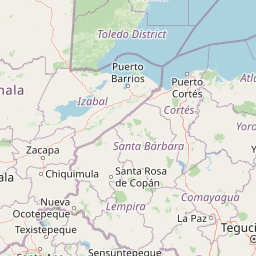
Understand where Cusuco National Park sits in Honduras through a broader geographic reading of the surrounding landscape, nearby location context, and its mapped position within the national park landscape.

How Cusuco National Park fits into Honduras

Honduras, officially the Republic of Honduras, is a Central American nation with a predominantly Mestizo population. It gained independence in 1821 and operates as a unitary presidential republic. The country faces significant economic challenges, with over 70% of its population living in poverty, though it possesses valuable natural resources including minerals, coffee, and tropical fruits.

Wider geography shaping Cusuco National Park in Honduras

Honduras is located in Central America, bordering Guatemala to the west, El Salvador to the southwest, Nicaragua to the southeast, the Pacific Ocean to the south at the Gulf of Fonseca, and the Caribbean Sea to the north at the Gulf of Honduras. The terrain includes mountainous regions and coastal lowlands.

Map view of Cusuco National Park

Use this park location map to pinpoint Cusuco National Park in Honduras, understand its exact geographic position, and read its mapped placement within the surrounding landscape more clearly.

Pigeon | © OpenStreetMap contributors
Park atlas

Trace connected protected landscapes and compare their distinct ecosystems within the broader Central American biodiversity hotspot surrounding Cusuco.

Discover Nearby Protected Areas and Regional Park Geography Beyond Cusuco National Park
Browse a curated list of national parks and significant protected areas located near Cusuco National Park, offering a comparative view of diverse Central American landscapes. Explore their mapped terrain, distinct habitats like cloud forests or dwarf forests, and conservation significance to understand regional protected-area patterns.
National parkHonduras

Montaña Santa Bárbara National Park: National Park Geography and Protected Landscape

Mapped boundaries and regional landscape context in Honduras.

Delve into the protected landscape identity of Montaña Santa Bárbara National Park, a significant national park situated in Honduras. This entry provides atlas-focused details on its geographic footprint, mapped terrain, and its role within the nation's protected areas. Understand the park's environmental setting and its importance in the context of Honduran geography for structured exploration.

Area
121.3 km²
Established
1987
IUCN
II
Relief
Mountain
National parkHonduras

Pico Pijol National Park: National Park within the Honduran Geographic Atlas

Explore its mapped boundaries and protected landscape context.

Pico Pijol National Park stands as a protected area within Honduras, offering critical insight into the nation's natural landscapes. This detail page provides essential context for understanding its geographic positioning and mapped boundaries, serving as a foundational element for broader atlas-based exploration of protected regions in Central America. Discover the park's unique identity as a national park and its contribution to regional geographic understanding.

Area
122.1 km²
Established
1987
IUCN
II
Relief
Mountain
National parkHonduras

Cerro Azul de Copán National Park: Honduras's Highland Cloud Forest Protected Area

Explore mapped geography and montane landscape context.

Cerro Azul de Copán National Park, located in the highlands of western Honduras, is a national park defined by its mountainous terrain and distinctive cloud forest environment. Rising to elevations of over 2,200 meters, the park preserves a crucial highland ecosystem known for its biodiversity and role in watershed protection. Its mapped geography offers insight into the unique montane forest structures and the broader natural landscape of Central America. Discover the protected land's specific environmental characteristics and its place within the region's atlas.

Area
154.6 km²
Established
1987
IUCN
II
Relief
Mountain
National parkHonduras

Cerro Azul Meámbar National Park: Protected Area and Mapped Landscape Context

Explore its geography and national park boundaries in Honduras.

Cerro Azul Meámbar National Park offers a unique perspective on Honduras's protected lands and national park geography. This entry provides an atlas-style overview of its mapped boundaries and its regional landscape context, crucial for understanding the distribution of conservation areas within Central America. Gain insight into its protected area status and geographic identity for focused landscape discovery.

Area
300 km²
Established
1987
IUCN
II
Relief
Mountain
National parkToledo District

Sarstoon-Temash National Park: National Park Geography and Mapped Boundaries

Explore the protected landscape of Toledo District.

Sarstoon-Temash National Park is a key protected area located in Belize's Toledo District. As a national park, it offers distinct geographic features and mapped boundaries that are crucial for understanding regional conservation landscapes. This entry provides detailed context on its protected status and geographic setting, enabling a more profound atlas-based exploration of the natural terrain and its significance.

Area
165.92 km²
Established
1994
IUCN
II
Relief
Lowland
National parkToledo District

Payne's Creek National Park: National Park Protected Landscape and Geographic Atlas

Explore mapped boundaries and regional geography in Toledo District.

Payne's Creek National Park serves as a vital protected area within Belize, recognized as a national park. This entry details its specific location within the Toledo District, emphasizing the mapped extent of its protected boundaries. It provides a foundation for understanding the park's geographic character and its role within regional conservation landscapes, ideal for atlas-based discovery.

Area
152 km²
IUCN
II
Relief
Lowland
Climate
Tropical
National parkAtlántida Department

Punta Izopo National Park: Honduran National Park with Defined Protected Boundaries

Explore the geographic setting of this protected landscape.

Punta Izopo National Park is a protected natural area situated within the Atlántida Department of Honduras. As a national park, it represents a significant entity for exploring Honduran geography and mapped conservation lands. This park detail page provides context on its protected boundaries and its role within the regional landscape atlas.

Area
112 km²
Established
1992
IUCN
II
Relief
Lowland
National parkHonduras

Jeannette Kawas National Park: A Protected Landscape within Honduran Geography

Explore the mapped boundaries and regional setting of this national park.

Jeannette Kawas National Park is a vital protected area whose geographic identity is central to understanding the natural landscape of Honduras. This page serves as a detailed exploration point, focusing on the park's mapped boundaries and its role within the country's protected lands atlas. Discover the unique aspects of this national park's terrain and its contribution to regional geographic context, providing a factual basis for atlas-driven learning.

Area
781.62 km²
Established
1994
IUCN
II
Relief
Highland

Common questions about visiting, size, designation, and location context for Cusuco National Park

Cusuco National Park FAQs for park facts, access, geography, and protected area context
Find quick answers about Cusuco National Park, including protected-area facts, park geography, trail and visitor context, and how the park fits into its surrounding country and regional landscape.
MoriAtlas Explorer

Continue Your Protected Areas Search Across the Global Atlas

Deepen your exploration by continuing the structured search for national parks and protected areas worldwide. Utilize the comprehensive filtering capabilities to compare different conservation landscapes and refine your understanding of global park geography. Discover more about the distribution and characteristics of protected natural areas.

Global natural geography