Mori Atlas logo
National parkPayne's Creek National Park

Discover the mapped boundaries and regional geography of this protected landscape in Toledo District.

Payne's Creek National Park: National Park Protected Area and Geographic Context

Payne's Creek National Park represents a significant protected natural area within Belize, designated as a national park. This page offers detailed insights into its geographic scope, focusing on its mapped boundaries and its place within the Toledo District. Users can explore the park's protected landscape identity and understand its context through an atlas-driven approach to natural geography and conservation areas.

broadleaf forestcoastal forestMaya archaeologyhowler monkeysmangrove ecosystemsToledo District

Payne's Creek National Park

National park

Park overview

Structured park overview, official facts, and landscape profile for Payne's Creek National Park

Payne's Creek National Park park facts, protected area profile, and essential visitor context
Review the core facts for Payne's Creek National Park, including designation, size, terrain, visitor scale, habitats, and operating context in one park-focused overview.

About Payne's Creek National Park

Payne's Creek National Park occupies a distinctive position in Belize's protected area network, combining ecological conservation with significant archaeological resources. The park spans the coastal zone and lower riverine environments of the Monkey River watershed in the Toledo District, one of the most ecologically diverse regions of Belize. The protected area was established to safeguard the remaining forest cover and associated wildlife while allowing for the restoration of degraded lands that had previously been converted to banana cultivation and traditional agriculture.

The park's landscape character is defined by the transition from inland broadleaf forests to coastal mangrove systems along the Monkey River estuary. This ecological gradient creates diverse habitat conditions supporting a range of species. The regenerating secondary forest, which has matured significantly since the cessation of intensive agricultural use, now provides substantial canopy habitat for arboreal wildlife including notable populations of black howler monkeys. The mangrove areas along the watercourse provide critical coastal habitat and serve important ecological functions related to water quality and coastal protection.

The archaeological significance of Payne's Creek adds a dimension of cultural heritage that distinguishes it from many other protected areas in Belize. The discovery of at least four Maya sites within the park boundaries, including submerged archaeological features, has provided researchers with valuable insights into Classic Maya coastal adaptation and economic activities. The preservation of wooden artifacts in the underwater context is particularly rare and offers unique opportunities for understanding Maya material culture and daily life.

Quick facts and research context for Payne's Creek National Park

Located in southern Belize's Toledo District, Payne's Creek National Park covers 152 square kilometers along the Monkey River estuary. The protected area encompasses both mature broadleaf forest and coastal mangrove habitats. The park is recognized for its population of black howler monkeys, which thrive in the secondary forest that has regenerated following historical agricultural disturbance. The area also holds significant Maya archaeological importance, with submerged archaeological sites documenting ancient salt production activities.

Park context

Deeper park guide and search-rich context for Payne's Creek National Park

Payne's Creek National Park history, landscape, wildlife, and travel context
Explore Payne's Creek National Park through its history, landscape character, ecosystems, wildlife, conservation priorities, cultural context, and seasonal travel timing in a structured park guide built for atlas discovery and search intent.

Why Payne's Creek National Park stands out

Payne's Creek National Park is best known for its combination of coastal forest protection and Maya archaeological heritage. The park protects important populations of black howler monkeys within regenerating broadleaf forest that has recovered from historical banana farming and slash-and-burn agriculture. Perhaps most distinctively, the park contains submerged Maya sites with preserved wooden artifacts and architectural elements, including saltworks dating from 300 to 900 AD that demonstrate sophisticated ancient maritime trade and food preservation practices.

Payne's Creek National Park history and protected-area timeline

Payne's Creek National Park was established as part of Belize's broader initiative to protect remaining forest areas and restore degraded lands across the country. The park area experienced significant historical disturbance from banana farming operations and traditional slash-and-burn agricultural practices that cleared large areas of original forest cover. Following the transition away from intensive agricultural use, the land began a natural process of forest succession that has produced the current regenerating secondary forest condition.

The discovery and documentation of Maya archaeological sites within the park represents an important chapter in understanding the region's pre-Columbian history. Archaeological investigations have revealed that the area served as a significant center for salt production during the Classic Maya period, with evidence of sophisticated facilities for processing and preserving seafood using salt. The submerged nature of some archaeological deposits has allowed for exceptional preservation of organic materials including wooden tools and structural elements that would typically not survive in terrestrial contexts.

Payne's Creek National Park landscape and geographic character

The physical landscape of Payne's Creek National Park is characterized by its position along the lower Monkey River, where the waterway transitions from its inland course to the coastal estuary. The terrain is predominantly low-lying, with elevations that place much of the area within the coastal wetland zone. The broadleaf forest dominates the inland portions of the park, characterized by tropical tree species that form a dense canopy. Along the watercourse and coastal fringe, mangrove ecosystems replace the terrestrial forest, creating a distinctiveVegetation transition from freshwater to brackish and saltwater conditions.

The Monkey River provides the primary hydrological feature of the park, creating a dendritic drainage pattern that influences both the distribution of habitats and the accessibility of different areas. The river's estuary zone supports extensive mangrove forest that fringe the water's edge and extend onto adjacent low-lying terrain. This coastal landscape configuration provides important ecological functions while also creating the conditions that have allowed for the preservation of archaeological materials at submerged sites.

Payne's Creek National Park ecosystems, habitats, and plant life

The ecological character of Payne's Creek National Park reflects its position within the broader Mesoamerican biodiversity hotspot. The park protects a continuum of habitats from upland broadleaf forest through the riparian corridor to coastal mangrove systems. The regenerating secondary forest, while not representing old-growth conditions, has developed sufficient canopy complexity to support viable populations of forest-dwelling species including the notable black howler monkey populations.

The mangrove ecosystems along the Monkey River estuary represent a critical habitat type within the coastal zone, providing breeding and nursery functions for marine and estuarine species while also serving as carbon sinks and coastal protection features. The intersection of terrestrial and marine environments creates ecological conditions that support high biological productivity and species diversity. The protected area status provides a framework for maintaining these ecological processes while allowing for continued forest maturation and habitat restoration.

Payne's Creek National Park wildlife and species highlights

Payne's Creek National Park is notable for its populations of black howler monkeys, which are among the most recognizable megafauna species in Belize's forests. These primates live in social groups called troops, with individual animals maintaining home ranges of 40,000 to 70,000 square meters within the forest canopy. The regenerating broadleaf forest provides the foliar resources and structural habitat necessary for maintaining viable howler populations, and the species appears to have recovered substantially as the forest has matured since agricultural disturbance ceased.

Beyond the howler monkeys, the forest and mangrove habitats support diverse faunal communities including numerous bird species, reptiles, and smaller mammals. The proximity of freshwater and saltwater environments creates conditions that support both terrestrial and aquatic species assemblages. While specific species inventories are limited in the available sources, the broader Toledo District region is recognized for high biodiversity, and the protected area provides habitat connectivity for species moving between larger conservation areas.

Payne's Creek National Park conservation status and protection priorities

Payne's Creek National Park contributes to Belize's national protected area system as an IUCN Category II conservation designation, providing formal protection for the forest and coastal ecosystems within its boundaries. The park's establishment reflects a recognition that the combination of ecological and archaeological values warranted conservation attention, and the protected area status provides regulatory framework for preventing future habitat conversion or resource extraction.

The conservation significance of the park is enhanced by its role in protecting habitat connectivity within the broader Toledo District landscape. As forest regeneration has progressed since the cessation of agricultural activities, the area has become increasingly valuable as wildlife habitat. The protection of the Monkey River corridor provides movement pathways for species and helps maintain ecological processes that depend on connectivity between inland and coastal environments. The submerged archaeological sites add a conservation dimension focused on cultural heritage alongside the ecological values.

Payne's Creek National Park cultural meaning and human context

The cultural context of Payne's Creek National Park is defined primarily by the presence of Maya archaeological sites that document the region's pre-Columbian occupation. The discovery of at least four distinct Maya sites within the park demonstrates the area's significance in ancient Maya settlement patterns. Most remarkable is the presence of submerged archaeological deposits containing preserved wooden artifacts and portions of wooden structures, rare findings in Maya archaeology due to the typically tropical conditions that cause rapid decay of organic materials.

The submerged Maya saltworks represent particularly significant findings, dating from 300 to 900 AD and demonstrating that the coastal area served as an important center for salt production. These facilities included wooden kitchens where fish and meat were salted and preserved for transport to inland markets. This evidence points to sophisticated economic organization and maritime trade connections during the Classic Maya period. The cultural resources add a dimension to the park's significance that extends beyond ecological conservation to include the preservation of tangible heritage representing thousands of years of human presence in the region.

Top sights and standout views in Payne's Creek National Park

Payne's Creek National Park stands out for its combination of regenerating tropical forest, coastal mangrove ecosystems, and significant Maya archaeological resources. The park's black howler monkey populations represent a visible and accessible wildlife viewing opportunity within the secondary forest that has matured along the Monkey River corridor. The archaeological sites, particularly the submerged saltworks with preserved wooden artifacts, provide a rare window into Classic Maya coastal economy and daily life. The transition from inland forest to coastal mangrove creates a landscape diversity that supports varied ecological communities within a single protected area.

Best time to visit Payne's Creek National Park

The optimal time to visit Payne's Creek National Park generally corresponds to the dry season months from December through May, when rainfall is reduced and trail conditions are most favorable for exploration. The dry season period also offers clearer conditions for wildlife viewing and reduces the likelihood of disrupting access due to high water levels along the river corridor. However, the park's year-round accessibility may vary, and visitors should check current conditions before planning trips. The wet season from June through November brings increased precipitation that can affect trail conditions and river navigation.

Park location guide

Geography guide, regional context, and park location map for Payne's Creek National Park

Payne's Creek National Park park geography, regions, and map view in Belize
Understand where Payne's Creek National Park sits in Belize through a broader geographic reading of the surrounding landscape, nearby location context, and its mapped position within the national park landscape.

How Payne's Creek National Park fits into Belize

Belize is a Caribbean and Central American nation located on the Yucatán Peninsula's eastern coast. It gained independence from Britain in 1981 and remains a Commonwealth realm with Charles III as monarch. The country features diverse cultures, multiple spoken languages including Belizean Creole, Spanish, and Mayan languages, and is recognized for its rich marine biodiversity including the Mesoamerican Barrier Reef.

Wider geography shaping Payne's Creek National Park in Belize

Belize occupies the eastern coast of the Yucatán Peninsula, stretching approximately 290 kilometres long and 110 kilometres wide. It is bordered by Mexico to the north and west, Guatemala to the south and west, and the Caribbean Sea to the east. The country also shares a maritime boundary with Honduras. The landscape includes coastal plains, swamps, and the Maya Mountains in the interior.

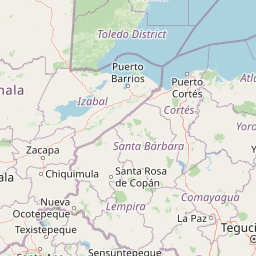
Map view of Payne's Creek National Park

Use this park location map to pinpoint Payne's Creek National Park in Belize, understand its exact geographic position, and read its mapped placement within the surrounding landscape more clearly.

Pigeon | © OpenStreetMap contributors

Location context for Payne's Creek National Park

Toledo District
Park atlas

Discover surrounding protected landscapes, coastal geography, and Maya heritage sites beyond Payne's Creek.

Find Other National Parks and Protected Areas Near Payne's Creek National Park
After exploring Payne's Creek National Park, browse other national parks and protected areas across southern Belize, encompassing diverse coastal and lowland forest landscapes. Comparing these regional protected areas provides valuable geographic context for understanding conservation strategies, ecological transitions, and the distribution of Maya archaeological sites.
National parkCayo District

Chiquibul National Park: Detailed Protected Area and National Park Geography

Explore mapped boundaries within Belize's Cayo District.

Chiquibul National Park offers a critical lens through which to view Belize's protected natural areas. As a designated national park located in the Cayo District, it provides essential data for understanding the extent and geographic positioning of conservation landscapes. Users can engage with detailed map information to trace the park's borders and appreciate its role within the national atlas of protected territories.

Area
1,073 km²
Established
1995
IUCN
II
Relief
Mountain
National parkToledo District

Sarstoon-Temash National Park: National Park Geography and Mapped Boundaries

Explore the protected landscape of Toledo District.

Sarstoon-Temash National Park is a key protected area located in Belize's Toledo District. As a national park, it offers distinct geographic features and mapped boundaries that are crucial for understanding regional conservation landscapes. This entry provides detailed context on its protected status and geographic setting, enabling a more profound atlas-based exploration of the natural terrain and its significance.

Area
165.92 km²
Established
1994
IUCN
II
Relief
Lowland
National parkCayo District

St. Herman's Blue Hole National Park: National Park Protected Landscape and Geographic Setting

Mapped Boundaries and Regional Landscape Context in Cayo District

St. Herman's Blue Hole National Park is an integral protected landscape within Belize, situated in the Cayo District. This national park offers specific geographic features and mapped boundaries essential for understanding its place within regional conservation. MoriAtlas provides detailed context for exploring the park's protected terrain and its contribution to the broader geographic atlas, focusing on landscape identity and mapped outlines for analytical discovery.

Area
2 km²
Established
1986
Climate
Tropical
Access
Easy access
National parkCayo District

Elijio Panti National Park: Protected Landscape and Regional Geography in Cayo District

Explore the mapped boundaries and geographic features of this national park.

Elijio Panti National Park offers a unique focus on protected landscape discovery within Belize. Situated in the Cayo District, this national park provides a specific geographic anchor for understanding natural terrain and mapped boundaries. The page details its identity as a protected area, contributing to a structured atlas of conservation lands and regional geography.

Area
52.645 km²
Established
2001
IUCN
II
Relief
Mountain
National parkHonduras

Cusuco National Park: Protected Landscape and Geographic Atlas in Honduras

Explore mapped boundaries and regional natural terrain.

Cusuco National Park represents a crucial protected area within Honduras, offering rich detail for geographic exploration. This entry focuses on its identity as a national park, detailing its mapped boundaries and its contribution to the broader landscape context of Central America. Users can discover the specific protected lands and natural terrain that characterize this significant conservation site, building a foundational understanding for atlas-based study.

Area
234.4 km²
Established
1959
IUCN
II
Relief
Mountain
National parkCayo District

Guanacaste National Park National Park: Explore its Protected Landscape and Geographic Setting

Mapped natural terrain and regional context within Cayo District.

Delve into the specifics of Guanacaste National Park, a protected national park located in the Cayo District of Belize. This detail page is designed for atlas exploration, offering insights into the park's geographic boundaries and its significance as a defined natural landscape. Understand how this protected area fits into the regional geography and contributes to the mapped natural heritage of Belize.

Area
0.2 km²
Established
1973
IUCN
II
Climate
Tropical
National parkHonduras

Cerro Azul de Copán National Park: Honduras's Highland Cloud Forest Protected Area

Explore mapped geography and montane landscape context.

Cerro Azul de Copán National Park, located in the highlands of western Honduras, is a national park defined by its mountainous terrain and distinctive cloud forest environment. Rising to elevations of over 2,200 meters, the park preserves a crucial highland ecosystem known for its biodiversity and role in watershed protection. Its mapped geography offers insight into the unique montane forest structures and the broader natural landscape of Central America. Discover the protected land's specific environmental characteristics and its place within the region's atlas.

Area
154.6 km²
Established
1987
IUCN
II
Relief
Mountain
National parkAtlántida Department

Punta Izopo National Park: Honduran National Park with Defined Protected Boundaries

Explore the geographic setting of this protected landscape.

Punta Izopo National Park is a protected natural area situated within the Atlántida Department of Honduras. As a national park, it represents a significant entity for exploring Honduran geography and mapped conservation lands. This park detail page provides context on its protected boundaries and its role within the regional landscape atlas.

Area
112 km²
Established
1992
IUCN
II
Relief
Lowland

Common questions about visiting, size, designation, and location context for Payne's Creek National Park

Payne's Creek National Park FAQs for park facts, access, geography, and protected area context
Find quick answers about Payne's Creek National Park, including protected-area facts, park geography, trail and visitor context, and how the park fits into its surrounding country and regional landscape.
MoriAtlas Explorer

Continue Your Protected Areas Search Across the Global Atlas

Deepen your exploration by continuing the structured search for national parks and protected areas worldwide. Utilize the comprehensive filtering capabilities to compare different conservation landscapes and refine your understanding of global park geography. Discover more about the distribution and characteristics of protected natural areas.

Global natural geography