Mori Atlas logo
National parkGuanacaste National Park

Trace the mapped boundaries of this national park within its regional setting.

Guanacaste National Park: Protected Landscape and Geographic Context in Cayo District, Belize

Guanacaste National Park stands as a significant protected natural area within Belize's Cayo District. This page offers an in-depth atlas-style exploration of the park, focusing on its protected landscape identity and its place within the broader regional geography. Understand the park's mapped boundaries and its role as a distinct natural territory for informed geographic discovery.

Tropical ForestBirdwatchingAccessible NatureSmall Protected AreaCayo DistrictBelize Audubon Society

Guanacaste National Park

National park

Park overview

Structured park overview, official facts, and landscape profile for Guanacaste National Park

Guanacaste National Park park facts, protected area profile, and essential visitor context
Review the core facts for Guanacaste National Park, including designation, size, terrain, visitor scale, habitats, and operating context in one park-focused overview.

About Guanacaste National Park

Guanacaste National Park occupies a distinctive place in Belize's protected area network as the most accessible park managed by the Belize Audubon Society. Located on the north side of the Western Highway just east of the Roaring Creek bridge, the park sits roughly midway between Belize City and the Guatemalan border, with the capital city of Belmopan nearby. The park's landscape features a mix of tropical forest habitats that, while not extensive, support remarkable biodiversity for the area. The original guanacaste tree that inspired the park's name remains a central feature, standing as a living testament to the park's origin story and the historical relationship between local communities and the forest. Visitors can explore over two miles of maintained trails that wind through different habitat types, with the park recommending long-sleeved clothing and sturdy footwear to protect against contact with poisonous plants common in the area. The park's educational center provides interpretive context for visitors seeking to understand the ecological and cultural significance of the area.

Quick facts and research context for Guanacaste National Park

Guanacaste National Park covers 50 acres in central Belize's Cayo District, making it one of the country's smaller protected areas but also its most accessible. The park was established as a Crown Reserve in 1973 and gained national park designation in 1990, now under Belize Audubon Society management. Its namesake guanacaste tree is a local landmark, notable for its unusual triple-trunked form that historically saved it from being harvested for timber. The park features over two miles of maintained hiking trails, an educational center, and visitor facilities. With more than one hundred bird species recorded, the park serves as an important birdwatching destination in Belize.

Park context

Deeper park guide and search-rich context for Guanacaste National Park

Guanacaste National Park history, landscape, wildlife, and travel context
Explore Guanacaste National Park through its history, landscape character, ecosystems, wildlife, conservation priorities, cultural context, and seasonal travel timing in a structured park guide built for atlas discovery and search intent.

Why Guanacaste National Park stands out

Guanacaste National Park is best known for its iconic guanacaste tree that gave the park its name, a massive specimen whose unusual triple-trunked growth pattern saved it from being cut down during logging operations. The park has also gained recognition as a premier birdwatching destination in Belize, with more than one hundred documented avian species including Lesson's motmot, black-faced antthrush, red-lored amazon, and magnolia warbler. Its exceptional accessibility from Belize's major population centers, combined with well-maintained trails and family-friendly facilities, makes it stand out among Belize's protected areas.

Guanacaste National Park history and protected-area timeline

Guanacaste National Park traces its origins to 1973 when it was established as a Crown Reserve, reflecting Belize's early commitment to protecting significant natural areas. The park's name and identity come from a single remarkable guanacaste tree that stood in the area, its trunk dividing into three bases rather than the typical single trunk. This unusual growth pattern reduced the tree's commercial value as timber, allowing it to survive the logging operations that cleared much of the surrounding forest. The tree's survival became a local landmark and the natural symbol around which the protected area coalesced. After seventeen years as a Crown Reserve, the area achieved full national park status in 1990, elevating its legal protection and formalizing its role in Belize's conservation network. The Belize Audubon Society subsequently assumed management responsibility, bringing professional conservation management and visitor services to the property. The park's proximity to major population centers and the Western Highway made it a natural choice for public accessibility, distinguishing it from more remote protected areas.

Guanacaste National Park landscape and geographic character

The physical landscape of Guanacaste National Park reflects the tropical forest environment of central Belize's Cayo District. The terrain consists of relatively flat lowland areas characteristic of the region, with the park's 50-acre extent representing a remnant of the broader tropical forest ecosystem that once covered much of this part of Belize. The park's setting along the Western Highway places it in a transitional zone between the more developed agricultural lands of central Belize and the remaining forested areas. The famous guanacaste tree that gives the park its name dominates the landscape, its massive trunk and wide canopy serving as a visual anchor for visitors. Beyond the namesake tree, the forest contains several other notable tree species including rain tree, mamey sapote, Brazilian firetree, and Honduras mahogany, which is Belize's national tree. The maintained trail system allows visitors to experience this forest environment while providing access to different areas of the property.

Guanacaste National Park ecosystems, habitats, and plant life

The ecological character of Guanacaste National Park exemplifies the tropical forest biodiversity for which Belize has earned recognition. The park's tree composition includes several species of conservation and economic significance, with the Honduras mahogany standing out as Belize's national tree. The forest supports a complex web of ecological relationships typical of Neotropical forest systems, though the park's small size means it functions as a fragment of the larger ecosystem that once existed in the Cayo District. The diversity of bird species recorded, exceeding one hundred, indicates the ecological value the area provides as habitat and corridor. The park's proximity to the Western Highway and human population centers creates both accessibility benefits and conservation challenges, as the area exists in a landscape influenced by human activity.

Guanacaste National Park wildlife and species highlights

Guanacaste National Park supports a diverse array of wildlife despite its modest size, with birdlife being particularly notable. The park has documented over one hundred bird species, making it a significant destination for birdwatching in Belize. Notable avian residents include Lesson's motmot, black-faced antthrush, smoky-brown woodpecker, black-headed trogon, red-lored amazon, magnolia warbler, belted kingfisher, and bright-rumped attila. The mammal community includes white-tailed deer, jaguarundi, kinkajou, and nine-banded armadillo, representing both common species and those of conservation interest. The variety of wildlife present demonstrates how even smaller protected areas can provide valuable habitat within Belize's broader conservation landscape, particularly for species that can utilize fragmented forest areas or benefit from the educational and protective value such parks provide.

Guanacaste National Park conservation status and protection priorities

Guanacaste National Park contributes to Belize's conservation framework as a protected area managed by the Belize Audubon Society, one of the nation's primary conservation organizations. While the park's 50-acre size is modest, it serves important functions as an accessible nature education site and as a pocket of protected habitat within the developed landscape of central Belize. The park's designation as an IUCN Category II protected area (national park) reflects its primary conservation purpose of protecting natural ecosystems while allowing compatible public use. The management approach emphasizes visitor education through its educational center and trail system, creating awareness of biodiversity and conservation among the many visitors who come from Belize's major cities. The park's status as the most accessible of the Audubon Society's properties makes it an important gateway for public engagement with conservation in Belize.

Guanacaste National Park cultural meaning and human context

The cultural context of Guanacaste National Park is closely tied to the historical relationship between Belize's communities and the forest landscape. The park's origin story centers on the guanacaste tree whose unusual triple-trunked form reflects natural variation in the species, but whose survival became a matter of local knowledge and eventual protection. The tree escaped logging not through formal conservation measures but through its own physical characteristics that rendered it less commercially valuable, a serendipitous outcome that became embedded in local memory and eventually gave the protected area its identity. The park's location near Belmopan and along the Western Highway places it in a region where human settlement and development have transformed much of the original forest, making the preserved area a remnant of the historical landscape.

Top sights and standout views in Guanacaste National Park

The signature highlight of Guanacaste National Park is the legendary guanacaste tree that inspired its creation and name, a living landmark whose unusual triple-trunked form has made it a symbol of natural endurance. The exceptional bird diversity, with over one hundred species recorded, positions the park as a premier birdwatching destination that offers accessible wildlife observation in a protected setting. The well-maintained trail system spanning over two miles provides visitors with meaningful forest exploration opportunities, while the educational center enhances the visit with interpretive context. The park's status as the most accessible of Belize's Audubon-managed protected areas makes it a model for balancing conservation with public engagement, offering an entry point for residents and tourists to experience Belize's natural heritage without requiring travel to remote locations.

Best time to visit Guanacaste National Park

Guanacaste National Park is open year-round for daytime visitors, with operating hours from 8 am to 4:30 pm. The dry season from December through May generally offers more comfortable conditions for hiking and wildlife observation, with reduced rainfall making trail conditions more predictable. However, the wet season from June through November brings lusher vegetation and different bird activity patterns that may appeal to dedicated birdwatchers. The park's small size and trail system can be explored in a few hours, making it suitable for day trips from Belize City, Belmopan, or other nearby population centers. Visitors should note the park's recommendation to wear long-sleeved shirts, sturdy shoes, and pants to protect against contact with poisonous plants that occur in the area.
Park location guide

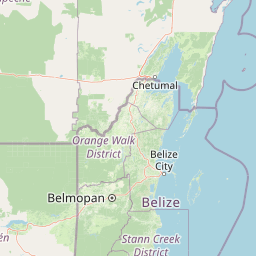
Geography guide, regional context, and park location map for Guanacaste National Park

Guanacaste National Park park geography, regions, and map view in Belize
Understand where Guanacaste National Park sits in Belize through a broader geographic reading of the surrounding landscape, nearby location context, and its mapped position within the national park landscape.

How Guanacaste National Park fits into Belize

Belize is a Caribbean and Central American nation located on the Yucatán Peninsula's eastern coast. It gained independence from Britain in 1981 and remains a Commonwealth realm with Charles III as monarch. The country features diverse cultures, multiple spoken languages including Belizean Creole, Spanish, and Mayan languages, and is recognized for its rich marine biodiversity including the Mesoamerican Barrier Reef.

Wider geography shaping Guanacaste National Park in Belize

Belize occupies the eastern coast of the Yucatán Peninsula, stretching approximately 290 kilometres long and 110 kilometres wide. It is bordered by Mexico to the north and west, Guatemala to the south and west, and the Caribbean Sea to the east. The country also shares a maritime boundary with Honduras. The landscape includes coastal plains, swamps, and the Maya Mountains in the interior.

Map view of Guanacaste National Park

Use this park location map to pinpoint Guanacaste National Park in Belize, understand its exact geographic position, and read its mapped placement within the surrounding landscape more clearly.

Pigeon | © OpenStreetMap contributors

Location context for Guanacaste National Park

Cayo District
Park atlas

Explore the diverse protected landscapes of Belize, mapping nearby reserves and comparing features within the Cayo District and beyond.

Discover Other National Parks and Protected Areas Near Guanacaste National Park, Belize
Browse a curated list of national parks and protected areas geographically relevant to Guanacaste National Park, tracing the spread of conservation efforts across central Belize's tropical forest ecosystems. Comparing these protected landscapes helps contextualize their distinct features, biodiversity, and accessibility within the broader regional park geography surrounding the Cayo District.
National parkCayo District

St. Herman's Blue Hole National Park: National Park Protected Landscape and Geographic Setting

Mapped Boundaries and Regional Landscape Context in Cayo District

St. Herman's Blue Hole National Park is an integral protected landscape within Belize, situated in the Cayo District. This national park offers specific geographic features and mapped boundaries essential for understanding its place within regional conservation. MoriAtlas provides detailed context for exploring the park's protected terrain and its contribution to the broader geographic atlas, focusing on landscape identity and mapped outlines for analytical discovery.

Area
2 km²
Established
1986
Climate
Tropical
Access
Easy access
National parkCayo District

Elijio Panti National Park: Protected Landscape and Regional Geography in Cayo District

Explore the mapped boundaries and geographic features of this national park.

Elijio Panti National Park offers a unique focus on protected landscape discovery within Belize. Situated in the Cayo District, this national park provides a specific geographic anchor for understanding natural terrain and mapped boundaries. The page details its identity as a protected area, contributing to a structured atlas of conservation lands and regional geography.

Area
52.645 km²
Established
2001
IUCN
II
Relief
Mountain
National parkCayo District

Chiquibul National Park: Detailed Protected Area and National Park Geography

Explore mapped boundaries within Belize's Cayo District.

Chiquibul National Park offers a critical lens through which to view Belize's protected natural areas. As a designated national park located in the Cayo District, it provides essential data for understanding the extent and geographic positioning of conservation landscapes. Users can engage with detailed map information to trace the park's borders and appreciate its role within the national atlas of protected territories.

Area
1,073 km²
Established
1995
IUCN
II
Relief
Mountain
National parkToledo District

Payne's Creek National Park: National Park Protected Landscape and Geographic Atlas

Explore mapped boundaries and regional geography in Toledo District.

Payne's Creek National Park serves as a vital protected area within Belize, recognized as a national park. This entry details its specific location within the Toledo District, emphasizing the mapped extent of its protected boundaries. It provides a foundation for understanding the park's geographic character and its role within regional conservation landscapes, ideal for atlas-based discovery.

Area
152 km²
IUCN
II
Relief
Lowland
Climate
Tropical
National parkAmbergris Caye

Bacalar Chico National Park and Marine Reserve: Belize National Park & Marine Reserve Atlas

Explore Ambergris Caye's unique barrier island and reef geography.

Discover the extensive protected territory of Bacalar Chico National Park and Marine Reserve, a critical national park and marine reserve situated on Ambergris Caye, Belize. This protected area showcases a rich diversity of landscapes, from rare littoral forests and inland wetlands to vital coral reefs and sea grass beds integral to the Mesoamerican Barrier Reef System. Its unique geographic position and ecological significance make it a key destination for understanding Belize's conservation landscapes and mapped marine environments.

Area
62.8 km²
Established
1996
IUCN
IV
Relief
Lowland
National parkToledo District

Sarstoon-Temash National Park: National Park Geography and Mapped Boundaries

Explore the protected landscape of Toledo District.

Sarstoon-Temash National Park is a key protected area located in Belize's Toledo District. As a national park, it offers distinct geographic features and mapped boundaries that are crucial for understanding regional conservation landscapes. This entry provides detailed context on its protected status and geographic setting, enabling a more profound atlas-based exploration of the natural terrain and its significance.

Area
165.92 km²
Established
1994
IUCN
II
Relief
Lowland
National parkPetén

El Rosario National Park: Protected National Park & Mapped Landscape Explorer

Geographic context and protected area boundaries within Petén.

Delve into the protected landscape of El Rosario National Park, identified as a national park within Guatemala's Petén region. This page provides an atlas-centric view, highlighting its mapped park boundaries and its significance in the regional geography. Understand the park as a distinct protected area contributing to the natural landscape context, ideal for geographic exploration and detailed mapping.

Area
11.05 km²
Established
1980
IUCN
II
Relief
Lowland
National parkHonduras

Cusuco National Park: Protected Landscape and Geographic Atlas in Honduras

Explore mapped boundaries and regional natural terrain.

Cusuco National Park represents a crucial protected area within Honduras, offering rich detail for geographic exploration. This entry focuses on its identity as a national park, detailing its mapped boundaries and its contribution to the broader landscape context of Central America. Users can discover the specific protected lands and natural terrain that characterize this significant conservation site, building a foundational understanding for atlas-based study.

Area
234.4 km²
Established
1959
IUCN
II
Relief
Mountain

Common questions about visiting, size, designation, and location context for Guanacaste National Park

Guanacaste National Park FAQs for park facts, access, geography, and protected area context
Find quick answers about Guanacaste National Park, including protected-area facts, park geography, trail and visitor context, and how the park fits into its surrounding country and regional landscape.
MoriAtlas Explorer

Continue Your Protected Areas Search Across the Global Atlas

Deepen your exploration by continuing the structured search for national parks and protected areas worldwide. Utilize the comprehensive filtering capabilities to compare different conservation landscapes and refine your understanding of global park geography. Discover more about the distribution and characteristics of protected natural areas.

Global natural geography