

Mori Atlas logo
National parkD'Entrecasteaux National Park

Navigate the mapped boundaries and regional geography of this significant Western Australian protected area.

D'Entrecasteaux National Park: National Park & Protected Landscape Discovery

D'Entrecasteaux National Park represents a vital protected landscape within the vast geographic expanse of Western Australia. As a designated National Park, it offers users a singular focus for atlas exploration, allowing for detailed examination of its mapped boundaries and regional context. Understanding this park's place within the broader natural terrain of Western Australia is key to appreciating its conservation significance and geographic identity.

coastal national parksWestern Australiavolcanic landscapesbasalt cliffswetland ecosystemsseabird colonies

D'Entrecasteaux National Park

National park

Park overview

Structured park overview, official facts, and landscape profile for D'Entrecasteaux National Park

D'Entrecasteaux National Park park facts, protected area profile, and essential visitor context
Review the core facts for D'Entrecasteaux National Park, including designation, size, terrain, visitor scale, habitats, and operating context in one park-focused overview.

About D'Entrecasteaux National Park

D'Entrecasteaux National Park represents one of Western Australia's most geographically diverse protected areas, encompassing a rich tapestry of coastal, forest, wetland, and dune environments along the state's southern frontier. The park's 130 kilometre coastline features dramatic variations in character, from the rugged basalt sea cliffs at Black Point to the sandy beaches and dune systems that extend toward Long Point in the east. Inland, the landscape transitions through coastal heath communities and occasional pockets of karri forest before reaching the extensive wetland systems that characterize the park's interior. Several significant river systems, including the Warren, Donnelly, and Shannon, flow through the park and empty into the Southern Ocean, creating estuarine environments that support diverse ecological communities. The park's establishment in 1980 recognized the need to protect this significant coastal stretch and the unique geological and ecological values it contains, including the internationally important seabird nesting colonies that have made Sandy Island a focal point for conservation research and monitoring.

Quick facts and research context for D'Entrecasteaux National Park

D'Entrecasteaux National Park covers 1,187.79 square kilometres along the south coast of Western Australia in the state's Southwest Australia region. The park encompasses a coastal strip stretching 130 kilometres between Black Point and Long Point, with interior reaches extending up to 20 kilometres inland. The landscape is characterized by volcanic basalt formations at Black Point, the massive Yeagarup mobile sand dune system, coastal heath communities, patches of karri forest, and extensive wetland systems including Lake Jasper and the Blackwater wetlands. Major river systems including the Warren, Donnelly, and Shannon traverse the park before entering the Southern Ocean. The park contains the only significantly unaltered inlet system in the South West region at Broke Inlet.

Park context

Deeper park guide and search-rich context for D'Entrecasteaux National Park

D'Entrecasteaux National Park history, landscape, wildlife, and travel context
Explore D'Entrecasteaux National Park through its history, landscape character, ecosystems, wildlife, conservation priorities, cultural context, and seasonal travel timing in a structured park guide built for atlas discovery and search intent.

Why D'Entrecasteaux National Park stands out

D'Entrecasteaux National Park is distinguished by its remarkable geological features, most notably the basalt column formations at Black Point that were created by a lava flow approximately 135 million years ago, and the Yeagarup dune, one of the largest mobile sand dune systems in the southern hemisphere spanning ten kilometres in length. The park is also internationally significant for its seabird populations, particularly on Sandy Island at Windy Harbour, where approximately 300,000 breeding pairs of flesh-footed shearwaters nest annually, representing a substantial proportion of the global population. The combination of coastal cliff landscapes, ancient volcanic formations, moving dunes, and wetland systems within a single protected area makes this park particularly notable within Western Australia's conservation estate.

D'Entrecasteaux National Park history and protected-area timeline

The park bears the name of French Admiral Antoine Bruni d'Entrecasteaux, who sailed along this portion of the Southern Ocean coastline in 1792 during a voyage of exploration. D'Entrecasteaux was the first European to sight and formally document the area, identifying the coastal feature that would later become known as Point D'Entrecasteaux. European settlement of the surrounding region followed in subsequent decades, with the land ultimately being set aside for conservation protection in 1980, establishing the national park boundaries that exist today. The Department of Environment and Conservation, now part of the broader parks and wildlife service, has managed the protected area since its establishment, maintaining the balance between public access and environmental protection that characterizes the park's contemporary management approach.

D'Entrecasteaux National Park landscape and geographic character

The physical landscape of D'Entrecasteaux National Park encompasses an extraordinary range of landforms within a relatively compact coastal strip. The park's western terminus at Black Point presents one of its most dramatic geological features, where ancient basalt columns rise from the sea, the result of a massive lava flow that occurred approximately 135 million years ago. These columnar basalts create a visually striking cliff formation that stands in stark contrast to the sandy beaches that dominate much of the remaining coastline. West of Lake Jasper lies the Yeagarup dune, a spectacular mobile sand dune system stretching ten kilometres in length that continues to shift and migrate across the landscape, reshaping the coastal plain in a manner rarely seen in Australian protected areas. The park's eastern section contains Broke Inlet, notable as the only inlet system in the South West region that has not been significantly altered within its catchment area. Here, gneiss basement rocks project through the shallow waters to form small islands that add further geological interest to the coastal scenery. Between these major landmarks, the landscape transitions through coastal cliffs, heath-covered dune systems, forest pockets, and the flat terrain surrounding the park's major wetland basins.

D'Entrecasteaux National Park ecosystems, habitats, and plant life

The ecological character of D'Entrecasteaux National Park reflects the convergence of multiple distinct habitat types within a coastal protected area. The park's vegetation communities include coastal heath dominating the dune systems, patches of karri forest in sheltered inland positions, and extensive wetland vegetation surrounding the lake and inlet systems. The Blackwater area represents one of the larger scale wetland complexes within the park, while Lake Jasper and Lake Yeagarup provide significant freshwater habitats within the coastal plain. These wetland systems, combined with the river estuaries where the Warren, Donnelly, and Shannon rivers enter the ocean, create a network of aquatic habitats that support diverse bird communities and aquatic organisms. The coastal marine environment adjacent to the park also contributes to its ecological significance, with the productive Southern Ocean waters supporting marine mammals and seabirds that rely on the coastal zone for foraging and breeding.

D'Entrecasteaux National Park wildlife and species highlights

D'Entrecasteaux National Park supports significant wildlife populations, with the park's offshore islands playing a particularly important role in seabird conservation. Sandy Island at Windy Harbour represents one of the most important seabird nesting sites in southern Australia, hosting up to 300,000 breeding pairs of flesh-footed shearwaters annually. This concentration of breeding seabirds represents a remarkably high proportion of the global population for this species, making the park internationally significant for seabird conservation. The wetland systems throughout the park provide habitat for waterbird species including ducks, swans, and wading birds, while the forest and heath communities support a variety of terrestrial bird species. The rivers and inlets contain native fish species and support recreational fishing activities that are popular among park visitors.

D'Entrecasteaux National Park conservation status and protection priorities

The park's conservation significance stems from the combination of its geological heritage, intact coastal ecosystems, and the presence of internationally important seabird populations. The protection of Broke Inlet represents a particularly notable conservation achievement, as it remains the only inlet in the South West region that has not been significantly altered by human activity within its catchment, preserving natural hydrological processes and associated ecological communities. Sandy Island's status as a major seabird nesting site has driven specific conservation management attention to minimize disturbance during the breeding season. The variety of landscape types protected within the park, from coastal cliffs to wetlands to forest patches, maintains ecological connectivity and supports biodiversity conservation at a landscape scale within the Southwest Australia biodiversity hotspot.

D'Entrecasteaux National Park cultural meaning and human context

While the park's European naming derives from French Admiral d'Entrecasteaux's 1792 voyage of exploration, the land itself has been home to Aboriginal peoples for thousands of years prior to European contact. The southwestern coast of Western Australia contains significant Aboriginal heritage, and the park's rivers, wetlands, and coastal resources would have supported traditional Indigenous use and occupation. The contemporary park management approach recognizes the importance of integrating cultural heritage considerations into conservation planning, though the source material provides limited detail on specific Aboriginal cultural values within the park boundaries. The Bibbulmun Track, one of Australia's long-distance walking trails, passes through the park, connecting visitors to the cultural landscape of the Southwest region.

Top sights and standout views in D'Entrecasteaux National Park

D'Entrecasteaux National Park offers visitors an exceptional combination of geological wonders and natural environments along Western Australia's southern coast. The basalt columns at Black Point provide a dramatic introduction to the park's volcanic heritage, while the ten-kilometre Yeagarup dune demonstrates the dynamic nature of coastal sand systems in a striking manner. The wetland systems of Lake Jasper, Lake Yeagarup, and the Blackwater create important habitat networks that attract abundant birdlife, and Broke Inlet offers paddling opportunities through a uniquely unaltered inlet system. Sandy Island's massive shearwater colony represents a wildlife experience of international significance, with the breeding spectacle providing a memorable encounter for visitors fortunate enough to witness the birds during the appropriate season.

Best time to visit D'Entrecasteaux National Park

The park can be visited throughout the year, though the southern Australian seasons each offer distinct experiences. Summer months from December through February bring warmer conditions suitable for beach activities and coastal exploration, while the cooler winter months from June through August provide excellent conditions for forest walking and wildlife observation. The shoulder seasons of spring and autumn offer moderate temperatures and often present the park at its most verdant, particularly following winter rainfall that replenishes the wetland systems. Bird enthusiasts planning to observe the seabird colonies should note that the flesh-footed shearwaters nest during the Australian summer months, with peak activity occurring from approximately November through March.
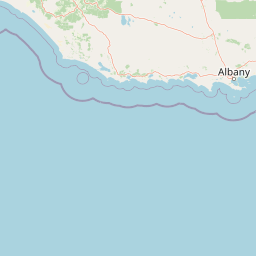
Park location guide

Geography guide, regional context, and park location map for D'Entrecasteaux National Park

D'Entrecasteaux National Park park geography, regions, and map view in Australia
Understand where D'Entrecasteaux National Park sits in Australia through a broader geographic reading of the surrounding landscape, nearby location context, and its mapped position within the national park landscape.

How D'Entrecasteaux National Park fits into Australia

Australia is a constitutional monarchy and federal parliamentary democracy comprising six states and ten territories. With a population of nearly 28 million, it is one of the world's most urbanised countries, with most people concentrated on the eastern seaboard. The country has a high Human Development Index and is known for its cultural diversity, ancient Aboriginal heritage, and unique wildlife.

Wider geography shaping D'Entrecasteaux National Park in Australia

Australia occupies the entire Australian continent, the island of Tasmania, and numerous smaller islands. It is the world's flattest and driest inhabited continent, featuring vast deserts in the interior (the Outback), tropical rainforests along the eastern coast, and a coastline bordering the Indian and Pacific Oceans.

Map view of D'Entrecasteaux National Park

Use this park location map to pinpoint D'Entrecasteaux National Park in Australia, understand its exact geographic position, and read its mapped placement within the surrounding landscape more clearly.

Pigeon | © OpenStreetMap contributors

Location context for D'Entrecasteaux National Park

Western Australia
Park atlas

Trace the regional spread of protected areas, comparing diverse coastal and wetland landscapes in Southwest Australia

Discover Nearby National Parks and Protected Areas Near D'Entrecasteaux National Park in Western Australia
After exploring D'Entrecasteaux National Park's unique basalt cliffs and mobile sand dunes, you can browse other national parks and protected areas across Western Australia's southern coastline. This regional view allows you to compare diverse coastal ecosystems, wetland complexes, and geological formations, revealing broader conservation patterns and landscape connections.
National park

Boorara-Gardner National Park: Mapped Old Growth Forest and Protected Landscape

Western Australia's protected area and regional geography.

Boorara-Gardner National Park is a vital national park in Western Australia, recognized for its stands of old-growth forest and its stunning spring wildflower displays. Delve into the park's specific geographic features, mapped terrain, and its identity as a key protected area within the South West region. Understand its place in the contiguous network of conservation lands through detailed atlas-style exploration.

Area
110.08 km²
Established
2004
Relief
Mixed relief
Climate
Mediterranean
National park

Jane National Park: Western Australia's Protected Old-Growth Forest Landscape

Mapped forest ecosystems in the South West bioregion.

Jane National Park represents a key protected landscape in the South West of Western Australia, recognized for its significant old-growth forest ecosystems. This Class A reserve preserves mature stands of karri and jarrah trees, offering a glimpse into the region's undisturbed natural heritage. Its landscape is characterized by dense, ancient forests dominating gentle terrain, making it an important site for understanding the conservation value of this bioregion and exploring its mapped natural context.

Area
68.63 km²
Established
2004
IUCN
II
Scope
Terrestrial
National parkWestern Australia

Shannon National Park: A Protected Landscape in Western Australia's Geography

Discover the mapped boundaries and regional park context.

Shannon National Park represents a key protected area within the vast geographic expanse of Western Australia. This entry focuses on understanding its identity as a national park, highlighting its specific landscape character and its contribution to the regional atlas. Through detailed mapping and geographic context, users can explore the protected boundaries and natural setting of Shannon National Park.

Area
525.98 km²
Established
1988
IUCN
II
Relief
Mixed relief
National parkWestern Australia

Brockman National Park: Western Australia National Park for Protected Landscape Discovery

Explore mapped boundaries and natural terrain.

Brockman National Park is a significant protected area within Western Australia, recognized as a national park. This detail page focuses on its role as a conserved landscape, offering insight into its natural geography and mapped extent. Engage with structured data to understand the park's context within the broader regional atlas of Western Australia's protected lands.

Area
0.52 km²
Established
1977
IUCN
II
Relief
Highland
National park

Greater Hawke National Park: Mapped Boundaries of Old Growth Forest Landscape

Explore the protected forest and regional geography.

Greater Hawke National Park offers a significant atlas exploration opportunity for understanding Australia's protected forest ecosystems. This national park preserves critical old growth stands of karri and jarrah trees, showcasing the unique landscape of the Warren bioregion. Its Class A reserve status and adjacency to D'Entrecasteaux National Park highlight its importance as a conservation corridor within the South West of Western Australia. Users can examine the park's geographic setting and its protected-area identity.

Area
140.04 km²
Established
2004
Climate
Mediterranean
Access
Moderate access
National parkWestern Australia

Warren National Park: A Protected Landscape of Ancient Karri Forests in Western Australia

Explore mapped forest boundaries and river geography.

Warren National Park offers an unparalleled glimpse into the grandeur of old-growth karri forests, showcasing some of Western Australia's most towering trees. Situated in the South West region, this national park protects a vital tract of temperate forest ecosystem, characterized by rolling terrain and the scenic Warren River. Its mapped landscape and protected-area status highlight the critical importance of preserving these magnificent natural environments for atlas-based geographic discovery.

Area
29.81 km²
Established
1977
IUCN
II
Scope
Terrestrial
National parkWestern Australia

Gloucester National Park: National Park in Western Australia's Geographic Landscape

Explore mapped boundaries and protected land context.

Gloucester National Park stands as a significant protected area within the vast geographic expanse of Western Australia. This entry focuses on its identity as a national park, detailing its mapped landscape features and regional context. Understanding Gloucester National Park involves appreciating its specific geographic setting and its contribution to the atlas of protected natural areas in Australia, providing foundational data for landscape exploration.

Area
8.78 km²
Established
1993
IUCN
II
Access
Moderate access
National parkWestern Australia

Sir James Mitchell National Park: National Park, Western Australia - Geographic Atlas View

Mapped protected area with regional landscape context.

Gain a structured understanding of Sir James Mitchell National Park as a key protected landscape within Western Australia. This atlas entry focuses on the park's geographic extent, its status as a national park, and its position within the diverse regional geography of Western Australia, offering clear insights for map-based exploration and conservation landscape analysis.

Area
2.47 km²
Established
1969
IUCN
II
Access
Access unknown

Common questions about visiting, size, designation, and location context for D'Entrecasteaux National Park

D'Entrecasteaux National Park FAQs for park facts, access, geography, and protected area context
Find quick answers about D'Entrecasteaux National Park, including protected-area facts, park geography, trail and visitor context, and how the park fits into its surrounding country and regional landscape.
MoriAtlas Explorer

Continue Your Protected Areas Search Across the Global Atlas

Deepen your exploration by continuing the structured search for national parks and protected areas worldwide. Utilize the comprehensive filtering capabilities to compare different conservation landscapes and refine your understanding of global park geography. Discover more about the distribution and characteristics of protected natural areas.

Global natural geography