Why Deua National Park stands out
Deua is best known for its spectacular wilderness character and the presence of rare pinkwood rainforests growing in protected gullies throughout the park. The dramatic escarpments and associated waterfalls create visually striking landscapes that contrast with the more typical eucalyptus forests of the region. The park serves as an important habitat refuge for threatened species, particularly birds of prey including the peregrine falcon and powerful owl. The limestone cave systems provide critical maternity roosting sites for several bat species, adding to the park's ecological significance.
Deua National Park history and protected-area timeline
Deua National Park was established in 1979, designated under the National Parks and Wildlife Act of New South Wales. The protected area was created to preserve the significant wilderness values, unique ecosystems, and habitats present in this portion of the Southern Tablelands. Prior to formal protection, the area had been subject to selective logging and pastoral use, though the rugged terrain limited the extent of extensive development. The park's designation as an IUCN Category Ib wilderness area reflects a commitment to maintaining the land in a state where natural processes predominate and human infrastructure is minimal. Management by the National Parks and Wildlife Service focuses on preserving ecological integrity while allowing controlled public access for wilderness appreciation.
Deua National Park landscape and geographic character
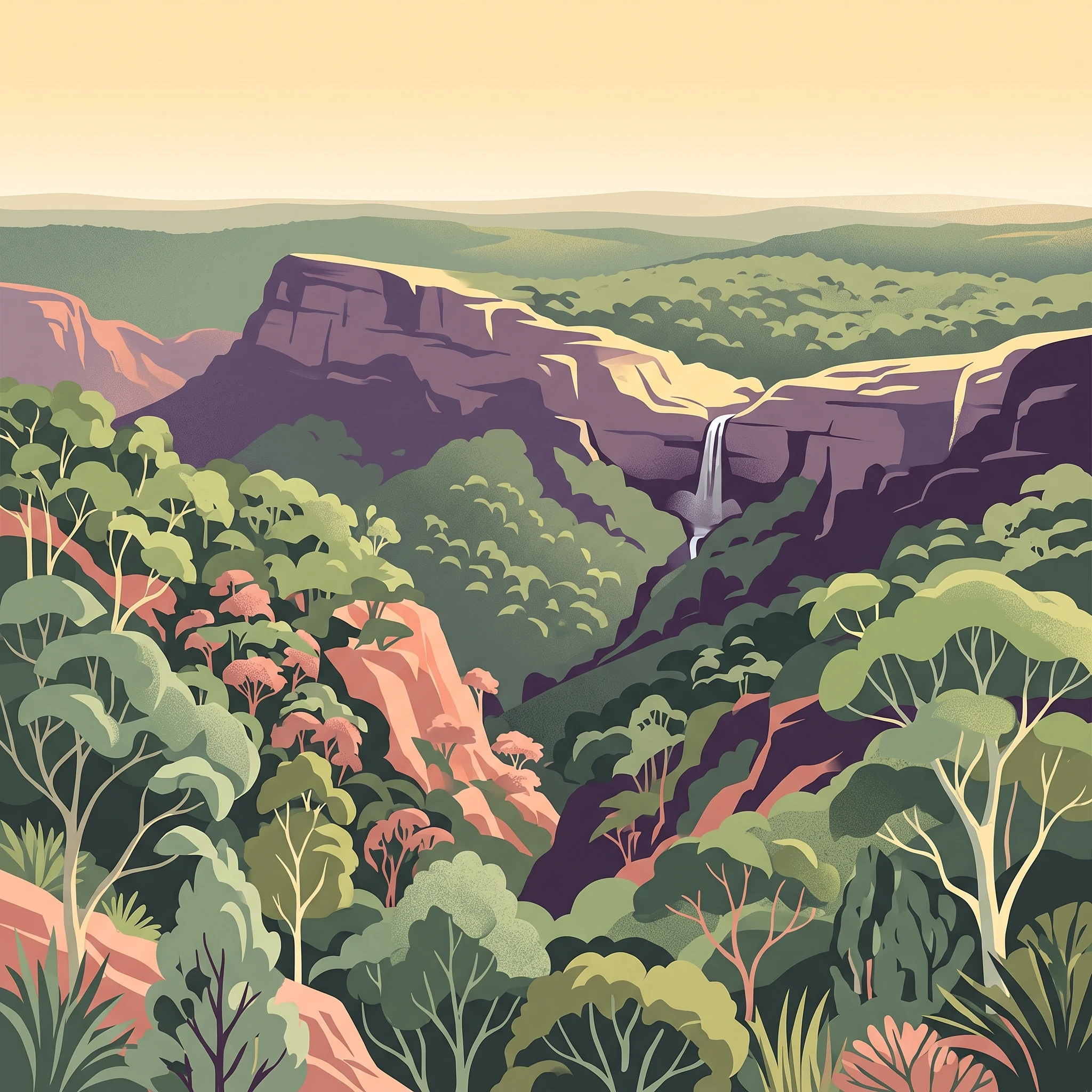
The landscape of Deua National Park is characterized by its dramatic topography of steep escarpments, deep gullies, and elevated ridges that create a complex and visually varied terrain. The main ridgelines and peaks, including Big Badja Hill, provide panoramic views across the park and surrounding region. The escarpments feature exposed rock faces and create numerous waterfalls where water cascades over the edges during wet periods. Deep gullies dissect the plateau, creating sheltered valleys that trap moisture and protect the rainforest communities from fire and harsh weather. The park also contains limestone cave systems typical of karst landscapes, with these underground spaces providing important habitat for bats and other cave-dwelling species. The combination of rocky outcrops, forest-covered slopes, and wetland areas creates a landscape of considerable visual diversity despite the relatively consistent forest cover across most of the area.
Deua National Park ecosystems, habitats, and plant life
The ecological character of Deua National Park is defined by the mixture of wet eucalyptus forests, high-altitude rainforests, and various wetland habitats. The eucalyptus-dominated forests are the most widespread vegetation type, with species including black ash, monkey gum, messmate, and white ash forming the main canopy in different parts of the park. The rainforest pockets, dominated by pinkwood (Eucryphia moorei), hard water fern, and soft tree fern, are restricted to gullies where moisture levels are high and fire frequency is reduced. These rainforest enclaves represent a relict distribution pattern from wetter past climates. Additional habitats include swamps and bogs in valley floors, riverside forests along watercourses, and rocky scrub on exposed slopes. The variety of habitats within a relatively compact area supports the notable biodiversity recorded in the park.
Deua National Park wildlife and species highlights
Deua National Park supports impressive biodiversity with over 106 bird species and 62 mammal species documented within its boundaries. The bird fauna is particularly notable for its diversity of birds of prey, with both the peregrine falcon and powerful owl present in significant populations. The powerful owl, Australia's largest owl species, depends on forested habitats with adequate prey populations, and the park provides suitable nesting and hunting grounds. The limestone caves scattered through the park serve as critical maternity sites for several bat species, which use the dark, stable conditions of the caves for breeding. The combination of forest types, wetlands, and rocky areas provides habitat for a wide range of mammals, though many species are shy and rarely observed by visitors.
Deua National Park conservation status and protection priorities
The protection of Deua National Park serves important conservation objectives in southeastern Australia. The park preserves significant examples of wilderness ecosystems that have become rare in the heavily cleared and modified landscapes of New South Wales. The presence of pinkwood rainforest represents a threatened ecological community requiring specific conditions that are protected within the park. Many of the species found in Deua, including both flora and fauna, are listed as threatened under national and state environmental legislation, and the park provides essential habitat for their survival. The wilderness classification ensures that ecological processes continue with minimal human disturbance, preserving natural patterns of fire, nutrient cycling, and species interactions. The park also serves as a linkage area connecting coastal and inland ecosystems, facilitating species movement across the landscape.
Deua National Park cultural meaning and human context
Deua National Park has traditional associations with Aboriginal Australians, reflecting the long indigenous connection to this landscape. The rugged terrain and varied resources of the area would have supported Aboriginal people prior to European settlement. The specific nature of these associations, including which Aboriginal nations or clans held traditional connections to the area, is not detailed in available source material, but the presence of this connection is acknowledged as part of the park's heritage values.
Top sights and standout views in Deua National Park
The park's standout features include the spectacular pinkwood rainforests hidden within protected gullies, the dramatic escarpments and waterfalls visible from various vantage points, and the remarkable diversity of birds of prey that inhabit the area. Big Badja Hill offers one of the most accessible summits for panoramic views across the park's forested terrain. The cave systems add a different dimension to the park's appeal, providing habitat for bat colonies and representing interesting geological features. The wilderness character of the park, with minimal development and maintained natural processes, distinguishes it from more heavily used protected areas closer to population centres.
Best time to visit Deua National Park
The park can be visited throughout the year, though the experience varies with the seasons. The warmer months from late spring through early autumn typically offer more comfortable conditions for hiking and exploring the park's remote areas. Summer thunderstorms can occur and may affect access to some areas, while winter brings colder temperatures and possible snow at higher elevations. The rainforest gullies are particularly evocative after periods of rain when waterfalls are flowing and the vegetation appears lush. Those interested in wildlife viewing may find different opportunities across seasons, with birds being most active during cooler parts of the day in summer.