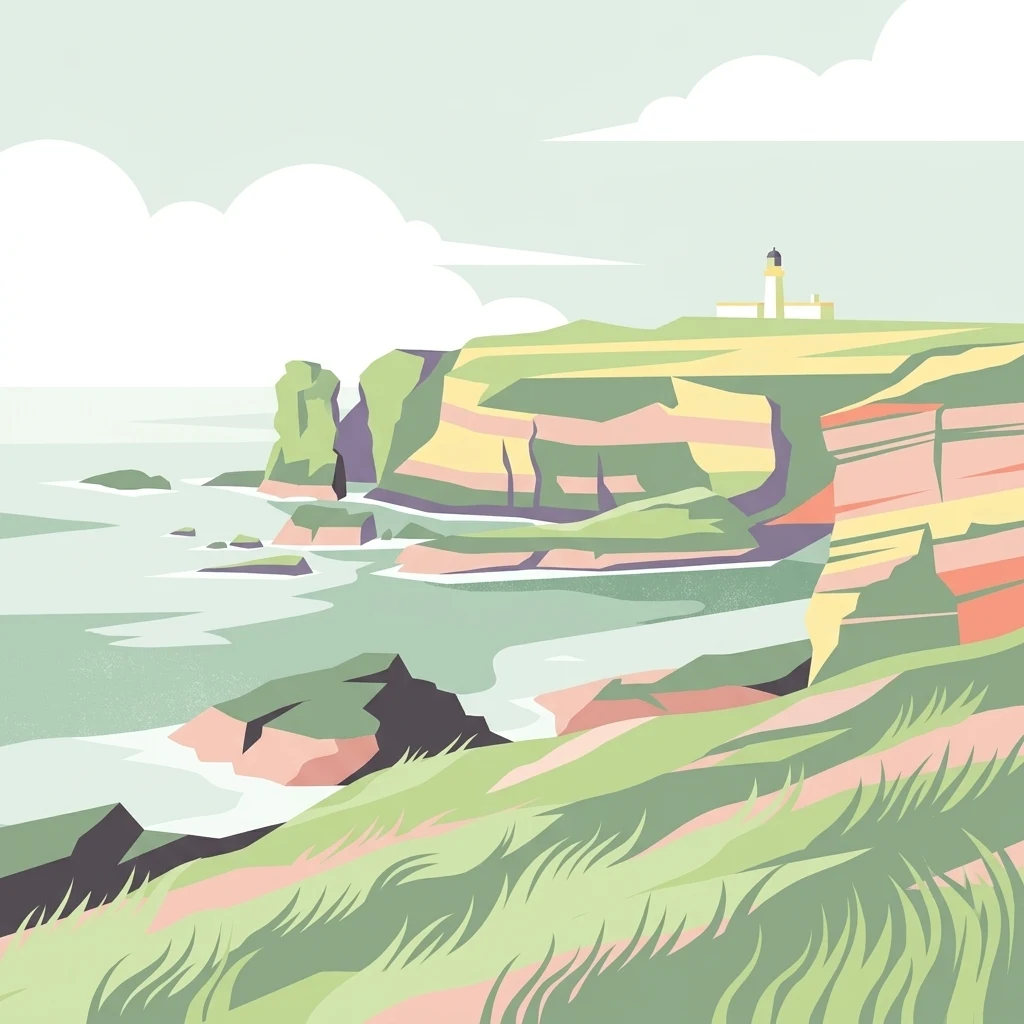
A weathered sandstone coastline in northern Scotland, famous for hosting up to 300,000 breeding seabirds on its towering cliffs.
East Caithness Cliffs
East Caithness Cliffs is a protected area of dramatic sandstone cliffs and adjacent seas along the east coast of Caithness, the northernmost mainland county of Scotland. The cliffs rise to around 150 metres at Berriedale, providing rugged nesting ledges that pull in extraordinary concentrations of breeding seabirds each spring and summer. The site is internationally recognised for its ornithological importance, with up to 300,000 seabirds estimated to use the cliffs during the breeding season and particularly strong populations of black guillemot, common guillemot, razorbill, and kittiwake.
The site is unusual in being shielded by a layered system of conservation designations, including a land-based Special Area of Conservation, an offshore Marine Protected Area, and a Special Protection Area that merges both. Together these protections safeguard roughly 11,700 hectares of cliff, coastal heath, and adjacent sea. The cliffs themselves are relatively accessible compared with the headlands and island cliffs further north on the Scottish coast, yet they still retain the wild, weather-beaten character typical of Caithness.
Beyond their seabird colonies, the cliffs support a varied cliff-top and slope flora, including roseroot, Scots lovage, juniper, and willow scrub in sheltered gullies. The combination of seabird spectacle, distinctive northern sandstone geology, and stacked conservation layers makes East Caithness Cliffs one of the most important coastal wildlife sites on mainland Scotland's eastern seaboard.