Why Gouritz Cluster Biosphere Reserve stands out
The reserve is best known for being the only place in the world where three recognised biodiversity hotspots converge: Fynbos, Succulent Karoo, and Maputaland-Pondoland-Albany. This triple-hotspot setting, layered over a landscape that runs from sandy coastline to high mountain ridges, gives the area an unusually compressed diversity of plant and animal life within a single protected system. It is also recognised for its high concentration of endemic plant species, particularly within the Cape Floristic Region, and for threatened species such as Cape mountain zebra, bontebok, leopard, the enigmatic Colophon beetles, and endemic butterflies. The inclusion of three UNESCO World Heritage Sites within its boundaries adds a further layer of international recognition.
Gouritz Cluster Biosphere Reserve history and protected-area timeline
The Gouritz Cluster Biosphere Reserve was formally established on 7 March 2015, becoming the seventh and largest biosphere reserve in South Africa recognised under UNESCO's Man and the Biosphere Programme. Its creation reflected a growing recognition that the region's ecological complexity, spanning coastal lowlands, mountain ranges, and arid interior basins, could only be effectively conserved through a large-scale, multi-sector approach rather than a collection of separate protected areas.
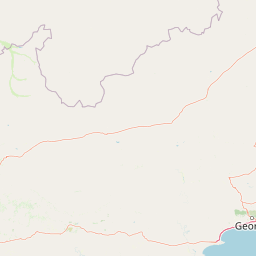
The reserve's structure, divided into the four clusters of Towerkop, Kammanassie, Langeberg and St. Blaize, builds on the geography of existing protected landscapes, mountain catchments, and coastal zones. By unifying these into a single biosphere framework, managers aimed to better connect habitats, buffer wilderness areas, and integrate rural communities into conservation planning.
Beyond its modern conservation history, the region carries a far older human story. Archaeological work at Pinnacle Point near Mossel Bay, located within what is now the biosphere reserve, has produced evidence of shellfish exploitation by early humans around 164,000 years ago and the earliest known use of fire in toolmaking around 72,000 years ago. These finds have helped shape the view that the southern Cape coast is closely tied to the origins of modern humanity.
Many of the reserve's rural communities are also descended from, or culturally connected to, the ancient Khoisan people, the original inhabitants of the region. Contemporary livelihoods continue to rely heavily on agriculture, including ostrich farming, dairy, citrus, wine, grain, and sheep and cattle grazing, alongside an emerging but still underdeveloped tourism economy.
Gouritz Cluster Biosphere Reserve landscape and geographic character
The landscape of the Gouritz Cluster Biosphere Reserve is defined by sharp transitions between marine, mountain, and semi-arid environments. Along the coast, fine-grained sandy beaches and dunes alternate with wave-cut platforms and exposed rocky headlands. Deeply incised river valleys cut down through the coastal platform, often terminating in estuaries or forming coastal lagoons where freshwater meets the sea.
Inland from the coast, the Outeniqua and Langeberg mountains rise as a natural barrier separating the southern Cape from the interior, marking the boundary between wetter fynbos country and the drier Little Karoo. Further into the reserve, the Kammanassie, Kouga and Swartberg ranges form the northern and eastern edges of the system, with peaks reaching above 2,000 metres. Between these ranges lie valley basins and plains where vegetation gradually shifts toward arid Succulent Karoo.
This compressed geography, from sea-level shoreline to high mountain ridges and arid basin country, gives the reserve a remarkable variety of landforms within a relatively cohesive area. The elevational range, reaching approximately 2,240 metres at its highest point, supports a sequence of climatic zones and vegetation types that is unusual even by South African standards.
Gouritz Cluster Biosphere Reserve ecosystems, habitats, and plant life
Ecologically, the Gouritz Cluster Biosphere Reserve sits within the Cape Floristic Region, the smallest but one of the richest of the world's six floral kingdoms. The reserve is unusually significant because it is the only place where three recognised biodiversity hotspots converge: Fynbos, the Succulent Karoo, and the Maputaland-Pondoland-Albany hotspot. Each of these contributes a distinct suite of plant communities and ecological processes, and their overlap here produces exceptionally high plant diversity in a concentrated area.
The reserve records well over a thousand plant species, with very high levels of endemism, including Succulent Karoo endemics and numerous Red List species. Even the more arid inland portion contains hundreds of endemic plant species, illustrating that botanical richness is not limited to the wetter coastal mountains. Fynbos vegetation, characterised by fine-leaved shrubs and remarkable floral diversity, dominates much of the mountain terrain, while the drier valleys support succulent and shrubland communities typical of the Karoo.
The reserve also plays an important role in maintaining ecological connectivity across the southern Cape. By linking coastal, montane, and arid habitats within a single framework, it helps sustain migration routes, dispersal pathways, and the long-term resilience of plant communities facing climate change and habitat fragmentation.
Gouritz Cluster Biosphere Reserve wildlife and species highlights
The reserve supports a notable mix of large mammals, rare subspecies, and highly localised invertebrates. Two of its most important conservation targets are the Cape mountain zebra and the bontebok, both of which represent unique and threatened populations restricted to the Cape region. Their persistence within the reserve is a key marker of successful habitat protection.
Leopard populations are present across much of the reserve's mountainous terrain, where rugged topography and prey availability allow these predators to maintain viable ranges. The mountains also serve as important corridors for other large mammals and contribute to the reserve's role as a migratory pathway for terrestrial species moving between coastal and inland landscapes.
The invertebrate fauna is equally distinctive. The reserve hosts seven endemic species of the Colophon beetle genus, an unusual and scientifically intriguing group found only in parts of the Cape mountains, as well as fourteen endemic butterfly species. These invertebrates are important indicators of habitat health and underscore the high concentration of narrow-range endemics within the reserve.
Along the coast, estuaries and nearshore environments act as nursery areas for marine species, extending the reserve's ecological influence beyond its terrestrial boundaries and contributing to the productivity of the surrounding ocean.
Gouritz Cluster Biosphere Reserve conservation status and protection priorities
The Gouritz Cluster Biosphere Reserve represents a major conservation achievement, recognising and consolidating one of the most botanically important regions on Earth under a single protected framework. Its status as the only place where three recognised biodiversity hotspots intersect gives it outstanding global conservation significance, while its position within the Cape Floristic Region places it among the most biodiverse temperate areas on the planet.
By encompassing altitudinal zones from sea level to more than 2,000 metres and three distinct vegetation biomes, the reserve protects an unusually broad spectrum of habitats in a connected system. This connectivity is critical for maintaining migration routes, allowing species range shifts in response to climate change, and preserving gene flow between isolated populations of endemic plants and animals.
The reserve's conservation profile is strengthened by the inclusion of three UNESCO World Heritage Sites within its broader extent: the Swartberg Complex, Boosmansbos Nature Reserve, and the Baviaanskloof area. These sites amplify international recognition and bring additional protection standards to parts of the reserve. At the same time, management of the biosphere is shaped by the need to address significant socio-economic challenges, including high unemployment, poverty, inadequate services in informal settlements, and elevated rates of HIV and crime, making conservation here inseparable from rural development.
Gouritz Cluster Biosphere Reserve cultural meaning and human context
The cultural dimension of the Gouritz Cluster Biosphere Reserve is shaped both by deep antiquity and contemporary rural life. The southern Cape coast within the reserve has produced some of the most important archaeological evidence related to the origins of modern humans, including findings at Pinnacle Point near Mossel Bay that demonstrate early shellfish exploitation and some of the earliest known controlled use of fire in toolmaking.
Many present-day rural communities in the reserve trace part of their heritage to the ancient Khoisan people, the original inhabitants of the region. Contemporary populations include farmers of European descent and farm dwellers primarily identified as part of the Cape Coloured community, many of whom share this deeper ancestry. Intensive agriculture, including ostrich farming, dairy, citrus, wine, and grain production, alongside extensive sheep and cattle grazing, defines the rural economy.
Tourism is an additional, though still underdeveloped, contributor to local livelihoods. Together with the region's archaeological and indigenous heritage, this rural economic base forms an integral part of the biosphere reserve's identity, reflecting the UNESCO model that links conservation with sustainable human use of the landscape.
Top sights and standout views in Gouritz Cluster Biosphere Reserve
Among the Gouritz Cluster Biosphere Reserve's most distinctive highlights is its triple biodiversity hotspot status, the only place on Earth where Fynbos, Succulent Karoo, and the Maputaland-Pondoland-Albany hotspot overlap, combined with its full placement within the Cape Floristic Region. The reserve also stands out for its exceptionally high plant endemism, including hundreds of endemic species even in its arid interior.
The reserve's four-cluster structure of Towerkop, Kammanassie, Langeberg and St. Blaize captures an unusually complete ecological sequence from sandy coastline and estuaries to high mountain ridges and Karoo basins. The presence of three UNESCO World Heritage Sites within its boundaries, the Swartberg Complex, Boosmansbos Nature Reserve, and Baviaanskloof, reinforces its global importance.
It is also notable for supporting endemic wildlife such as Cape mountain zebra, bontebok, leopard, Colophon beetles and endemic butterflies, while encompassing landscapes that have produced archaeological finds central to our understanding of early modern human behaviour.
Best time to visit Gouritz Cluster Biosphere Reserve
The reserve's climate transitions rapidly from Mediterranean conditions along the coast and wetter mountains to semi-arid conditions inland, so the most rewarding times to visit depend strongly on which sector of the biosphere is being explored. In the coastal and fynbos-dominated mountain areas, late winter and spring tend to bring the highest wildflower displays, cooler temperatures, and lush vegetation following the rainy season, although conditions can be changeable.
In the drier inland sectors such as the Little Karoo and parts of the Swartberg region, autumn, winter and spring are generally more comfortable for travel, while summer can bring high temperatures and dry, harsh conditions. Wildlife viewing opportunities are shaped by these patterns, with cooler months often favouring animal activity in the open, while the wetter seasons emphasise botanical richness and green landscapes.
Across the reserve, planning around the climatic differences between coast and interior is the most important consideration, since attempting to experience both within a single short window can mean very different seasonal conditions in different sectors.