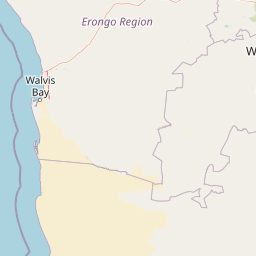

Why Gross Barmen Hot Springs Resort stands out
Gross Barmen is best known for its warm, sulfurous thermal spring water, which is channeled into indoor and outdoor bathing pools. The site is recognized as a heritage location linked to early missionary activity among the Herero people, and it serves as one of Namibia's established state-managed recreation areas with spa, wellness, and conference facilities.
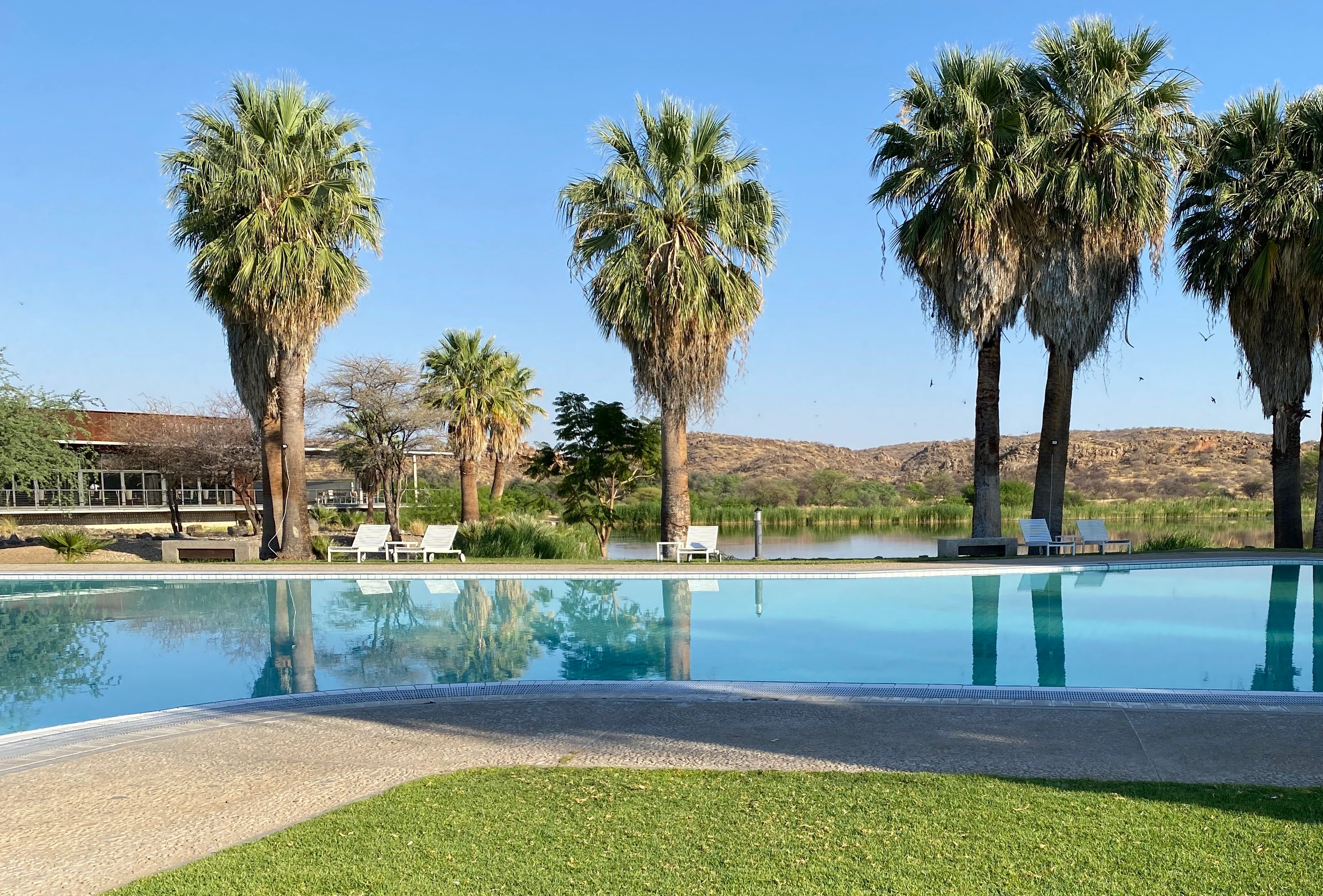
Gross Barmen Hot Springs Resort history and protected-area timeline
The history of Gross Barmen begins on 28 October 1844, when the site was formally established under its German colonial-era name, derived from Barmen, the then-headquarters of the Rhenish Mission in what is today Wuppertal, Germany. Missionaries Carl Hugo Hahn and Franz Heinrich Kleinschmidt founded the station as the first missionary outpost among the Herero people, following the establishment of a mission presence in nearby Okahandja. Before the German name was applied, the site was known in Otjiherero as Otjikango and in Khoekhoegowab as ǁKatsabias, reflecting long-standing indigenous place-name traditions.
In the modern era, Gross Barmen transitioned from a historically significant mission location into a state recreation area, with the surrounding landscape formally designated in 1968 as a public resort focused on its thermal springs. Between December 2010 and December 2014 the entire recreation area was closed for extensive renovations. The upgrade introduced new accommodation, a large spa and wellness complex, and conference facilities, reshaping the site into a more developed leisure and events destination. Its inclusion among Namibia's listed protected areas places it within the country's formal network of conservation and recreation sites administered by the Ministry of Environment and Tourism.
Gross Barmen Hot Springs Resort landscape and geographic character
The immediate landscape of Gross Barmen is shaped by the gentle topography of central Namibia, with the surrounding terrain dominated by dry thornveld and mixed woodland characteristic of the Otjozondjupa Region. The site itself sits in a relatively flat setting that opens onto the broader central Namibian plateau, where open savanna vegetation and distant horizons define the visual character. To the southeast lies the Osonakuppe kopje, a small hill feature that adds modest relief to an otherwise level landscape.
The defining landscape element, however, is not topographic but hydrological: the natural thermal spring at the heart of the site, whose warm sulfurous water emerges from underground and is channeled into the resort's bathing pools. This single feature, both ecologically and culturally, anchors the entire protected area and gives Gross Barmen its distinctive identity within Namibia's network of recreation areas.
Gross Barmen Hot Springs Resort ecosystems, habitats, and plant life
Gross Barmen sits within the broader ecological context of central Namibia's dry woodland and thornveld, an environment shaped by semi-arid conditions, seasonal rainfall, and vegetation adapted to heat and dryness. The immediate protected footprint of about 100 hectares is modest in scale and focused on the spring environment rather than on a large, contiguous ecosystem. As a result, the site's ecological value is tied less to expansive wildlife habitat and more to the unique presence of a year-round warm sulfurous spring in an otherwise dry landscape.
The surrounding region supports plant communities typical of central Namibian savanna, with acacia-dominated woodland, grasses adapted to seasonal drought, and the kind of open vegetation structure often associated with the area between Okahandja and Windhoek. The recreation area's protected status under IUCN Category III acknowledges the importance of the spring feature itself as a natural monument within this broader ecological setting.
Gross Barmen Hot Springs Resort wildlife and species highlights
Gross Barmen is not primarily managed as a wildlife destination, and its small protected footprint means that it does not host the large mammal populations characteristic of Namibia's flagship national parks. Wildlife presence in the surrounding region is typical of central Namibian thornveld, where small mammals, reptiles, and a range of bird species adapted to dry savanna conditions occur naturally. Within the resort grounds, visitors are more likely to encounter managed landscaped areas and the thermal pools than intact wildlife habitat.
Because the site's significance lies in its thermal spring and historical layers rather than in biodiversity concentrations, a dedicated wildlife narrative is not strongly supported by available source material.
Gross Barmen Hot Springs Resort conservation status and protection priorities
Gross Barmen's protected status is anchored in its formal recognition as a state recreation area established in 1968 and managed by Namibia's Ministry of Environment and Tourism. The site is recorded under the World Database on Protected Areas with WDPA ID 18002 and is classified under IUCN Category III as a Natural Monument or Feature, a designation that highlights the conservation importance of the thermal spring itself rather than of a large ecological block.
The conservation value of Gross Barmen rests on the preservation of a distinctive natural feature: a warm sulfurous spring in a semi-arid landscape where such features are ecologically and culturally significant. Its inclusion in Namibia's official inventory of protected areas reflects the country's broader approach of combining recreation, heritage, and natural-monument protection within a single managed site framework.
Gross Barmen Hot Springs Resort cultural meaning and human context
Gross Barmen carries substantial cultural and historical weight as one of the earliest sites of structured missionary and colonial-era engagement with the Herero people in central Namibia. The 1844 founding of the mission station by Carl Hugo Hahn and Franz Heinrich Kleinschmidt of the Rhenish Mission gave the location a foundational place in the history of European missionary activity in the region. The German name Gross Barmen, the Otjiherero name Otjikango, and the Khoekhoegowab name ǁKatsabias together reflect the multiple cultural layers that have shaped the site over time.
The enduring local name Otjikango, in particular, preserves the indigenous Herero identity of the place, anchoring it within pre-colonial regional naming traditions. Today the site functions simultaneously as a place of natural recreation and as a reference point in Namibia's broader heritage landscape, where visitors encounter both the thermal pools and the layered cultural memory embedded in the location's names and history.
Top sights and standout views in Gross Barmen Hot Springs Resort
The standout features of Gross Barmen include its warm sulfurous thermal spring, the historical weight of its 1844 missionary founding, and its role as a state-managed recreation area combining wellness, accommodation, and conferencing. The 2010–2014 renovation program introduced a significantly expanded spa and conference complex, reshaping the visitor experience while preserving the site's identity as a heritage thermal destination. Its inclusion among Namibia's formally recognized protected areas underlines the lasting relevance of the spring feature within the country's conservation and recreation framework.
Best time to visit Gross Barmen Hot Springs Resort
As a thermal-spring recreation area rather than a weather-sensitive wilderness destination, Gross Barmen can be visited across much of the year, with the warm pools offering a particular appeal during cooler periods. The dry winter months in central Namibia tend to bring clearer skies and more comfortable outdoor conditions, while the warmer summer period also draws visitors seeking the contrast between hot ambient temperatures and the warm, sulfurous bathing pools. Seasonal choice is more a matter of preferred atmosphere and accompanying travel plans than of strict access windows.