Germany's smallest Wadden Sea park protecting a unique tidal ecosystem
Hamburg Wadden Sea National Park
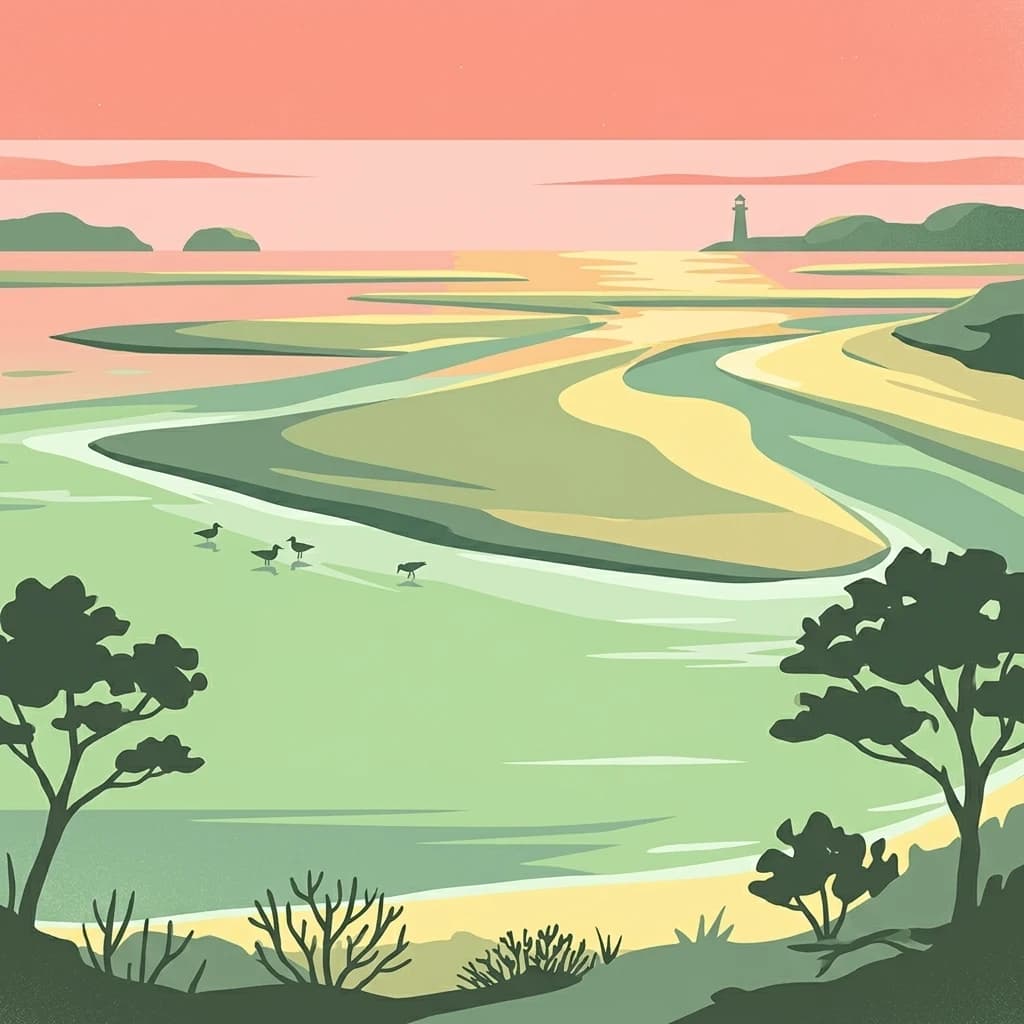
Hamburg Wadden Sea National Park is the smallest of the three German Wadden Sea National Parks that collectively protect the tidal flats stretching from Den Helder in the Netherlands to Esbjerg in Denmark. Located as an exclave of the city state of Hamburg in the North Sea, the park lies approximately 12.5 kilometers off the coast of Cuxhaven at the mouth of the Elbe River in the German Bight. The protected area encompasses the islands of Neuwerk, Scharhörn, and Nigehörn, together forming a distinctive landscape of sand and mixed mudflats, shallow tidal channels, sand bars locally called _Plaaten_, and dune islands.
The park protects one of the world's most significant tidal ecosystems, characterized by its vast intertidal mudflats that emerge and submerge with the twice-daily rhythm of the North Sea. This dynamic environment supports an extraordinary concentration of biodiversity, with approximately 2,000 animal species recorded within the park's boundaries, including some 250 species endemic to the salt marshes of the Wadden Sea. The park serves as a critical refuge for marine mammals, particularly common seals and gray seals, and functions as an internationally important resting and molting area for millions of migratory birds.
In 2011, Hamburg Wadden Sea National Park was inscribed as part of the UNESCO World Heritage Site recognizing the Wadden Sea as a natural phenomenon of outstanding universal value. The park's inclusion highlights its intact intertidal ecosystem, its significance as a breeding and staging area for numerous bird species, and the uniquely high biodiversity found within its tidal habitats.