
Why Heubachwiesen (BOR) stands out
Heubachwiesen is best known for its mosaic of wet meadows and open water habitats along the Heubach stream floodplain, which provide important conditions for wading birds, meadow-nesting bird species, and geese. The reserve is closely tied to the broader Heubachniederung landscape, a regionally recognized area for bird conservation in western Münsterland. The site is also notable for focusing protection on threatened plant communities of open water and damp grassland, including habitats that support rare invertebrates and amphibians. Its integration into the EU Birds Directive network gives it standing beyond purely local nature protection.
Heubachwiesen (BOR) history and protected-area timeline
Heubachwiesen was officially designated as a nature reserve (Naturschutzgebiet) in 1982, under the identification number BOR-032 used by the district of Borken. The protection aimed initially at preserving a coherent set of wet grassland habitats and the species associated with them in the Heubach floodplain near Reken.
Over time, the reserve has been integrated into larger protective frameworks, most notably the EU Birds Directive site "Heubachniederung, Lavesumer Bruch und Borkenberge." This integration reflects a shift from purely local conservation to a broader landscape-level approach, recognizing the importance of connected habitats for meadow birds, waders, and waterfowl across the wider Heubach lowlands.
Heubachwiesen (BOR) landscape and geographic character
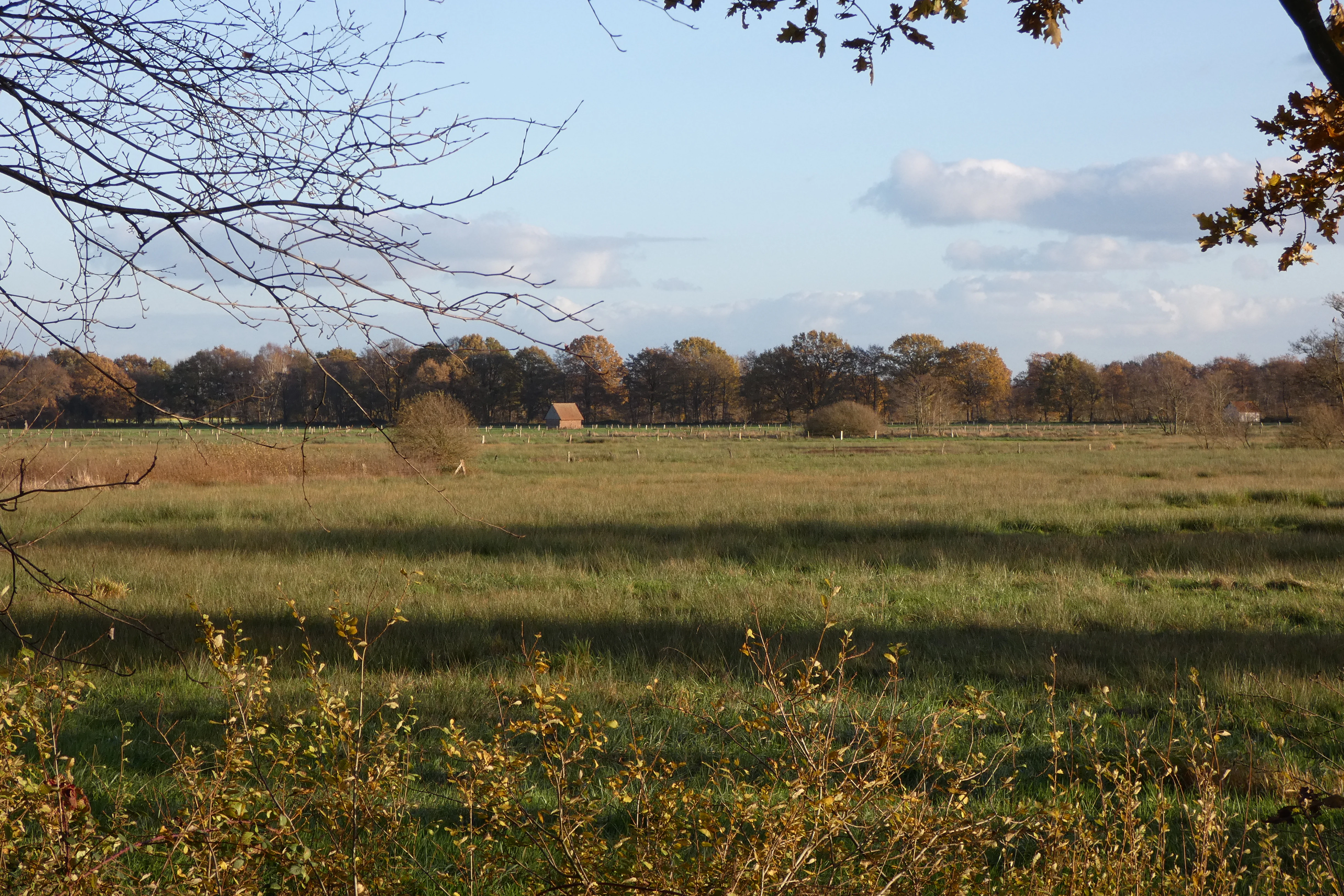
The reserve occupies a section of the Heubach stream floodplain, a subdued lowland landscape typical of western Münsterland. The terrain is dominated by flat to gently undulating wet meadows, interspersed with open water features such as shallow ponds, ditches, and slow-moving stretches of the Heubach and related watercourses.
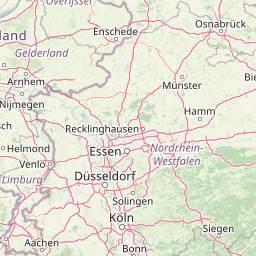
The four protected parcels are distributed around Reken, creating a fragmented mosaic of wet and damp habitats rather than a single contiguous block. Federal highway B67 and state road L608 cross the area, while the A31 autobahn runs along its western edge, marking the transition from open agricultural and natural land toward denser transport infrastructure.
The visual character of the landscape is quiet and open, defined by expanses of grassland, low wetland vegetation, and seasonal water surfaces, rather than by forest cover or dramatic relief.
Heubachwiesen (BOR) ecosystems, habitats, and plant life
Ecologically, Heubachwiesen belongs to the category of central European wet meadow and floodplain systems. Its habitat mosaic includes damp grassland, open water, and transitional wetland vegetation, with plant communities typical of nutrient-variable, seasonally flooded conditions.
The reserve is significant for maintaining communities of open water and wet grassland that have become increasingly scarce in the surrounding farmland-dominated region. These habitats support both specialized plant assemblages and the invertebrate populations on which many birds and amphibians depend.
The site's value is enhanced by its place within the larger Heubachniederung floodplain network, where similar habitats connect across municipal boundaries, allowing wildlife populations to function at a meaningful landscape scale rather than as isolated fragments.
Heubachwiesen (BOR) wildlife and species highlights
The reserve is explicitly managed for the benefit of meadow birds and waterbirds typical of lowland wet grasslands in northwestern Germany. Waders (Watvögel) and meadow-nesting bird species are among the named conservation targets, alongside geese that use the floodplain for grazing and resting.
Amphibians are another key focus of protection, reflecting the importance of the area's open water and wet meadow habitats for breeding and dispersal. Invertebrates (Wirbellose), particularly those tied to wet grassland and open water plant communities, are also highlighted as a conservation priority.
Together, these groups reflect a typical bird-and-amphibian-rich floodplain meadow fauna, with the reserve playing a meaningful role in sustaining populations that have declined across much of the wider agricultural landscape of western Münsterland.
Heubachwiesen (BOR) conservation status and protection priorities
Heubachwiesen is classified as an IUCN Category IV protected area, meaning it is managed primarily for the conservation of specific habitats and species rather than for broader ecosystem or landscape protection. Its targets focus on preserving, developing, and restoring habitats and communities of species that have become regionally rare or threatened.
The protection status emphasizes several priorities: rare and endangered plant communities of open water and wet grassland, breeding and resting populations of waders, meadow birds, and geese, and viable populations of amphibians and invertebrates tied to the wet meadow system.
The reserve's integration into the EU Birds Directive site "Heubachniederung, Lavesumer Bruch und Borkenberge" adds an international conservation layer, connecting the Heubachwiesen to a wider network of floodplain habitats that together support migratory and breeding bird populations across the Heubach lowlands.
Top sights and standout views in Heubachwiesen (BOR)
The Heubachwiesen stands out for its combination of wet meadow habitats and open water along the Heubach floodplain, an increasingly uncommon landscape feature in the intensively used western Münsterland. Its four-part configuration creates a network of habitats that supports both resident and migratory birdlife.
Recognition as part of the EU Birds Directive site "Heubachniederung, Lavesumer Bruch und Borkenberge" highlights the reserve's importance beyond purely local nature protection. Its focus on threatened meadow birds, waders, geese, amphibians, and rare wetland plant communities gives it a clearly defined conservation identity.
Best time to visit Heubachwiesen (BOR)
Heubachwiesen is a lowland wet meadow reserve shaped by seasonal water levels, so the character of a visit varies through the year. Wet conditions and high water tables are most typical in winter and early spring, while late spring and early summer bring the most active bird breeding period across the meadows.
Autumn and winter months often bring geese and other waterfowl to the floodplain, while spring and early summer are typically the most rewarding periods for observing meadow-nesting bird species and amphibians around the reserve's open water features.