Mori Atlas logo
National parkHot Springs National Park

Discover the geographic context and protected landscape boundaries of this US National Park.

Hot Springs National Park: Mapped Protected Area and Regional Geography in Garland County

Hot Springs National Park represents a significant protected area within the United States, situated in Garland County. This page offers an atlas-centric view, detailing the park's mapped boundaries and its place in the regional geography. Understand the park's protected landscape identity and its mapped terrain features for a deeper geographic discovery.

Thermal SpringsHistoric BathhousesOld-Growth ForestOuachita MountainsNational Historic LandmarkGeothermal Features

Hot Springs National Park

National park

Park overview

Structured park overview, official facts, and landscape profile for Hot Springs National Park

Hot Springs National Park park facts, protected area profile, and essential visitor context
Review the core facts for Hot Springs National Park, including designation, size, terrain, visitor scale, habitats, and operating context in one park-focused overview.

About Hot Springs National Park

Hot Springs National Park represents a unique fusion of natural wonder and American history that distinguishes it from virtually every other unit in the National Park System. The thermal springs that define the park have drawn visitors for thousands of years, with Native American tribes including the Caddo, Choctaw, and Cherokee gathering in the Valley of the Vapors to experience the healing properties of the waters. Spanish explorer Hernando de Soto became the first known European to see the springs in 1541, and the area subsequently passed through French and Spanish control before becoming part of the United States through the Louisiana Purchase. In 1832, Congress established the Hot Springs Reservation, marking the first time the federal government set aside land specifically to preserve it for recreational use, establishing a precedent that would eventually lead to the national park system. The city of Hot Springs developed into a sophisticated spa destination during the late 19th and early 20th centuries, attracting not only those seeking therapeutic baths but also Major League Baseball teams for spring training, wealthy tourists during the Prohibition era, and notorious figures including Al Capone. Today the park encompasses the historic bathhouse district, portions of Hot Springs Mountain, and significant forest areas, offering visitors the opportunity to experience both the natural thermal resource and the remarkably preserved architectural heritage of America's spa era.

Quick facts and research context for Hot Springs National Park

Hot Springs National Park covers approximately 5,550 acres in Garland County, Arkansas, adjacent to the city of Hot Springs. The reservation was established by Congress on April 20, 1832, making it the first federally protected recreation area in the United States, and it was redesignated as a national park on March 4, 1921. The thermal springs flow from the western slope of Hot Springs Mountain, producing water at an average temperature of about 143 degrees Fahrenheit from deep geological circulation. The park features miles of hiking trails through forested mountain terrain, with the Bathhouse Row area containing several historic bathhouse buildings, including the Fordyce Bathhouse serving as the visitor center. The park operates a public campground at Gulpha Gorge, approximately two miles from downtown Hot Springs.

Park context

Deeper park guide and search-rich context for Hot Springs National Park

Hot Springs National Park history, landscape, wildlife, and travel context
Explore Hot Springs National Park through its history, landscape character, ecosystems, wildlife, conservation priorities, cultural context, and seasonal travel timing in a structured park guide built for atlas discovery and search intent.

Why Hot Springs National Park stands out

Hot Springs National Park is best known for its unique combination of natural thermal resources and historic spa architecture. The park preserves 43 thermal springs that produce nearly a million gallons of hot mineral water daily, which has been believed for centuries to possess medicinal properties and attracted visitors seeking therapeutic benefits. The Bathhouse Row district contains the most significant collection of historic bathhouses in North America, featuring outstanding examples of Gilded Age architecture with grand structures like the Fordyce, Buckstaff, Quapaw, and Maurice bathhouses. The park is also notable for its old-growth forests, containing 230 acres of unlogged pine and oak forest on North and Hot Springs Mountains with trees many over 130 years old. Its proximity to downtown Hot Springs makes it one of the most accessible national parks in the United States.

Hot Springs National Park history and protected-area timeline

The history of Hot Springs National Park spans nearly five centuries of human interaction with the thermal springs, beginning with Native American tribes who revered the waters for their supposed healing properties. Spanish explorer Hernando de Soto arrived in 1541 and became the first European documented to witness the springs, though tribes had been gathering there for over 8,000 years. Following French and Spanish colonial periods, the United States acquired the territory through the Louisiana Purchase in 1803, and in 1804 President Thomas Jefferson commissioned an expedition to study the springs and surrounding area. Jean Emmanuel Prudhomme became the first European-American settler in 1807 after experiencing the waters' restorative effects. In 1818 the Quapaw Indians ceded the land around the hot springs to the United States, and in 1832 Congress passed legislation creating the Hot Springs Reservation, the first federally protected recreation area in American history. The reservation was formally set aside for public use as a park on June 16, 1880, and Congress redesignated it as Hot Springs National Park in 1921. The bathhouse industry flourished throughout the late 19th and early 20th centuries, with as many as two dozen bathhouses operating simultaneously, including facilities that served both white and Black patrons during the era of segregation. The park underwent significant development under federal supervision beginning in 1877, including the construction of a centralized plumbing system and the covering of Hot Springs Creek. Central cooling towers were installed in 1950 to regulate water temperatures for safety.

Hot Springs National Park landscape and geographic character

The landscape of Hot Springs National Park is defined by its position within the Ouachita Mountains, a rugged range in central Arkansas that runs east to west rather than the more common north to south orientation of most American mountain ranges. Hot Springs Mountain, West Mountain, North Mountain, Sugarloaf Mountain, and the smaller peaks within the park create a mountainous terrain that rises dramatically from the adjacent city. The thermal springs emerge in a gap between Hot Springs Mountain and West Mountain at altitudes between 576 and 683 feet above sea level, in an area approximately 1,500 feet long by 400 feet wide. The geology consists primarily of sedimentary rocks of Mississippian to Ordovician age, including shale, chert, novaculite, sandstone, and conglomerate. The Hot Springs Sandstone Member of the Stanley Shale is particularly significant as the formation through which the thermal waters rise to the surface. The mountains are heavily forested, with the slopes supporting diverse vegetation communities adapted to the moisture and temperature conditions of the thermal area.

Hot Springs National Park ecosystems, habitats, and plant life

The ecological character of Hot Springs National Park encompasses diverse forest communities and significant old-growth areas despite the park's relatively small size and urban adjacency. According to the U.S. Potential Natural Vegetation classification system, the park supports an Oak/Hickory/Pine potential vegetation type and a Southern Mixed Forest potential vegetation form. The northern slopes of ridges and basins support deciduous forest dominated by oak and hickory species, while pines predominate on the southern exposures. The park contains approximately 230 acres of unlogged pine and oak forest on North and Hot Springs Mountains, plus an additional 90 acres on Sugarloaf Mountain, representing some of the oldest forest growth in the region. These old-growth forests contain shortleaf pine, blackjack oak, and white oak, with many trees exceeding 130 years in age and some surpassing 200 years. The forest provides critical habitat for numerous species and contributes to the overall ecological health of the Ouachita Mountains ecosystem.

Hot Springs National Park wildlife and species highlights

The wildlife community at Hot Springs National Park reflects the diverse forest habitats found within the Ouachita Mountains region, though many large mammals that once inhabited the area have been extirpated since European settlement. Historical accounts indicate that plains bison, elk, cougar, and red wolf were once present in the region but departed following colonization. The contemporary fauna community includes white-tailed deer, wild turkey, various squirrel species, rabbits, Virginia opossum, gray fox, coyote, striped skunk, raccoon, gopher, long-tailed weasel, American mink, rats, chipmunks, frogs, and nine-banded armadillo. The park's position along the Mississippi Flyway migratory bird route makes it a significant area for seasonal bird activity, with numerous species utilizing the forested habitats as stopover points during their annual migrations. The old-growth forest areas provide important habitat structures for many of these species, including cavity-nesting birds and mammals that rely on the dead wood and mature tree characteristics found in older forests.

Hot Springs National Park conservation status and protection priorities

Hot Springs National Park holds significant conservation importance for multiple reasons, beginning with its role as the nation's first federally protected recreation area and the precursor to the modern national park system. The preservation of the thermal springs represents a unique conservation challenge, as the waters must be managed to maintain their natural composition while providing for public use and consumption. Approximately 43 thermal springs are presumed to be flowing within the park, with water from 33 of these springs collected and monitored at a central reservoir before distribution. The old-growth forest areas, comprising roughly 320 acres across multiple mountain peaks, have been recognized by the Old-Growth Forest Network, an organization dedicated to identifying and preserving old-growth forests across the United States. These forests contain trees many over 130 years old, with some exceeding 200 years, representing significant ecological value and carbon storage capacity. The Bathhouse Row district's designation as a National Historic Landmark District ensures the preservation of irreplaceable architectural resources that tell the story of America's spa era.

Hot Springs National Park cultural meaning and human context

The cultural context of Hot Springs National Park extends far beyond its natural thermal resources to encompass centuries of human history and social development. Native American tribes including the Caddo, Choctaw, Cherokee, and Quapaw held the springs in reverence and established a cultural tradition of peaceful gathering where tribes would set aside weapons to share the healing waters. The area became a significant intersection of cultures during the colonial period, passing from Spanish to French control before becoming American territory. During the late 19th and early 20th centuries, Hot Springs developed into a vibrant resort destination that attracted not only health-seekers but also baseball teams for spring training, wealthy tourists, and, during Prohibition, organized crime figures including Al Capone. The city was also notable for its Army and Navy Hospital, which provided treatment using the thermal waters to military personnel and veterans. The park's boundaries encompass portions of downtown Hot Springs, creating a unique integration of protected natural area with an active urban environment, and the history of segregation is preserved in the National Baptist Hotel and Sanitorium, which served Black visitors during the era of Jim Crow laws.

Top sights and standout views in Hot Springs National Park

Hot Springs National Park offers several outstanding features that distinguish it from other national parks. The Bathhouse Row historic district represents the largest and most architecturally significant collection of thermal bathhouses in North America, with the Fordyce Bathhouse serving as an exquisitely restored visitor center and the Buckstaff and Quapaw bathhouses continuing to operate as functional bathing facilities. The thermal springs themselves, producing nearly a million gallons of hot water daily at approximately 143 degrees Fahrenheit, represent a remarkable natural phenomenon resulting from deep geological circulation through ancient sedimentary formations. The old-growth forest areas, with trees exceeding 200 years in age, provide a rare glimpse of the presettlement forest ecology of the Ouachita Mountains. The park's location adjacent to downtown Hot Springs makes it unusually accessible, with miles of hiking trails accessible within minutes of the city center, and the campground at Gulpha Gorge provides overnight opportunities just two miles from the urban core.

Best time to visit Hot Springs National Park

Hot Springs National Park is open throughout the year and can be visited during any season, though each season offers distinct advantages for different interests. The humid subtropical climate means summers are warm and humid with temperatures regularly reaching the low 90s Fahrenheit, which can make extensive hiking challenging during midday but provides excellent conditions for experiencing the hot spring waters. Winters are generally mild with temperatures in the 40s and 50s Fahrenheit, offering comfortable conditions for trail exploration and historic district walks, though occasional cold snaps can bring freezing temperatures. Spring and fall typically provide the most pleasant overall conditions for outdoor activities, with moderate temperatures and reduced humidity making extended hikes more enjoyable. The park's forest environments display seasonal changes, with fall bringing colorful foliage displays and spring offering wildflower blooms along the trails. Visitors interested in experiencing the thermal baths should note that the Buckstaff Bathhouse operates on a schedule independent of the National Park Service, while the Quapaw offers modern spa services.
Park location guide

Geography guide, regional context, and park location map for Hot Springs National Park

Hot Springs National Park park geography, regions, and map view in United States of America
Understand where Hot Springs National Park sits in United States of America through a broader geographic reading of the surrounding landscape, nearby location context, and its mapped position within the national park landscape.

How Hot Springs National Park fits into United States of America

The United States of America is a federal presidential republic and one of the world's largest countries by area and population. It consists of 50 states across a vast territory spanning multiple time zones, with its capital in Washington, D.C. and largest city in New York City. The nation has a diverse economy, influential political system, and significant cultural and military presence globally.

Wider geography shaping Hot Springs National Park in United States of America

The United States occupies a vast territory in North America, bordered by Canada to the north and Mexico to the south. The 48 contiguous states stretch from the Atlantic to the Pacific Ocean, while Alaska occupies the northwestern region and Hawaii is an archipelago in the Pacific. The country encompasses diverse terrain including the Rocky Mountains, Appalachian Mountains, Great Plains, and extensive river systems.

Map view of Hot Springs National Park

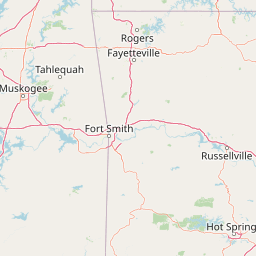
Use this park location map to pinpoint Hot Springs National Park in United States of America, understand its exact geographic position, and read its mapped placement within the surrounding landscape more clearly.

Pigeon | © OpenStreetMap contributors

Location context for Hot Springs National Park

ArkansasGarland County
Park atlas

Browse nearby protected landscapes across the Ouachita Mountains region for comprehensive geographic comparison.

Discover Other National Parks and Protected Areas Near Hot Springs National Park, Arkansas
Explore national parks and protected areas located in proximity to Hot Springs National Park, tracing the unique geography of Arkansas and the Ouachita Mountains. Continuing your discovery allows for detailed comparison of diverse conservation landscapes and geological features, deepening your understanding of the broader regional ecology.
National parkMissouri

Gateway Arch National Park: National Park Geographic Atlas and Map Boundaries

Explore protected landscape context and regional setting.

Gateway Arch National Park represents a unique protected landscape within Missouri, contributing to the broader national park atlas. This entry focuses on its specific geographic identity and mapped boundaries, offering structured data for understanding its role. Discover the factual landscape context and regional importance of Gateway Arch National Park for informed geographic exploration.

Area
0.78 km²
Established
2018
IUCN
II
Visitors
1.2M annual
National parkKentucky

Mammoth Cave National Park: Kentucky's Premier National Park for Protected Landscape Exploration

Explore its mapped boundaries and regional geography.

Mammoth Cave National Park in Kentucky presents a profound opportunity for protected-area discovery, anchored by its status as a national park. This resource focuses on providing a factual atlas-style view of its landscape, emphasizing its geographic context within the region and the extent of its protected boundaries. Users can engage with detailed information designed for structured exploration, understanding the park not just as a location but as a key component of natural landscape data.

Area
210.46 km²
Established
1941
IUCN
II
Visitors
747K annual
National parkTennessee

Great Smoky Mountains National Park: Exploring Its Protected Landscape and Regional Geography

Tennessee's premier national park, mapped for landscape discovery.

Delve into the protected area identity of Great Smoky Mountains National Park, a significant natural landmark within Tennessee. This page provides detailed context on its mountainous terrain, mapped ecological zones, and its foundational role in the broader geography of eastern North America. Understanding the park's specific protected landscape features and its geographic setting is essential for appreciating its unique conservation value.

Area
2,114.15 km²
Established
1934
IUCN
II
Visitors
12.2M annual
National parkUnited States of America

Indiana Dunes National Park: Protected Landscape Geography and Map Exploration

Explore the National Park's geographic boundaries and regional context.

Indiana Dunes National Park represents a distinct protected area within the United States of America, characterized by its unique landscape setting. This entry provides a detailed atlas-style view, highlighting the park's mapped boundaries and its contribution to the regional geography. Understanding this National Park means appreciating its specific natural terrain and its place within the conservation landscape of North America.

Area
62.12 km²
Established
1966
IUCN
II
Visitors
2.8M annual
National parkEddy County

Carlsbad Caverns National Park: Detailed Protected Area and Landscape Exploration

View mapped terrain and geographic context for this Eddy County national park.

Gain a deep understanding of Carlsbad Caverns National Park through its specific geographic features and protected landscape identity. This entry provides foundational atlas-level information on the park's mapped boundaries and its role as a designated national park within the broader regional geography of Eddy County. It is designed to offer precise context for users focused on understanding the specific natural terrain and conservation geography of this important protected area, facilitating structured discovery.

Area
189.26 km²
Established
1930
IUCN
II
Visitors
410.8K annual
National parkBrewster County

Big Bend National Park: National Park, Mapped Protected Landscape, and Regional Geography

Explore Brewster County's protected natural terrain.

Big Bend National Park is a prominent national park defined by its protected landscape and geographic features within Brewster County. This destination provides users with detailed atlas-style information, focusing on the park's mapped boundaries and its contribution to the understanding of regional natural geography. Delve into the specific context of this protected area to enhance your geographic discovery.

Area
3,242.19 km²
Established
1944
IUCN
II
Visitors
568.1K annual
National parkSouth Carolina

Congaree National Park: A Protected National Park in South Carolina's Geographic Landscape

Explore mapped boundaries and regional park geography.

Congaree National Park represents a vital protected national park entity within South Carolina, offering rich opportunities for geographic discovery and landscape exploration. Its designation as a National Park underscores its importance in mapping protected areas and understanding regional terrain. This entry provides essential context for exploring the park's specific geographic features and its position within the broader atlas of conservation landscapes.

Area
108.021 km²
Established
2003
IUCN
Ib
Visitors
287.8K annual
National parkCulberson County

Guadalupe Mountains National Park: Mapped Boundaries and Protected Landscape Identity

Explore the geography and terrain of this Texas national park.

Guadalupe Mountains National Park is a key protected area within Culberson County, West Texas. This national park offers a distinct geographic focus, allowing for detailed exploration of its mapped boundaries and the unique natural landscapes that define its protected status. Understanding its place within the Trans-Pecos region provides valuable context for regional geography and atlas-based discovery of conservation lands in Texas.

Area
349.51 km²
Established
1972
IUCN
II
Visitors
206.4K annual

Common questions about visiting, size, designation, and location context for Hot Springs National Park

Hot Springs National Park FAQs for park facts, access, geography, and protected area context
Find quick answers about Hot Springs National Park, including protected-area facts, park geography, trail and visitor context, and how the park fits into its surrounding country and regional landscape.
MoriAtlas Explorer

Continue Your Protected Areas Search Across the Global Atlas

Deepen your exploration by continuing the structured search for national parks and protected areas worldwide. Utilize the comprehensive filtering capabilities to compare different conservation landscapes and refine your understanding of global park geography. Discover more about the distribution and characteristics of protected natural areas.

Global natural geography