Why Gateway Arch National Park stands out
Gateway Arch National Park is best known for the Gateway Arch itself, the tallest monument in the United States and one of the most recognizable architectural landmarks in America. The arch serves as a monument to westward expansion and stands as a symbolic gateway to the western United States. The park is also significant for the Old Courthouse, where the Dred Scott case was tried, making it an important site in American civil rights history. The site occupies the exact location where St. Louis was founded and where key events in early American history unfolded, including the Three Flags Day ceremony that formally completed the Louisiana Purchase transfer.
Gateway Arch National Park history and protected-area timeline
The history of Gateway Arch National Park begins in the early 1930s when St. Louis civic leader Luther Ely Smith conceived the idea of creating a memorial to Thomas Jefferson at the site of the original platted area of St. Louis. After pitching his idea in December 1933, Smith chaired the committee that selected the area and persuaded President Franklin Roosevelt in 1935 to make it a National Park Service unit. The original area was bounded by the Eads Bridge to the north, Poplar Street to the south, the Mississippi River to the east, and Third Street to the west. The Old Courthouse was added to the memorial boundary in 1940. The ambitious project required the demolition of 40 city blocks and 486 buildings, a plan that faced significant opposition. An election to approve a bond issue for the project was later revealed to be rigged. Construction of the Gateway Arch itself was delayed by World War II and the Korean War. Architect Eero Saarinen won the 1947 design competition, though officials initially thought the winner was his father Eliel. Saarinen died in September 1961, before the arch was completed. The arch was finished on October 28, 1965, and formally dedicated on May 25, 1968. In 2018, Congress redesignated the site as Gateway Arch National Park despite opposition from the National Park Service, which recommended calling it a national monument instead.
Gateway Arch National Park landscape and geographic character
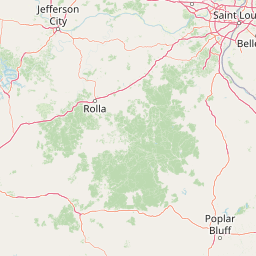
Gateway Arch National Park is situated on the riverfront of St. Louis, Missouri, along the west bank of the Mississippi River. The landscape is primarily urban and designed, featuring the monumental Gateway Arch as its centerpiece, surrounded by structured park spaces, plazas, and landscaped areas. The park sits on ground that was once the original platted area of St. Louis, including the sites of the Battle of St. Louis during the American Revolutionary War and the location where the Three Flags Day ceremony transferred Louisiana from Spain to France to the United States in 1804. The Old Courthouse, the only portion of the memorial west of Interstate 44, sits with its distinctive dome similar to the U.S. Capitol dome. The park includes the Gateway Mall running between Market and Chestnut Streets, and the grounds extend over a section of Interstate 70 via the Park over the Highway project completed in 2014. The riverfront location provides views of the Mississippi River and connects to the Illinois riverfront via elevated walkways.
Gateway Arch National Park ecosystems, habitats, and plant life
As an urban cultural and historical site, Gateway Arch National Park does not contain significant natural habitats or ecosystems in the traditional sense. The park's value is primarily historical and architectural rather than ecological. However, recent renovations have added green space to the grounds, increasing from 1,800 trees to approximately 4,200 trees following the CityArchRiver renovation project completed in 2018. This includes an explorers garden for children and new landscaped areas totaling 7.5 acres. On the Illinois side, there is a new bird sanctuary. Prior to 2016, many ash trees were removed from the grounds to prevent damage from emerald ash borers. The park's nature offerings are best understood as urban green space and landscape design rather than protected natural habitats.
Gateway Arch National Park wildlife and species highlights
Wildlife presence at Gateway Arch National Park is limited due to its urban setting and primary function as a cultural monument. The site does not feature significant wildlife populations or habitat areas typical of more natural national parks. Some bird activity may be present in the landscaped areas and the bird sanctuary on the Illinois side of the river, but the park is not known for wildlife viewing or biodiversity. The park's significance lies in its historical and architectural features rather than in wildlife conservation or natural ecosystems.
Gateway Arch National Park conservation status and protection priorities
Gateway Arch National Park represents a unique conservation case within the National Park Service system. The site was listed on the National Register of Historic Places on October 15, 1966, recognizing its significant historical and architectural value. The conservation significance centers on preserving the Gateway Arch as an architectural masterpiece, the Old Courthouse as a historic building where pivotal civil rights cases were argued, and the memory of the founding era of St. Louis and American westward expansion. The 2018 redesignation as a national park rather than a national memorial has been controversial among conservation professionals who argue that the site lacks the natural resources typically protected in national parks. The National Park Service testified that the memorial is too small and limited in the range of resources it protects to warrant the national park designation. The conservation value lies primarily in maintaining the architectural integrity and historical significance of the structures and the commemorative purpose of the site.
Gateway Arch National Park cultural meaning and human context
Gateway Arch National Park is deeply embedded in American cultural and historical narratives. The park commemorates Thomas Jefferson's Louisiana Purchase, which doubled the size of the United States in 1803 and opened the western frontier for exploration and settlement. The site marks the starting point of the Lewis and Clark Expedition, one of the most important exploratory journeys in American history. The Old Courthouse connects to the Dred Scott case, one of the most infamous legal decisions in American history that helped fuel the Civil War. The park sits on land originally deeded by St. Louis founder Auguste Chouteau, and the surrounding area contains layers of history from the Revolutionary War through the Civil War. The Gateway Arch itself has become an enduring symbol of American ambition and westward expansion, appearing on the Missouri state quarter in 2003. The site represents a complex intersection of colonial history, westward expansion, and civil rights that continues to shape American identity.
Top sights and standout views in Gateway Arch National Park
Gateway Arch National Park's main highlight is the Gateway Arch itself, a 630-foot-tall steel catenary arch that stands as the tallest monument in the United States and one of the most recognizable American landmarks. Visitors can ride a unique tram system to the observation room at the top for panoramic views of St. Louis and the Mississippi River. The Old Courthouse, with its domed roof similar to the U.S. Capitol, is another significant highlight where the Dred Scott case was argued. The museum beneath the arch features exhibits on westward expansion and the arch's construction, including the documentary Monument to the Dream. The recent CityArchRiver renovation added 7.5 acres of green space, a new cobblestone plaza between the arch and the river, and improved connectivity to downtown St. Louis via the Park over the Highway structure.
Best time to visit Gateway Arch National Park
Gateway Arch National Park can be visited year-round, as the indoor museum and arch observation area operate in all seasons. The best time to visit depends on preferences: spring and fall offer pleasant weather for exploring the outdoor grounds and riverfront areas, while summer brings larger crowds but longer daylight hours for viewing the arch at sunset. Winter visits offer fewer visitors but cold temperatures in the outdoor areas. The museum and tram operate daily, though specific operating hours may vary by season. Visitors interested in avoiding crowds should consider weekday visits during non-peak tourist seasons. The arch's illuminated appearance at night offers a different perspective for evening visitors.