
Why Îles de la Paix Migratory Bird Sanctuary stands out
The sanctuary is best known as a major St. Lawrence River stopover for migratory waterfowl, particularly diving ducks such as scaup and goldeneye as well as common mergansers, and as a breeding ground for a diverse community of marsh and island-nesting birds. The combination of partly flooded forest, marsh, and open water on islands that barely rise above river level makes the site exceptionally productive for waterbirds in both spring and autumn. It is also notable for being one of the federal Migratory Bird Sanctuary designations located within the heavily urbanized Montreal region, where it preserves a meaningful pocket of natural river-island habitat very close to major population centres.
Îles de la Paix Migratory Bird Sanctuary history and protected-area timeline
The Îles de la Paix Migratory Bird Sanctuary was established in 1972 as part of Canada's federal Migratory Bird Sanctuary program, administered by the Canadian Wildlife Service. The designation was intended to secure the island group and its surrounding waters as protected habitat for migratory birds using the St. Lawrence River corridor.
Over time, the area's conservation profile expanded beyond the original sanctuary designation. It later became associated with the Îles de la Paix National Wildlife Area, strengthening its long-term protection through a complementary federal framework. BirdLife International has additionally included the broader area within an Important Bird Area, recognizing its importance at an international scale for migratory and breeding bird populations.
Îles de la Paix Migratory Bird Sanctuary landscape and geographic character
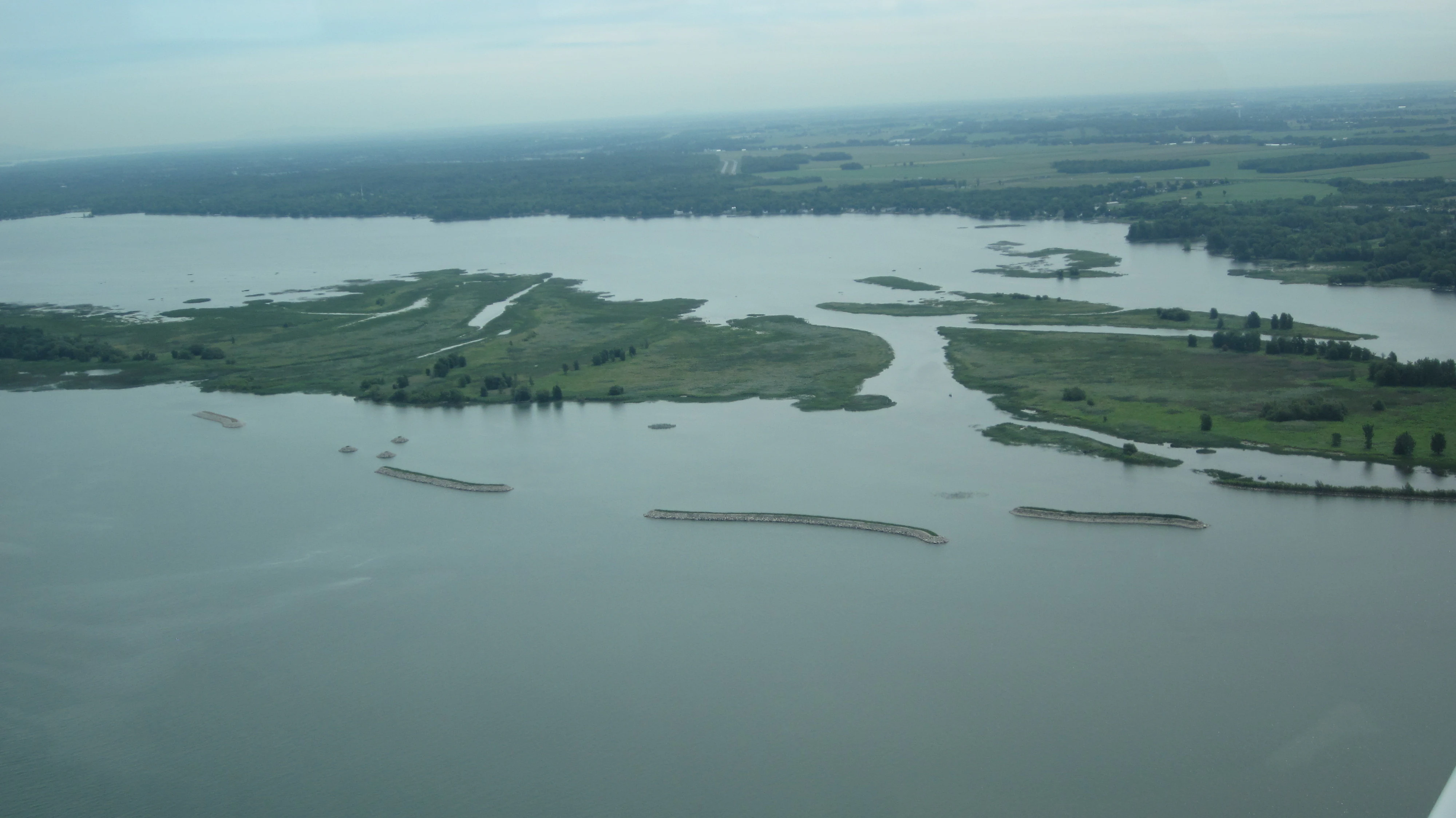
The landscape of the sanctuary is shaped almost entirely by the hydrology of the St. Lawrence River. The protected area lies in the natural widening of the river known as Lac Saint-Louis, just upstream of Montreal, where the St. Lawrence spreads out into a broad lake-like expanse. Within this setting, the sanctuary centres on the small islands of the Îles de la Paix group, surrounded by a buffer of open water extending roughly 500 metres from the islands.
The islands themselves sit only a few metres above the waterline, which gives the landscape a distinctly low and vulnerable profile. During high-water periods, parts of the islands are routinely inundated, and the boundary between land and water shifts with the seasonal flow of the great river. This dynamic produces a landscape mosaic of partly flooded forest, marsh, and shallow open water rather than clearly defined dry land.
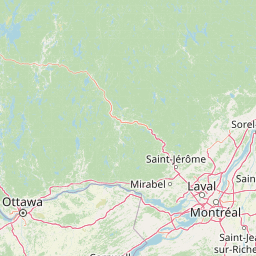
The proximity of the small town of Beauharnois on the southern shore and the broader Montreal metropolitan area to the north emphasizes how unusual this near-natural river-island environment is within its regional context. The scenery is essentially a working river landscape, dominated by water, low wooded hummocks, marsh vegetation, and the open sky of the St. Lawrence valley.
Îles de la Paix Migratory Bird Sanctuary ecosystems, habitats, and plant life
Ecologically, the sanctuary reflects the character of the St. Lawrence Lowlands where the great river expands into Lac Saint-Louis. Despite its small absolute size, the area concentrates several important habitat types within a single protected boundary: open river water, shallow shoreline water, marsh, and forest patches on low islands that are repeatedly shaped by flooding.
This habitat mosaic supports rich seasonal biological activity. In spring and autumn the open water and flooded margins become staging and feeding areas for migratory waterfowl, while in summer the drier portions of the islands provide nesting substrates for ground-nesting and tree-nesting birds, as well as habitat for marsh-associated songbirds. The repeated natural flooding regime also creates conditions that continually reset and rejuvenate these habitats, favouring a dynamic mosaic rather than a stable fixed community.
Îles de la Paix Migratory Bird Sanctuary wildlife and species highlights
Migratory and breeding waterbirds are the central feature of the sanctuary's wildlife. In spring the area is regularly visited by large numbers of ducks, and during the autumn migration the islands and surrounding waters host an estimated thirty thousand or more birds. Diving ducks such as lesser scaup, common goldeneye, and common mergansers are particularly characteristic of the autumn staging flocks that use these productive, open-water feeding grounds.
In the breeding season the sanctuary supports a wide variety of waterfowl and marsh-associated species. Ducks nesting here include ring-necked duck, mallard, northern pintail, gadwall, wood duck, green-winged teal, and blue-winged teal. Colonial and marsh-nesting waterbirds also make use of the islands, including black tern, common tern, pied-billed grebe, green heron, and black-crowned night-heron, together with American coot, spotted sandpiper, great horned owl, and marsh wren. This rich breeding community reflects the site's combination of nesting cover, open water, and protected isolation from much human disturbance during the nesting period.
The combination of large seasonal concentrations of migratory ducks and a diverse array of breeding species gives the sanctuary unusual wildlife significance for such a small area embedded in a major metropolitan region.
Îles de la Paix Migratory Bird Sanctuary conservation status and protection priorities
The conservation significance of Îles de la Paix rests on its layered protection status. As a Migratory Bird Sanctuary established under Canadian federal wildlife legislation, it provides legal protection for migratory birds and their habitats throughout the year. The overlap with the Îles de la Paix National Wildlife Area adds an additional federal mechanism aimed at broader wildlife and habitat protection, while recognition as part of a BirdLife International Important Bird Area places the site within an international bird-conservation framework.
From a habitat perspective, the sanctuary protects islands, marshes, and shallow St. Lawrence waters that are scarce elsewhere in the corridor between Montreal and the river's mouth. Flooded forest, marsh, and open-water edge habitats of this quality have been heavily reduced along the St. Lawrence, and the sanctuary therefore preserves a disproportionately valuable example of these habitat types.
The site's role as both a major autumn staging area for migratory ducks and an active breeding area for waterfowl and marsh-nesting birds also gives it strong functional conservation value, supporting bird populations that range far beyond the immediate Montreal region across the broader Atlantic and Mississippi flyways.
Top sights and standout views in Îles de la Paix Migratory Bird Sanctuary
A federal Migratory Bird Sanctuary on low St. Lawrence River islands south of Montreal, with overlapping National Wildlife Area and Important Bird Area designations.
Notable for supporting up to around thirty thousand migratory waterfowl in autumn and a strikingly diverse breeding bird community on islands barely above the waterline.
An unusually natural island-and-marsh refuge preserved within the heavily developed Montreal metropolitan region, where flooded forests, marsh, and open river water meet at the edge of one of North America's great rivers.
Best time to visit Îles de la Paix Migratory Bird Sanctuary
The sanctuary's character shifts sharply with the seasons in ways typical of St. Lawrence River sites. Spring brings the arrival of large numbers of ducks using the open water and flooded edges as staging habitat, making it an active time for waterbird observations. Autumn is the peak period of bird abundance, as tens of thousands of migratory waterfowl, including diving ducks and mergansers, concentrate on the islands and surrounding waters before continuing south.
Summer is the breeding season, when the islands host nesting waterfowl, herons, terns, grebes, and marsh-nesting songbirds, and the flooded-forest and marsh habitats are at their most biologically active. Winter conditions, by contrast, leave the low islands exposed to ice, flooding, and snow cover and generally offer limited wildlife viewing, though freeze-up and break-up periods can still concentrate waterbirds elsewhere along Lac Saint-Louis.