Scotland's first national park, protecting lochs, mountains, and ancient forests
Loch Lomond and The Trossachs National Park
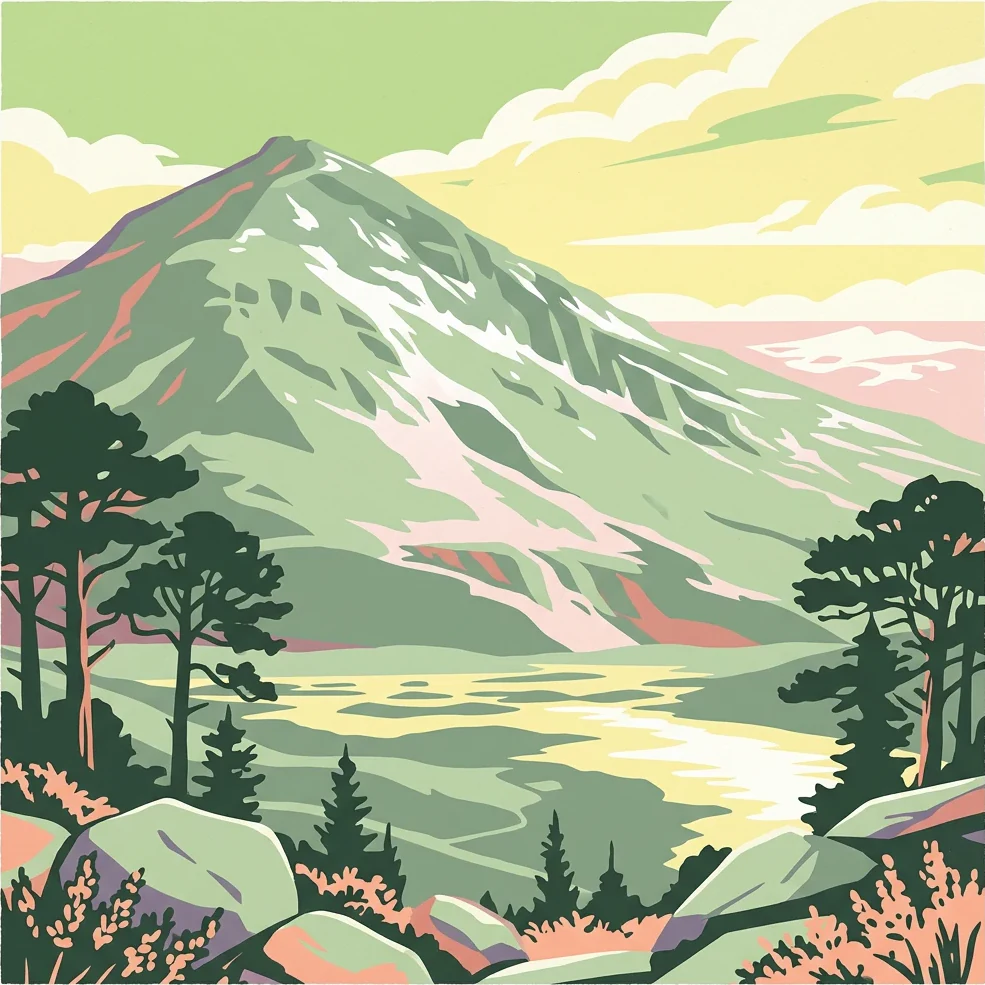
Loch Lomond and The Trossachs National Park is Scotland's first national park, established in 2002 by the Scottish Parliament. Covering 1,865 square kilometres, it occupies much of the western part of the southern Highlands, lying north of Glasgow and stretching from the shores of Loch Lomond northward into the Breadalbane mountains. The park straddles the Highland Boundary Fault, a major geological division that creates a sharp contrast between the lowland landscapes to the south with their green fields and cultivated land and the wild highland terrain to the north with its dramatic mountains and glens. The park protects a remarkable diversity of landscapes, including the largest lake in Great Britain by surface area, 21 Munros (mountains exceeding 3,000 feet), ancient Caledonian pine forests, and over 50 rivers and large burns.
The park is centred on Loch Lomond, a landmark so iconic that a 2005 poll of Radio Times readers voted it the sixth greatest natural wonder in Britain. The surrounding Trossachs region, once a small woodland glen, now refers to a broader area of wooded hills, glens, and lochs that has welcomed visitors for centuries. The combination of accessibility from major population centres like Glasgow and Stirling, and the quality of scenery representing a microcosm of typical Highland landscape, has made this area one of Scotland's most visited protected landscapes, with nearly three million visits recorded in 2017.
The park's ecological significance is substantial, with over 200 bird species and more than a quarter of all plant species found in Britain recorded within its boundaries. It contains significant areas of native woodland, including remnants of the once-extensive Caledonian forest, Atlantic oakwoods, and upland habitats such as heathland and blanket bog. The park also includes 63 kilometres of coastline around sea lochs, supporting marine wildlife and coastal bird populations.