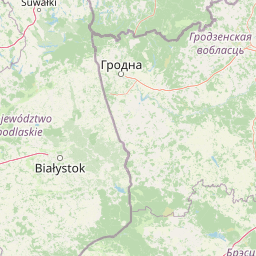
Why Mały Borek Nature Reserve stands out
Mały Borek is best known for its preserved types of pine bore forest, particularly the crowberry-type and cowberry-type pine communities considered characteristic of the Augustów Primeval Forest. Around 85 percent of the reserve's area consists of pine bore forests, and coniferous trees overall account for nearly 90 percent of the stand. The reserve is also recognized for its combination of contrasting wet habitats within a relatively small area, including a central raised bog with sparse, stunted pine, and younger alder swamps in the southern and southeastern portions. Together with its inclusion in the Natura 2000 area 'Puszcza Augustowska,' the reserve is notable for providing habitat for capercaillie and for offering a representative scientific and educational reference site for Augustów Plain forest ecology.
Mały Borek Nature Reserve history and protected-area timeline
Mały Borek Nature Reserve was created on 12 November 1959 by an order of the Minister of Forestry and the Wood Industry of Poland. Like many forest reserves established during that era, its purpose was to preserve an exemplary fragment of natural forest landscape that could serve both scientific research and educational use, rather than to manage timber production.
In its founding legal documentation, the specific type and subtype of the reserve were not specified, but within the records of the Płaska Forest District, it has consistently been treated as a forest reserve (rezerwat leśny). Its area has generally been described as approximately 90.49 hectares, although some publications cite a slightly larger figure of 90.53 hectares.
A major step in modern conservation management came in 2008, when a formal protection plan (plan ochrony) was introduced for the reserve. This plan established concrete conservation objectives and risk-management measures, addressing threats such as declining groundwater levels, forest pest outbreaks, and loss of old hollow-bearing trees. In 2004, Mały Borek also became part of the Natura 2000 Special Protection Area 'Puszcza Augustowska,' formally linking it to European-level bird conservation during the reserve's later administrative history.
Mały Borek Nature Reserve landscape and geographic character
The landscape of Mały Borek reflects the broader character of the Augustów Plain, a lowland region shaped by glacial history that gives rise to flat terrain interspersed with peatlands, wet hollows, and coniferous forests. Within the reserve, the topography is gently undulating, with subtle transitions driven more by soil moisture and bog formation than by dramatic relief.
The dominant physical setting is pine bore forest, where sandy, often podzolized soils support dry to moist pine communities. In the central part of the reserve, the landscape shifts into a raised bog, marked by a low and sparse pine overstory that reflects waterlogged, nutrient-poor peat soils. This open, stunted-forest character contrasts with the taller surrounding coniferous stands.
Along the southern and southeastern edges of the reserve, the landscape changes again into younger alder-dominated swamp forest, where black alder, downy birch, and silver birch grow on wetter, more fertile peat and muck soils. The interplay of dry pine uplands, central bog, and wet alder margins gives Mały Borek a small but visually distinct mosaic of northeastern Polish lowland forest landscapes.
Mały Borek Nature Reserve ecosystems, habitats, and plant life
The ecological character of Mały Borek is defined by its mosaic of boreal and wetland forest habitats, anchored by extensive pine bore communities. Fresh and moist pine bores dominate the reserve, enriched by a significant admixture of spruce that adds vertical structure and a more shaded understory than pure pine stands would allow. The ground layer of these forests includes blackberry and lingonberry, with moister patches featuring blueberry and straight moor grass.
A distinctive ecological centerpiece of the reserve is its central raised bog, a peatland ecosystem supporting a low, sparse pine overstory and a flora adapted to nutrient-poor, acidic, and waterlogged conditions. The bog contributes peat-forming bryophytes such as several sphagnum species, and supports insectivorous plants like round-leaved sundew, which is fully protected in Poland.
In the southern and southeastern portions of the reserve, the ecology shifts to younger alder swamp forests, where the canopy is composed mainly of black alder and birch species, with a shrub layer of alder buckthorn, grey willow, and eared willow. This combination of dry pine forests, ombrotrophic bog, and minerotrophic alder swamp produces, within a small area, a representative and ecologically meaningful sample of Augustów Primeval Forest vegetation types.
Mały Borek Nature Reserve wildlife and species highlights
The wildlife of Mały Borek reflects the forest and peatland mosaic of the reserve, with particular importance placed on bird species. The reserve contains refuges and leks (traditional display grounds) of the capercaillie, a large grouse species considered a sensitive indicator of mature, structurally complex coniferous forest in northeastern Europe. This presence is one of the reasons the reserve was incorporated into the Natura 2000 Special Protection Area 'Puszcza Augustowska'.
Beyond capercaillie, the reserve's mixture of pine forests, raised bog, and alder swamp supports birdlife typical of the Augustów Primeval Forest, including species that depend on old trees, deadwood, and undisturbed interiors of large forest tracts. Cavity-nesting and deadwood-dependent bird groups are among those specifically considered in the reserve's protection plan.
Invertebrate studies have also highlighted the reserve's ecological interest. Research from 1985 documented eight ant species living largely in nests within rotting stumps, with common species including Lasius niger and Camponotus ligniperda. Surveys from 2016 recorded 45 lichen species, including several considered threatened on Polish red lists, particularly in northeastern Poland. These findings underscore the reserve's value for less conspicuous but ecologically important organisms.
Mały Borek Nature Reserve conservation status and protection priorities
Mały Borek plays a meaningful role in regional conservation by preserving representative pine bore forest habitats of the Augustów Primeval Forest, an area of significant national and European conservation value. Its designation, together with its later inclusion in the Natura 2000 network, reflects its importance both as a local forest reference site and as part of broader European biodiversity protection efforts.
The reserve has been under active protection since at least 2008, when a formal protection plan was adopted. This plan addresses key threats: declining groundwater levels around the reserve, outbreaks of forest insect pests, and the reduction of bird species associated with old, hollow-bearing trees. Preventive measures include prohibiting drainage works in a 100-meter buffer zone, monitoring forest sanitary conditions, and retaining deadwood and cavity trees that do not pose a pest risk.
Fire risk is another key conservation concern due to the dominance of dry pine bore forests, which are particularly flammable during dry periods. The combination of habitat-level management, buffer zone safeguards, and Natura 2000 integration makes the reserve a small but well-structured component of forest conservation in the Podlaskie region.
Top sights and standout views in Mały Borek Nature Reserve
Mały Borek stands out for the unusually high proportion of pine bore forest preserved within a single compact reserve, along with the presence of a central raised bog bordered by alder swamp, giving it strong habitat diversity for its size. Its ecological profile is closely tied to the identity of the Augustów Primeval Forest, one of the largest remaining primeval-style forest complexes in Poland.
The reserve's integration into the Natura 2000 network and its role as habitat for capercaillie leks further add to its conservation significance. The presence of numerous lichens, several sphagnum species, and protected flowering plants like martagon lily and round-leaved sundew reflects a level of botanical richness typical of older, minimally disturbed forests in this region of Poland.
Best time to visit Mały Borek Nature Reserve
Because Mały Borek is a protected forest reserve rather than a developed visitor destination, seasonal visitation is best approached with the ecology of the Augustów Primeval Forest in mind. Late spring and early summer bring lush ground vegetation in the fresh pine bores and alder swamps, while the raised bog is most visually distinctive in warmer months when sphagnum cushions and bog flora are active.
Early autumn can highlight the contrasting colors of the coniferous canopy and the wetland margins, though the dominant pine-dominated landscape retains a strongly evergreen character through the year. Winter visits should be approached cautiously because of the high fire risk associated with dry pine stands and because of the sensitivity of capercaillie habitat, which can be disturbed by human presence during cold months.