
Why Maramureș Mountains Natural Park stands out
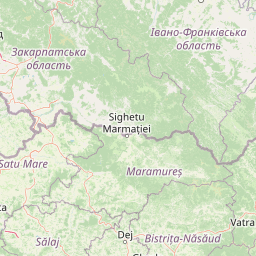
Maramureș Mountains Natural Park is best known for its status as Romania's largest nature park and its protection of pristine Carpathian wilderness. The park preserves the dramatic alpine landscape of the Maramureș Mountains, including the imposing Vârful FARCĂU peak and its surrounding glacial cirques. It is renowned for its exceptional biodiversity, protecting significant populations of large carnivores including brown bear, wolf, and lynx, as well as iconic bird species such as the capercaillie and black grouse. The park contains important botanical treasures including endemic Carpathian flora such as edelweiss, yellow gentian, and rare Carpathian saxifrage. The narrow-gauge Mocănița railway running through the Vaser Valley has become a cultural symbol of the region.
Maramureș Mountains Natural Park history and protected-area timeline
Maramureș Mountains Natural Park was officially established through Government Decision 2151, passed on November 30, 2004, and published in the Romanian Official Monitor on January 12, 2005. This legislation instituted protected area status for the Maramureș Mountains region, designating it as a Category V protected landscape under the IUCN classification system. The establishment came as part of Romania's broader expansion of its protected areas network following European integration requirements and growing recognition of the Carpathians' ecological significance. Prior to formal protection, the area had long functioned as a de facto wilderness zone due to its challenging terrain and limited infrastructure development. The Maramureș Mountains themselves have historical significance as a natural boundary between historical Romanian territories and neighboring lands. The region became particularly noted during the medieval period when the Maramureș territory served as a distinct voivodeship with its own cultural and administrative identity. The park administration falls under Romsilva, the national forestry authority, with the APNMM (Administrația Parcului Natural Munții Maramureșului) managing daily operations. The park partially overlaps with the Natura 2000 site designated under European Union nature protection directives, providing additional regulatory framework for species and habitat conservation.
Maramureș Mountains Natural Park landscape and geographic character
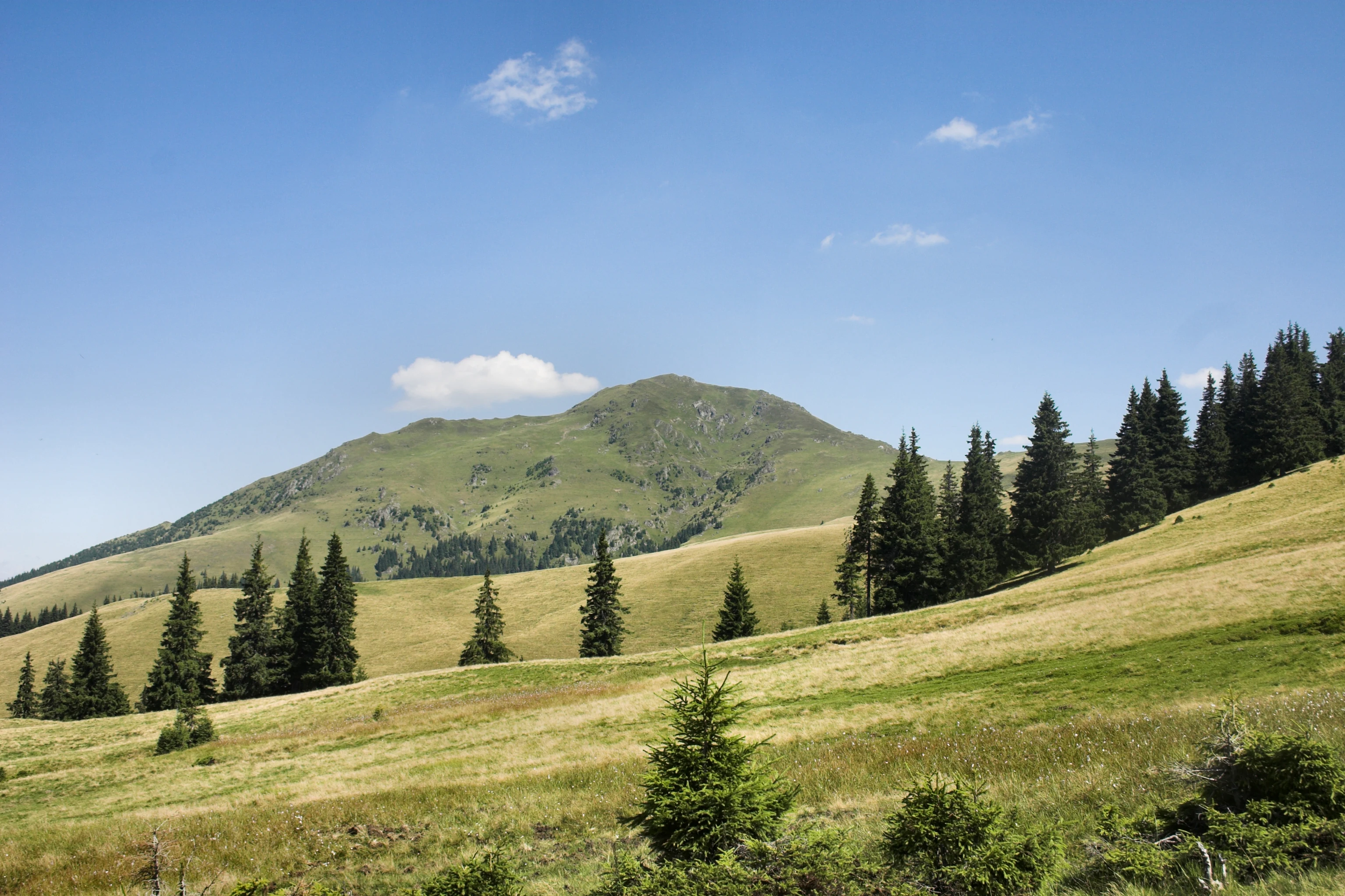
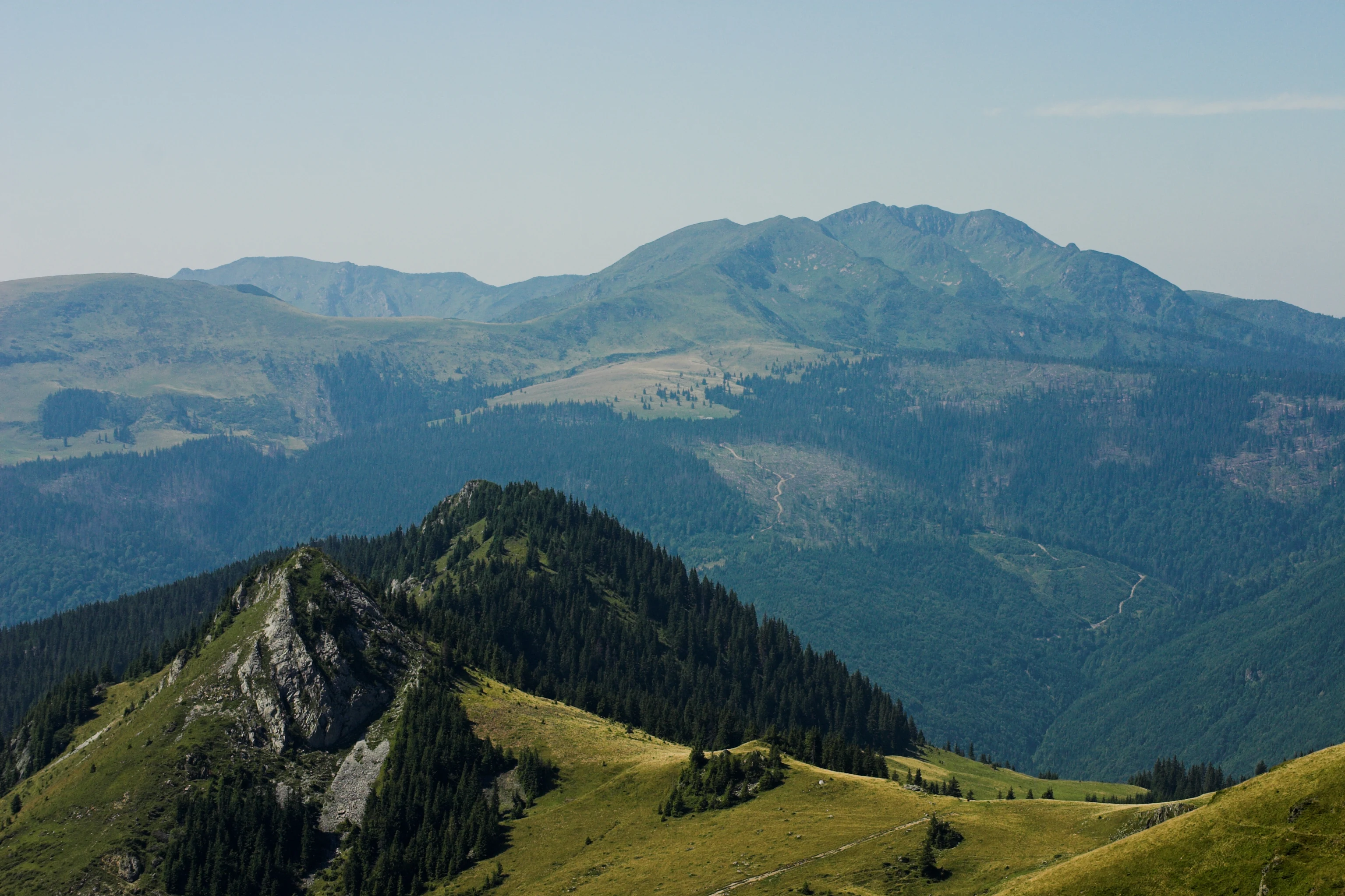
The landscape of Maramureș Mountains Natural Park exemplifies the dramatic topography of the Eastern Carpathians. The main ridge forms a segmented backbone with several prominent peaks including FARCĂU (1,957m), Stogu, Mihăilecu, and Pop-Ivan rising above the surrounding terrain. These peaks display diverse geological character, with volcanic formations at FARCĂU and Mihăilecu, while other areas feature limestone cliffs and crystalline rock exposures. The park contains extensive glacial features including cirques, moraines, and U-shaped valleys carved during the Pleistocene epoch. The Vaser River valley stands out as a particularly dramatic landscape element, with its narrow gorge, steep walls, and the famous narrow-gauge railway threading along its course. The terrain includes numerous karst features such as dolines, sinkholes, and caves developed in the limestone sections. Lower slopes give way to forest-covered valleys and the broader Maramureș depression. The landscape transitions from montane forest through subalpine scrub to alpine grassland as elevation increases, creating a vertical zonation clearly visible across the park's terrain. Rocky cliffs and stony slopes interrupt the forest cover at higher elevations, providing specialized habitats for alpine vegetation and nesting sites for raptors.
Maramureș Mountains Natural Park ecosystems, habitats, and plant life
The ecological diversity of Maramureș Mountains Natural Park reflects its position within the Carpathian biodiversity hotspot. The park contains an impressive array of habitat types arranged in clear altitudinal zones. Montane forests of Norway spruce, silver fir, and European beech dominate the lower and middle elevations, with more extensive spruce forests occupying higher positions. The park includes diverse forest types ranging from mixed beech-fir forests through pure spruce stands to subalpine pine communities. At the highest elevations, alpine meadows and shrublands replace forest cover. The botanical richness is exceptional, with the Romanian Wikipedia source listing numerous protected and endemic species. Rare Carpathian endemics include the Carpathian saxifrage, Carpathian rock jasmine, and Carpathian fleabane. The park preserves important populations of edelweiss and yellow lady's slipper, both legally protected species. The Vârful FARCĂU reserve protects rare floral communities including Vaccinium species, alpine rose, and various rare herbs. The Poiana cu narcise reserve preserves a notable colony of Narcissus radiiflorus at approximately 1,600 meters elevation. The park supports several carnivorous plant species including round-leaved sundew and alpine butterwort, both glacial relicts. Fungal diversity is significant, with the park's forests supporting populations of prized edible species including Boletus edulis, Lactarius deliciosus, and Cantharellus cibarius.
Maramureș Mountains Natural Park wildlife and species highlights
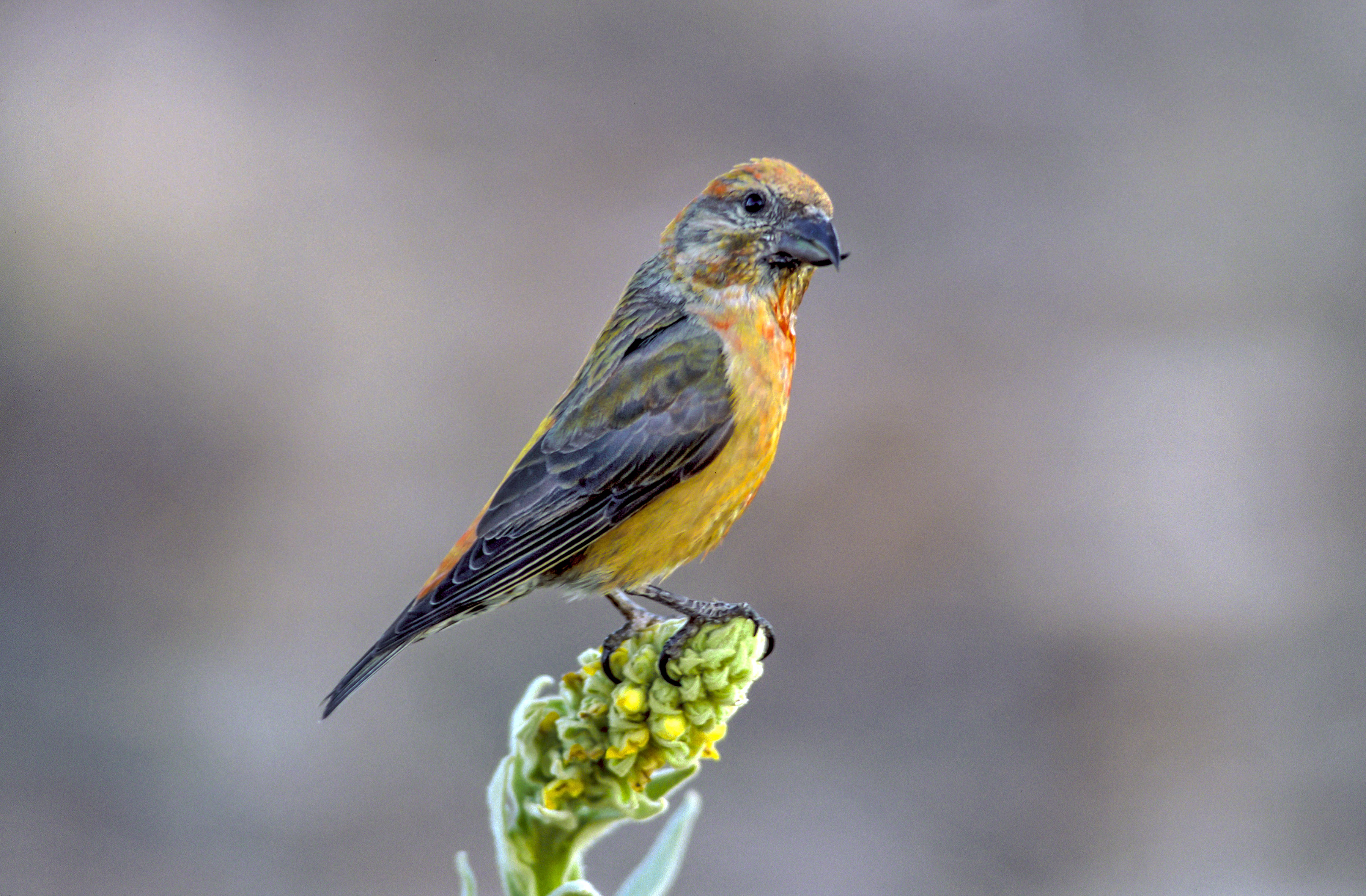
The wildlife community of Maramureș Mountains Natural Park represents one of Romania's most significant assemblages of large mammals and forest species. The park supports viable populations of brown bear, gray wolf, and Eurasian lynx, the three Carpathian large carnivores that have persisted in relatively healthy numbers compared to other European mountain ranges. Red deer and roe deer occupy the forest openings and meadow edges, while wild boar traverse the woodlands. The European pine marten and beech marten are common mustelids, alongside the European polecat and the critically endangered European mink. River otter inhabits the park's streams and the semi-aquatic water shrew occupies wetland areas. Bird diversity is particularly notable, with the capercaillie and black grouse representing flagship species of the subalpine coniferous forests. Golden eagle, lesser spotted eagle, and peregrine falcon soar above the peaks and cliffs. The hazel grouse inhabits the forest understory while various woodpecker species including the three-toed woodpecker occupy old-growth forest stands. The park protects bat colonies including both horseshoe bat species and the common pipistrelle. Reptile and amphibian communities include the viviparous lizard, Aesculapian snake, and slow worm among reptiles, while the Carpathian newt, fire-bellied toad, and common frog represent amphibian diversity. The streams support populations of brown trout, grayling, and the Danube salmon, a game fish of particular conservation concern.
Maramureș Mountains Natural Park conservation status and protection priorities
Maramureș Mountains Natural Park plays a crucial role in conserving Carpathian biodiversity and ecosystem services. The park's Category V protected landscape designation reflects its combination of significant natural value with maintained traditional land uses. The overlap with the Natura 2000 network provides additional European-level protection through the Birds and Habitats Directives, formalizing conservation commitments for the park's priority species and habitats. The park contains four national nature reserves of Category IV status, providing stricter protection for particularly sensitive areas: Vârful FARCĂU protecting geological, floristic, and landscape values; Cornu Nedeii protecting capercaillie habitat; Poiana cu narcise Tomnatec preserving the Narcissus colony; and Stâncăriile Sâlhoi-Zâmbroslavele protecting geological and botanical features. The Carpathian Mountains serve as Europe's last major wilderness area, and the park contributes to maintaining connectivity between protected areas across international boundaries. The park faces conservation challenges including unauthorized logging, poaching, and habitat fragmentation from infrastructure development. Tourism pressure concentrates along the Vaser Valley and around major peaks, requiring management to prevent ecosystem degradation. The protection of large carnivore populations depends on maintaining sufficient habitat connectivity and prey base within the park boundaries.
Maramureș Mountains Natural Park cultural meaning and human context
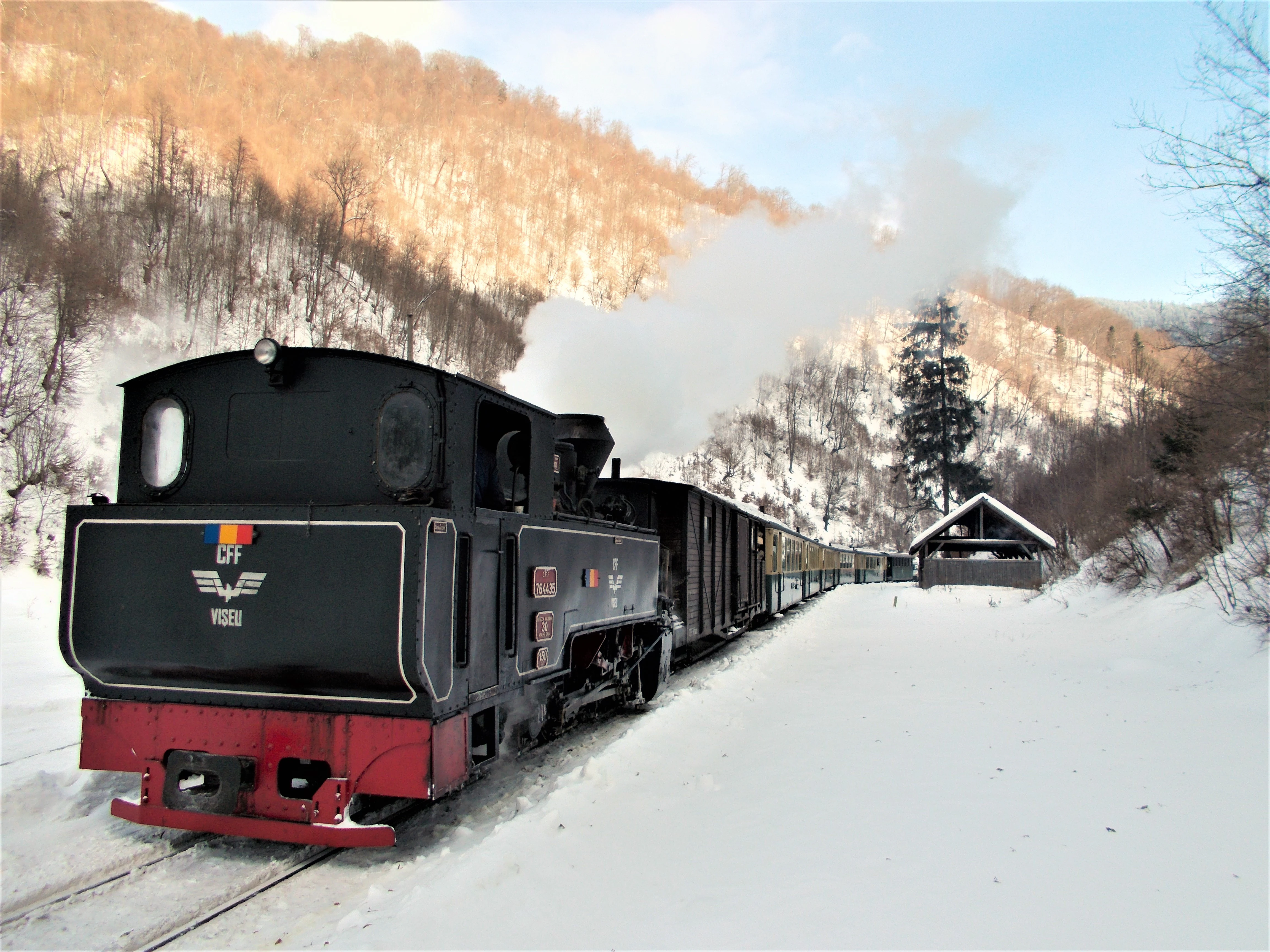
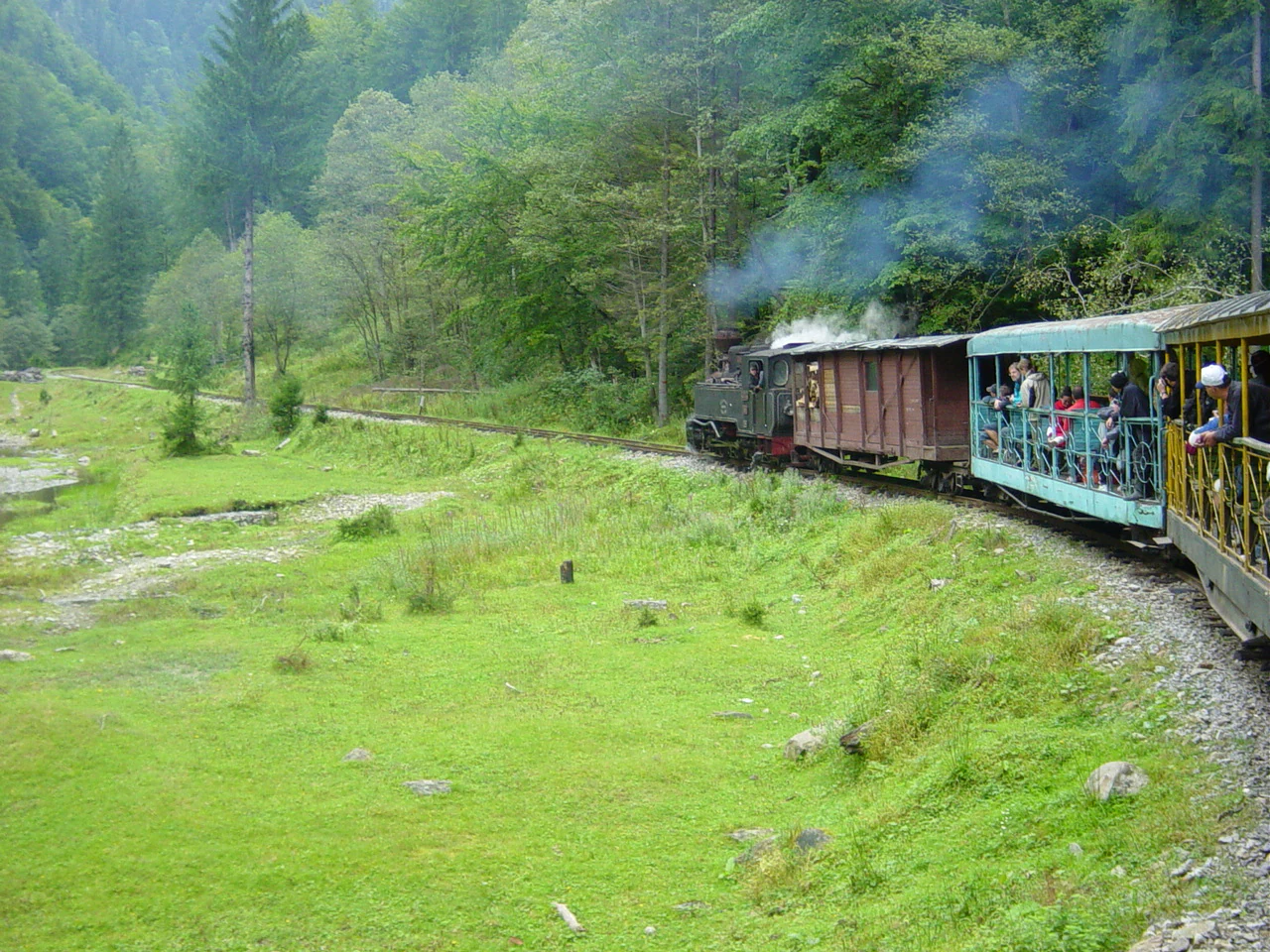
Maramureș Mountains Natural Park encompasses a landscape shaped by centuries of traditional pastoral and forestry practices by the Maramureș people, an ethnically distinct community whose cultural traditions remain remarkably intact. The park contains numerous wooden churches built in the distinctive Maramureș style, with the churches at Borșa, Moisei, and Poienile de sub Munte recognized as historic monuments dating from the 17th and 18th centuries. These structures represent unique architectural heritage with their tall wooden towers and elaborate interior decorations. The narrow-gauge Mocănița railway, built between 1930 and 1933, originally served forestry operations but now functions as a tourist attraction offering rides through the dramatic Vaser Valley, nearly reaching the Ukrainian border. Traditional villages within and adjacent to the park maintain cultural practices including traditional costume, water-powered fulling mills called vâltori, and distinctive festivals celebrating seasonal events like the Narcissus Festival at Repedea and the Shepherd's Day at Bistra. The economy of the surrounding area historically centered on logging, livestock raising, and craftsmanship, with these activities continuing within the park's multiple-use framework. The Maramureș region is renowned for its wooden cemetery markers and distinctive ethnographic traditions that attract cultural tourism alongside the natural attractions.
Top sights and standout views in Maramureș Mountains Natural Park
Maramureș Mountains Natural Park offers exceptional experiences centered on its Carpathian wilderness character. The ascent to Vârful FARCĂU provides hikers access to the highest peak in the range, with panoramic views across the alpine landscape and into neighboring Ukraine. The Vaser Valley narrow-gauge railway journey on the historic Mocănița offers a unique combination of cultural heritage and scenic travel through pristine forest terrain. The glacial Lacul Vinderelu sits in a striking mountain saddle, accessible via mountain trails and offering a glimpse into the park's glacial heritage. The reserve at Poiana cu narcise preserves one of Romania's most impressive high-altitude Narcissus colonies, creating a remarkable floral display in early summer. Wildlife observation opportunities include tracking opportunities for large carnivores in their natural habitat, while birdwatchers seek capercaillie and black grouse in the coniferous forests. The traditional wooden churches scattered throughout the park's periphery provide cultural enrichment for visitors interested in regional heritage. The winter landscape transforms the park into a backcountry skiing and snowshoeing destination with challenging terrain and minimal infrastructure.
Best time to visit Maramureș Mountains Natural Park
The optimal visiting period for Maramureș Mountains Natural Park spans from late spring through early autumn, with June through September offering the most favorable conditions for hiking and wildlife observation. Summer months bring warm days and cool evenings in the high country, with wildflower displays at their peak in July and August. Autumn provides excellent conditions for mushroom foraging in the forests and offers spectacular fall color as the beech and mixed forests turn golden. Winter access is limited and requires appropriate mountain experience, as heavy snowfall closes many trails and the terrain becomes hazardous without proper equipment. The shoulder seasons of May and October offer fewer visitors and pleasant weather, though trail conditions may be variable. The Maramureș region experiences a continental climate with significant snowfall at higher elevations, making winter visits feasible only for experienced winter mountain travelers. The Vaser Valley railway operates seasonally, with schedules varying throughout the year.