Why Mergiškių Nature Reserve stands out
Mergiškių Nature Reserve is best known for safeguarding one of the remaining patches of mature hornbeam-dominated hill forest in the Aukštadvaris region of southeastern Lithuania, an ecosystem that has become increasingly rare in the country. Within these woodlands, the reserve preserves not only the habitat itself but also the full set of species that depend on it, including rare plants, fungi, ground-dwelling beetles, woodland moths, and the white-backed woodpecker, a specialist species of mature broadleaf and mixed forest. This combination of intact forest habitat and a notable concentration of Red Data Book species is the defining character of the reserve.
Mergiškių Nature Reserve history and protected-area timeline
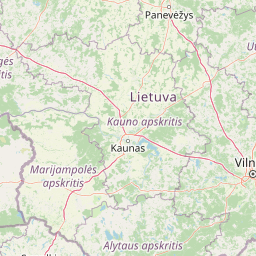
Mergiškių Nature Reserve was formally established in 1996, at a time when Lithuania was reorganizing its system of protected areas in the years following the restoration of independence. The reserve was created as a strictly protected core within the wider Aukštadvaris Regional Park, with the explicit aim of preserving the central part of the Mergiškių hill forest ecosystem and the rare species associated with it.
Its designation as an IUCN Category Ia nature reserve reflects a deliberate choice to apply the most restrictive protection regime available. No economic activity is permitted within its boundaries, and visitor access is limited to research and educational visits coordinated with the regional park directorate. By becoming part of the European Natura 2000 network, the reserve also became linked to the broader EU framework for protecting threatened habitats and species, giving its local conservation role an additional continental dimension.
Mergiškių Nature Reserve landscape and geographic character
The reserve occupies a stretch of low hill country typical of the Aukštadvaris region. The terrain is shaped by glacial processes, producing gentle ridges, shallow valleys, and a mosaic of hilltops and depressions rather than dramatic relief. These hills are densely forested, and the reserve lies within a compartment-based forest management unit of the Trakai forestry district, indicating that even the administrative layout respects the underlying topography.
Hornbeam-dominated woodland defines the visual character of the site. In late spring and summer, the canopy forms a dense, layered cover that casts deep shade on the forest floor, while autumn brings a quieter palette as hornbeam leaves turn yellow and the leaf litter thickens. The wider regional park landscape around the reserve features lakes, additional forest blocks, and traditional rural land, but within the reserve itself the scene is one of continuous closed forest stretching across hilly ground.
Mergiškių Nature Reserve ecosystems, habitats, and plant life
Ecologically, Mergiškių Nature Reserve is a strictly protected example of mature broadleaf hill forest, with hornbeam at the core of the woodland community. Such hornbeam habitats have become increasingly rare and fragmented in Lithuania, making well-preserved stands like this one ecologically significant at both national and regional scales.
The reserve's ecological value also lies in the wider community of species that hornbeam forests support. The undisturbed structure of the forest, with its old trees, decaying wood, deep litter layer, and shaded microclimate, creates conditions that many specialized woodland species require. By protecting these conditions, the reserve maintains not just trees but an entire habitat system, including its characteristic understorey, fungi, invertebrates, and cavity-nesting birds.
Mergiškių Nature Reserve wildlife and species highlights
Mergiškių Nature Reserve supports a community of woodland species tied to mature hornbeam and mixed broadleaf forest. Among the most notable is the white-backed woodpecker, a species that depends on old trees with suitable nesting sites and is rare across much of its European range.
The invertebrate fauna is also significant. Species recorded in the reserve and listed in Lithuania's Red Data Book include the purple flat beetle, a forest specialist associated with decaying wood in old broadleaf stands, and the black-veined moth, a woodland moth sensitive to changes in forest structure. Fungi such as European hedgehog mushroom, woodland hay mushroom, and bulbous cortinarius contribute to the forest's hidden but ecologically important biodiversity. These groups together highlight the reserve's role as a refuge for species that struggle to survive in more intensively managed forests.
Mergiškių Nature Reserve conservation status and protection priorities
Conservation is the sole purpose of Mergiškių Nature Reserve. As an IUCN Category Ia site, it represents the strictest tier of protection in Lithuania's system, removing the area from any form of economic exploitation and placing the forest under a regime designed to maintain natural processes.
The reserve's conservation focus is unusually specific. Rather than protecting a broad landscape, it concentrates on preserving the central ecosystem of the Mergiškių hill forest, with particular attention to hornbeam habitats and the Red Data Book species that depend on them. By keeping the habitat intact and undisturbed, the reserve helps maintain viable populations of plants, fungi, beetles, moths, and birds that are otherwise under pressure in the Lithuanian countryside.
Inclusion in the Natura 2000 network adds a further layer of significance, connecting the site to European-level monitoring, reporting, and conservation planning. This makes the reserve not only a local stronghold for hornbeam forest but also a contributor to the EU-wide effort to maintain representative examples of threatened habitats.
Top sights and standout views in Mergiškių Nature Reserve
Mergiškių Nature Reserve stands out as a site where ecological function is given priority over visibility. The reserve exists to keep a single ecosystem, mature hornbeam hill forest, in an undisturbed state, and that singularity is itself its main strength.
For naturalists and conservation biologists, the reserve offers an increasingly rare opportunity to observe a hornbeam woodland community in which the full suite of dependent species, from woodland herbs and rare fungi to specialist beetles, moths, and the white-backed woodpecker, can still persist together. The reserve thus serves both as a refuge for threatened species and as a reference for what intact deciduous hill forest looks like in this part of Lithuania.
Best time to visit Mergiškių Nature Reserve
As a strict nature reserve with access limited to research and educational visits, Mergiškių Nature Reserve is not a destination for casual travel. Within the rules set by the regional park administration, the timing of any permitted visit should be chosen with the biological calendar of the forest in mind.
Late spring and early summer bring the canopy into full leaf and the richest understorey of woodland herbs, making this period valuable for botanical observation. Late summer and autumn are better for fungi and for many forest invertebrates, while winter can reveal old trees, dead wood, and woodpecker activity when the bare canopy opens up the forest interior. Any such visit must be coordinated in advance with the Aukštadvaris Regional Park directorate.