

Mori Atlas logo
National parkMinalungao National Park

Discover the protected area boundaries and regional geography of Minalungao National Park.

Minalungao National Park: Philippines National Park Geography and Mapped Landscape

Minalungao National Park stands as a designated national park within the Philippines, situated in the province of Nueva Ecija. This page offers an atlas-style exploration of the park's protected landscape, providing insights into its geographic setting and its place within the regional context of Central Luzon. Understand the mapped boundaries and the natural terrain that define this significant protected area.

Limestone canyonRiver parkSierra MadreCentral LuzonProtected landscapeEcotourism
Illustration of a river with bamboo boats, people rowing, limestone cliffs, and trees

Minalungao National Park

National park

Park overview

Structured park overview, official facts, and landscape profile for Minalungao National Park

Minalungao National Park park facts, protected area profile, and essential visitor context
Review the core facts for Minalungao National Park, including designation, size, terrain, visitor scale, habitats, and operating context in one park-focused overview.

About Minalungao National Park

Minalungao National Park occupies a distinctive ecological niche in the Philippines, protecting a river corridor and surrounding terrain that has retained its natural character despite decades of agricultural expansion throughout central Luzon. The park's central feature is the Peñaranda River, which flows through a constricted canyon defined by vertical limestone walls that create an enclosed corridor of remarkable scenic quality. These geological formations, combined with the river's clear waters and surrounding forest cover, produce a landscape that stands in sharp contrast to the rice paddies and farmland that dominate the surrounding lowlands. The Sierra Madre mountain range provides the backdrop to the park, with the protected area sitting at the transition between higher elevation terrain and the flat agricultural plains below. Management of the park falls under the Department of Environment and Natural Resources, which has supported the development of recreational infrastructure while attempting to preserve the environmental integrity that attracts visitors. The combination of geological, aquatic, and terrestrial habitats within a relatively compact area has made Minalungao a focal point for nature-based tourism in Nueva Ecija province.

Quick facts and research context for Minalungao National Park

Minalungao National Park is located in General Tinio, Nueva Ecija, approximately 130 kilometers north of Manila. The protected area covers 2,018 hectares along the Peñaranda River, characterized by a narrow canyon with limestone cliff walls reaching 16 meters in height. Established on June 11, 1967, the park falls under the management of the Philippines Department of Environment and Natural Resources and is classified as an IUCN Category V protected landscape. The region sits at the boundary between Nueva Ecija and Bulacan provinces, within the Sierra Madre mountain range foothills.

Park context

Deeper park guide and search-rich context for Minalungao National Park

Minalungao National Park history, landscape, wildlife, and travel context
Explore Minalungao National Park through its history, landscape character, ecosystems, wildlife, conservation priorities, cultural context, and seasonal travel timing in a structured park guide built for atlas discovery and search intent.

Why Minalungao National Park stands out

Minalungao National Park is best known for its striking limestone canyon that borders the Peñaranda River, creating a dramatic natural corridor with towering rock walls. The park is recognized as one of the few remaining intact natural areas in the heavily cultivated central Luzon plains. Its ecotourism offerings include swimming, fishing, raft riding, and cliff diving in the river, alongside picnicking facilities. The unexplored cave systems within the limestone formations represent an additional dimension of potential discovery that distinguishes this park from more accessible recreational sites in the region.
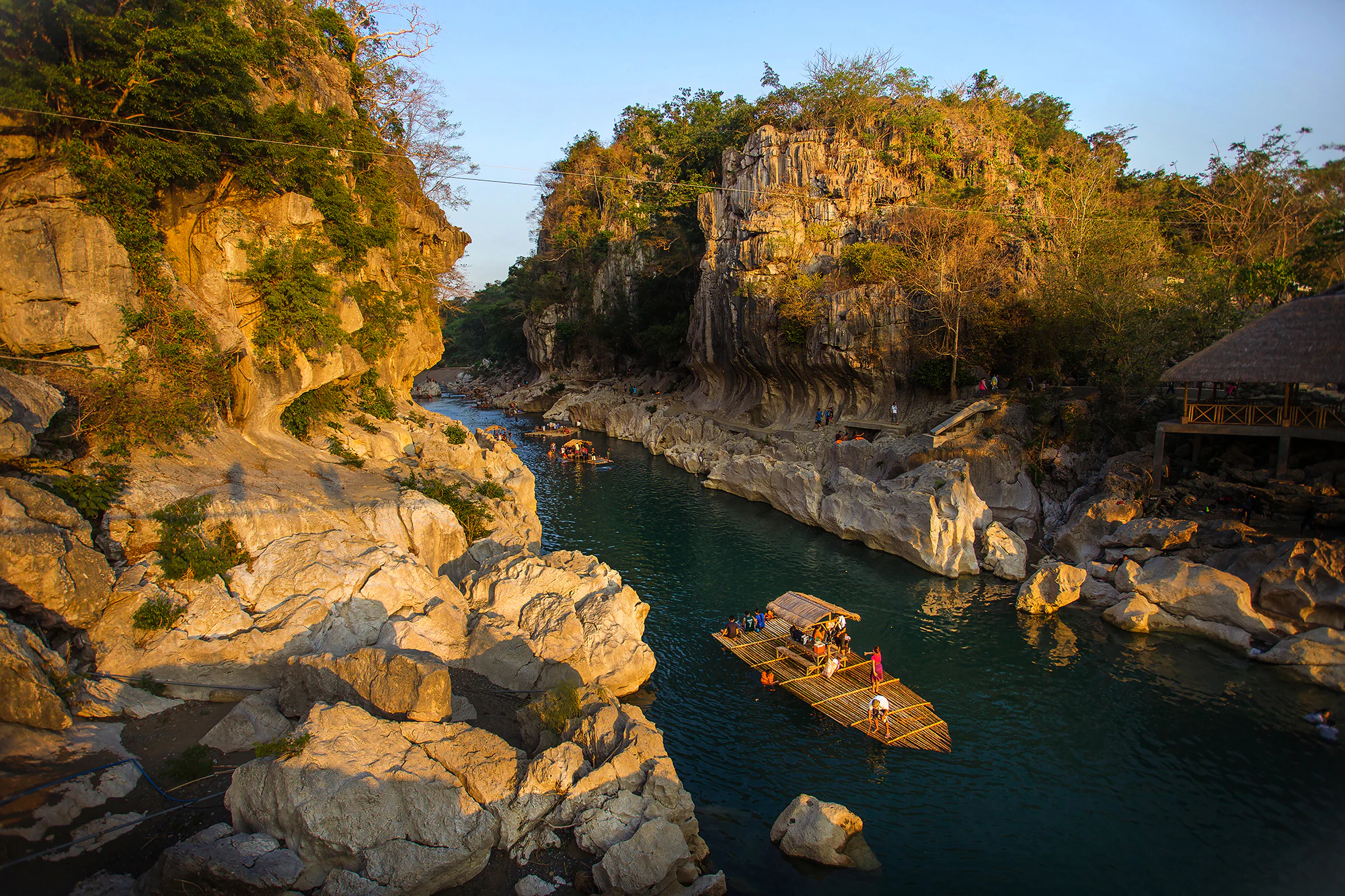
Aerial view of a bamboo raft with two people navigating the river using a pole
Aerial view of a bamboo raft on the Minalungao River

Minalungao National Park history and protected-area timeline

Minalungao National Park was established on June 11, 1967, through the passage of Republic Act No. 5100, which designated the area as a protected park under Philippine law. The legislation reflected a growing awareness in the mid-1960s of the need to preserve representative natural areas across the Philippines before agricultural development and population expansion altered landscapes beyond recovery. The park was created at a time when the Philippines was systematically identifying and protecting key ecological zones, with Minalungao selected for its distinctive canyon landscape and the ecological value of its river corridor. Since establishment, the park has been managed by the Department of Environment and Natural Resources, though the specific management approaches and visitor facilities have evolved over the decades. The shift toward ecotourism promotion began in earnest during the later decades of the 20th century, aligning with broader national strategies to leverage protected areas for both conservation and sustainable development objectives.

Minalungao National Park landscape and geographic character

The physical landscape of Minalungao National Park is defined by the dramatic canyon corridor formed along the Peñaranda River. Limestone cliffs rise vertically on both sides of the river, reaching heights of approximately 16 meters and creating a confined channel that produces the park's most visually striking feature. The rock formations display the characteristic texture and coloring of tropical limestone, with erosion patterns and natural crevices adding visual complexity to the canyon walls. Beyond the immediate river corridor, the park encompasses rolling terrain in the Sierra Madre foothills, with slopes transitioning from the river level upward into more rugged terrain. The combination of the water feature, vertical rock faces, and surrounding vegetated slopes creates a compact but visually diverse landscape. The river itself provides a dynamic element, with water flow patterns and the sounds of moving water contributing to the sensory experience of the canyon environment.

Minalungao National Park ecosystems, habitats, and plant life

The ecological character of Minalungao National Park centers on the riparian corridor along the Peñaranda River and the limestone forest habitat that surrounds the canyon walls. The river ecosystem supports aquatic life and provides a water source that sustains vegetation throughout the protected area. The limestone cliffs host specialized plant communities adapted to the rocky substrate and shaded conditions created by the canyon geometry. Forest vegetation covers the slopes outside the immediate river channel, contributing to habitat diversity and supporting terrestrial species. As one of the few remaining natural areas in the heavily modified central Luzon region, the park serves as a refuge for wildlife species that have lost habitat elsewhere in the province. The transition zone between the Sierra Madre mountains and the lowland agricultural plains adds ecological complexity, with species from both elevations potentially present within the park boundaries.

Minalungao National Park wildlife and species highlights

While detailed species inventories are not extensively documented in available sources, Minalungao National Park's position as a preserved natural corridor in central Luzon suggests the presence of wildlife adapted to river, forest, and limestone cliff habitats. The river provides habitat for fish and other aquatic organisms, while the surrounding forest cover supports bird species and small mammals. The intact natural vegetation within the park contrasts sharply with the cultivated agricultural lands surrounding it, meaning the protected area likely serves as an important refuge for wildlife in a region where natural habitat has been largely converted. The limestone cliff formations may provide nesting sites for birds and shelter for cave-dwelling species, particularly given references to unexplored caverns within the park that could harbor specialized faunal communities.

Minalungao National Park conservation status and protection priorities

Minalungao National Park represents a conservation priority as one of the few remaining natural environments in Nueva Ecija province, an area that has experienced extensive agricultural development over the past century. The protected area designation provides legal framework for preserving the canyon landscape, river ecosystem, and surrounding forest habitat from conversion or degradation. The IUCN Category V classification reflects the park's landscape-scale conservation approach, recognizing both the natural values and the cultural practices that have shaped the area over time. As an ecotourism destination, the park generates economic value from its natural assets while maintaining the protected area status that ensures long-term preservation. The cave systems noted in park documentation represent an additional conservation consideration, as unexplored subterranean environments may contain unique biological or geological features requiring protection.

Minalungao National Park cultural meaning and human context

The park is situated within the municipality of General Tinio, Nueva Ecija, a province in central Luzon with its own historical and cultural character. The name Minalungao derives from local usage, and the protected area forms part of the regional identity for communities in this part of the Philippines. While the sources do not extensively document indigenous cultural connections to the landscape, the park's establishment reflects a national approach to protected area management that often intersects with local community relationships to land and natural resources. The proximity to the boundary with Bulacan province adds regional context, as the park sits at the edge of what were historically distinct administrative and cultural zones within central Luzon.

Top sights and standout views in Minalungao National Park

The defining highlight of Minalungao National Park is its spectacular limestone canyon along the Peñaranda River, where vertical rock walls create an enclosed corridor of remarkable scenic beauty. The river itself serves as the focal point for recreational activities including swimming, cliff diving, and raft riding, offering visitors direct engagement with the water environment. The unexplored cave systems within the limestone formations represent an additional dimension of discovery potential that distinguishes this park from more conventional nature tourism destinations in the Philippines. As one of the few remaining natural areas in the heavily agricultural central Luzon region, the park provides a rare opportunity to experience unmodified river and forest habitat in a region where such environments have become increasingly scarce.

Best time to visit Minalungao National Park

The park can be visited throughout the year, though the dry season from November to May generally offers more comfortable conditions for outdoor recreation along the river. During the wet season from June to October, increased rainfall can affect water levels and river conditions, potentially influencing the feasibility of water-based activities. The cooler months of December through February tend to offer the most pleasant temperatures for hiking and exploring the canyon trail. Visitors seeking optimal conditions for swimming and river activities should consider the typical dry season pattern, though the natural landscape maintains its visual appeal regardless of season.

Park location guide

Geography guide, regional context, and park location map for Minalungao National Park

Minalungao National Park park geography, regions, and map view in Philippines
Understand where Minalungao National Park sits in Philippines through a broader geographic reading of the surrounding landscape, nearby location context, and its mapped position within the national park landscape.

How Minalungao National Park fits into Philippines

The Philippines, officially the Republic of the Philippines, is an archipelagic nation in Southeast Asia comprising approximately 7,641 islands categorized into three main geographical divisions: Luzon, Visayas, and Mindanao. Located in the western Pacific Ocean, it shares maritime borders with Taiwan, Japan, Palau, Indonesia, Malaysia, Vietnam, and China. Manila serves as the capital city, while Quezon City is the most populated city, both within Metro Manila.

Wider geography shaping Minalungao National Park in Philippines

The Philippines is an archipelagic nation in Southeast Asia, positioned in the western Pacific Ocean. Its islands are bounded by the South China Sea to the west, Philippine Sea to the east, and Celebes Sea to the south. The country shares maritime borders with Taiwan to the north, Japan to the northeast, Palau to the east and southeast, Indonesia to the south, Malaysia to the southwest, Vietnam to the west, and China to the northwest.

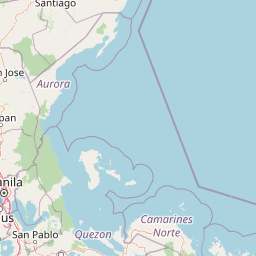
Map view of Minalungao National Park

Use this park location map to pinpoint Minalungao National Park in Philippines, understand its exact geographic position, and read its mapped placement within the surrounding landscape more clearly.

Pigeon | © OpenStreetMap contributors

Location context for Minalungao National Park

Nueva Ecija

Visualizing Minalungao's Protected Landscape: Terrain, River Habitat, and Unique Geological Formations

Minalungao National Park Photos: Explore Dramatic Limestone Canyon Scenery and River Landscapes
Explore detailed visual references of Minalungao National Park to understand its unique limestone canyon terrain, riverine habitats, and the characteristic protected landscape of Central Luzon. These photographs provide a direct perspective on the park's dramatic rock formations, verdant slopes, and the pristine Peñaranda River environment.

Aerial view of a bamboo raft with two people navigating the river using a pole

A river flowing between rocky limestone cliffs with a bamboo raft carrying people, surrounded by forested hills under a clear sky

Park atlas

Compare protected landscapes, river corridors, and the diverse terrain across the Central Luzon region.

Explore Nearby National Parks and Protected Areas Beyond Minalungao National Park
Browse national parks and protected areas near Minalungao National Park, including other river systems and unique limestone landscapes in the Central Luzon region. Trace broader protected-area geography, compare terrain features, and understand conservation patterns across adjacent natural environments.
National parkBulacan

Biak-na-Bato National Park: National Park Atlas and Geographic Context in Bulacan

Explore protected landscapes and mapped terrain.

Biak-na-Bato National Park is a key protected area in Bulacan, Philippines, identified for its national park designation. This entry provides specific details on its geographic positioning and mapped features, essential for atlas-based research and understanding the distribution of protected lands within the region. Dive into the landscape context and mapped boundaries that define this significant natural entity.

Area
21.17 km²
Established
1937
IUCN
V
Relief
Mountain
National parkPhilippines

Aurora Memorial National Park: A Protected Landscape in the Philippines' Sierra Madre

Explore mapped boundaries and endemic avian habitat.

Aurora Memorial National Park represents a critical conservation area situated within the Philippines' Sierra Madre mountain range. Spanning a significant stretch along the eastern mountain slopes, this national park is characterized by its lowland dipterocarp forest ecosystem, recognized for supporting diverse flora and fauna. It is particularly noted as an Important Bird Area, crucial for endemic species like the Philippine eagle and various other avian populations, highlighting its ecological significance within the archipelago's geography.

Area
56.76 km²
Established
1937
IUCN
V
Relief
Mountain
National parkZambales

Olongapo Naval Base Perimeter National Park: Philippines National Park & Protected Landscape in Zambales

Coastal terrain and historical military land context.

Discover Olongapo Naval Base Perimeter National Park, a protected landscape within Zambales province, Philippines. Established adjacent to the former U.S. Naval Base Subic Bay perimeter, this small national park preserves a unique coastal fringe. Its mapped boundaries offer insights into a transitional zone, serving as a green corridor and protecting a fragment of the region's natural habitat. Explore the distinct geographical and historical significance of this protected area.

Area
0.09 km²
Established
1968
IUCN
V
Scope
Terrestrial
National parkLaguna

Pagsanjan Gorge National Park: Philippines National Park & Protected Area Mapping

Explore the geographic context and mapped terrain.

Pagsanjan Gorge National Park represents a key protected natural area within the Laguna region, offering insights into Philippine national park geography. This entry focuses on understanding its mapped boundaries and the surrounding landscape context, providing a foundational element for anyone exploring protected lands through maps and regional atlases. It serves as a gateway to comprehending the park's specific geographic identity and its place within the natural environment of the Philippines.

Area
1.526 km²
Established
1939
IUCN
II
Relief
Upland
National parkNueva Vizcaya

Bangan Hill National Park: A Protected Landscape within Nueva Vizcaya's Geography

Explore its mapped terrain and cultural significance.

Bangan Hill National Park is a crucial protected area nestled in Nueva Vizcaya, Philippines. This page details its specific geography, including its role as a distinct hill within the broader Cagayan Valley landscape. Users can explore the park's mapped boundaries, understand its role as a national park, and discover the surrounding mountain context of the Caraballo and Cordillera Central ranges. It offers a unique perspective on the region's natural and historical significance, serving as a focal point for protected landscape exploration.

Area
0.139 km²
Established
1995
IUCN
II
Relief
Mixed relief
National parkPangasinan

Hundred Islands National Park: Detailed Map and Protected Landscape Context in Pangasinan

National Park in Pangasinan, Philippines

Explore Hundred Islands National Park, a protected natural landscape in Pangasinan, Philippines. This page provides detailed geographic context, highlighting the park's mapped boundaries and its status as a national park. Understand its placement within the regional geography and appreciate the structured discovery value for atlas-based exploration of this significant protected area.

Area
16.76 km²
Established
1940
IUCN
II
Relief
Mixed relief
National park

Fuyot Springs National Park: Philippines Protected Area with Springs, Caves & Waterfalls

Explore Sierra Madre mountain terrain and natural landscape features.

Fuyot Springs National Park offers a detailed look at a unique protected landscape within the Philippines' Sierra Madre mountain range. This atlas perspective focuses on the park's defining natural springs, its exploration-ready cave systems such as Main Cave and Altar Cave, and scenic features like Pinzal Falls. Understand the geographic context of this protected area and its mountainous terrain for landscape discovery.

Area
8.19 km²
Established
1938
IUCN
V
Relief
Mountain
National parkCordillera Administrative Region

Balbalasang, Balbalan National Park: Mapped Protected Area in Cordillera Administrative Region

Explore its national park geography and landscape context.

Balbalasang, Balbalan National Park offers a distinct protected landscape within the Philippines' Cordillera Administrative Region. This canonical detail page provides an atlas-driven perspective, focusing on the park's mapped boundaries and its regional geographic context. Users can delve into the specific terrain and natural features that define this national park, enhancing their understanding of its protected area status and its significance in landscape exploration.

Area
13.38 km²
Established
1972
IUCN
II
Relief
Mountain

Common questions about visiting, size, designation, and location context for Minalungao National Park

Minalungao National Park FAQs for park facts, access, geography, and protected area context
Find quick answers about Minalungao National Park, including protected-area facts, park geography, trail and visitor context, and how the park fits into its surrounding country and regional landscape.
MoriAtlas Explorer

Continue Your Protected Areas Search Across the Global Atlas

Deepen your exploration by continuing the structured search for national parks and protected areas worldwide. Utilize the comprehensive filtering capabilities to compare different conservation landscapes and refine your understanding of global park geography. Discover more about the distribution and characteristics of protected natural areas.

Global natural geography