Why North Cascades National Park stands out
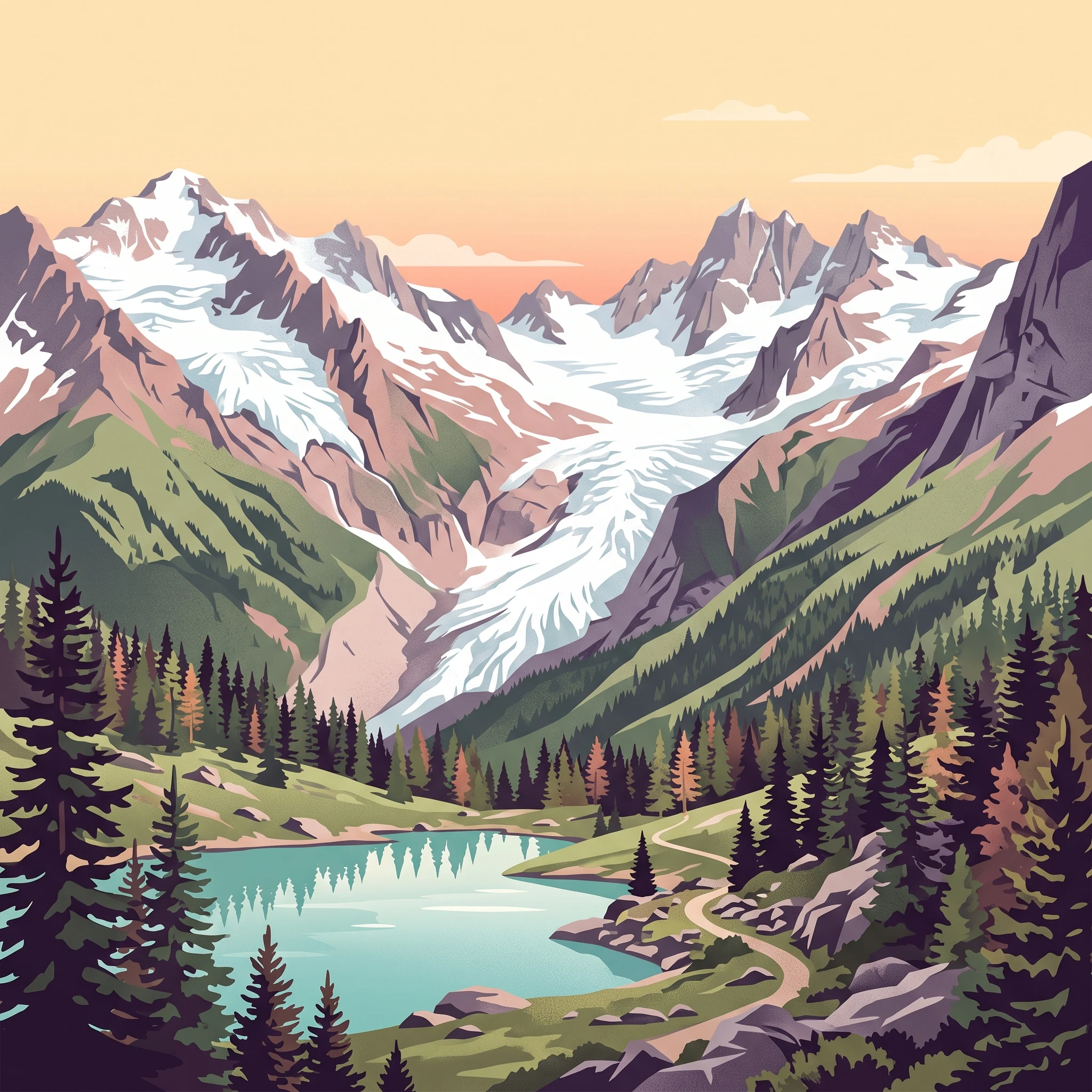
North Cascades National Park is best known for its exceptional glacial landscape, which contains the largest concentration of glaciers in the contiguous United States with over 300 ice bodies. The park protects the most extensive glacial system in the lower 48 states, representing roughly one-third of all glaciers outside Alaska. It is also renowned for its extraordinary biodiversity, hosting the highest flora diversity of any American national park with 1,630 documented vascular plant species and extensive old-growth forests spanning 236,000 acres. The dramatic mountain scenery, including peaks like Goode Mountain, Mount Shuksan, and the jagged Picket Range, combined with nearly 400 miles of hiking trails, makes it a premier wilderness destination.
North Cascades National Park history and protected-area timeline
Human presence in the North Cascades dates back 8,000 to 10,000 years, beginning with Paleo-Indians advancing from Puget Sound as glacial ice retreated. Archaeological evidence at Cascade Pass has revealed microblades nearly 9,600 years old, among 260 prehistoric sites identified within the park. When European explorers arrived in the late 18th century, an estimated thousand Skagit people inhabited the region, living in large communal lodges and practicing potlatch ceremonies. The fur trade brought Alexander Ross to the area in 1814, establishing Fort Okanogan, the first American settlement in present-day Washington. Limited mining and logging occurred from the late 19th century, while dam construction in the 1920s along the Skagit River for hydroelectric power prompted environmental advocates to campaign for wilderness preservation. After decades of advocacy, North Cascades National Park was finally established on October 2, 1968, with much of the park designated as the Stephen Mather Wilderness by 1988.
North Cascades National Park landscape and geographic character
The physical landscape of North Cascades National Park is defined by its spectacular mountain terrain, with Goode Mountain rising as the park's highest point at 9,220 feet. The southern section contains several peaks exceeding 9,000 feet, including Buckner Mountain, Mount Logan, and Black Peak, while the northern Picket Range features dramatic spires with ominous names like Mount Fury, Mount Challenger, and Mount Terror. The park contains over 300 glaciers representing the most extensive glacial system in the contiguous United States, with Boston Glacier being the largest at 1,730 acres. More than 500 lakes and ponds dot the landscape, while hundreds of creeks and streams carry glacial meltwater, often appearing turquoise due to suspended rock particles called glacial flour. The Skagit River bisects the park, flowing through Ross Lake National Recreation Area and supplying nearly 90 percent of Seattle's electricity through dams in the watershed.
North Cascades National Park ecosystems, habitats, and plant life
The ecological diversity of North Cascades National Park is remarkable, with eight distinct life zones supporting extraordinary biodiversity across its nearly 9,000-foot elevation range. The park contains 1,630 documented vascular plant species, the highest count of any American national park, with estimates suggesting that adding non-vascular plants and fungi could more than double this number. Approximately 236,000 acres of old-growth forests remain largely untouched, with virgin stands of western hemlock, red cedar, and Douglas fir dominating lower elevations up to the timberline at 7,000 feet. At higher elevations, Pacific silver fir dominates, transitioning to mountain hemlock, then giving way to subalpine meadows and finally sparse alpine vegetation. Whitebark pine grows at the highest elevations in the drier eastern region, providing critical habitat for species like Clark's nutcracker and Douglas squirrels. Climate change and invasive species pose ongoing threats to this ecological richness.
North Cascades National Park wildlife and species highlights
North Cascades National Park supports remarkable animal diversity, with 75 mammal species, more than 200 bird species, at least 28 fish species, and numerous reptiles and amphibians documented within its boundaries. The park provides critical habitat for several threatened and endangered species, including the gray wolf listed as endangered and the grizzly bear listed as threatened, though grizzly bears were extirpated from the region by 1860 and restoration efforts remain underway. Among the 18 carnivore species present are coyote, bobcat, Canada lynx, cougar, American black bear, and the elusive wolverine, one of the rarest mammals in North America. Mountain goats thrive on the steep snow-covered slopes, while elk and moose inhabit the valleys. The park's waterways support all five species of Pacific salmon, making it ecologically significant for marine species that depend on freshwater habitats. Birdlife includes bald and golden eagles, northern spotted owl, harlequin duck, and the federally endangered peregrine falcon.
North Cascades National Park conservation status and protection priorities
North Cascades National Park represents one of the most significant conservation designations in the contiguous United States, protecting an ecosystem with extraordinary biodiversity and geological value. The park's designation as wilderness across 93 percent of its area provides the highest level of federal protection, prohibiting logging, mining, oil and gas extraction, and other extractive activities. The park hosts one of the earliest and longest-running research programs dedicated to studying climate change, primarily through examining glacial retreat and its effects on ecosystems and water resources. Research has documented a 40 percent reduction in glacial ice volume since the end of the Little Ice Age, with a 25 percent reduction in summer streamflow since 1959, making the park a critical indicator of climate impacts in mountain ecosystems. The park also maintains an ongoing fish stocking program, unique among national parks, allowing non-reproducing fish in a limited number of lakes.
North Cascades National Park cultural meaning and human context
The North Cascades region has been inhabited by Native peoples for thousands of years, with the Skagit people historically residing primarily west of the park near Puget Sound and venturing into the mountains during summer months. Inland tribes including the Nlaka'pamux, Chelan, Okanogan, and Wenatchee lived partly or year-round in the eastern sections. These peoples left a rich archaeological record spanning five distinct cultural periods, with evidence of chert mining from Hozomeen Mountain near the park's eastern border extending back 8,400 years. The region's history also includes the early fur trade era, with Fort Okanogan established in 1811 as a trading post, and later Anglo-European exploration in the 1850s and 1880s that sought potential railroad routes through the mountains.
Top sights and standout views in North Cascades National Park
North Cascades National Park offers exceptional wilderness experiences through nearly 400 miles of hiking trails, including 18 miles of the Pacific Crest Trail and 63 miles of the Pacific Northwest Trail. Cascade Pass, used as a travel route by Native Americans for thousands of years, remains one of the most popular destinations. The park provides premier mountaineering opportunities with high-quality climbing routes on numerous peaks including Forbidden Peak, one of the Fifty Classic Climbs of North America. Unlike most national parks, there are no drivable campgrounds within the park itself; all overnight camping is backcountry camping requiring permits, preserving the wilderness character and solitude. Mount Shuksan in the northwest corner, at 9,131 feet, is among the most photographed peaks in the region and is accessible via trails in adjacent national forests.
Best time to visit North Cascades National Park
The best time to visit North Cascades National Park is from mid-June through late September when high elevation trails are accessible and weather is most stable. Summer months bring the warmest temperatures, particularly on the drier eastern slopes where highs can reach 90°F. Peak visitation occurs between June and September. Winter conditions are extreme, with State Route 20, the only highway through the park complex, typically closed from late November until late April due to heavy snowfall and avalanche danger. The western slopes receive over 400 inches of snow annually at higher elevations, creating dangerous conditions but also preserving the exceptional glacial landscape. Spring and fall offer fewer crowds but unpredictable weather, with fall often bringing clear skies and comfortable temperatures.