Mori Atlas logo
National parkPacific Rim National Park Reserve

Discover the mapped boundaries and regional context of this protected natural area in British Columbia.

Pacific Rim National Park Reserve: National Park Protected Landscape & Geography

Pacific Rim National Park Reserve represents a significant protected natural landscape within Canada's national park system. Situated in British Columbia, this park offers a unique perspective on regional geography and mapped conservation areas. Understanding its location and protected boundaries provides essential context for exploring Canada's diverse protected lands.

Temperate RainforestCoastal IslandsMarine Protected AreaWest Coast TrailSea KayakingSurfing

Pacific Rim National Park Reserve

National park

Park overview

Structured park overview, official facts, and landscape profile for Pacific Rim National Park Reserve

Pacific Rim National Park Reserve park facts, protected area profile, and essential visitor context
Review the core facts for Pacific Rim National Park Reserve, including designation, size, terrain, visitor scale, habitats, and operating context in one park-focused overview.

About Pacific Rim National Park Reserve

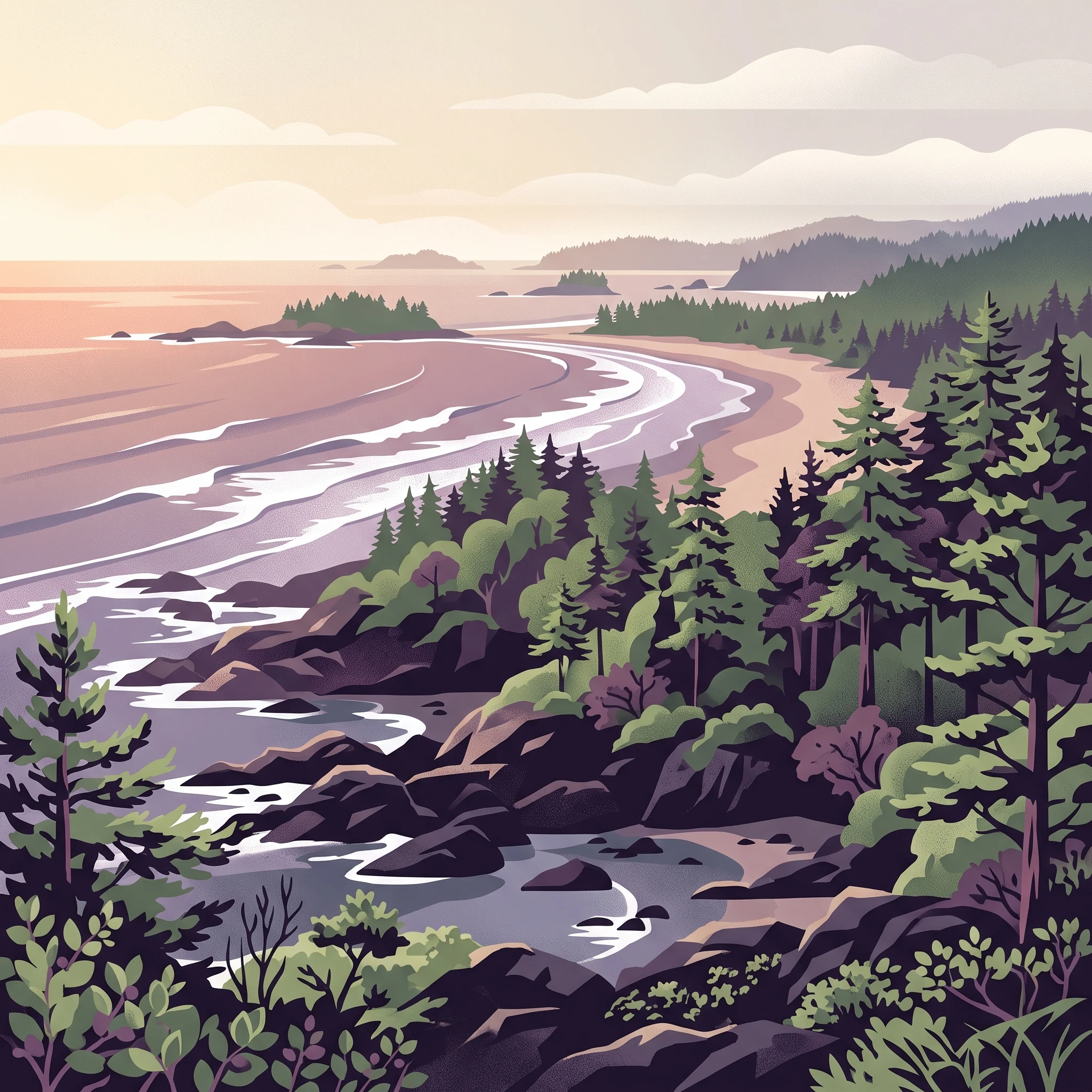
Pacific Rim National Park Reserve occupies a striking position on Canada's Pacific coast, where the mountains of Vancouver Island meet the open ocean. The park's three units create a continuous protected corridor from the Sandy Beach area near Tofino and Ucluelet southward through the Broken Group Islands in Barkley Sound to the West Coast Trail area near Port Renfrew and Bamfield. This national park reserve represents the Pacific Coast Mountains natural region, characterized by rugged coastlines carved by glacial activity, heavy rainfall creating temperate rainforests, and a rich marine environment influenced by the Kuroshio Current. The park lies on the Pacific Rim Terrane, a distinct geological feature separated from the main Vancouver Island landmass by the West Coast Fault. Beyond its natural significance, the park holds deep cultural importance, with seven First Nations claiming portions of the area as traditional territory and ongoing negotiations regarding Aboriginal rights. The park reserve designation reflects this complexity, allowing for the continuation of traditional renewable resource harvesting activities while providing permanent protection for the outstanding natural landscapes.

Quick facts and research context for Pacific Rim National Park Reserve

Pacific Rim National Park Reserve spans 511 square kilometres along Vancouver Island's west coast, with 221 square kilometres of marine area and 290 square kilometres of terrestrial terrain. The park was established through a 1970 agreement between federal and provincial governments and was formally added to Canada's National Parks Act in 2000 as a park reserve due to outstanding First Nations land claims. The reserve lies within the traditional territories of seven First Nations including the Huu-ay-aht, Ditidaht, Pacheedaht, Hupacasath, Tla-o-qui-aht, and Tseshaht, with the Nuu-chah-nulth Tribal Council having submitted a claim in 1980 that was accepted for negotiation in 1983. The park receives approximately 1.16 million visitors annually and is managed by Parks Canada.

Park context

Deeper park guide and search-rich context for Pacific Rim National Park Reserve

Pacific Rim National Park Reserve history, landscape, wildlife, and travel context
Explore Pacific Rim National Park Reserve through its history, landscape character, ecosystems, wildlife, conservation priorities, cultural context, and seasonal travel timing in a structured park guide built for atlas discovery and search intent.

Why Pacific Rim National Park Reserve stands out

Pacific Rim National Park Reserve is best known for its exceptional combination of coastal landscapes and outdoor recreation opportunities. The Long Beach Unit attracts surfers and windsurfers to its consistent Pacific waves, while the Broken Group Islands provide one of British Columbia's premier sea kayaking destinations with over one hundred islands to explore. The West Coast Trail has become a legendary multi-day hiking route along the former telegraph corridor, known for its challenging terrain through rainforest, rocky beaches, and remote coastline. The park also protects the Cheewhat Giant, the largest known tree in Canada and one of the largest trees in the world, a massive western red cedar that stands as a symbol of the ancient forests found within the reserve.

Pacific Rim National Park Reserve history and protected-area timeline

The creation of Pacific Rim National Park Reserve followed decades of advocacy and complex negotiations between federal and provincial governments. The idea of protecting Long Beach was first proposed by the Canadian National Parks Association in 1929, but the remote location and outstanding forestry rights made early efforts impractical. The provincial government established Wickaninnish Beach Provincial Park in 1948, which would later become the nucleus of the national park. The opening of Highway 4 in 1959 connecting Tofino to Port Alberni transformed the region, bringing thousands of visitors annually and leading to environmental degradation that intensified calls for federal protection. Negotiations between the federal government under Minister Arthur Laing and the provincial government under Premier W.A.C. Bennett stalled over disagreements about park size and cost-sharing. The project advanced only after Jean Chrétien became federal minister responsible for parks in 1968, and British Columbia adopted the West Coast National Park Act in 1969. The agreement was finalized in 1970, and the park opened in 1971 with Princess Anne attending the ceremony. However, disputes over timber rights delayed full implementation until 1988, and the park was only formally added to the National Parks Act in 2000. Throughout this period, consultation with First Nations was limited, though the Nuu-chah-nulth Tribal Council's land claim was accepted for negotiation in 1983.

Pacific Rim National Park Reserve landscape and geographic character

Pacific Rim National Park Reserve showcases the dramatic intersection of mountain and ocean that defines British Columbia's west coast. The Long Beach Unit features a series of sandy beaches bordered by dense rainforest, including the namesake Long Beach, Combers Beach, Wickaninnish Beach, and the more sheltered Florencia Bay, all set within Wickaninnish Bay. Behind the beaches, the landscape rises into coastal temperate rainforest dominated by massive western hemlock, Sitka spruce, and western red-cedar. The Broken Group Islands comprise over one hundred islands in Barkley Sound, ranging from tiny rocky islets to larger landmasses with diverse terrain from sand beaches to exposed rock bluffs. The West Coast Trail Unit follows a rugged coastal corridor through some of Vancouver Island's most remote and densely forested terrain, featuring dramatic headlands, remote beaches, and the ancient forest that characterizes the region. The entire park sits within the Estovan Lowlands, a narrow coastal strip between the ocean and the Vancouver Island Ranges of the Insular Mountains.

Pacific Rim National Park Reserve ecosystems, habitats, and plant life

The terrestrial ecosystems of Pacific Rim fall within the Coastal Western Hemlock Biogeoclimatic Zone, specifically the very wet hypermaritime subzone that produces true temperate rainforest conditions. The combination of cool temperatures, high moisture, and low elevation creates ideal conditions for massive conifers including western hemlock, Sitka spruce, and western red-cedar, the latter including the famous Cheewhat Giant, the largest tree in Canada. The forest understory thrives with extensive mosses, lichens, and ferns including deer fern and sword fern. The marine environment is equally rich, influenced by the Kuroshio Current which keeps water temperatures between 8 degrees Celsius in winter and 14 degrees Celsius in summer. The subtidal areas support extensive kelp forests providing habitat for marine mammals, while the shoreline hosts diverse intertidal communities with sea stars, anemones, and mollusks. The area's climate creates some of the wettest conditions on Earth, with certain locations receiving over 4,000 millimetres of precipitation annually.

Pacific Rim National Park Reserve wildlife and species highlights

Pacific Rim supports remarkable terrestrial and marine wildlife populations. The old-growth forests are home to black bears, Vancouver Island cougars, Roosevelt elk, and American marten, while Vancouver Island wolves persist even on the islands of the Broken Group. The forest canopy provides habitat for marbled murrelets and olive-sided flycatchers, and the understory teems with invertebrates including banana slugs and warty jumping-slugs. Six species of salmon populate the park's streams and rivers, predominantly coho and sockeye, while cutthroat trout, northern red-legged frogs, western toads, American minks, and river otters inhabit the lakes and wetlands. The marine environment hosts diverse cetaceans including killer whales, humpback whales, and grey whales along migratory routes, while Steller sea lions, seals, and porpoises frequent the waters. The intertidal zone supports sea stars, the northern abalone, and various crab species, with birdlife including black oystercatchers and glaucous-winged gulls along the shoreline.

Pacific Rim National Park Reserve conservation status and protection priorities

Pacific Rim National Park Reserve protects significant ecological values within Canada's Pacific Coast Mountains region. The park preserves representative examples of the Central Pacific coastal forests ecoregion, safeguarding old-growth temperate rainforest that has become increasingly rare on Vancouver Island. The marine protected components shield important kelp forest ecosystems and critical habitat for migratory whales along the Pacific coast. As a park reserve rather than a national park proper, the designation reflects the ongoing resolution of First Nations land claims, with seven nations claiming traditional territory within the boundaries. This status also allows for the continuation of traditional renewable resource harvesting by Aboriginal persons, balancing conservation with indigenous rights. The park protects the Cheewhat Giant, a living heritage symbol and one of the world's largest trees, representing the ecological potential of the coastal rainforest ecosystem.

Pacific Rim National Park Reserve cultural meaning and human context

The lands and waters of Pacific Rim National Park Reserve hold deep significance for the Nuu-chah-nulth First Nations who have inhabited Vancouver Island's west coast for thousands of years. Archaeological evidence on Benson Island in the Broken Group indicates human presence dating back more than 5,000 years, with the Tseshaht First Nation historically living on the islands. The park boundaries exclude 21 Indian reserves belonging to seven different First Nations, though most of the park is claimed as part of traditional territories that were never formally ceded. The Tla-o-qui-aht have declared the Kennedy Lake watershed and Meares Island as a tribal park within the Long Beach area. Parks Canada has developed a working relationship with interested First Nations, creating the Nuu-chah-nulth interpretive trail, incorporating cultural information into educational materials, increasing employment opportunities, and establishing shared management responsibilities beginning in 1995. The West Coast Trail itself originated as a telegraph line corridor in 1889 and was upgraded to a life-saving trail following the SS Valencia disaster in 1906, adding historical Layers to the landscape.

Top sights and standout views in Pacific Rim National Park Reserve

Pacific Rim National Park Reserve offers three distinct yet complementary wilderness experiences. Long Beach provides accessible beach recreation with surfing, windsurfing, and scenic trails through old-growth forest to viewpoints like the Wickaninnish Interpretive Centre. The Broken Group Islands reward sea kayakers with opportunities to paddle among over one hundred islands, camp on remote beaches, and encounter marine wildlife in one of British Columbia's premier paddling destinations. The West Coast Trail presents a legendary backcountry hiking challenge, typically requiring six to seven days to complete the 75 kilometre route between Port Renfrew and Bamfield, with its combination of beach walking, rainforest passages, and remote coastal scenery. The park also protects the Cheewhat Giant, a western red cedar recognized as the largest tree in Canada and among the largest in the world, accessible via a trail in the West Coast Trail Unit.

Best time to visit Pacific Rim National Park Reserve

Pacific Rim National Park Reserve can be visited year-round, though the character of the experience changes dramatically with the seasons. The region experiences a temperate maritime climate with mild temperatures ranging from 5 to 18 degrees Celsius and extremely high precipitation, averaging over 3,500 millimetres annually. Winter brings the majority of rainfall and storm activity, though this period offers dramatic coastal scenery and fewer visitors. Summer from June through September brings drier, sunnier conditions and represents the most popular visiting season, though fog is common along the coast. The shoulder seasons of spring and fall offer fewer crowds while the landscape remains green and vibrant. The West Coast Trail requires careful planning regardless of season due to challenging conditions, and permits may be required. Sea kayaking in the Broken Group is best during the calmer summer months, while surfing at Long Beach is popular year-round but best during winter storm season for experienced surfers.
Park location guide

Geography guide, regional context, and park location map for Pacific Rim National Park Reserve

Pacific Rim National Park Reserve park geography, regions, and map view in Canada
Understand where Pacific Rim National Park Reserve sits in Canada through a broader geographic reading of the surrounding landscape, nearby location context, and its mapped position within the national park landscape.

How Pacific Rim National Park Reserve fits into Canada

Canada is a federal parliamentary constitutional monarchy spanning North America from the Atlantic to the Pacific and Arctic Oceans. With a population of over 41 million, it is officially bilingual in English and French at the federal level. The country gained independence from the United Kingdom through a gradual process culminating in 1982.

Wider geography shaping Pacific Rim National Park Reserve in Canada

Canada occupies the northern portion of North America, sharing its longest international border with the United States. The country extends from the Atlantic Ocean to the Pacific Ocean and northward into the Arctic Ocean, giving it the longest coastline of any nation.

Map view of Pacific Rim National Park Reserve

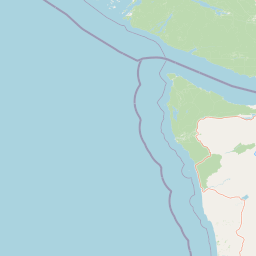
Use this park location map to pinpoint Pacific Rim National Park Reserve in Canada, understand its exact geographic position, and read its mapped placement within the surrounding landscape more clearly.

Pigeon | © OpenStreetMap contributors

Location context for Pacific Rim National Park Reserve

British ColumbiaVancouver Island
Park atlas

Compare coastal protected landscapes, temperate rainforests, and marine environments across Vancouver Island.

Explore National Parks and Protected Areas Near Pacific Rim National Park Reserve
After exploring Pacific Rim National Park Reserve, continue your geographic discovery of Canada's west coast protected areas. Browse adjacent national parks and other significant conservation landscapes to trace their regional context, shared ecosystems, and unique characteristics on a broader scale.
National parkBritish Columbia

Gulf Islands National Park Reserve: British Columbia National Park Protected Area

Mapped boundaries and regional geographic context.

Delve into the protected landscape of Gulf Islands National Park Reserve, a significant national park located in British Columbia. This entry provides detailed insights into its mapped boundaries, regional geographic setting, and its identity as a protected area. Understand the park's place within the natural terrain and atlas of Canada, offering a clear geographic overview for focused discovery and landscape context.

Area
36 km²
Established
2003
IUCN
VI
Visitors
28.4K annual
National parkWashington

Olympic National Park National Park: Geographic Atlas and Protected Landscape Discovery

Explore its unique Washington landscape and mapped protected areas.

Olympic National Park serves as a key protected area within Washington, offering rich opportunities for geographic exploration. This detail page provides essential context on its designation as a national park, its mapped boundaries, and its contribution to the regional geography. Understand the park's specific landscape character and its role within the atlas of protected lands, facilitating a structured approach to discovering its natural terrain and geographic significance.

Area
3,733.8 km²
Established
1938
IUCN
II
Visitors
3.7M annual
National parkWashington

North Cascades National Park: US National Park Protected Landscape and Geographic Context

Explore mapped boundaries and regional Washington geography.

Gain insight into North Cascades National Park, a vital US National Park located in Washington. This entry focuses on its protected land status, mapped geographic extent, and its role within the regional atlas. Users seeking to understand the park's landscape character, natural terrain, and its specific location in Washington will find this an essential point for detailed park geography exploration and protected area discovery.

Area
2,042.26 km²
Established
1968
IUCN
II
Visitors
16.5K annual
National parkWashington

Mount Rainier National Park: A National Park in Washington with Distinct Mapped Boundaries

Explore its protected landscape and regional geography.

Mount Rainier National Park represents a core protected area within Washington State, offering rich opportunities for geographic discovery through its mapped boundaries and natural terrain. As a designated national park, it contributes significantly to the atlas of United States protected lands. This destination allows for detailed exploration of its landscape context, making it an essential point of reference for understanding regional geography and conservation areas.

Area
956.6 km²
Established
1899
IUCN
II
Visitors
1.6M annual
National parkBritish Columbia

Mount Revelstoke National Park: Explore Protected Landscape Geography and Mapped Boundaries

British Columbia's National Park Atlas Entry

Delve into the protected landscape of Mount Revelstoke National Park, a critical national park located in British Columbia. This entry provides a detailed look at its mapped geographic extent and protected area identity, offering valuable context for regional atlas exploration. Understand the park's distinct contribution to the mapped natural landscapes of Canada.

Area
260 km²
Established
1914
IUCN
II
Visitors
775.2K annual
National parkColumbia-Shuswap Regional District

Glacier National Park: A National Park within Canada's Protected Landscape Atlas

Explore its mapped boundaries and regional geography.

Glacier National Park represents a significant protected area entity within the broader Canadian geography. This page offers an atlas-oriented perspective on its identity as a national park, focusing on its mapped geographic spread and role as a conservation landscape. Users can explore the park's place within the Columbia-Shuswap Regional District and understand its distinct contribution to the national protected area framework.

Area
1,349 km²
Established
1886
IUCN
II
Visitors
4M annual
National parkHaida Gwaii

Gwaii Haanas National Park Reserve and Haida Heritage Site: National Park Protected Area

Explore the mapped geography and landscape context of Haida Gwaii.

Gwaii Haanas National Park Reserve and Haida Heritage Site offers a clear view of a protected national park's landscape and geographic positioning. This page provides detailed information on its specific boundaries and its location within the Haida Gwaii region, serving as a key point for understanding protected land distribution and regional geography through an atlas lens.

Area
1,470 km²
Established
1988
IUCN
II
Relief
Mountain
National parkOregon

Crater Lake National Park: Oregon National Park Atlas of Volcanic Landscapes

Explore mapped boundaries and unique caldera geography.

Crater Lake National Park represents a significant protected area within Oregon, defined by the dramatic volcanic caldera it contains. This national park is celebrated for its exceptionally deep, clear blue lake, formed by the collapse of Mount Mazama, offering a unique subject for geographic and landscape study. Users can explore its mapped boundaries and understand its position within the broader atlas of protected lands and mountainous terrain of the Cascade Range.

Area
741.48 km²
Established
1902
IUCN
II
Visitors
527K annual

Common questions about visiting, size, designation, and location context for Pacific Rim National Park Reserve

Pacific Rim National Park Reserve FAQs for park facts, access, geography, and protected area context
Find quick answers about Pacific Rim National Park Reserve, including protected-area facts, park geography, trail and visitor context, and how the park fits into its surrounding country and regional landscape.
MoriAtlas Explorer

Continue Your Protected Areas Search Across the Global Atlas

Deepen your exploration by continuing the structured search for national parks and protected areas worldwide. Utilize the comprehensive filtering capabilities to compare different conservation landscapes and refine your understanding of global park geography. Discover more about the distribution and characteristics of protected natural areas.

Global natural geography