Mori Atlas logo
National parkOdzala-Kokoua National Park

Mapped boundaries and regional geography within Cuvette-Ouest Department

Odzala-Kokoua National Park: National Park Protected Landscape and Geographic Context

Odzala-Kokoua National Park represents a significant protected area within the Cuvette-Ouest Department. As a national park, its mapped boundaries define a distinct natural landscape, offering rich context for geographic exploration and atlas-based discovery. Understanding the park's place within its regional geography reveals its importance as a conservation landscape. This detailed view facilitates a deeper appreciation of its protected status and mapped terrain.

rainforestprimatesUNESCO World Heritage Sitebiosphere reserveCentral Africaforest elephants

Odzala-Kokoua National Park

National park

Park overview

Structured park overview, official facts, and landscape profile for Odzala-Kokoua National Park

Odzala-Kokoua National Park park facts, protected area profile, and essential visitor context
Review the core facts for Odzala-Kokoua National Park, including designation, size, terrain, visitor scale, habitats, and operating context in one park-focused overview.

About Odzala-Kokoua National Park

Odzala-Kokoua National Park represents one of the most significant conservation areas in Central Africa, protecting a vast expanse of intact rainforest in the heart of the Congo Basin. The park's history as a protected area dates to 1935, making it one of Africa's oldest national parks, though it did not receive formal national park designation until 2001. The park is situated in the Cuvette-Ouest Department, a region of exceptional ecological importance within the Congo Basin, the world's second-largest tropical rainforest. The landscape is characterized by a complex mosaic of forest types, including primary rainforest, secondary forest, Marantaceae-dominated forest, and patches of savanna, all interspersed with natural clearings that provide unique viewing opportunities for wildlife. The park's management has undergone significant transformation, particularly since African Parks assumed operational responsibility in 2010, implementing anti-poaching initiatives, community engagement programs, and infrastructure development to support both conservation and sustainable tourism. The 2023 UNESCO World Heritage inscription recognizes the global significance of the Forest Massif of Odzala-Kokoua, highlighting its outstanding universal value as a biodiversity hotspot and its critical importance for the survival of endangered species.

Quick facts and research context for Odzala-Kokoua National Park

Odzala-Kokoua National Park covers 13,500 square kilometers in northwestern Republic of the Congo, making it one of Central Africa's largest protected rainforest areas. The park was first protected in 1935, designated a biosphere reserve in 1977, and granted official national park status by presidential decree in 2001. It is part of the larger Sangha Trinational landscape that spans the borders of the Republic of the Congo, Cameroon, and the Central African Republic. The park features terrain ranging from 350-meter hills to dense jungle and numerous forest clearings known as glades. African Parks has managed the park since 2010 under a 25-year agreement with the Congolese government, working to protect its outstanding biodiversity while developing sustainable tourism.

Park context

Deeper park guide and search-rich context for Odzala-Kokoua National Park

Odzala-Kokoua National Park history, landscape, wildlife, and travel context
Explore Odzala-Kokoua National Park through its history, landscape character, ecosystems, wildlife, conservation priorities, cultural context, and seasonal travel timing in a structured park guide built for atlas discovery and search intent.

Why Odzala-Kokoua National Park stands out

Odzala-Kokoua is renowned for its exceptional primate populations, particularly western lowland gorillas and central chimpanzees, which exist in some of the highest densities recorded anywhere in Central Africa. The park was once home to nearly 20,000 gorillas, though Ebola outbreaks between 2002 and 2005 devastated the population. It also supports significant populations of African forest elephants, with survey estimates indicating approximately 9,600 individuals as of 2014. The park's Marantaceae forest ecosystem, characterized by an open canopy dominated by Marantaceae plants, supports remarkable biodiversity and provides critical habitat for the park's diverse mammal and bird communities. The forest clearings within the park are particularly important for wildlife viewing and ecological function.

Odzala-Kokoua National Park history and protected-area timeline

Odzala-Kokoua's history as a protected area began in 1935 when it was first established as a colonial-era reserve, reflecting early recognition of the region's ecological importance. The park was designated a UNESCO biosphere reserve in 1977, integrating conservation objectives with sustainable development goals. In 2001, President Denis Sassou Nguesso issued a presidential decree formally establishing Odzala as a national park, providing stronger legal protection for the area. Conservation efforts faced severe challenges during the Republic of the Congo Civil War from 1997 to 1999, and the park was neglected during the subsequent Ebola outbreaks that devastated wildlife populations. The arrival of African Parks in 2010 marked a new chapter in the park's management, with the nonprofit organization entering into a 25-year partnership with the Ministry of Forest and Sustainable Development. A significant $10 million five-year agreement was signed in 2013 with the United States Fish and Wildlife Service, Wildlife Conservation Society, and World Wide Fund for Nature to strengthen conservation efforts. Tourism operations began in August 2012, with Wilderness Safaris developing luxury accommodations before the operation transitioned to the Congo Conservation Company. In 2023, the park achieved international recognition through its inscription on the UNESCO World Heritage List as part of the Forest Massif of Odzala-Kokoua.

Odzala-Kokoua National Park landscape and geographic character

The physical landscape of Odzala-Kokoua is characterized by a diverse terrain that ranges from gentle rolling hills reaching approximately 350 meters in elevation to dense tropical jungle and expansive forest clearings. The park's topography features a network of valleys and ridges that create varied microhabitats throughout the protected area. The forest ecosystem is predominantly composed of Marantaceae forest, where the open canopy allows for rich undergrowth and creates distinctive ecological conditions different from closed-canopy primary rainforest. Numerous natural glades, or forest clearings, punctuate the landscape and provide unique ecological niches as well as exceptional wildlife viewing opportunities. The park's location in the Congo Basin places it within one of the world's most significant tropical rainforest regions, with the ecosystem supporting extraordinary biodiversity despite the relatively uniform appearance of the forest canopy from above.

Odzala-Kokoua National Park ecosystems, habitats, and plant life

The ecological character of Odzala-Kokoua is defined by its position within the Congo Basin rainforest, one of the most biodiverse regions on Earth. The park supports approximately 4,500 plant and tree species, with the vast majority of the forest classified as open-canopy Marantaceae forest, a distinctive habitat type characterized by the dominance of Marantaceae plants in the understory. This forest type creates a relatively light canopy that supports diverse ground-layer vegetation and provides optimal conditions for a range of wildlife species. The park encompasses multiple ecosystem types including primary rainforest, secondary forest, dry forest, and patches of savanna, creating a mosaic of habitats that supports the remarkable biodiversity for which the area is renowned. The forest clearings play a particularly important ecological role, providing feeding grounds and viewing areas for large mammals while supporting specialized plant and insect communities adapted to these open spaces.

Odzala-Kokoua National Park wildlife and species highlights

Odzala-Kokoua hosts approximately 100 mammal species and supports one of Africa's most diverse primate populations, with particularly significant populations of western lowland gorillas and central chimpanzees. The park once supported nearly 20,000 gorillas, but Ebola outbreaks between 2002 and 2005 killed an estimated 70 to 95 percent of the gorilla population, with approximately 5,000 gorillas dying in a single 2,700 square kilometer area in 2005. Despite this catastrophe, gorilla populations have shown signs of recovery in recent years. The park is also home to approximately 9,600 African forest elephants, representing a significant population though one that has faced pressure from poaching. Mammal surveys have recorded 13 large mammal species in the park's northern clearings, including bongo, buffalo, forest hog, sitatunga, and various duiker species. The primate community includes eight monkey species: Angolan talapoin, black crested mangabey, crested mona monkey, De Brazza's monkey, greater spot-nosed monkey, mantled guereza, moustached guenon, and Tana River mangabey. The park's bird fauna includes approximately 440 species, with herons, hornbills, and kingfishers commonly observed, and it has been designated an Important Bird Area by BirdLife International.

Odzala-Kokoua National Park conservation status and protection priorities

Odzala-Kokoua holds exceptional conservation significance as one of the most important protected areas in Central Africa, recognized in 2023 through its inscription on the UNESCO World Heritage List. The park serves as a critical refuge for forest elephants, western lowland gorillas, and chimpanzees, all of which face significant threats across their ranges. The 2023 World Heritage inscription specifically cited the area's exceptional biodiversity and its importance as a habitat for forest elephants. Conservation challenges have included poaching, which has contributed to elephant population decline, and the devastating impact of Ebola outbreaks that nearly eliminated the gorilla population in the early 2000s. African Parks has implemented various conservation initiatives, including a firearm amnesty program that offers poachers positions as park rangers in exchange for weapons and intelligence. The park's designation as a biosphere reserve since 1977 reflects its dual role in biodiversity conservation and sustainable development. However, concerns have been raised about mining permits issued within the park's boundaries despite its protected status.

Odzala-Kokoua National Park cultural meaning and human context

Odzala-Kokoua is situated within the traditional territories of indigenous communities who have inhabited the Congo Basin rainforest for generations. The park's establishment and management have involved complex relationships with local communities, and the region has historical significance as part of the broader cultural landscape of Central Africa. The forest has long provided resources and spiritual significance to local populations, though the establishment of the protected area has brought changes to traditional land use patterns. Community engagement remains an important aspect of park management, with conservation organizations working to balance wildlife protection with the needs and rights of local communities.

Top sights and standout views in Odzala-Kokoua National Park

Odzala-Kokoua stands as one of Africa's most significant rainforest protected areas, offering visitors the opportunity to experience the extraordinary biodiversity of the Congo Basin. The park's forest clearings provide exceptional wildlife viewing opportunities, particularly for observing gorillas, chimpanzees, and elephants in their natural habitat. The Marantaceae forest ecosystem creates a distinctive landscape unlike the closed-canopy rainforests found in other parts of Central Africa, allowing for more accessible wildlife viewing and a unique forest atmosphere. The park's status as a UNESCO World Heritage Site and its designation as an Important Bird Area reflect its global conservation importance. The ongoing recovery of gorilla populations following the Ebola crises demonstrates both the resilience of nature and the effectiveness of dedicated conservation efforts.

Best time to visit Odzala-Kokoua National Park

The optimal time to visit Odzala-Kokoua is during the dry season, which typically runs from December to March, when wildlife viewing is enhanced as animals congregate around remaining water sources and forest clearings provide better visibility. The wet season from April to November brings heavier rainfall that can make some areas more difficult to access and wildlife more dispersed, though the park remains accessible year-round. Visitors should be aware that the park's tourism infrastructure is still developing, with visitor numbers historically low compared to other African parks, though this relative remoteness contributes to the wilderness experience. The climate in the Congo Basin is consistently humid and warm year-round, with temperatures remaining relatively stable regardless of season.
Park location guide

Geography guide, regional context, and park location map for Odzala-Kokoua National Park

Odzala-Kokoua National Park park geography, regions, and map view in Congo
Understand where Odzala-Kokoua National Park sits in Congo through a broader geographic reading of the surrounding landscape, nearby location context, and its mapped position within the national park landscape.

How Odzala-Kokoua National Park fits into Congo

Congo is a geographic term referring to multiple entities in central Africa. The most notable are the Democratic Republic of the Congo (DRC) and the Republic of the Congo (Congo-Brazzaville), both named after the Congo River which forms much of their border. The term also encompasses the Congo Basin, the river itself, historical kingdoms, and various other uses.

Wider geography shaping Odzala-Kokoua National Park in Congo

Central Africa region encompassing the Congo River basin and surrounding areas.

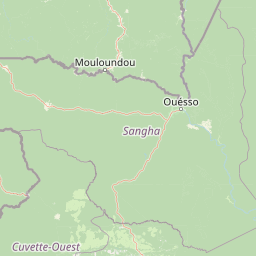
Map view of Odzala-Kokoua National Park

Use this park location map to pinpoint Odzala-Kokoua National Park in Congo, understand its exact geographic position, and read its mapped placement within the surrounding landscape more clearly.

Pigeon | © OpenStreetMap contributors

Location context for Odzala-Kokoua National Park

Cuvette-Ouest Department
Park atlas

Compare surrounding protected landscapes, mapping conservation zones across Central Africa's rich rainforest geography.

Discover Nearby National Parks and Protected Areas Beyond Odzala-Kokoua National Park
Continue your exploration of Central African conservation by browsing other national parks and protected areas near Odzala-Kokoua National Park. Trace the regional spread of rainforest protection and compare diverse ecosystems, from dense jungle to unique Marantaceae forest clearings, to contextualize this UNESCO World Heritage Site.
National parkEast Province

Boumba Bek National Park: National Park with Protected Landscape Identity in East Province

Explore its geographic context and mapped protected boundaries.

Boumba Bek National Park is a key protected area within Cameroon's East Province, offering a dedicated focus for understanding national park landscapes. This resource facilitates discovery of its precise geographic footprint and its significance as a mapped protected land. Users can delve into its regional context and explore the atlas-level details defining its protected status and natural landscape character.

Area
2,382 km²
Established
2005
IUCN
II
Relief
Lowland
National park

Lobéké National Park National Park: A Protected Landscape within the Congo Basin

Explore its semi-evergreen forest, unique bais, and riverine ecosystems.

Lobéké National Park represents a core protected national park within the vast Congo Basin, renowned for its exceptionally high densities of African forest elephants and western lowland gorillas. Covering over 2,000 square kilometers of largely untouched semi-evergreen forest, the park features distinct ecosystems including mineral-rich bais clearings, saline swamp savannas, and diverse riverine habitats. As a crucial component of the Sangha Trinational protected area, Lobéké National Park offers a profound look into Central African wilderness and its unique natural geography.

Area
2,178 km²
Established
1999
IUCN
II
Relief
Lowland
National parkCameroon

Nki National Park: Protected National Park Landscape in Cameroon

Explore the geographic context and mapped boundaries.

Nki National Park is a designated national park in Cameroon, offering a distinct protected landscape for geographic study. This page provides essential context for understanding the park's place within the country's natural geography and protected areas atlas. Explore its mapped terrain and protected boundary details to gain a clearer picture of this natural entity within Central Africa's diverse geography.

Area
3,093 km²
Established
2005
IUCN
II
Relief
Upland
National parkCongo

Ntokou-Pikounda National Park: Congo's Protected Landscape and Regional Geographic Atlas

Explore the mapped boundaries of this national park in Congo.

Ntokou-Pikounda National Park serves as a critical point of reference for understanding protected landscapes in Congo. As a national park, its geographic scope and mapped boundaries are essential for atlas-based discovery. This detailed entry facilitates an exploration of its protected terrain and regional context, highlighting its significance within the broader conservation geography.

Area
4,572 km²
Established
2012
IUCN
II
Relief
Lowland
Watercolor painting showing rolling hills, green vegetation, and a pinkish river area
National parkCentral African Republic

Dzanga-Ndoki National Park National Park: Mapped Boundaries and Geographic Context in Central Africa

Explore protected landscape geography and park atlas details.

Gain a structured understanding of Dzanga-Ndoki National Park as a protected area in the Central African Republic. This page focuses on its precise geographic scope, mapped park boundaries, and its identity as a National Park. It serves as an entry point for exploring the park's landscape context and its place within the atlas of protected natural areas, offering factual details for geographic discovery.

Area
1,143.26 km²
Established
1990
IUCN
II
Relief
Lowland
National parkCongo

Nouabalé-Ndoki National Park: Congo National Park & Protected Landscape Atlas

Explore protected area geography and mapped terrain.

Nouabalé-Ndoki National Park is a designated national park in Congo, offering rich opportunities for geographic discovery and atlas exploration. This page details the park's protected landscape, its mapped boundaries, and its significance within the regional geography of Congo. Users can investigate the park's natural terrain and its place within the broader atlas of protected areas.

Area
3,921.61 km²
Established
1993
IUCN
II
Relief
Lowland
National parkGabon

Minkébé National Park: Protected Area and Geographic Context in Gabon

Explore the mapped terrain and protected landscape of this national park.

Gain a structured understanding of Minkébé National Park, a designated national park situated in Gabon. This destination focuses on the park's protected landscape, its distinct mapped boundaries, and its contribution to the regional geography of Central Africa. Examine how its protected status shapes the natural terrain and offers a unique angle for geographic discovery.

Area
7,570 km²
Established
2002
IUCN
II
Relief
Upland
National parkGabon

Ivindo National Park: A Protected Rainforest Landscape in Gabon

Explore its waterfalls, diverse ecosystems, and mapped geographic context.

Ivindo National Park represents a significant protected landscape within Gabon, spanning a vast area of intact tropical rainforest. Recognized as a UNESCO World Heritage Site, the park is defined by the Ivindo River and its dramatic waterfalls, including the famous Kongou and Mingouli Falls. Its geography includes mountainous terrain and vital riverine ecosystems, supporting critical populations of forest elephants and great apes. This page offers a gateway to understanding the park's protected status, its unique natural features, and its role in the broader geography of Central Africa.

Area
3,000 km²
Established
2002
IUCN
II
Relief
Mixed relief

Common questions about visiting, size, designation, and location context for Odzala-Kokoua National Park

Odzala-Kokoua National Park FAQs for park facts, access, geography, and protected area context
Find quick answers about Odzala-Kokoua National Park, including protected-area facts, park geography, trail and visitor context, and how the park fits into its surrounding country and regional landscape.
MoriAtlas Explorer

Continue Your Protected Areas Search Across the Global Atlas

Deepen your exploration by continuing the structured search for national parks and protected areas worldwide. Utilize the comprehensive filtering capabilities to compare different conservation landscapes and refine your understanding of global park geography. Discover more about the distribution and characteristics of protected natural areas.

Global natural geography