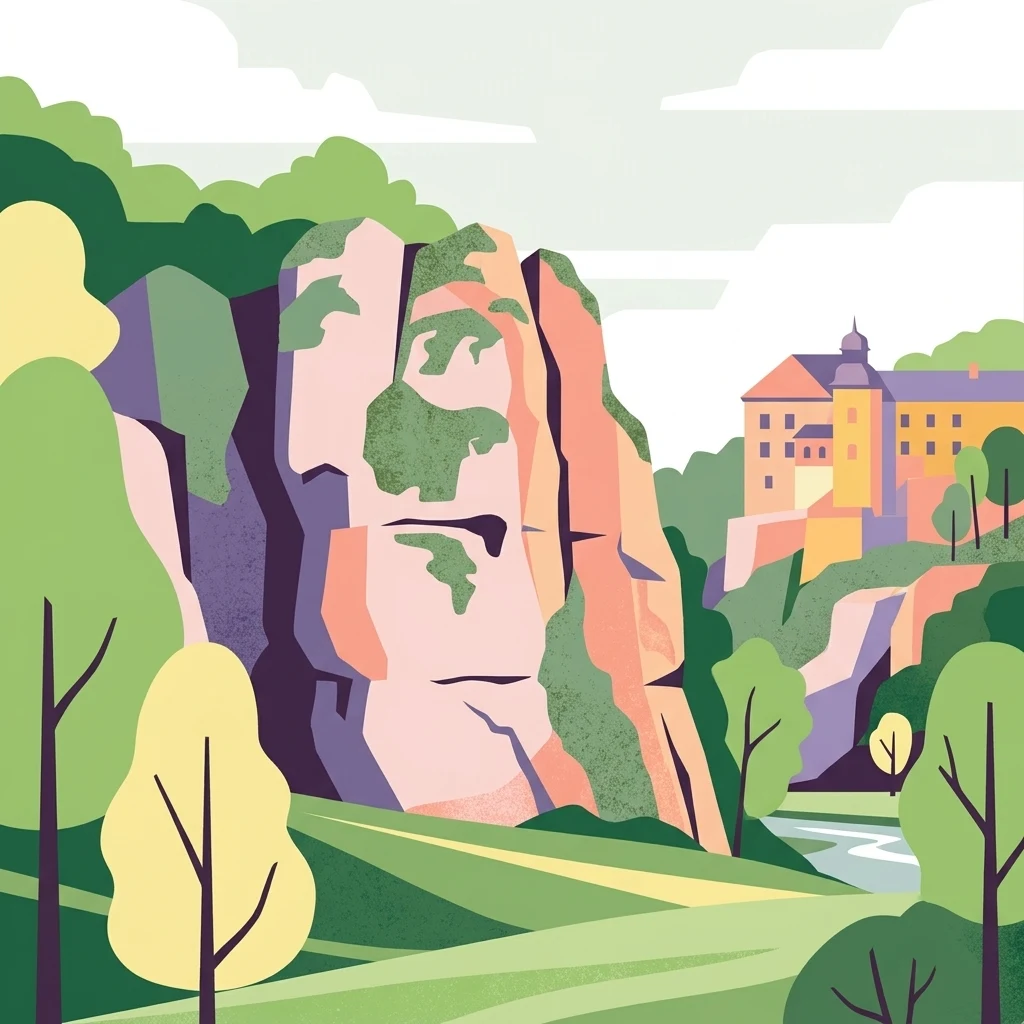
A compact limestone valley park near Krakow, defined by caves, rock pillars, and rich prehistoric human history.
Ojców National Park
Ojców National Park (Ojcowski Park Narodowy) is a small protected area in southern Poland, located in the Małopolskie region about 16 kilometers northwest of Krakow. It sits in the southern part of the Kraków-Częstochowa Upland, within the Olkusz Upland mesoregion, and protects a remarkable concentration of limestone landscape features within a remarkably compact footprint. The park is officially the smallest of Poland's national parks, yet it encompasses deeply carved river valleys, towering rock formations, dense cave systems, and a mosaic of forest, steppe-like, and wetland habitats.
The park's identity is shaped by the Jurassic limestone bedrock laid down in an ancient sea, which was later sculpted by erosion into gorges, terraces, and isolated rock pillars. The Prądnik River and its tributary the Sąspówka flow through the two main valleys, while dozens of dry side gorges, rock outcrops, and karst caves add diversity to the scenery. Cultural layers run equally deep: prehistoric human traces in Ojców's caves span the Middle Paleolithic through the Neolithic, and medieval castles such as those at Ojców and Pieskowa Skała are integrated into the park landscape.
Ojców National Park is also notable for being close to a major urban center, making it a popular destination for hiking, nature education, and short visits from Krakow. Its official symbol is the bat, reflecting the importance of the park's caves as winter habitats for numerous bat species and its broader ecological identity.