
Why Pong Dam Lake stands out
Pong Dam Lake is best known as a winter staging ground for migratory waterfowl on the Central Asian and trans-Himalayan flyway, with over 220 bird species recorded across 54 families, and winter counts that have exceeded 140,000 birds. The combination of receding shoreline mudflats, shallow margins, deep open water, sandy banks, and cultivated drawdown areas generates a remarkable range of feeding and roosting habitats within a single reservoir. Among its signature species are the bar-headed goose, ruddy shelduck, northern pintail, common teal, black stork, and, unusually for India, the red-necked grebe. The reservoir is equally recognised among anglers and naturalists for the strong mahseer fishery in its waters, said to be unique within the country.
Pong Dam Lake history and protected-area timeline
The history of Pong Dam Lake is bound up with the post-partition distribution of the Indus river system and India's effort to harness its allocated share of the three eastern rivers allocated under the Indus Water Treaty of 1960. Once the Bhakra Dam had been built on the Satluj, the Beas River was developed in stages, with the Pong Dam forming the second major stage of that plan. Construction produced what was, at the time, the highest earthfill dam in India.
The reservoir first filled in 1975, dramatically altering the Siwalik landscape and submerging long-standing villages and agricultural land along the Beas valley. The disruption led to the displacement of thousands of people, but it also opened up a new chapter for the region. In 1983, the reservoir was declared a bird sanctuary, and in 1986 the Himachal Pradesh government declared the entire reservoir a Wildlife Sanctuary, an act that carries the name of Maharana Pratap, the Rajput king of Mewar, in whose honour the lake is also known as Maharana Pratap Sagar.
Recognition of the lake's international importance grew steadily through the late twentieth century. After sustained documentation of its waterfowl populations, the reservoir was designated a Ramsar Wetland in August 2002, joining the global network of internationally significant wetland sites. The catchment planting programmes, anti-poaching patrols, and reservoir fishing cooperatives that emerged in subsequent decades have shaped the lake's modern identity as a working, inhabited, and protected landscape rather than a purely engineered reservoir.
Pong Dam Lake landscape and geographic character
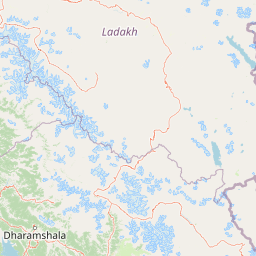
Pong Dam Lake lies within the low Shivalik foothills where the Himalayas descend toward the Indo-Gangetic plains, a setting that defines its visual character. The reservoir is framed by the Dhauladhar range on the northern horizon, while the immediate shoreline consists of undulating Siwalik ridges covered in mixed pine and deciduous forest. Mountain streams cut through narrow valleys feeding the reservoir, and the surrounding terrain shifts gradually between rugged ridges, forested slopes, and gentler lowlands.
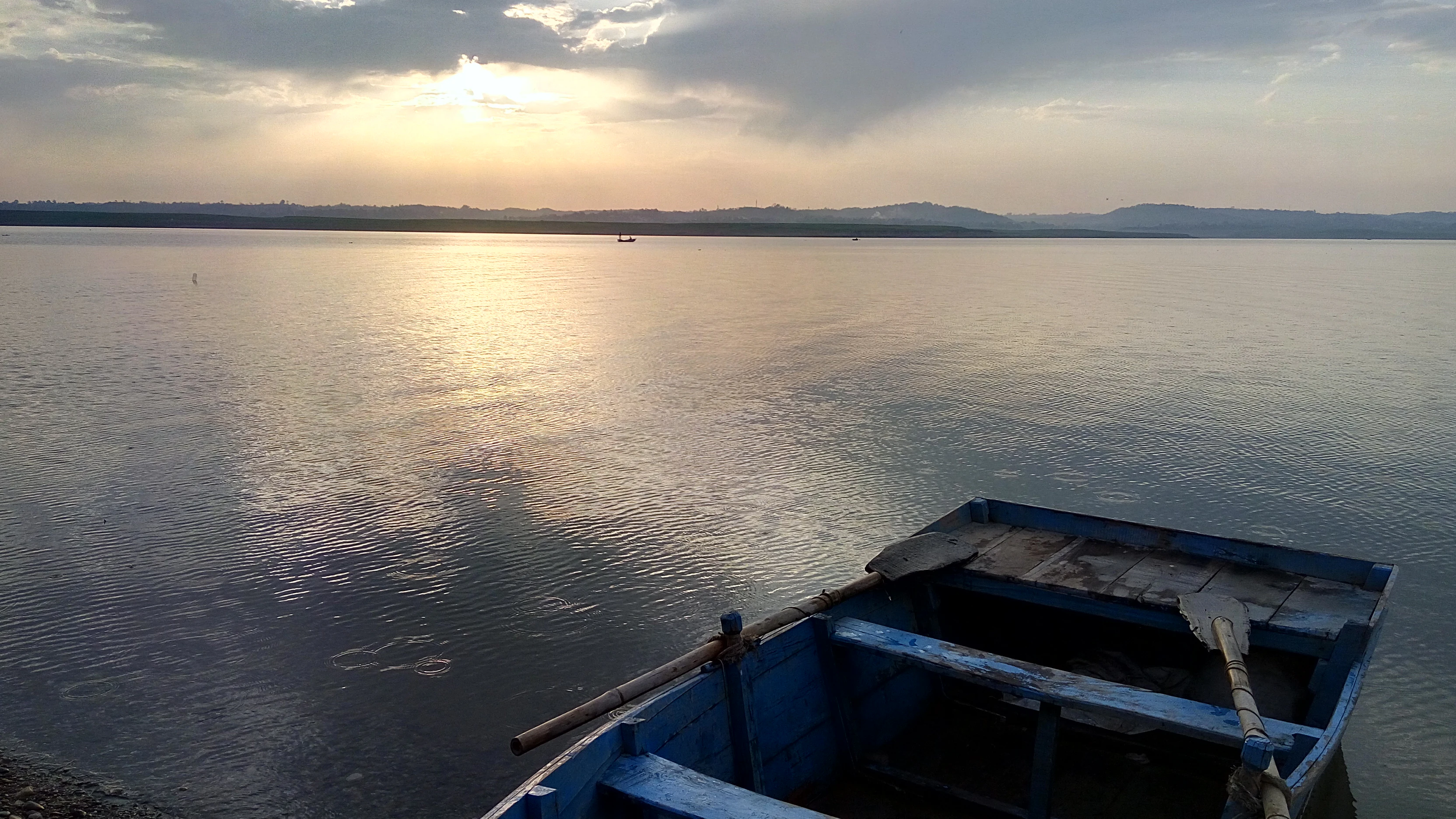
The lake itself stretches roughly 42 kilometres along its longest axis, with breadths that can approach 15 kilometres under normal conditions and broaden further during flood years. Its surface lies at an elevation of about 436 metres, and depths reach nearly 100 metres near the dam structure. The seasonal drawdown between peak and low water levels exposes extensive mudflats and sand spits along the edges, while several islands rise above the high water mark, giving the lake a varied and seasonally shifting shoreline. In the southern margins the landscape opens out toward the plains, while in the north the relief rises more sharply into deep-cut valleys and steeper hill sections.
Pong Dam Lake ecosystems, habitats, and plant life
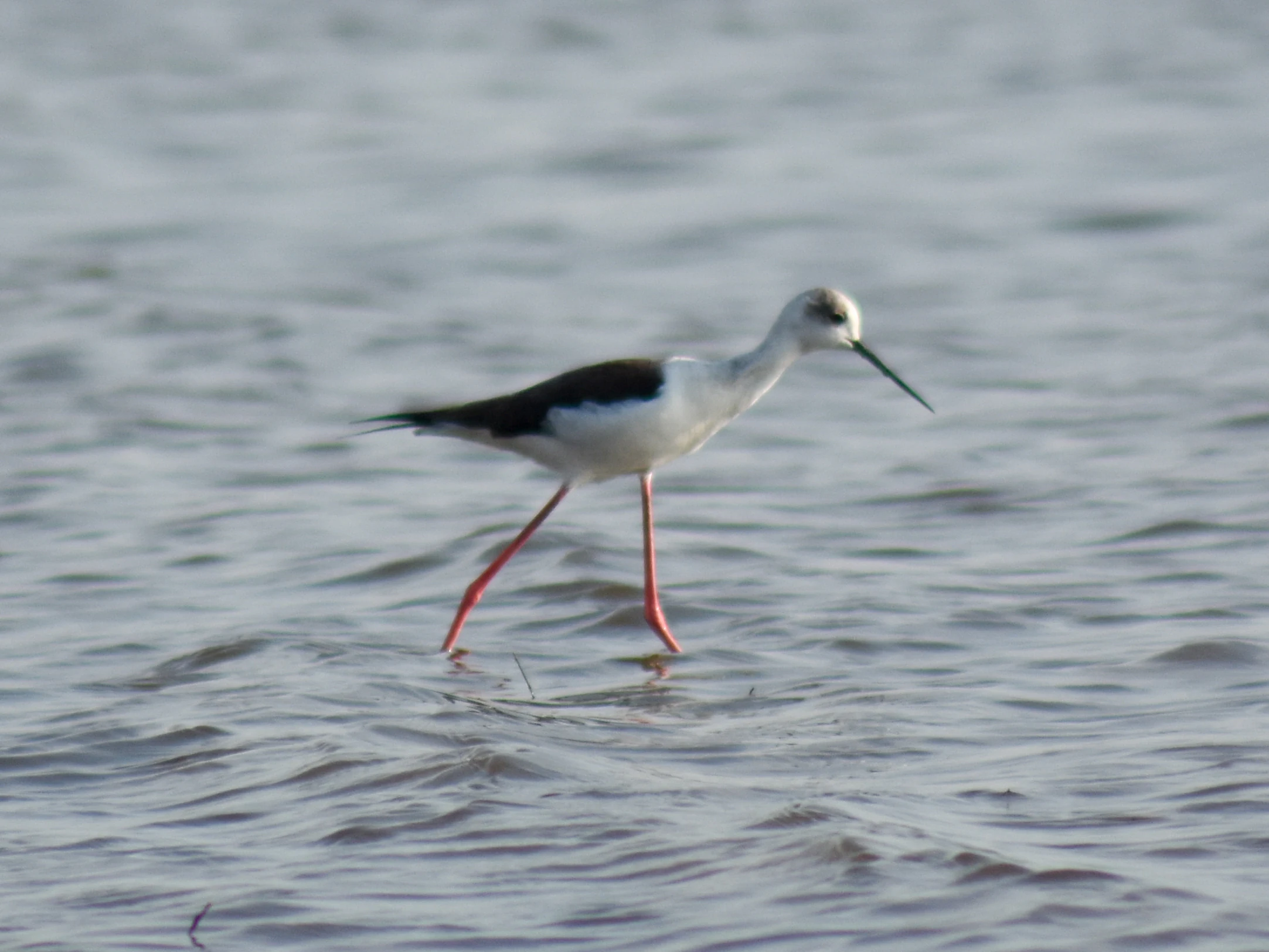
Ecologically, Pong Dam Lake functions as a freshwater mosaic where open deep water, shallow margins, receding mudflats, sandy banks, swamp habitats, and forested catchments all converge within a single landscape. The reservoir's peripheral land is cloaked in mixed perennial and deciduous pine forests, supplemented by plantations of eucalyptus, with a varied understorey of acacia, jamun, shisham, mango, mulberry, ficus, kachnar, amla, and prunus, alongside shrubs, grasses, and climbers. Because water levels fluctuate strongly with the filling and depletion cycle, emergent aquatic vegetation is limited, although some submerged vegetation is recorded within the lake body.
The lake sits at a hinge point between mountain and plain, and that geographic position is what powers its ecological richness. Catchment runoff from glacial melt, snowmelt, and intense monsoon rainfall feeds a nutrient regime capable of supporting both rich fisheries and the enormous seasonal influx of waterfowl. Habitats around the reservoir are highly complementary: muddy shores provide invertebrates for waders, shallow margins suit dabbling ducks, open deep water hosts grebes and diving species, and dry sandy banks dotted with boulders create roosting and feeding habitat for stone curlews and pratincoles. The combination of these conditions within one catchment is what gives Pong Dam Lake its reputation as an unusually complete and ecologically layered wetland.
Pong Dam Lake wildlife and species highlights
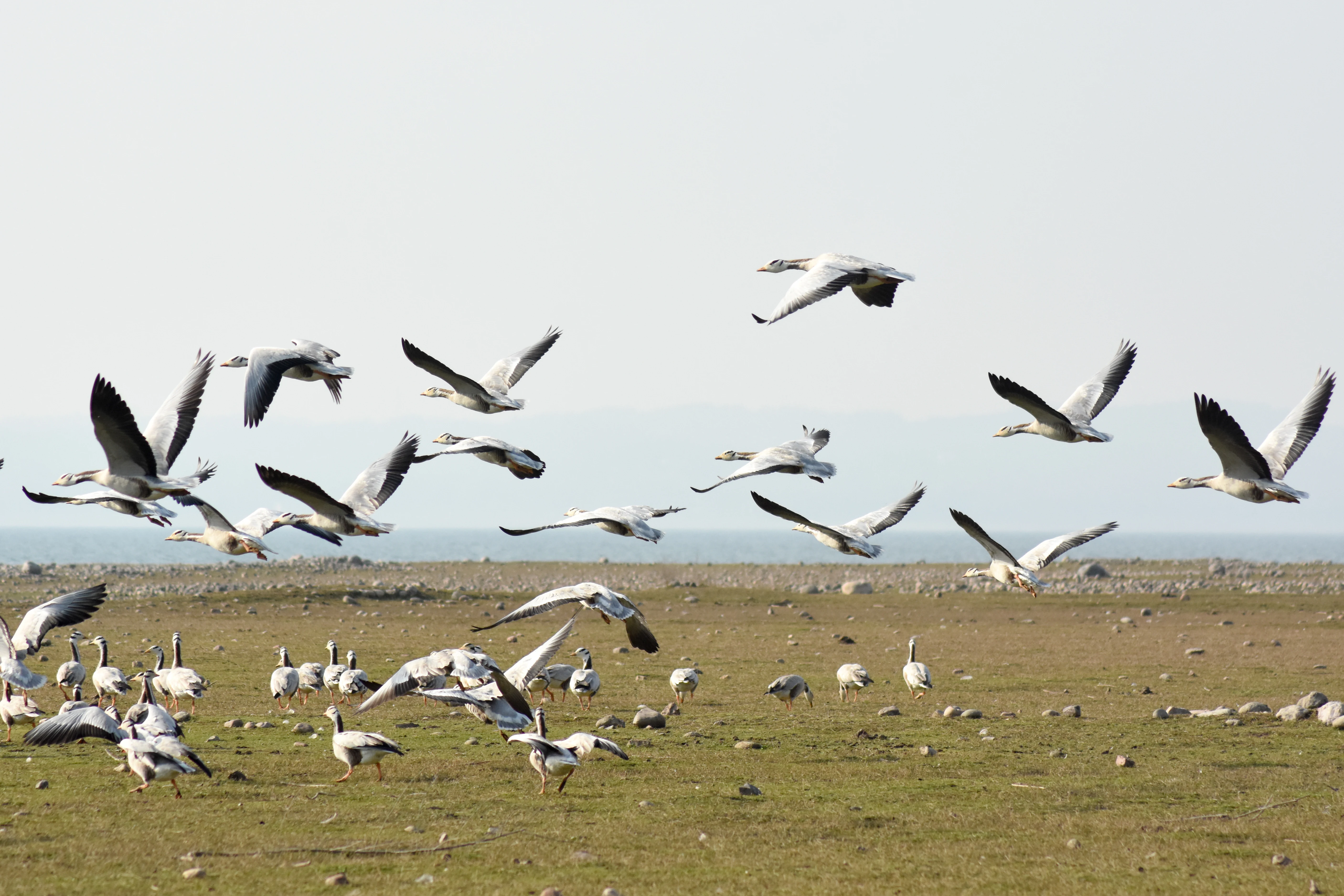
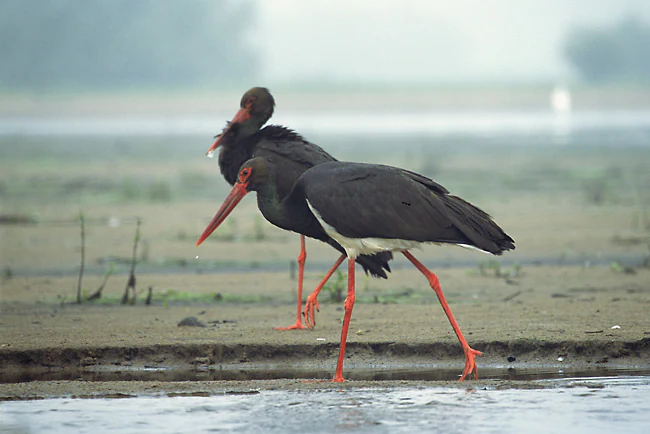
Pong Dam Lake is internationally significant for its waterfowl, with more than 220 bird species across 54 families recorded, supported by winter counts that have climbed from an annual average below twenty thousand in the late 1980s and early 1990s to well over one hundred thousand in recent years. The lake sits on the trans-Himalayan flyway, and birds arrive from the plains of India and from distant Central Asian breeding grounds, including Siberia. Among its signature winter visitors are the bar-headed goose, ruddy shelduck, northern pintail, common teal, Indian spot-billed duck, Eurasian coot, black-headed gull, plovers, terns, egrets, and the striking black stork, along with occasional rare records such as the red-necked grebe, first documented in India at this site in 1987.
The lake's fish fauna is equally important. Twenty-seven species from five families have been recorded, with mahseer, catla, mirror carp, and native singhara among the most valued. A deliberate stocking programme, beginning with common carp in 1974 and Indian major carps and silver carp in the late 1970s, shifted the reservoir's catch composition to a carp-dominated profile while mahseer populations have remained strong enough for the site to hold the country's only known dedicated mahseer fishery of its kind.
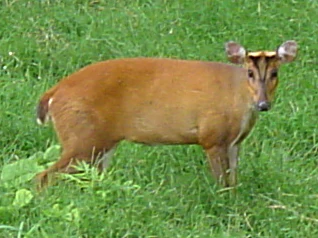
In the forested catchments above the shore, mammals thrive alongside the birdlife. Barking deer, sambar, wild boar, leopard, and the oriental small-clawed otter have all been recorded in the buffer zone, benefitting from the habitat mosaic the reservoir creates between water, forest, and farmland. Local fishermen, traditional boat builders, and visitors during peak winter all add a human layer to the wildlife experience at Pong Dam Lake.
Pong Dam Lake conservation status and protection priorities
The conservation significance of Pong Dam Lake rests on its formal recognition across multiple layers of protection. Declared a Wildlife Sanctuary in 1986 and a Bird Sanctuary earlier in 1983, the lake became a Ramsar Wetland in 2002, joining the global network of internationally important wetland sites and cementing its status as a key stopover and wintering ground on the trans-Himalayan flyway.
This protected framework has been backed by practical measures on the ground. Nearly forty village forest development committees work alongside nine checkposts and two mobile units to suppress poaching of birds and mammals within the sanctuary's five-kilometre buffer belt, while large-scale plantation in the reservoir's peripheral area helps reduce siltation and creates nesting habitat. Strict fishery rules, including minimum catchable sizes for mahseer, are credited with sustaining the reservoir's unusual mahseer population. One of the reservoir's islands has been formally named Ramsar and developed as an education and conservation hub, helping link protected-area management, local livelihoods, and the long-term ecological future of this Himalayan reservoir.
Pong Dam Lake cultural meaning and human context
The cultural setting of Pong Dam Lake blends inherited memory with active community life. The reservoir was named in honour of Maharana Pratap, the sixteenth-century Rajput ruler of Mewar, giving the landscape an identity drawn from a wider Indian historical imagination. Beneath the reservoir itself lies a quieter cultural layer in the form of the Bathu Temples, a cluster of ancient temples that remain submerged for much of the year and emerge only when water levels fall between March and June.
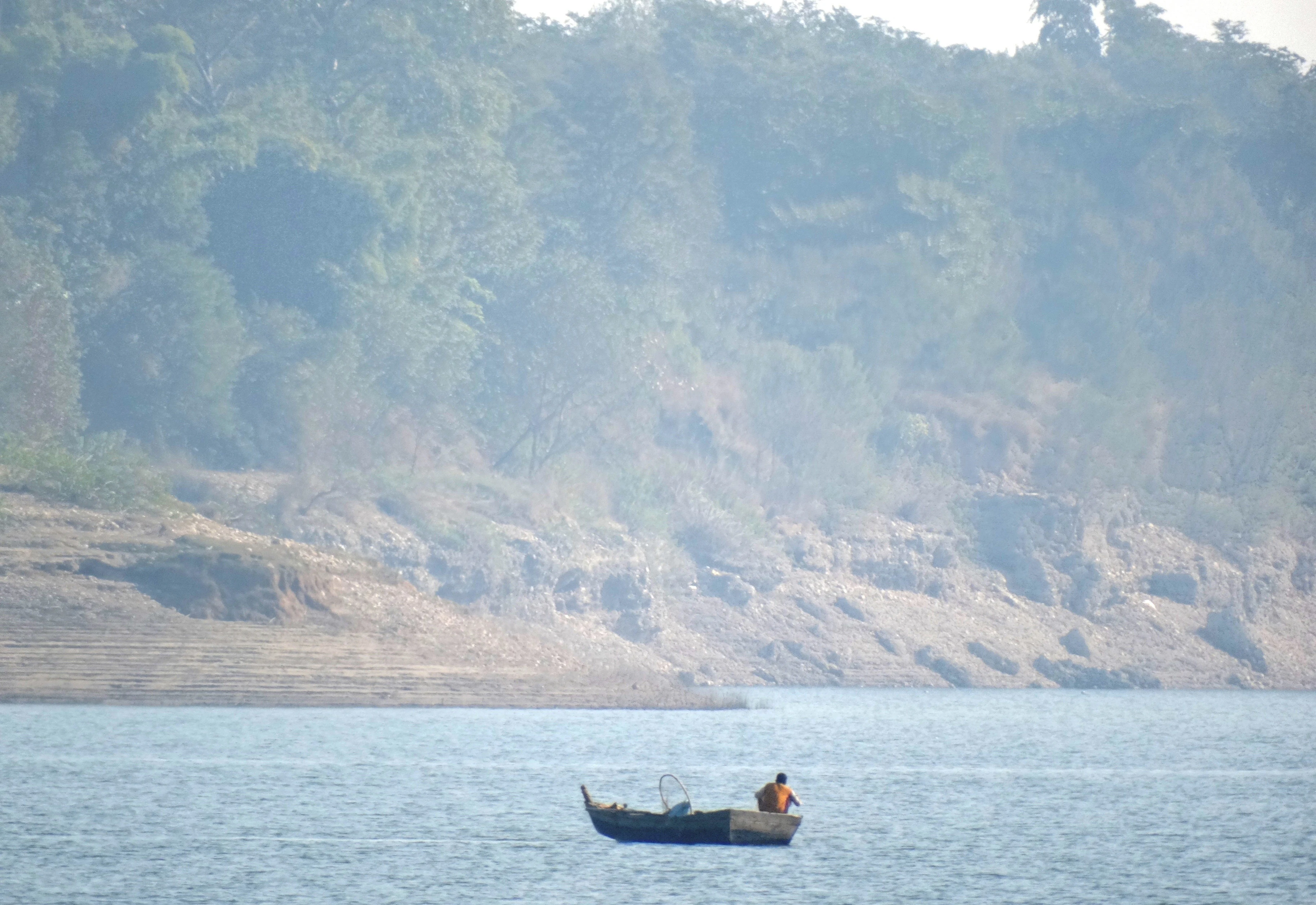
The lake's modern communities remain closely tied to its waters. Families displaced by the original submergence became the backbone of the reservoir's fishing cooperatives, while traditional wooden boat-building continues in settlements such as Dehra, passed down by craftsmen whose numbers have shrunk over time but whose work still links the reservoir to long-standing local practices of using the Beas.
Top sights and standout views in Pong Dam Lake
Among Pong Dam Lake's most distinctive qualities is the sheer scale of its seasonal birdlife, with over 220 species and counts exceeding one hundred thousand waterfowl, anchored by flocks of bar-headed geese that have become an iconic winter sight over the Siwalik Hills. Equally distinctive is the reservoir's role as one of India's few strongholds for mahseer angling, supported by carefully managed fishing rules. The setting itself, framed by the Dhauladhar against Siwalik foothills with several forested islands within the lake, gives the site a powerful visual identity. Adding to its distinctiveness are the seasonal emergence of the ancient Bathu Temples and the presence of one of the country's only dedicated water sports centres on an inland reservoir.
Best time to visit Pong Dam Lake
Winter is the most rewarding time to experience Pong Dam Lake, with large flocks of migratory waterfowl arriving between November and March and reaching their peak counts in the early months of the year. Cooler temperatures and clearer skies make this period ideal for birdwatching across the lake's varied shoreline habitats, from mudflats and sand spits to shallow margins and forested edges. Outside of winter, lower water levels between March and June expose more shoreline and reveal the ancient Bathu Temples, while the warmer months offer access to the lake's water sports facilities. Monsoon months bring heavy rainfall and rising water levels that expand the reservoir's surface area and limit land-based access to the shoreline, so most visitors focus on the drier winter and spring windows.