
Mori Atlas logo
Wildlife reservePulicat Lake Bird Sanctuary

Mapping the extensive brackish lagoon ecosystems and migratory habitats of the southeastern Indian coast.

Pulicat Lake Bird Sanctuary: A Major Coastal Wetland and Wildlife Reserve in Andhra Pradesh

Pulicat Lake Bird Sanctuary represents a critical protected landscape located along the Bay of Bengal, straddling the border between Andhra Pradesh and Tamil Nadu. As India's second-largest brackish-water lagoon, the sanctuary functions as a complex mosaic of tidal mudflats, salt pans, and coastal scrub. This protected area supports seasonal migrations of greater flamingos and other waterbirds, providing essential feeding and nesting grounds within the shallow tidal geography of the region.

bird sanctuarybrackish lagooncoastal wetlandwaterbirdsflamingosmigratory birds

Pulicat Lake Bird Sanctuary

Wildlife reserve

Park overview

Structured park overview, official facts, and landscape profile for Pulicat Lake Bird Sanctuary

Pulicat Lake Bird Sanctuary park facts, protected area profile, and essential visitor context

Review the core facts for Pulicat Lake Bird Sanctuary, including designation, size, terrain, visitor scale, habitats, and operating context in one park-focused overview.

About Pulicat Lake Bird Sanctuary

Pulicat Lake Bird Sanctuary is built upon one of the largest and most ecologically important brackish-water lagoons in India. The lagoon itself forms the heart of the protected area, with its shallow saline waters, mudflats, and fringing vegetation creating a complex mosaic of habitats. The sanctuary's location near the coast of the Bay of Bengal exposes it to tidal influences, and this interplay between fresh inland drainage and seawater defines much of its ecological character.

The protected area functions as both a habitat refuge and a landscape-scale conservation zone. The Andhra Pradesh Forest Department manages a larger share of the sanctuary in the northern portion, while the Tamil Nadu Forest Department oversees the southern area, including isolated tracts such as the small inland area that is classified as a National Park zone. A meaningful portion of the surrounding land is shaped by human use, including traditional fishing, salt production, and small-scale agriculture, which has historically coexisted with the lagoon's wildlife.

Pulicat's identity is strongly tied to birds. The lagoon hosts enormous flocks that change with the seasons, from winter visitors arriving from Central Asia and beyond to resident species that breed within the sanctuary's quieter stretches. Visitors often encounter flamingos along shallow flats, pelicans gliding low over open water, herons and egrets patrolling the edges, and open-country species in the scrubland beyond the shoreline. The sanctuary's accessibility from cities such as Chennai and its integration with the fishing villages on its shores contribute to its character as a destination that combines wildlife, working landscapes, and traditional coastal life.

Overall, Pulicat Lake Bird Sanctuary is a place where ecological function, scenic open-water landscapes, and human coastal heritage intersect, offering a strong example of how a large lagoon ecosystem can be conserved as a living landscape rather than only as an isolated natural enclave.

Quick facts and research context for Pulicat Lake Bird Sanctuary

Pulicat Lake Bird Sanctuary is located in southeastern India, primarily in the Tirupati district of Andhra Pradesh, and extends into the Thiruvallur District of Tamil Nadu. Established in 1976 and classified as an IUCN Category IV protected area, it is managed jointly by the Andhra Pradesh Forest Department and the Tamil Nadu Forest Department. The sanctuary is internationally recognized as an Important Bird Area, confirming its role as a key refuge for resident and migratory waterbirds in South Asia.

Protection and recognition

Examine the documented conservation scope and regulatory framework for Pulicat Lake Bird Sanctuary.

Pulicat Lake Bird Sanctuary Protection Status and Designation Records

Pulicat Lake Bird Sanctuary maintains a mixed protection scope governed by official conservation frameworks and designated management guidelines. Review structured records detailing the protected area administration without relying on external recognition assumptions.

Protection details

Protection scope
Mixed
Transboundary protection
No
Park context

Deeper park guide and search-rich context for Pulicat Lake Bird Sanctuary

Pulicat Lake Bird Sanctuary history, landscape, wildlife, and travel context

Explore Pulicat Lake Bird Sanctuary through its history, landscape character, ecosystems, wildlife, conservation priorities, cultural context, and seasonal travel timing in a structured park guide built for atlas discovery and search intent.

Why Pulicat Lake Bird Sanctuary stands out

Pulicat Lake Bird Sanctuary is best known for the massive gatherings of greater flamingos that feed in the shallow, brackish waters of Pulicat Lagoon, often appearing as a soft pink haze along the horizon. It is also associated with large colonies of pelicans, painted storks, and other migratory waterbirds that use the lagoon, mudflats, and surrounding vegetation as feeding and nesting habitat. More broadly, the sanctuary is recognized as one of the most important coastal wetland sites on the eastern Indian coastline, second only to Chilika Lake among India's brackish lagoon ecosystems. Its appeal lies in the combination of open tidal scenery, traditional fishing villages, and the seasonal rhythm of migratory arrivals, making it a distinctive destination for birdwatchers and nature travelers.
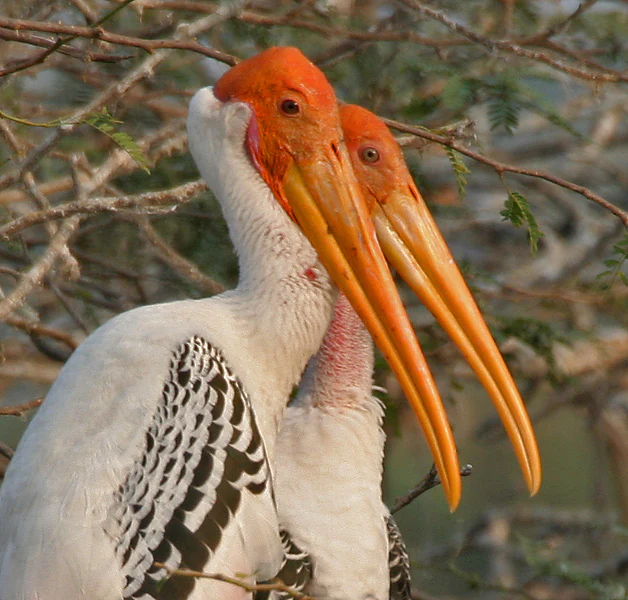
Close-up portrait of two painted storks with distinct orange heads and long yellow bills, positioned side-by-side against a background of thin, leafless branches.
Two painted storks perched in a tree at Pulicat Lake Bird Sanctuary.

Pulicat Lake Bird Sanctuary history and protected-area timeline

Pulicat Lake Bird Sanctuary was formally established as a protected area in 1976, reflecting a growing recognition of the lagoon's importance for waterbirds along the southeastern Indian coast. The designation brought the second-largest brackish-water ecosystem in India under formal state-level protection, with administration shared between Andhra Pradesh and Tamil Nadu.

Over the decades following its establishment, the sanctuary gained international recognition as an Important Bird Area, confirming its role in global migratory bird conservation and giving it a stronger profile among conservation organizations. NGOs such as the AARDE Foundation have also become active around the lagoon, particularly at Pazhaverkadu, working to raise awareness about the threats facing the wetland and the communities that depend on it.

More recently, the lake itself has come under increasing ecological pressure, and studies and conservation efforts have highlighted concerns that Pulicat Lake could be significantly reduced within a century if siltation and other pressures are not addressed. The sanctuary's history is therefore not only a story of formal protection but also an evolving story of how a coastal lagoon and its surrounding communities are managed in the face of mounting environmental change.

Pulicat Lake Bird Sanctuary landscape and geographic character

The defining landscape of Pulicat Lake Bird Sanctuary is a vast, shallow brackish lagoon bordered by low mudflats, sandy ridges, and patches of coastal scrub. The lagoon's waters are typically calm and shallow, with broad tidal flats emerging along the edges during low water and creating wide silvery expanses that reflect the sky. These open-water and mudflat zones define the visual identity of the sanctuary.

Behind the lagoon, the landscape transitions gently into low-lying terrain. Altitude across the broader area ranges roughly from near sea level at the shore to a few hundred feet inland, creating a subtle gradient between aquatic habitat, salt-influenced flats, and dry coastal scrub. Traditional salt pans and small fishing settlements dot parts of the shoreline, adding cultural texture to the natural scenery.

Vegetation along the lagoon includes spinifex and other salt-tolerant grasses on the sandy ridges, small mangrove patches in sheltered areas, and scattered trees near inland margins. Inland parts of the sanctuary include wooded pockets, scrub, and open spaces that contrast with the open water and contribute to the variety of habitats within a relatively compact coastal setting.

Pulicat Lake Bird Sanctuary ecosystems, habitats, and plant life

Pulicat Lake Bird Sanctuary is rooted in a brackish-water lagoon ecosystem, one of only a handful of large saline or brackish wetlands in India. The water body is fed by a mix of freshwater inflow and tidal seawater, producing salinities that support a wide range of specialized aquatic organisms. This brackish character is the ecological foundation of the sanctuary, shaping the food web that supports its famous birdlife.

The sanctuary's plant diversity includes around 132 recorded species, ranging from coastal grasses and spinifex that stabilize the sandy ridges to woody species such as Walsura piscida, Manilkara elengi, and Excoecaria agallocha along the margins. Climbers like Calamus viminalis add structural complexity in some of the moister transitional zones. Together, these plants create a mosaic of habitats across the lagoon edge, from bare sand to denser interior woodland.

Invertebrate life is exceptionally rich and underpins the sanctuary's importance for birds. Plankton, molluscs, crustaceans, coelenterates, and insects all thrive in and around the lagoon. The mudflats and shallow margins teem with small invertebrates that provide feeding opportunities for flamingos, waders, storks, and many other species, making the lagoon itself a vast natural feeding ground during much of the year.

Pulicat Lake Bird Sanctuary wildlife and species highlights

Pulicat Lake Bird Sanctuary is perhaps best remembered for its birds, and especially for the large flocks of greater flamingos that feed in its shallow, brackish waters. These gatherings, often seen at a distance as a wash of pink across the flats, are one of the sanctuary's signature sights and draw birdwatchers from across India and beyond.

Beyond flamingos, the sanctuary supports a rich community of waterbirds and shorebirds. Pelicans soar and feed in coordinated groups over the open water, while painted storks, other stork species, herons, egrets, and many smaller waders use the mudflats and lagoon margins. The site is also an important feeding and nesting ground for both resident and migratory species, making it a key stopover along the Central Asian Flyway.

Wildlife beyond the birds is quieter but still present. Mammals such as jackals, jungle cats, and black-naped hares inhabit the scrubland and interior pockets of the sanctuary. Reptiles, amphibians, and a wide variety of invertebrates inhabit the lagoon, mudflats, and inland vegetation, completing a food web in which birds are the most visible but by no means the only component.

Pulicat Lake Bird Sanctuary conservation status and protection priorities

Pulicat Lake Bird Sanctuary holds substantial conservation significance as one of the largest brackish-water lagoon ecosystems in India and as a formally protected habitat for resident and migratory waterbirds. Its recognition as an Important Bird Area underlines its role in international efforts to conserve migratory species that depend on coastal wetlands along the eastern Indian seaboard.

The sanctuary's protection covers a substantial area divided between Andhra Pradesh and Tamil Nadu, with different forest administrations responsible for different portions. A separate inland zone is maintained as a National Park area within the broader sanctuary landscape, adding a stricter layer of protection for a portion of the site. Together, these administrative arrangements aim to safeguard the lagoon's birdlife, water quality, and surrounding vegetation.

However, the conservation picture is not without serious concerns. Pulicat Lake is threatened by siltation and other pressures, and some assessments have suggested the lagoon could be heavily reduced within the coming century if action is not taken. Government agencies and NGOs such as the AARDE Foundation work to raise awareness and support practical interventions around communities like Pazhaverkadu, recognizing that the long-term future of the sanctuary depends on addressing both ecological and human pressures along the lagoon.

Pulicat Lake Bird Sanctuary cultural meaning and human context

Pulicat Lake Bird Sanctuary sits within a region of long-standing human interaction with the coast. Around the lagoon, traditional fishing villages such as Pazhaverkadu maintain livelihoods closely tied to the waters, using crafts and practices that have shaped the lagoon landscape over generations. These communities are part of the living cultural fabric of the sanctuary and the broader Pulicat region.

The area also reflects a layered history that stretches back centuries, with communities along the lagoon having adapted to shifting coastlines, changing salinity, and the seasonal rhythms of fish and birds. The continued presence of these communities, alongside salt-producing activities and small-scale agriculture, gives the sanctuary a distinctive cultural dimension that complements its natural value and underscores the importance of integrated management approaches.

Top sights and standout views in Pulicat Lake Bird Sanctuary

Pulicat Lake Bird Sanctuary's standout feature is the convergence of one of India's great brackish lagoons with an exceptional bird spectacle, anchored by greater flamingos but enriched by pelicans, painted storks, and many other waterbirds. The sanctuary's wide open vistas, exposed mudflats, and softly reflective shallow water create an atmosphere that feels distinct from forested or mountainous parks.

Equally notable is the sanctuary's shared governance and recognition across state and international frameworks. Its Important Bird Area status, its division between Andhra Pradesh and Tamil Nadu forest departments, and the inclusion of a National Park zone within its boundaries all reflect a multi-layered effort to safeguard a coastal lagoon that is simultaneously a wildlife refuge, a seasonal home for migratory species, and part of the cultural and economic life of the region.

Best time to visit Pulicat Lake Bird Sanctuary

Pulicat Lake Bird Sanctuary is most rewarding when large numbers of migratory birds are present, which generally corresponds to the cooler months in southeastern India. During this period, conditions are typically more comfortable for visitors and waterbird activity along the lagoon is at its peak, with flamingos, pelicans, and many other species concentrated around the shallows and mudflats.

Weather patterns across the sanctuary range from warm, humid conditions near the coast in summer to cooler, drier periods in the winter months. Rainfall in the region can be moderate to high, and the lagoon itself changes character with the seasons as water levels fluctuate and exposed mudflats expand or contract. For visitors focused on birdwatching, the cooler season tends to offer the most complete picture of the sanctuary's birdlife, while the broader lagoon landscape is visually engaging throughout much of the year.
Monthly climate preview

Long term temperature and precipitation records measured at representative park coordinates

Pulicat Lake Bird Sanctuary Climate and Monthly Temperature Normals

Representative coordinate records show average monthly temperatures ranging from 23.77 degrees Celsius to 31.92 degrees Celsius alongside distinct precipitation variations across the year. Reviewing the complete twelve month profile provides detailed climatological context for the protected area without relying on short term forecasts.
Annual mean28 °C
24 °C32 °C
Jan24°
Feb25°
Mar28°
Apr31°
May32°
Jun31°
Jul30°
Aug29°
Sep28°
Oct27°
Nov26°
Dec24°
Warmest month
May

31.9 °C

Coolest month
January

23.8 °C

Wettest month
November

9.8 mm/day

Driest month
February

0.3 mm/day

Park location guide

Geography guide, regional context, and park location map for Pulicat Lake Bird Sanctuary

Pulicat Lake Bird Sanctuary park geography, regions, and map view in India

Understand where Pulicat Lake Bird Sanctuary sits in India through a broader geographic reading of the surrounding landscape, nearby location context, and its mapped position within the national park landscape.

How Pulicat Lake Bird Sanctuary fits into India

India is a South Asian country bordered by the Indian Ocean, Arabian Sea, and Bay of Bengal. It shares land borders with Pakistan, China, Nepal, Bhutan, Bangladesh, and Myanmar. The country has a population of over 1.4 billion people and operates as a federal parliamentary republic with its capital in New Delhi.

Wider geography shaping Pulicat Lake Bird Sanctuary in India

India occupies the Indian subcontinent in South Asia, bordered by the Arabian Sea to the southwest, the Bay of Bengal to the southeast, and the Indian Ocean to the south. It shares land borders with Pakistan to the west, China, Nepal, and Bhutan to the north, and Bangladesh and Myanmar to the east. The territory also includes the Andaman and Nicobar Islands in the Indian Ocean.

Map view of Pulicat Lake Bird Sanctuary

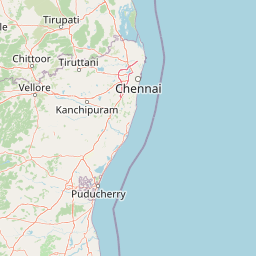
Use this park location map to pinpoint Pulicat Lake Bird Sanctuary in India, understand its exact geographic position, and read its mapped placement within the surrounding landscape more clearly.

Pigeon | © OpenStreetMap contributors

Location context for Pulicat Lake Bird Sanctuary

Andhra Pradesh

Examine the brackish lagoon, mudflats, and coastal wetland scenery

Pulicat Lake Bird Sanctuary Photos and Visual Landscape Exploration

Visual records capture the wide shallow lagoon, exposed mudflats, and seasonal flocks of greater flamingos defining Pulicat Lake Bird Sanctuary. Detailed photography reveals the unique terrain, brackish habitats, and coastal character shaping this protected wetland ecosystem.

Close-up portrait of two painted storks with distinct orange heads and long yellow bills, positioned side-by-side against a background of thin, leafless branches.

A large white and grey pelican flies low over the surface of a calm lake with grassy shorelines in the background.

Park atlas

Compare adjacent wetland habitats, regional topography, and migratory bird refuges.

Parks Near Pulicat Lake Bird Sanctuary and Connected Coastal Protected Areas

Browsing parks near Pulicat Lake Bird Sanctuary reveals a rich continuity of coastal lagoons, tidal mudflats, and protected wetland habitats across southeastern India. Comparing these regional conservation areas provides valuable geographic context for understanding wider wildlife corridors and coastal ecosystems.
Wildlife reserveTirupati district
About 38 km away#1 closest

Northwest

Nelapattu Bird Sanctuary: Wetland Geography and Wildlife Reserve in Tirupati District

Mapping the freshwater swamp forest and scrub landscapes of Andhra Pradesh.

Nelapattu Bird Sanctuary serves as a crucial protected area in Tirupati district, featuring an 83 hectare reservoir tank fringed by productive Barringtonia swamp forest. This reserve integrates dry upland ridges with aquatic lowland terrain to support significant breeding colonies and migratory bird life within the Deccan region.

Area
4.59 km²
Established
1976
IUCN
IV
Relief
Lowland
National parkTamil Nadu
About 62 km away#2 closest

South

Guindy National Park: Exploring its Protected Area Identity and Geographic Setting in Tamil Nadu

National park terrain and mapped boundaries for regional context.

Guindy National Park represents a significant protected natural landscape within Tamil Nadu, India. This entry provides detailed geographic context, focusing on the park's mapped boundaries and its identity as a national park. Users can delve into the regional landscape, understanding how Guindy National Park contributes to the atlas of protected areas in South India and appreciating its specific natural terrain.

Area
2.706 km²
Established
1977
IUCN
II
Visitors
700K annual
Wildlife reserveAndhra Pradesh
About 93 km away#3 closest

Northwest

Sri Penusila Narasimha Wildlife Sanctuary: Geographic Atlas and Protected Area Context

Protected dry evergreen forests of the Eastern Ghats transition zone.

Sri Penusila Narasimha Wildlife Sanctuary stands as a key protected area in Andhra Pradesh, known for its rare dry evergreen forest formation and status as a habitat for tigers, leopards, and the critically endangered Jerdon's courser. The sanctuary's undulating terrain of hills and valleys forms a complex mosaic of sheltered basins that provide essential refuge for both large mammals and endemic ground birds across the Eastern Ghats.

Area
1,030.85 km²
IUCN
IV
Relief
Mountain
Scope
Terrestrial
National parkAndhra Pradesh
About 95 km away#4 closest

West

Sri Venkateswara National Park: Andhra Pradesh National Park Protected Landscape Atlas

Mapped protected area, regional geography, and natural terrain.

Uncover the core geographic identity of Sri Venkateswara National Park, a designated national park within Andhra Pradesh. This resource delves into its protected landscape features, providing a mapped perspective on its boundaries and natural terrain. It serves as a crucial point for understanding the park's regional context and its significance as a mapped natural area for atlas-based exploration.

Area
353 km²
Established
1989
IUCN
II
Relief
Mountain
A pale, soft-focus watercolor illustration depicting rolling hills, sparse trees, and a light sky, arranged as a wide panoramic strip.
Wildlife reserveAndhra Pradesh
About 179 km away#5 closest

West

Koundinya Wildlife Sanctuary: Mapped Landscapes and Protected Area Geography in Andhra Pradesh

Essential insights into regional elephant habitat and plateau ecosystems

Koundinya Wildlife Sanctuary serves as the primary elephant reserve of Andhra Pradesh, protecting a rugged mosaic of dry deciduous woodlands and rocky valleys along the Kolar Plateau. This sanctuary provides critical sanctuary space characterized by seasonal waterfalls, dry forest canopy, and a diverse range of terrain that facilitates the movement of significant Asian elephant populations within this distinct southern Indian ecological zone.

Area
357.6 km²
Established
1990
IUCN
IV
Relief
Mountain
Watercolor illustration showing a landscape with rolling green hills, pale mountains in the background, and clusters of trees in soft shades of green and pink on the sides.
Wildlife reserveAndhra Pradesh
About 182 km away#6 closest

Northwest

Sri Lankamalleswara Wildlife Sanctuary: Protected Geography and Forest Landscapes

A critical dry forest refuge in Andhra Pradesh, India

Located in the Eastern Ghats, Sri Lankamalleswara Wildlife Sanctuary provides a critical sanctuary for the rare Jerdon's courser. The landscape features deep gorges, rocky outcrops, and dry deciduous thorn forests that remain essential for maintaining the ecological integrity of Andhra Pradesh. This protected area represents one of the most distinctive dry-forest systems in the southern part of India.

Area
464.42 km²
IUCN
IV
Relief
Upland
Access
Access unknown
National parkAndhra Pradesh
About 219 km away#7 closest

Northwest

Rajiv Gandhi National Park (Rameswaram) National Park: Exploring Andhra Pradesh's Protected Landscapes

Mapped geography and protected area context for Rajiv Gandhi National Park (Rameswaram).

Delve into the geographic identity of Rajiv Gandhi National Park (Rameswaram), a key protected area within Andhra Pradesh. This detail page serves as an atlas anchor for understanding the park's landscape, mapped features, and its significance as a national park. Users can explore its protected boundaries and appreciate its role within the regional geography of Andhra Pradesh.

Area
2.4 km²
Established
2005
IUCN
II
Relief
Lowland
Watercolor painting of a tranquil scene featuring green trees in the foreground, water, and soft, rolling hills in the background.
Wildlife reserveAndhra Pradesh
About 257 km away#8 closest

North

Krishna Wildlife Sanctuary: Coastal Mangrove Landscapes in the Krishna River Delta

Protected estuarine geography in Andhra Pradesh

Discover the geographic extent and habitat composition of Krishna Wildlife Sanctuary. This protected area features dense mangrove forests and intricate tidal waterways across deltaic islands, serving as an important ecological corridor along the Bay of Bengal coast in Andhra Pradesh.

Area
194.81 km²
IUCN
IV
Relief
Lowland
Scope
Terrestrial

Common questions about visiting, size, designation, and location context for Pulicat Lake Bird Sanctuary

Pulicat Lake Bird Sanctuary FAQs for park facts, access, geography, and protected area context

Find quick answers about Pulicat Lake Bird Sanctuary, including protected-area facts, park geography, trail and visitor context, and how the park fits into its surrounding country and regional landscape.
MoriAtlas Explorer

Continue Your Protected Areas Search Across the Global Atlas

Deepen your exploration by continuing the structured search for national parks and protected areas worldwide. Utilize the comprehensive filtering capabilities to compare different conservation landscapes and refine your understanding of global park geography. Discover more about the distribution and characteristics of protected natural areas.

Global natural geography