Mori Atlas logo
Nature reserveQurm Nature Reserve

Mapping the ecological significance of mangrove forests and tidal habitats along the Gulf of Oman

Qurm Nature Reserve: Protected Wetland Landscapes and Coastal Geography in Muscat Governorate

Qurm Nature Reserve occupies a unique position on the Gulf of Oman coast within the Muscat Governorate. This protected area safeguards one of the largest remaining mangrove forests in the region, encompassing a diverse landscape of tidal channels, mudflats, and alluvial plains. As a recognized Important Bird Area and Ramsar site, the reserve provides essential habitat for migratory shorebirds while maintaining marine productivity within an urban coastal setting.

mangrove forestcoastal wetlandRamsar siteImportant Bird Areaurban nature reserveGulf of Oman
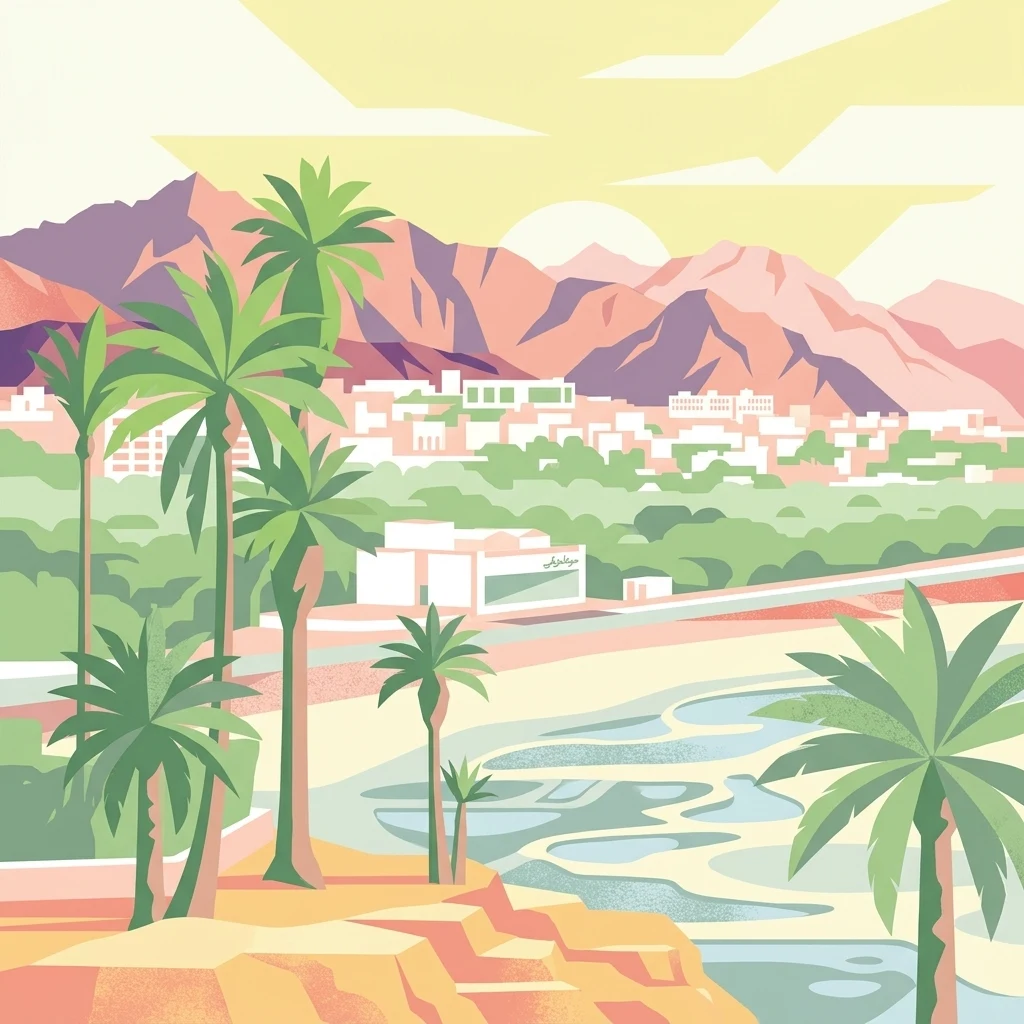
Stylized digital illustration showing palm trees in the foreground, with an estuary and marshland in the midground, and mountains behind a white city skyline in the background.

Qurm Nature Reserve

Nature reserve

Park overview

Structured park overview, official facts, and landscape profile for Qurm Nature Reserve

Qurm Nature Reserve park facts, protected area profile, and essential visitor context

Review the core facts for Qurm Nature Reserve, including designation, size, terrain, visitor scale, habitats, and operating context in one park-focused overview.

About Qurm Nature Reserve

Qurm Nature Reserve sits at a striking interface between a desert capital and a living marine ecosystem. Covering roughly 172 hectares within the Bawshar Province of the Muscat Governorate, the reserve occupies the small estuary and former delta of Wadi Aday, where seasonal freshwater flows meet the saline waters of the Gulf of Oman. Although it lies within the urban fabric of Qurm, one of Muscat's principal districts, it retains a layered mosaic of coastal habitats that reflect both natural coastal processes and the influence of nearby mountain runoff.

The reserve's protected area crosses several distinct ecological zones in close succession. From the Gulf inland, the sequence moves from open beach to coastal dunes, to sabkha tidal flats cut by tidal channels and gullies, and finally to the alluvial plain deposited by Wadi Aday. Northeast and south of the plain, the landscape rises into karstic bedrock outcrops beneath the Hajar Mountains. This compact zonation allows freshwater from several wadis and groundwater seepage to blend with seawater entering through two main tidal channels, producing a polyhaline environment that supports a rich mix of marine, brackish, and terrestrial species.

Protected since 1975 under a decree of Sultan Qaboos bin Said, the reserve has gained growing international recognition over the decades. Its recognition as an Important Bird Area in 1994 highlighted its role for waterbirds along the Central Asian-Indian Flyway, and the designation of 106.8 hectares of its lower wetland as a Ramsar site in 2013 underscored its standing as a wetland of international importance. Within Oman, the reserve is frequently cited as an example of how mangrove ecosystems can be preserved in close proximity to dense urban development, providing both ecological function and a natural refuge along the Muscat coastline.

Quick facts and research context for Qurm Nature Reserve

Qurm Nature Reserve is a national-level nature reserve located in Qurm, Bawshar Province, within the Muscat Governorate of Oman. Encompassing roughly 172 hectares, it protects mangrove, tidal flat, dune, and alluvial habitats where Wadi Aday meets the Gulf of Oman coast. The reserve is classified as an IUCN Category IV protected area, recognizing its focus on habitat and species management.

Among Oman's protected areas, Qurm is notable for combining three international designations. It was established by decree in 1975, recognized as an Important Bird Area in 1994, and listed as a Ramsar wetland of international importance on 19 April 2013. Its name derives from the local Arabic word "al-qurm," referring to the grey mangroves that dominate its coastal edge.

Protection and recognition

Examine documented designation history, management scope, and Ramsar listing details.

Qurm Nature Reserve Protection Status and International Recognition Data

Protected area records for Qurm Nature Reserve detail a mixed conservation scope established in 2013 alongside official Ramsar wetland recognition. Structured facts assemble verified designation sources to outline the administrative history and international status of the reserve.

International recognition

Protection details

Protection scope
Mixed
Designated year
2013
Transboundary protection
No
Park context

Deeper park guide and search-rich context for Qurm Nature Reserve

Qurm Nature Reserve history, landscape, wildlife, and travel context

Explore Qurm Nature Reserve through its history, landscape character, ecosystems, wildlife, conservation priorities, cultural context, and seasonal travel timing in a structured park guide built for atlas discovery and search intent.

Why Qurm Nature Reserve stands out

Qurm Nature Reserve is best known for protecting one of the largest mangrove forests along the Gulf of Oman coast. The grey mangrove (Avicennia marina) forms dense stands along the tidal channels, with its aerial roots hosting hooded oysters and giant mangrove whelks, while its fallen leaves feed a wider detrital food web in the estuary. The reserve is also widely recognized for its bird life. It has been listed as an Important Bird Area since 1994, with close to two hundred bird species recorded, ranging from coastal specialists like Socotra cormorants and Caspian gulls to migratory shorebirds such as bar-tailed godwits, dunlins, and ruddy turnstones. Among Oman's urban wetlands, Qurm stands out for combining high biodiversity, formal protection, and proximity to a major capital city.
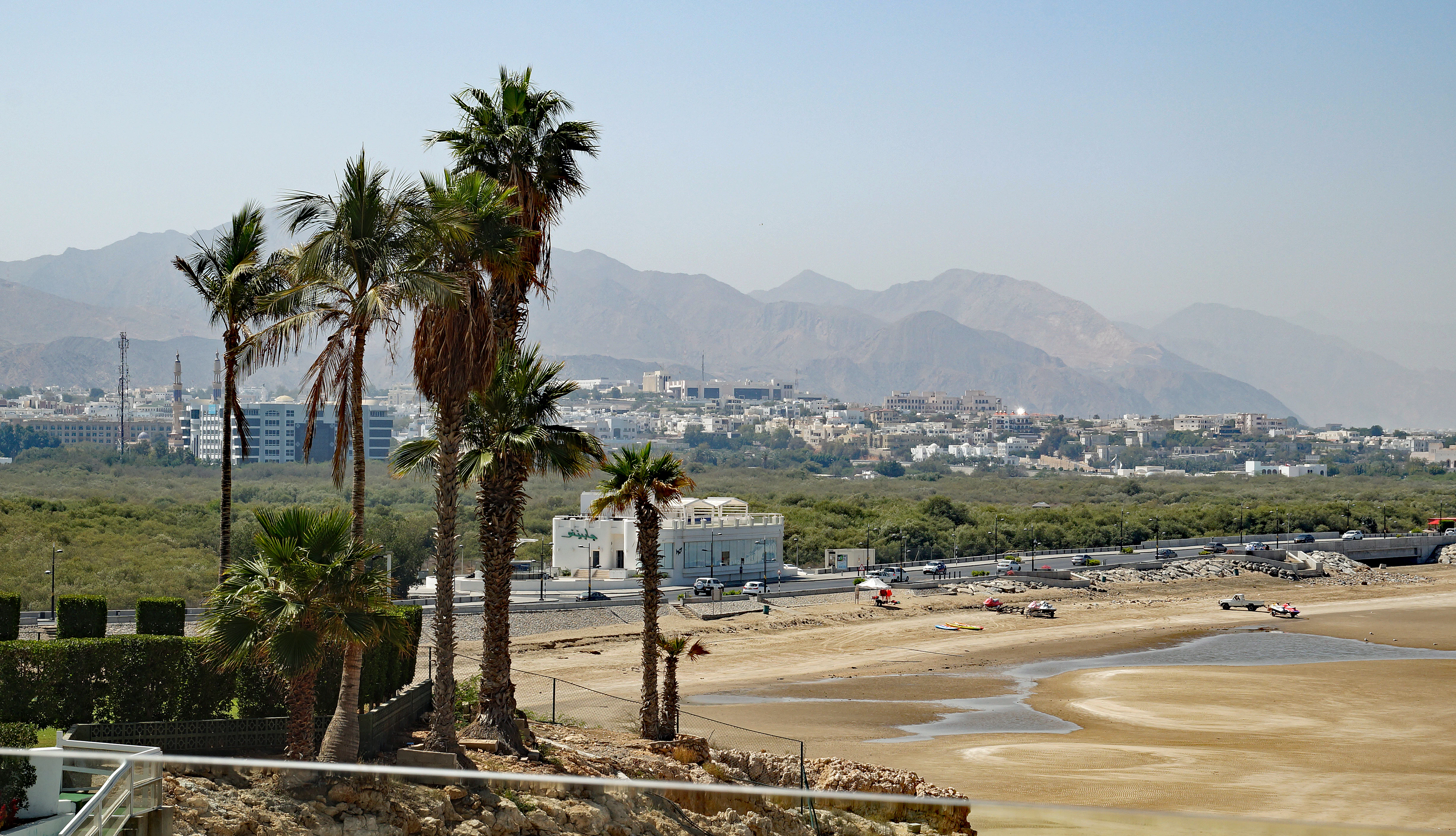
A wide angle view of a coastal wetland area with palm trees in the foreground, sand flats, and distant mountains under a hazy sky.
View of the coastal area at Qurm Nature Reserve, showcasing palm trees, intertidal flats, and urban development.

Qurm Nature Reserve history and protected-area timeline

Qurm Nature Reserve was established in 1975 by decree of Sultan Qaboos bin Said, making it one of the earlier formal protected area designations along the Gulf of Oman coast. Its establishment reflected a recognition that the mangrove-lined estuary of Wadi Aday, even within an urbanizing district of Muscat, warranted protection from accelerating coastal development.

Qurm Nature Reserve ecosystems, habitats, and plant life

Ecologically, Qurm Nature Reserve is defined by the interactions between desert landscape, freshwater seepage, and marine tides. The grey mangrove (Avicennia marina) is the ecosystem's signature species, forming dense stands along tidal channels and low-lying areas flooded at high tide. Around the mangroves, the reserve contains distinct vegetation zones that match its landforms, from salt-tolerant halophytes on the sabkha flats to scattered drought-adapted woodland on the alluvial plain.

The sabkha flats just above high tide support a specialized halophytic flora, including Suaeda aegyptiaca, Suaeda fruticosa, Cressa cretica, Aeluropus lagopoides, Halopeplis perfoliata, Arthrocaulon macrostachyum, and Zygophyllum qatarense. The dunes above the tidal zone carry their own zonation: Halopyrum mucronatum grasses on the outer coastal dunes, shifting to Sphaerocoma hookeri in less saline inner dunes, with Suaeda fruticosa, Cistanche phelypaea, and Suaeda vermiculata in more saline pockets. Sheltered dune hollows support small communities of Lotus garcinii, Cyperus conglomeratus, and Heliotropium ramosissimum.

Above the sabkha, the moderately drained alluvial plain supports scattered woodland of Vachellia tortilis, Prosopis cineraria, Ziziphus spina-christi, and Vachellia flava, along with shrubs such as Lycium shawii and Bassia muricata. The stony hills edging the reserve to the south and northeast add further plant diversity, including Euphorbia larica, Commiphora myrrha, Grewia tenax, and Ochradenus arabicus, while an abandoned date palm grove at the eastern end has merged into the surrounding wild vegetation.

Qurm Nature Reserve wildlife and species highlights

The wildlife profile of Qurm Nature Reserve is shaped by the productivity of its mangrove and tidal waters. Aquatic life is rich in decapod crustaceans, with crabs such as Gelasimus vocans, Austrua lactea, and Gelasimus tetragonon inhabiting the mangrove swamps, while Scylla serrata, Portunus pelagicus, Callinectes sapidens, Thalamita species, and Grapsus tenuicrustatus occupy the channels. The tidal channels and beach also host Ashtoret lunaris and Ocypode saratan. Among molluscs, hooded oysters grow on the aerial roots of mangroves, and giant mangrove whelks live in the mud between the trees. The mangroves' shed leaves feed a community of marine detritivores, supporting a broader food web that includes Arabian toothcarp, tiger perch, gobies, and common silver-biddies, along with mullet, bigeye snapper, shad, carangids, and seabream, as well as commercially important shrimp.

Top sights and standout views in Qurm Nature Reserve

Qurm Nature Reserve's standout features include its role as one of the largest mangrove forests on the Gulf of Oman coast, the close-to-two-hundred bird species recorded within its small footprint, and its unusual position as a formally protected wetland embedded in the urban district of Qurm in Muscat. The reserve combines sandy beach, coastal dunes, sabkha, tidal channels, mangrove stands, and alluvial plain within a compact, walkable landscape shaped by Wadi Aday.

Equally distinctive are its layered international designations: a 1975 national nature reserve, a 1994 Important Bird Area, and a 2013 Ramsar site. The reserve's archaeological record, documenting Stone Age oyster and whelk harvesting in the same mangrove forests, adds a deep cultural and historical dimension to its ecological significance.

Best time to visit Qurm Nature Reserve

Because Qurm Nature Reserve is a coastal wetland in a hot desert climate, the cooler months generally offer the most comfortable conditions for visiting. Winter and the transition months (broadly November through March) bring milder temperatures, reduced heat stress, and higher activity among migratory and wintering waterbirds using the reserve along the Central Asian-Indian Flyway.

In contrast, the long Omani summer is extremely hot, with evaporation far exceeding precipitation. For visitors interested specifically in birdwatching, the migratory seasons passing through the reserve offer the richest variety of species, while visits focused on landscape and mangrove scenery may be more pleasant during the cooler and less humid parts of the year. As always, the appearance of the wetland varies with tidal cycles and seasonal wadi flow, giving it a different character from visit to visit.
Monthly climate preview

Long-term temperature and monthly precipitation records measured at a representative coordinate

Qurm Nature Reserve Climate Normals and Annual Temperature Patterns

Historical climate data for Qurm Nature Reserve records a steady progression of monthly average temperatures and daily precipitation rates across the twelve-month cycle. Examining the full monthly breakdown reveals the complete range of temperature variation and long-term averages for this protected area.
Annual mean28 °C
21 °C34 °C
Jan21°
Feb22°
Mar24°
Apr29°
May33°
Jun34°
Jul34°
Aug33°
Sep31°
Oct29°
Nov25°
Dec22°
Warmest month
June

34.2 °C

Coolest month
January

20.8 °C

Wettest month
March

0.8 mm/day

Driest month
September

0.1 mm/day

Park location guide

Geography guide, regional context, and park location map for Qurm Nature Reserve

Qurm Nature Reserve park geography, regions, and map view in Oman

Understand where Qurm Nature Reserve sits in Oman through a broader geographic reading of the surrounding landscape, nearby location context, and its mapped position within the national park landscape.

How Qurm Nature Reserve fits into Oman

Oman, officially the Sultanate of Oman, is a country in the southeastern Arabian Peninsula. It borders Saudi Arabia, the UAE, and Yemen, and has coastline along the Arabian Sea and Gulf of Oman. Ruled by the Al Bu Said dynasty since 1744, it is the oldest independent state in the Arab world and was historically a regional power controlling territory across the Persian Gulf to East Africa.

Wider geography shaping Qurm Nature Reserve in Oman

Oman occupies the southeastern Arabian Peninsula in West Asia. It shares land borders with Saudi Arabia, the UAE, and Yemen. The country has coastal access to the Arabian Sea to the southeast and the Gulf of Oman to the northeast. The Hajar Mountains run through the northern region, while the interior consists of desert plains and rocky plateaus. The Musandam Peninsula is an exclave separated from the rest of Oman by UAE territory.

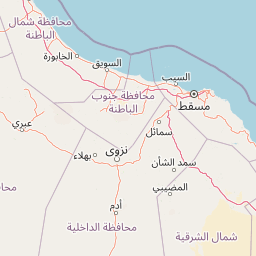
Map view of Qurm Nature Reserve

Use this park location map to pinpoint Qurm Nature Reserve in Oman, understand its exact geographic position, and read its mapped placement within the surrounding landscape more clearly.

Pigeon | © OpenStreetMap contributors

Location context for Qurm Nature Reserve

Muscat Governorate

Explore mangrove forests, tidal flats, and avian habitats through protected area photography.

Qurm Nature Reserve Photos and Landscapes: Visual Guide to Coastal Wetlands

Visual documentation of Qurm Nature Reserve reveals dense grey mangrove stands, tidal channels, and coastal sabkha environments along the Gulf of Oman. Detailed imagery captures the ecological character of urban wetlands, migratory bird habitats, and protected estuarine terrain.

A wide angle view of a coastal wetland area with palm trees in the foreground, sand flats, and distant mountains under a hazy sky.

Park atlas

Discover related national parks and regional conservation landscapes across northeastern Oman

Explore Protected Areas Near Qurm Nature Reserve and Surrounding Coastal Ecosystems

Visitors exploring Qurm Nature Reserve can continue browsing adjacent coastal wetlands and marine reserves in the surrounding region. Comparing these protected areas provides deeper geographic context on regional ecosystems and wildlife migration corridors.
A watercolor painting showing a wide coastal scene with green low-lying hills in the distance, a calm body of water in the middle, and varied vegetation in the foreground.
Nature reserveMuscat Governorate
About 48 km away#1 closest

Northwest

Ad Dimaniyat Islands Nature Reserve: Protected Archipelago and Marine Biodiversity Map

Archipelago landscape and marine protected area in Muscat Governorate.

The Ad Dimaniyat Islands represent a critical nature reserve composed of nine distinct islands in the Gulf of Oman. The archipelago is known for its rare coral formations, nesting beaches for endangered sea turtles, and its role as a breeding site for various seabird species. This protected landscape combines complex underwater reef habitats with rocky and sandy terrain, forming a significant ecological zone within the Muscat Governorate.

Area
1 km²
Relief
Lowland
Access
Moderate access
Scope
Marine
A watercolor painting depicting a soft-toned mountain landscape with muted greens, pinks, and yellows, showing rolling hills and gentle peaks.
Nature reserveAd Dakhiliyah Governorate
About 123 km away#2 closest

Southwest

Jebel Akhdar Mountains Nature Reserve: An Atlas of Oman's High Altitude Protected Landscapes

Geographic analysis of the Ad Dakhiliyah mountain massif

The Jebel Akhdar Mountains represent a critical protected nature reserve defined by dramatic limestone cliffs, deep wadis, and centuries of terraced agriculture. This elevated massif within the Ad Dakhiliyah Governorate sustains a rare montane ecology that serves as a cornerstone of regional Omani geography and environmental conservation.

Established
2011
Relief
Mountain
Climate
Arid
Access
Moderate access
Wildlife reserveOman
About 157 km away#3 closest

Southeast

Al Saleel National Park: A Protected Acacia Forest Wildlife Reserve in Oman

Explore its unique landscape and protected area geography.

Al Saleel National Park in Oman is distinguished by its exceptional acacia forest ecosystem, a scarce habitat type across the Arabian Peninsula. Covering 220 square kilometers, this wildlife reserve serves as a crucial sanctuary for at-risk species like the Arabian gazelle and the endemic Omani wild cat. Its landscape offers a compelling study of arid zone forest ecology and protected area management, providing valuable context for understanding Oman's commitment to natural heritage and conservation within its regional geography.

Area
220 km²
Climate
Arid
Scope
Terrestrial
Water
No major water
Nature reserveUnited Arab Emirates
About 263 km away#4 closest

Northwest

Khor Kalba Nature Reserve: UAE Coastal Wetland and Mangrove Ecosystem Discovery

Mapped boundaries and regional landscape context for this Sharjah nature reserve.

Khor Kalba Nature Reserve showcases a rare and ecologically significant mangrove ecosystem on the eastern coast of the United Arab Emirates. This protected area features a dynamic intertidal landscape of creeks and lagoons vital for coastal conservation. Understanding its unique halophytic vegetation and bird habitats provides critical insight into the UAE's efforts to preserve its limited natural wetland environments and their distinctive geography.

IUCN
IV
Scope
Terrestrial
National parkUnited Arab Emirates
About 299 km away#5 closest

Northwest

Wadi Wurayah National Park National Park: Mapped Protected Landscape and Geographic Context

Explore the mapped boundaries and regional geography of Wadi Wurayah National Park.

Wadi Wurayah National Park stands as a significant national park, offering a focused area for exploring protected lands. This page provides essential details about its landscape characteristics and geographic positioning, framed for atlas-driven discovery. Understand the park's protected-area identity and its contribution to regional geographic context, making it a valuable entry for anyone mapping natural landscapes or investigating conservation areas.

Nature reserveDubai
About 317 km away#6 closest

Northwest

Dubai Desert Conservation Reserve: Nature Reserve, Mapped Geography, and Protected Landscape Context

Explore the natural terrain and conservation atlas of this UAE protected area.

This page details the Dubai Desert Conservation Reserve, a designated nature reserve situated within the geographic scope of Dubai, United Arab Emirates. Dive into its mapped boundaries, understand its role as a protected landscape, and gain insight into its unique natural terrain. MoriAtlas provides structured data to explore the park's place within regional geography and the broader atlas of protected areas.

Area
225 km²
Established
2003
Relief
Lowland
Climate
Arid
Nature reserveEmirate of Dubai
About 333 km away#7 closest

Northwest

Al Wohoosh Desert Conservation Reserve Nature Reserve: Mapped Protected Landscape

Desert terrain and geographic context in the Emirate of Dubai.

Delve into the Al Wohoosh Desert Conservation Reserve, a key protected natural area situated in the Emirate of Dubai. This entry focuses on its mapped geography, showcasing the desert landscape and its protected boundaries. Gain structured insights into its role as a nature reserve and its contribution to understanding regional conservation landscapes and mapped terrain.

Area
15.06 km²
Established
2014
Relief
Lowland
Climate
Arid
Nature reserveDubai
About 342 km away#8 closest

Northwest

Al Marmoom Desert Conservation Reserve: Nature Reserve and Desert Landscape in Dubai

Mapped Geography and Protected Area Context

Explore the Al Marmoom Desert Conservation Reserve, a designated nature reserve located near Dubai. This protected area is crucial for understanding the region's desert geography and landscape. MoriAtlas provides detailed mapping and geographic context, allowing for in-depth study of its protected boundaries and its significance within the UAE's conservation landscape.

Area
0.4 km²
Established
2018
Relief
Lowland
Climate
Arid

Common questions about visiting, size, designation, and location context for Qurm Nature Reserve

Qurm Nature Reserve FAQs for park facts, access, geography, and protected area context

Find quick answers about Qurm Nature Reserve, including protected-area facts, park geography, trail and visitor context, and how the park fits into its surrounding country and regional landscape.
MoriAtlas Explorer

Continue Your Protected Areas Search Across the Global Atlas

Deepen your exploration by continuing the structured search for national parks and protected areas worldwide. Utilize the comprehensive filtering capabilities to compare different conservation landscapes and refine your understanding of global park geography. Discover more about the distribution and characteristics of protected natural areas.

Global natural geography