
Mori Atlas logo
Wildlife reserveSamaspur Bird Sanctuary

Explore the geography of freshwater jheels, marshes, and migratory waterbird habitats.

Samaspur Bird Sanctuary: A Significant Protected Wetland Landscape in Uttar Pradesh, India

Samaspur Bird Sanctuary is a vital protected wildlife reserve situated within the central Gangetic plain of Uttar Pradesh. The sanctuary encompasses a complex network of freshwater lakes, reed beds, and seasonal marshes that serve as a crucial stopover for migratory waterfowl. This regional landscape offers a unique perspective on the intersection of inland wetland ecosystems and the agricultural plains of northern India.

wetlandbird sanctuarymigratory birdswaterfowlfreshwater lakeRamsar site

Samaspur Bird Sanctuary

Wildlife reserve

Park overview

Structured park overview, official facts, and landscape profile for Samaspur Bird Sanctuary

Samaspur Bird Sanctuary park facts, protected area profile, and essential visitor context

Review the core facts for Samaspur Bird Sanctuary, including designation, size, terrain, visitor scale, habitats, and operating context in one park-focused overview.

About Samaspur Bird Sanctuary

Samaspur Bird Sanctuary occupies a stretch of low-lying terrain in the Gangetic plain of eastern Uttar Pradesh, where natural and semi-natural wetlands have been consolidated into a single protected reserve. The sanctuary is characterized by a mosaic of open freshwater jheels, reed-fringed shallows, and seasonally flooded grasslands, all of which contribute to habitat diversity within a relatively compact area of about 800 hectares. This wetland mosaic is surrounded by agricultural land, creating an interface between intensively used rural landscape and a refuge for waterbirds and other aquatic life.

The protected area plays a clear ecological role within the Indo-Gangetic flyway, supporting both wintering migrants from across the Himalayas and Central Asia and a robust community of resident species tied to freshwater habitats. Among the recorded migrants are greylag geese, northern pintails, common teals, Eurasian wigeons, northern shovelers, and ruddy shelducks, several of which undertake journeys of thousands of kilometers between their breeding and wintering grounds. Local and resident species add depth to the sanctuary's birdlife, including knob-billed ducks, lesser whistling ducks, Indian spot-billed ducks, Eurasian spoonbills, kingfishers, and vultures that use the surrounding open habitats.

Beyond its birdlife, Samaspur supports a freshwater aquatic community, with approximately twelve fish species recorded in its main lake. This fish fauna contributes to ecological complexity and helps sustain the food web that supports piscivorous birds and other wetland wildlife. The presence of both permanent and seasonal water features gives the sanctuary a layered ecological character, with different bird and fish communities exploiting shallow margins, deeper pools, and emergent vegetation at different times of year.

Administratively, the sanctuary is managed under the framework provided by the Government of India and is recognized internationally through its Ramsar listing. Its location on the Lucknow–Varanasi highway, combined with proximity to the rail head at Unchahar and the Fursatganj airfield, places the sanctuary within relatively easy reach of major population centers, while retaining a setting defined by open water, sky, and lowland rural landscape rather than urban encroachment. Together, these qualities make Samaspur a representative example of an inland freshwater bird sanctuary in the Indo-Gangetic belt.

Quick facts and research context for Samaspur Bird Sanctuary

Samaspur Bird Sanctuary is a habitat and species management area classified as IUCN Category IV, located in Raebareli district of Uttar Pradesh, India. The sanctuary covers roughly 800 hectares of wetland habitat near the town of Salon.

It was established in 1987 and has since been recognized internationally as a Ramsar Wetland, designated on 3 October 2019 under reference number 2415. The site hosts more than 250 recorded bird species and twelve varieties of fish within its principal lake.

Protection and recognition

Explore documented protected area designations and official Ramsar site recognition sources.

Samaspur Bird Sanctuary Protection Status and International Recognition Records

Samaspur Bird Sanctuary holds formal recognition as a designated Ramsar wetland site of international importance. Official records outline the documented protection status, international recognition sources, and management scope associated with this protected area.
Park context

Deeper park guide and search-rich context for Samaspur Bird Sanctuary

Samaspur Bird Sanctuary history, landscape, wildlife, and travel context

Explore Samaspur Bird Sanctuary through its history, landscape character, ecosystems, wildlife, conservation priorities, cultural context, and seasonal travel timing in a structured park guide built for atlas discovery and search intent.

Why Samaspur Bird Sanctuary stands out

Samaspur Bird Sanctuary is best known for its freshwater wetland complex that supports long-distance migratory waterfowl along with a rich community of resident wetland birds. The combination of open water bodies, marshes, and fringing habitats makes it a productive stopover and wintering site on the migratory flyway that connects Central and northern Asia with the Indian subcontinent. The sanctuary's recognition under the Ramsar Convention places it alongside the other significant wetlands of Uttar Pradesh that help sustain waterbird populations across the Gangetic plain. Its accessibility from both Lucknow and Varanasi has also made it one of the more visited inland birding sites in eastern Uttar Pradesh.
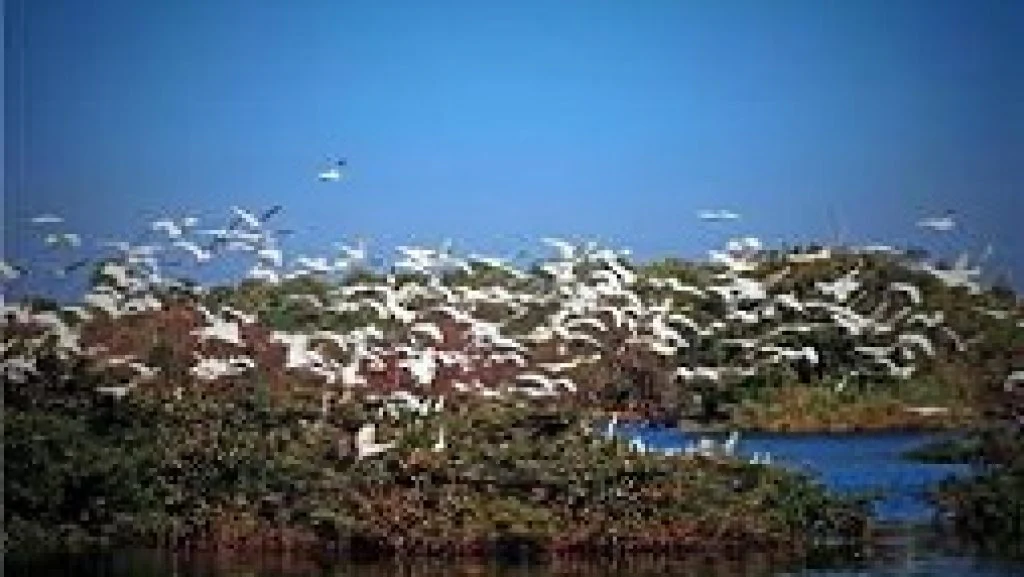
A large, dense flock of white birds in flight above lush green marshy islands and blue water in Samaspur Bird Sanctuary.
A large flock of migratory birds taking flight over the wetlands of Samaspur Bird Sanctuary.

Samaspur Bird Sanctuary history and protected-area timeline

Samaspur Bird Sanctuary was formally established in 1987, when roughly 780 hectares of existing wetland habitat near Salon in Raebareli district were brought under protected-area status. The designation marked an effort to consolidate the area's scattered jheels and marshes into a single managed reserve dedicated to the conservation of waterbirds and their associated wetland habitats.

Over the following decades, the sanctuary's importance was increasingly recognized at the national and international levels, particularly as ornithological surveys highlighted the diversity and richness of its birdlife. On 3 October 2019, the site was formally designated as a Ramsar Wetland of International Importance, assigned reference number 2415, underscoring its role within the global network of significant wetlands and acknowledging the value of its habitat for migratory waterfowl.

The sanctuary's history is closely tied to the broader conservation movement for inland wetlands in Uttar Pradesh, where many smaller jheels have come under increasing pressure from agricultural expansion and water management changes. Its protected status has provided a framework within which its waterbird populations and fish fauna have been documented and monitored.

Samaspur Bird Sanctuary landscape and geographic character

The landscape of Samaspur Bird Sanctuary is shaped by the gently undulating terrain of the central Gangetic plain, where low elevation and high groundwater support persistent freshwater bodies. The sanctuary's surface is dominated by a network of jheels and shallow lakes, interspersed with reed beds, floating vegetation, and mud or silt margins that shift with seasonal water levels. These open expanses of water are visually framed by low banks, grassy edges, and patches of scrubby vegetation that blend gradually into the surrounding agricultural countryside.

There are no dramatic relief features or high-elevation viewpoints within the reserve itself. Instead, the visual interest comes from the interplay of water and sky across flat, broad horizons, with reflections, fog, and changing light producing strongly atmospheric scenes at dawn and dusk. The fringing wetlands and seasonal marsh zones create transition habitats between open water and dry land, providing the structural diversity that supports both aquatic and terrestrial species.

The broader setting includes the rural landscape of Raebareli district, with cultivated fields, village settlements, and tree lines that surround the sanctuary. This context reinforces the wetland's character as a notable natural element within an otherwise heavily worked agricultural landscape, giving Samaspur a sense of openness that contrasts with the closely farmed fields that lie beyond its boundary.

Samaspur Bird Sanctuary ecosystems, habitats, and plant life

Ecologically, Samaspur Bird Sanctuary functions as a freshwater wetland complex within the Indo-Gangetic biogeographic region. Its habitats range from open water and semi-submerged vegetation to reed-dominated marshes and damp grasslands along the lake margins. This range of habitat types supports a layered community of aquatic plants, invertebrates, fish, amphibians, and waterbirds, each occupying a different part of the wetland mosaic.

The wetland's vegetation patterns reflect its position in a floodplain landscape, where seasonal variation in water depth and inflow strongly influences the distribution of emergent, floating, and submerged plants. Reed beds and marginal grasses provide nesting cover and foraging habitat for a wide variety of birds, while the open water areas allow larger flocks of ducks, geese, and waders to feed and roost in groups.

The sanctuary's Ramsar designation highlights its role in supporting ecological processes that extend beyond its boundaries, particularly for migratory species that depend on a chain of suitable wetland stopovers and wintering sites across South and Central Asia. As such, Samaspur is an integral node in the regional wetland network that sustains transboundary bird migration through the Indo-Gangetic plain.

Samaspur Bird Sanctuary wildlife and species highlights

Samaspur Bird Sanctuary is most celebrated for its birdlife, with more than 250 recorded species making it one of the significant inland birding destinations in Uttar Pradesh. Migratory waterfowl form a particularly important component of this diversity, with greylag geese, northern pintails, common teals, Eurasian wigeons, northern shovelers, and ruddy shelducks arriving from distant breeding grounds, some traveling more than 5,000 kilometers to reach the sanctuary during the winter months.

Resident and local species add a year-round layer of bird activity to the wetland. Knob-billed ducks, lesser whistling ducks, and Indian spot-billed ducks are characteristic of the sanctuary's open water and reedy margins, while Eurasian spoonbills forage in the shallows with their distinctive sweeping motion. Kingfishers, including the small jewel-toned species typical of North Indian wetlands, are regularly observed around the water's edge, and vultures use the surrounding airspace and open landscapes to range and roost.

Beyond birds, the sanctuary supports a freshwater fish fauna of approximately twelve documented species inhabiting the lake. These fish underpin a portion of the wetland food web and support piscivorous birds and other aquatic predators. The combination of abundant fish, diverse aquatic vegetation, and rich invertebrate life contributes to a productive and dynamic wildlife community across the sanctuary's seasons.

Samaspur Bird Sanctuary conservation status and protection priorities

Samaspur Bird Sanctuary holds clear conservation significance both nationally and internationally. Its recognition as a Ramsar Wetland of International Importance on 3 October 2019 placed it formally within the global framework for the protection of wetlands, acknowledging its role in conserving waterbird habitats and ecological functions. The Ramsar listing is also a recognition of the sanctuary's contribution to sustaining migratory waterfowl populations that traverse national boundaries along the Central Asian and trans-Himalayan flyways.

Within India, the sanctuary's IUCN Category IV designation as a habitat and species management area reflects a focus on maintaining the wetland conditions that support its characteristic bird and fish communities. Management under this category emphasizes habitat conservation and, where needed, intervention to safeguard the species for which the area has been recognized, including both resident and migratory waterbirds.

The sanctuary also serves as a refuge from the pressures faced by many smaller wetlands in the surrounding agricultural landscape. By consolidating and protecting its jheels and marshes, Samaspur safeguards breeding, roosting, and feeding habitat for waterbirds within an intensively worked rural setting, making it a meaningful contributor to wetland biodiversity conservation in the Gangetic plain.

Samaspur Bird Sanctuary cultural meaning and human context

Samaspur Bird Sanctuary is embedded in the rural cultural landscape of eastern Uttar Pradesh, where wetlands have long been part of local livelihoods and village life. The jheels and their surroundings are woven into traditional practices of fishing, livestock grazing, and agriculture, with many of the communities in and around Salon and Raebareli having historical ties to the seasonal rhythms of the wetland.

The sanctuary's emergence as a protected area in 1987 and its later Ramsar designation reflect a shift toward recognizing the wetland not only as a local resource but also as a site of broader ecological and cultural meaning. Its proximity to historic corridors connecting Lucknow, Varanasi, and other centers of the region places it within a wider cultural geography of the Indo-Gangetic plain, where natural and human landscapes have long interacted across the same fertile lowlands that the sanctuary now helps to protect.

Top sights and standout views in Samaspur Bird Sanctuary

Samaspur Bird Sanctuary stands out for the diversity of its birdlife, with over 250 recorded species that include both long-distance migrants and richly represented resident waterbirds. Open freshwater jheels, reed beds, and seasonally flooded margins create the layered habitat structure that supports this diversity within a compact area of about 800 hectares.

The sanctuary's Ramsar status, its long establishment as a protected bird reserve, and its accessibility from Lucknow and Varanasi together make it a distinctive inland wetland destination in Uttar Pradesh, offering a strong combination of ecological value, conservation recognition, and reach within the densely populated landscape of the central Gangetic plain.

Best time to visit Samaspur Bird Sanctuary

The character of a visit to Samaspur Bird Sanctuary changes meaningfully with the seasons, reflecting the migratory cycles of its most prominent bird species. The cooler months, broadly covering the winter period, are typically associated with the arrival of migratory waterfowl, when large flocks of ducks, geese, and other waterbirds concentrate on the sanctuary's jheels. Misty mornings, soft light over open water, and visible aggregations of wintering birds give this season a particularly atmospheric and bird-rich quality.

In the warmer months, the wetland shifts toward a resident profile, with breeding activity among local species, including knob-billed ducks, lesser whistling ducks, spoonbills, kingfishers, and other wetland birds that remain throughout the year. Vegetation grows denser, water levels fluctuate, and the visual emphasis shifts from massed flocks to the behavior of individual species around the marsh margins. Across the year, dawn and dusk tend to offer the most active periods for observing both bird movement and the changing moods of the open wetland landscape.
Monthly climate preview

Long-term temperature and precipitation records across twelve months

Samaspur Bird Sanctuary Climate Normals and Annual Weather Rhythm

Representative coordinates outline measured annual temperature variations and monthly precipitation totals for Samaspur Bird Sanctuary based on historical climatology data. Examining the complete twelve-month profile provides detailed context on long-term thermal swings and precipitation rates across the sanctuary terrain.
Annual mean26 °C
16 °C36 °C
Jan16°
Feb20°
Mar26°
Apr32°
May36°
Jun36°
Jul31°
Aug29°
Sep28°
Oct25°
Nov21°
Dec17°
Warmest month
May

36.3 °C

Coolest month
January

15.6 °C

Wettest month
July

7.8 mm/day

Driest month
November

0.1 mm/day

Park location guide

Geography guide, regional context, and park location map for Samaspur Bird Sanctuary

Samaspur Bird Sanctuary park geography, regions, and map view in India

Understand where Samaspur Bird Sanctuary sits in India through a broader geographic reading of the surrounding landscape, nearby location context, and its mapped position within the national park landscape.

How Samaspur Bird Sanctuary fits into India

India is a South Asian country bordered by the Indian Ocean, Arabian Sea, and Bay of Bengal. It shares land borders with Pakistan, China, Nepal, Bhutan, Bangladesh, and Myanmar. The country has a population of over 1.4 billion people and operates as a federal parliamentary republic with its capital in New Delhi.

Wider geography shaping Samaspur Bird Sanctuary in India

India occupies the Indian subcontinent in South Asia, bordered by the Arabian Sea to the southwest, the Bay of Bengal to the southeast, and the Indian Ocean to the south. It shares land borders with Pakistan to the west, China, Nepal, and Bhutan to the north, and Bangladesh and Myanmar to the east. The territory also includes the Andaman and Nicobar Islands in the Indian Ocean.

Map view of Samaspur Bird Sanctuary

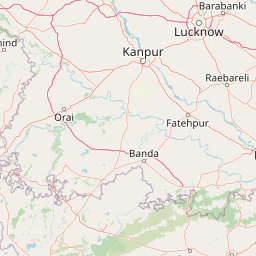
Use this park location map to pinpoint Samaspur Bird Sanctuary in India, understand its exact geographic position, and read its mapped placement within the surrounding landscape more clearly.

Pigeon | © OpenStreetMap contributors

Location context for Samaspur Bird Sanctuary

Uttar Pradesh

Visualizing freshwater habitats, shallow jheels, and protected sanctuary scenery

Samaspur Bird Sanctuary Photos and Wetland Landscapes

Visual documentation captures the freshwater jheels, marshes, and reed beds that define the protected wetland environment of Samaspur Bird Sanctuary. Detailed photography reveals the open water horizons and seasonal margins that sustain migratory waterfowl across the central Gangetic plain.

A large, dense flock of white birds in flight above lush green marshy islands and blue water in Samaspur Bird Sanctuary.

Park atlas

Compare regional wetland habitats and connected protected landscapes across the central Gangetic plain.

Explore Protected Areas and Parks Near Samaspur Bird Sanctuary

Browsing other protected areas near Samaspur Bird Sanctuary reveals broader wetland networks across Uttar Pradesh. Comparing these regional wetland habitats provides essential context for understanding Central Asian flyway migration corridors.
Watercolor illustration of a lush wetland scene with low hills in the background and a winding stream through green fields.
Wildlife reserveUttar Pradesh
96 km away#1 closest

Northwest

Nawabganj Bird Sanctuary: Geographic Overview and Protected Wetland Landscape in Uttar Pradesh

A Ramsar-recognized lake ecosystem and wildlife reserve.

Located in the Unnao district, Nawabganj Bird Sanctuary features a significant freshwater lake that serves as a vital hydrological heart for the region. The sanctuary creates an essential ecological mosaic of reed-fringed water, dry land patches, and woodland edges. This protected landscape plays a foundational role in conservation efforts for migratory waterfowl and resident species on the Indo-Gangetic plain, offering unique insights into wetland terrain mapping.

IUCN
IV
Relief
Lowland
Access
Easy access
Scope
Terrestrial
Wildlife reserveUttar Pradesh
124 km away#2 closest

Northeast

Parvati Arga Bird Sanctuary: Wetland Geography and Protected Area Atlas of Uttar Pradesh

Examining oxbow lakes and freshwater habitat boundaries

Located in northern India, Parvati Arga Bird Sanctuary encompasses a vital mosaic of freshwater oxbow lakes and surrounding deciduous woodland. The sanctuary serves as a key conservation area within Uttar Pradesh, protecting essential waterbird habitats and demonstrating the complex hydro-geography of the Gangetic plain through its crescent-shaped lakes and marshy margins.

Area
10.84 km²
Established
1990
IUCN
IV
Relief
Lowland
National parkMadhya Pradesh
About 196 km away#3 closest

Southwest

Panna National Park: National Park Atlas and Mapped Protected Landscape

Geographic context and protected boundaries in Madhya Pradesh.

Gain a structured understanding of Panna National Park as a protected national park entity. This detail page focuses on its specific geographic setting within Madhya Pradesh and its mapped landscape features. Explore the park's protected boundaries and regional natural context, ideal for atlas-based discovery and understanding its place in India's conservation geography.

Area
542.67 km²
Established
1981
IUCN
II
Visitors
22.6K annual
Wildlife reserveUttar Pradesh
196 km away#4 closest

Northeast

Bakhira Wildlife Sanctuary: Geographic Overview of India's Major Floodplain Wetland

Mapped wetlands and protected landscape context in Uttar Pradesh

Located in the heart of the Indo-Gangetic plain, Bakhira Wildlife Sanctuary features a complex network of seasonal water bodies and marshes. The sanctuary acts as a primary staging ground for migratory waterfowl, offering deep insights into floodplain hydrology, regional biodiversity, and the interplay between protected wilderness and active agricultural zones.

Area
29 km²
Established
1980
IUCN
IV
Relief
Lowland
A watercolor illustration of a calm, marshy wetland landscape with soft green and earthy tones, featuring distant vegetation, a small island, and foreground trees.
Wildlife reserveUttar Pradesh
199 km away#5 closest

Northwest

Sandi Bird Sanctuary: Wetland Reserve and Geographic Landscape in Uttar Pradesh, India

A Ramsar-designated protected area in the Indo-Gangetic plains

Sandi Bird Sanctuary represents a critical protected wetland ecosystem in Uttar Pradesh, featuring the 309-hectare Dahar Jheel. This reserve acts as a focal point for birdlife in northern India, providing essential marshland habitat alongside the River Garra. The geography reflects the flat, alluvial nature of the Gangetic plain, offering deep insights into regional wetland conservation and migratory ecology.

Area
3.09 km²
Established
1990
IUCN
IV
Relief
Lowland
National parkMadhya Pradesh
About 231 km away#6 closest

South

Sanjay National Park: Madhya Pradesh Protected Area with Hilly Terrain and Dry Deciduous Forests

Explore the mapped boundaries and landscape context of this national park.

Sanjay National Park, situated in Madhya Pradesh, India, is a substantial protected area recognized for its significant role in conservation. The park features a landscape dominated by hilly terrain and extensive dry deciduous forests, bisected by the Banas River. As a national park and tiger reserve, its mapped geography supports a rich ecosystem and is vital for understanding the protected lands of central India.

Area
1,674.55 km²
Established
1981
IUCN
II
Relief
Highland
Wildlife reserveUttar Pradesh
243 km away#7 closest

Northwest

Saman Bird Sanctuary: Protected Wildlife Reserve Geography and Wetland Atlas

Inland wetland habitat within the western Uttar Pradesh agricultural plain

Saman Bird Sanctuary represents a key protected Ramsar wetland located in the Mainpuri district of Uttar Pradesh. The site is defined by a seasonal, rain-fed oxbow lake that integrates with surrounding agricultural fields. It maintains a distinct ecological identity through its nesting colonies of resident birds and large winter congregations of migratory species on the flat alluvial landscape.

Area
5.25 km²
IUCN
IV
Relief
Lowland
Climate
Subtropical
National parkUmaria district
245 km away#8 closest

South

Bandhavgarh National Park: A Protected Landscape in India's Umaria District

Explore the geographic boundaries and mapped terrain.

Bandhavgarh National Park is a designated national park offering a unique glimpse into India's protected landscapes. Located within Umaria district, its geographic features and mapped terrain provide valuable context for atlas exploration. Understanding the park's protected area status and its place within the regional geography is key to appreciating its role as a vital natural landscape.

Area
105 km²
Established
1968
IUCN
II
Visitors
176.1K annual

Common questions about visiting, size, designation, and location context for Samaspur Bird Sanctuary

Samaspur Bird Sanctuary FAQs for park facts, access, geography, and protected area context

Find quick answers about Samaspur Bird Sanctuary, including protected-area facts, park geography, trail and visitor context, and how the park fits into its surrounding country and regional landscape.
MoriAtlas Explorer

Continue Your Protected Areas Search Across the Global Atlas

Deepen your exploration by continuing the structured search for national parks and protected areas worldwide. Utilize the comprehensive filtering capabilities to compare different conservation landscapes and refine your understanding of global park geography. Discover more about the distribution and characteristics of protected natural areas.

Global natural geography