
Why Sasthamkotta Lake stands out
Sasthamkotta Lake is best known for being Kerala's largest freshwater lake, for supplying drinking water to a substantial portion of Kollam district, and for its Ramsar-recognized wetland status. Its cultural footprint is anchored by the pilgrimage-linked Sastha temple on its bank, and it stands out for the unusual claim that bacterial control by native _cavaborus_ larvae helps preserve the purity of its water.
Sasthamkotta Lake history and protected-area timeline
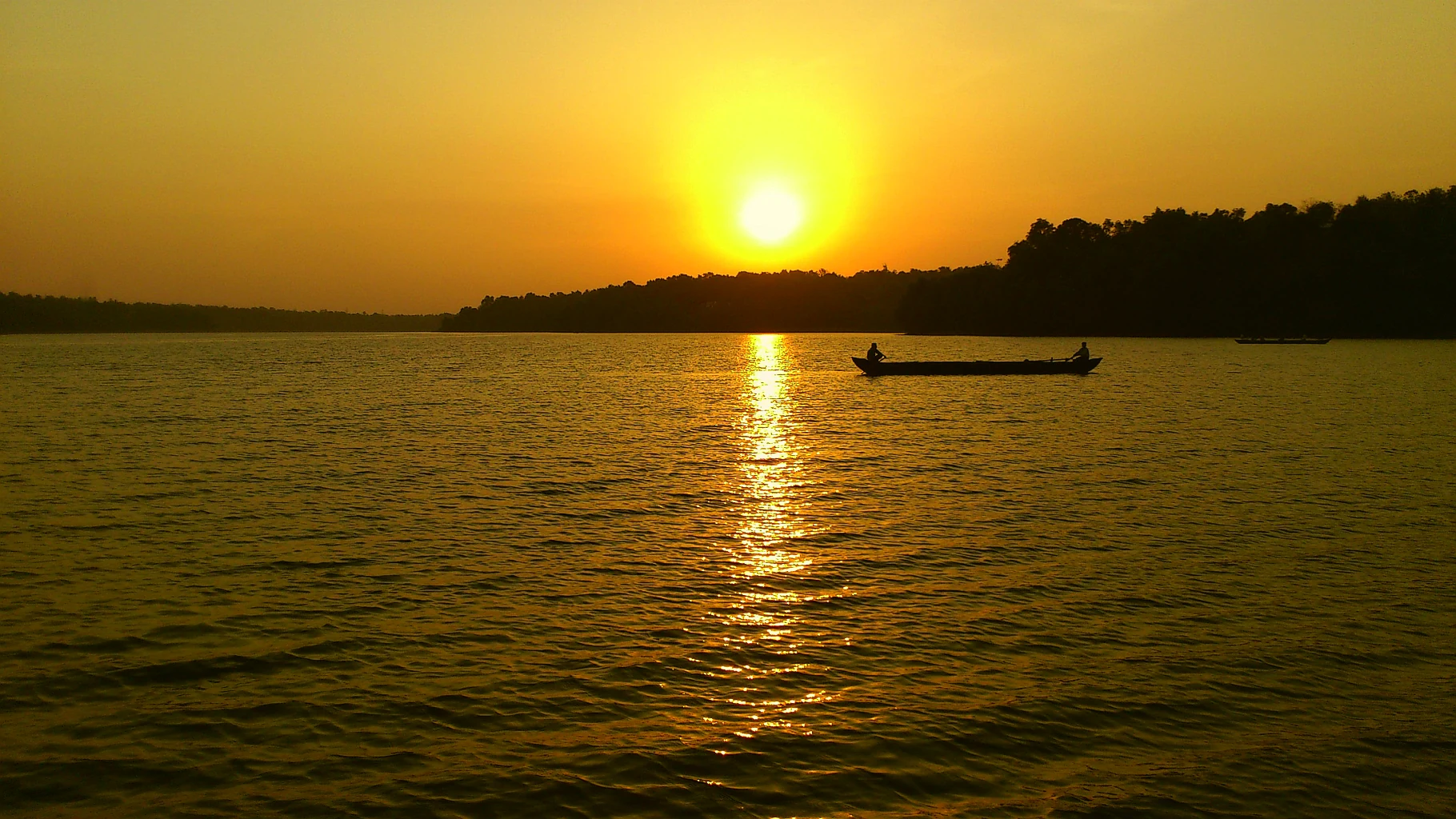
Sasthamkotta Lake has long been integrated into the cultural and economic life of the Kollam region, partly through the ancient Sastha pilgrimage temple on its bank, which gave the lake its name and anchored human presence along its shores. Over time, the lake became a vital municipal drinking water source for the Quilon (Kollam) district and an active freshwater fishery supporting local livelihoods.
In response to growing pressures on the lake, the Kerala State Government prepared a dedicated Conservation and Management Action Plan in 1999, aiming to safeguard the wetland while sustaining the services it provides. The plan was pursued with central government funding under the National Lake Conservation Plan and was coordinated through agencies including the Kerala Water Authority, the Departments of Forests and Wildlife and Fisheries, FIRMA, DRDA, and the Kerala State Council for Science Technology and Environment.
The lake's international profile was raised in 2002 when it was designated as a wetland of international importance under the Ramsar Convention, with formal designation recorded in November of that year. The site now carries Ramsar reference number 1212, reflecting formal recognition of its ecological significance alongside its long-standing role in the regional water economy and cultural landscape.
Sasthamkotta Lake landscape and geographic character
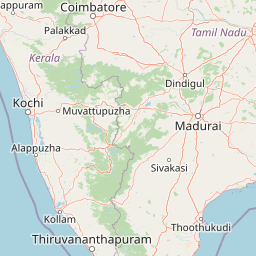
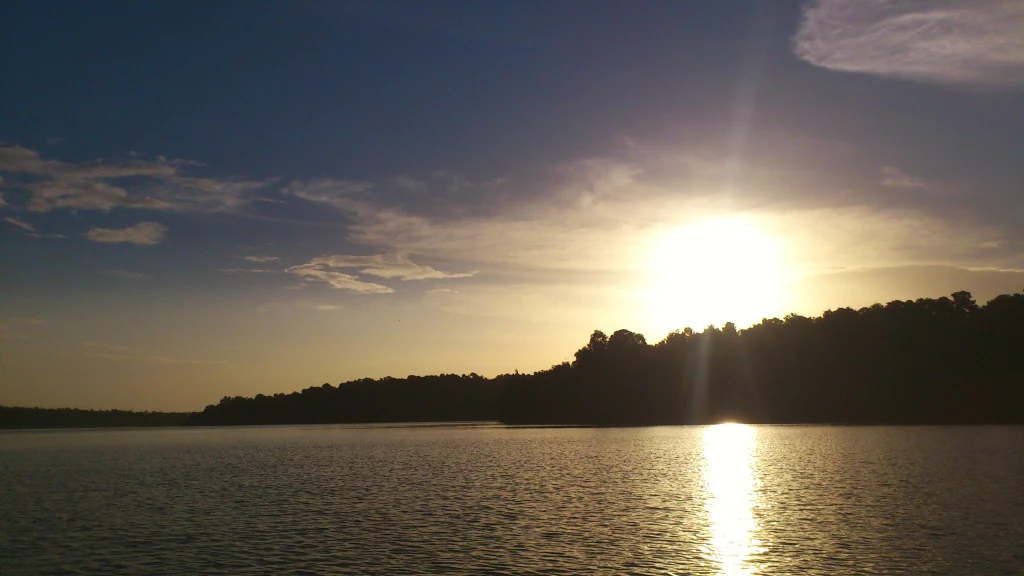
Sasthamkotta Lake sits in a varied post-and-valley landscape along Kerala's southern coastal interior. Most of its shoreline is enclosed by hills that rise steeply and frame narrow valleys, lending the lake a compact, sheltered character. Its southern boundary passes into the flat alluvial plains of the Kallada River, where paddy cultivation dominates and where a 1.5 kilometre earthen embankment separates the open water from the surrounding fields.
Within the catchment, the terrain can be understood as a sequence of geomorphological zones: undulating uplands carrying mixed plantations, low-lying valley fills of laterite, colluvium, and alluvium that are intensively cultivated, and the broad flood plain of the Kallada on the south. South and southwest of the lake, a network of smaller water bodies, waterlogged pockets, and tidal-influenced coastal stretches softens the transition toward the Varkala sedimentary formations underlying parts of the coastal belt.
Sasthamkotta Lake ecosystems, habitats, and plant life
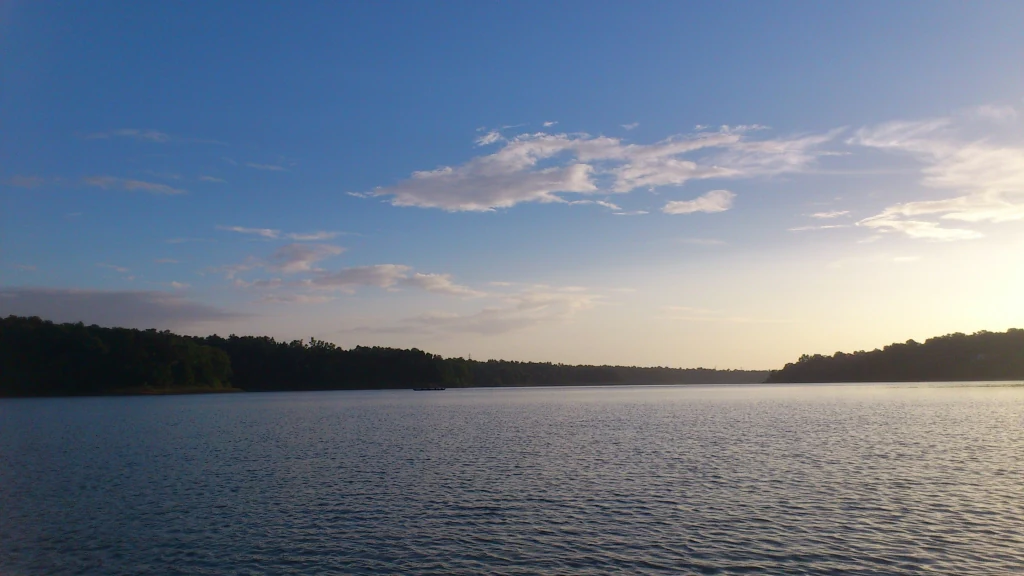
The ecological character of Sasthamkotta Lake centers on its open freshwater body and the productive basin around it. Rooted and floating aquatic plants play only a limited role in the lake, and open-water vegetation is sparse, leaving the lake clear and largely free of common salt or mineral contamination. The eastern shore supports insectivorous _Drosera_ plants, adding a distinctive biological note to the otherwise agriculture-dominated shoreline.
Surrounding land use patterns influence the wetland's ecological profile. The basin carries plantation crops such as cashew, tapioca, and plantain alongside paddy fields, while the upper catchment is clad in mixed forests, plantations, and cultivated valley soils. This mosaic of forest patches, agricultural lowlands, and open water shapes the movement of nutrients and sediment into the lake, and has historically supported both the water quality and the biological diversity for which the site is recognized.
Sasthamkotta Lake wildlife and species highlights
The lake and its fringes sustain a diverse freshwater fauna. Aquatic life includes 27 species of freshwater fish, together with two genera of prawns and 21 species of herrings and sardines from the family Clupeidae; pearl spot (Etroplus suratensis) and catfish, including _Wallago attu_ and _Calichrous bimaculatus_, are among the recognized species. The WWF has also recorded species of conservation concern in the lake, including the critically endangered _Puntius ticto punctatus_, the endangered _Horabagrus brachysoma_, and the vulnerable _Parambassis thomassi_.
Birdlife is anchored by the common teal, a small migratory dabbling duck that visits the wetland. On the banks, resident troops of monkeys associated with the Sasthamkotta temple environment form a familiar part of the shoreline scene. Insect diversity has been documented through 13 identified species, including nine butterflies, two odonates, and two hymenopterans, indicating a partially surveyed but ecologically meaningful invertebrate assemblage around the lake.
Sasthamkotta Lake conservation status and protection priorities
Sasthamkotta Lake's conservation significance rests on its role as a Ramsar-listed freshwater wetland, its importance as a regional drinking water source, and its ecological sensitivity in the face of rapid landscape change around the basin. The Kerala State Government's 1999 Conservation and Management Action Plan, supported through the National Lake Conservation Plan, frames the lake's protection around agro-forestry in the catchment, sanitation and drainage improvements, pollution abatement, limited desilting, weed control, and direct flora and fauna conservation, alongside fishery development and local awareness efforts.
These measures reflect broader recognition that long-term lake health depends on managing pressures from outside the open water, including soil erosion from tapioca cultivation, infiltration of domestic and agrochemical waste, sewage effluents, agricultural encroachment, and declining groundwater recharge. Coordinated implementation through the Kerala Water Authority, the Departments of Forests and Wildlife and of Fisheries, FIRMA, DRDA, and the Kerala State Council for Science Technology and Environment underscores the multi-agency approach needed to keep both the lake's water quality and its Ramsar-recognized status intact.
Sasthamkotta Lake cultural meaning and human context
Sasthamkotta Lake carries a strong cultural identity rooted in the ancient Sastha temple on its bank, a pilgrimage centre that gives the lake its name and continues to shape religious and social life in Sasthamkotta town. The temple's presence has produced distinctive shoreline features, including the resident monkey troops that inhabit the temple's environs and which are now part of the lake's everyday landscape.
The lake also underpins the local economy and water culture of the area, providing both drinking water and a working freshwater fishery to surrounding communities. The intertwining of pilgrimage, settlement, agriculture, and fishing around Sasthamkotta Lake gives the site a cultural depth that complements its standing as a major freshwater ecosystem in southern Kerala.
Top sights and standout views in Sasthamkotta Lake
Sasthamkotta Lake stands out as Kerala's largest freshwater lake and as a Ramsar wetland of international importance, combining ecological recognition with long-standing human use. Its shoreline complex of Sastha temple, resident monkey troops, and surrounding plantation and paddy landscapes offers a layered setting where culture, agriculture, and conservation meet. The lake's noted water purity, its role as a district-scale drinking water source, and its capacity to support a diverse freshwater fish and prawn community give it a distinctive identity within Kerala's wetland network.
Best time to visit Sasthamkotta Lake
The lake's water level rises toward the end of the monsoon season, and the surrounding landscape is at its greenest during and just after the wetter months, when plantations and paddy fields are fully refreshed. Cooler, drier conditions of the post-monsoon season offer calmer surfaces, clearer views, and more comfortable time on the water. Wildlife viewing such as common teal sightings on the lake is part of the broader draw, while the period leading up to and during the pilgrimage activity at the Sastha temple gives the visit a strong local cultural rhythm.