Why Snæfellsjökull National Park stands out
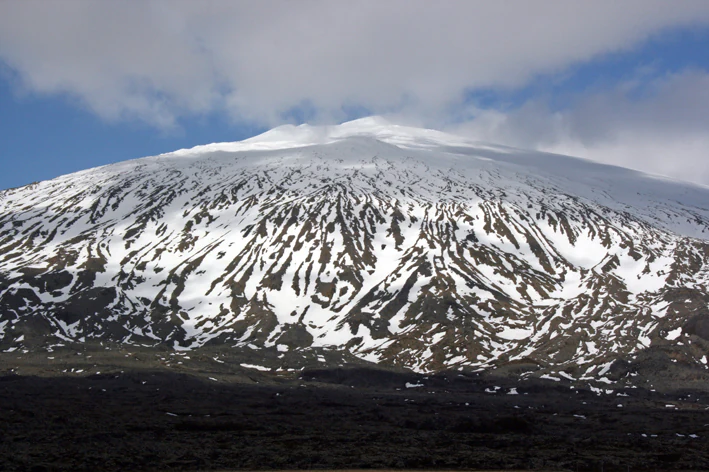
The park is best known for the glacier-capped Snæfellsjökull volcano, a 1,446-meter peak that stands as an enduring symbol of Iceland. Its fame is amplified by the role it plays as the entry point to the subterranean world in Jules Verne's Journey to the Center of the Earth, making it a touchstone of literary as well as natural significance. Beyond the volcano itself, the park is recognized for the ecological richness of the surrounding peninsula. Snæfellsnes hosts boreal birch forests and alpine tundra, undisturbed southern coastline wetlands, more than 300 species of flowering plants and ferns, and important marine habitats in nearby Breiðafjörður. White-tailed eagles, puffins, and Arctic foxes all find refuge here, contributing to the park's identity as a compact but ecologically diverse protected area.
Snæfellsjökull National Park history and protected-area timeline
The area surrounding Snæfellsjökull has long held cultural and natural significance, long predating its formal protection. The Snæfellsnes Peninsula is one of the main settings of the Laxdœla saga, a foundational text of medieval Icelandic literature that recounts the lives of figures including Guðrún Ósvífursdóttir, Bolli Þorleiksson, Bolli Bollasson, and Snorri Goði. According to the saga, Bolli Bollasson, born in the area, became the first West Norse member of the Varangian Guard.
The volcano itself entered global imagination through French author Jules Verne's 1864 novel Journey to the Center of the Earth, in which Snæfellsjökull serves as the gateway to a subterranean world. This literary association has endured for more than 150 years and remains a major element of the mountain's cultural identity.
In modern times, the area's ecological value prompted government action. The landscape surrounding Snæfellsjökull was formally designated as one of Iceland's four national parks, placing the volcano and its surrounding lava fields, lowlands, and coastline under national protection. Within the park, fox hunting has been banned since 2001, reflecting an early conservation measure aimed at protecting the resident Arctic fox population. In 2008, the broader Snæfellsnes community earned EarthCheck certification, the first such certification in Iceland and in Europe, recognizing sustained commitment to environmental benchmarking that had begun in 2003. In 2025, the national park was designated a UNESCO Biosphere Reserve, formalizing its international recognition as a site of both natural and cultural value.
Snæfellsjökull National Park landscape and geographic character
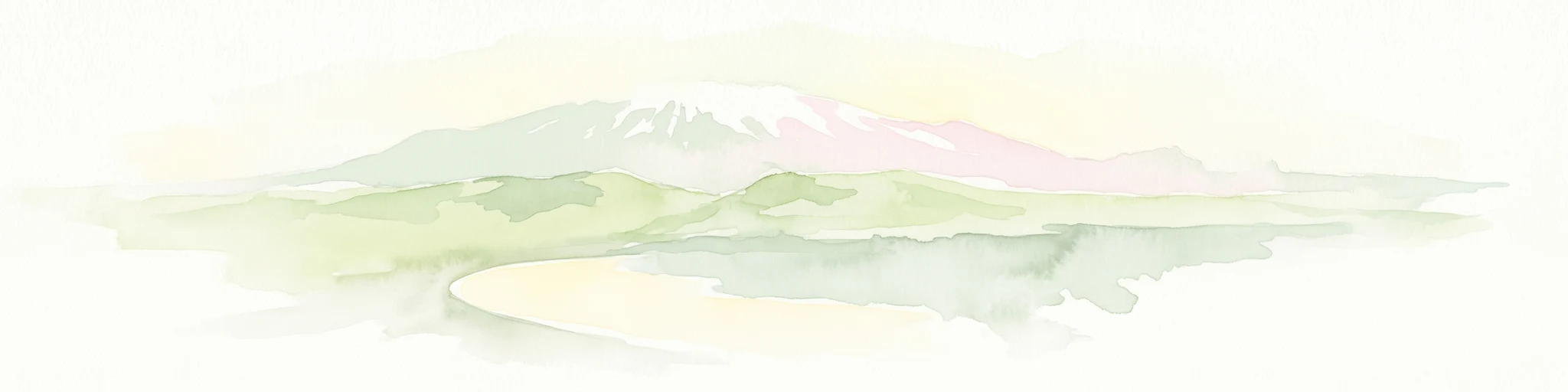
At the heart of the park, the Snæfellsjökull volcano rises to 1,446 meters, a classic conical stratovolcano capped by white glacier ice that contrasts sharply with the darker terrain below. The mountain itself anchors a range of dramatic landscapes that radiate outward from its slopes.
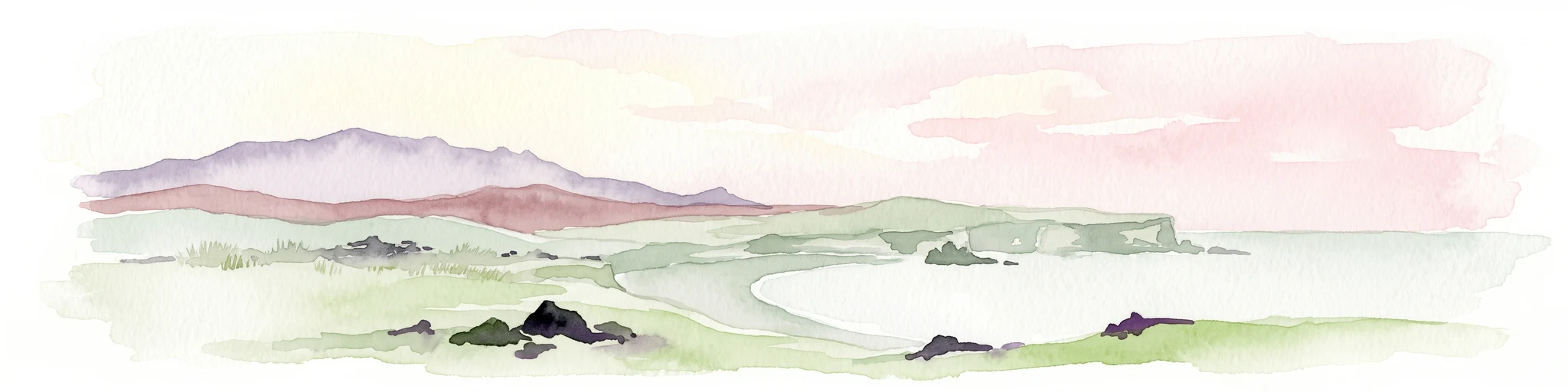
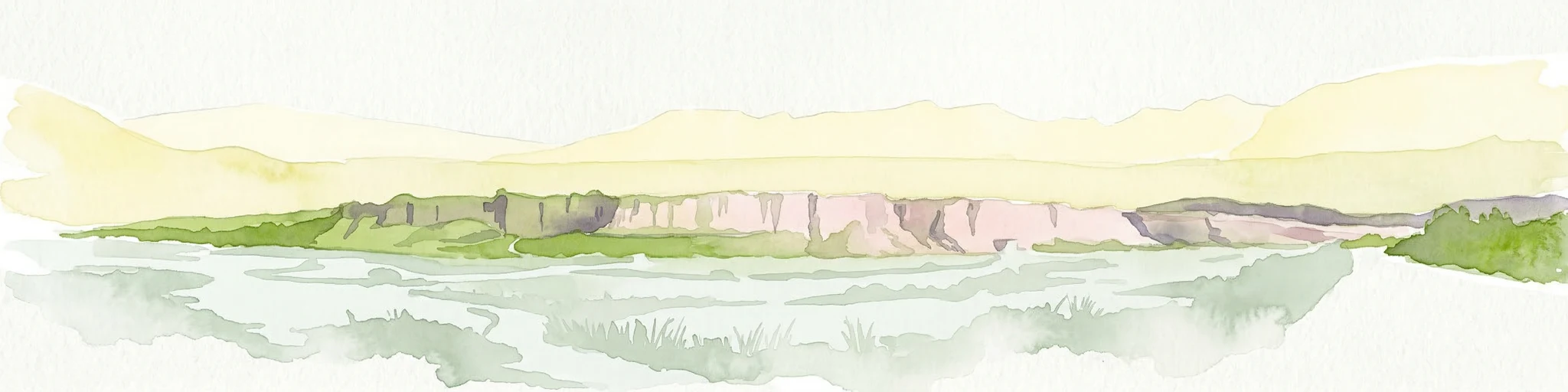
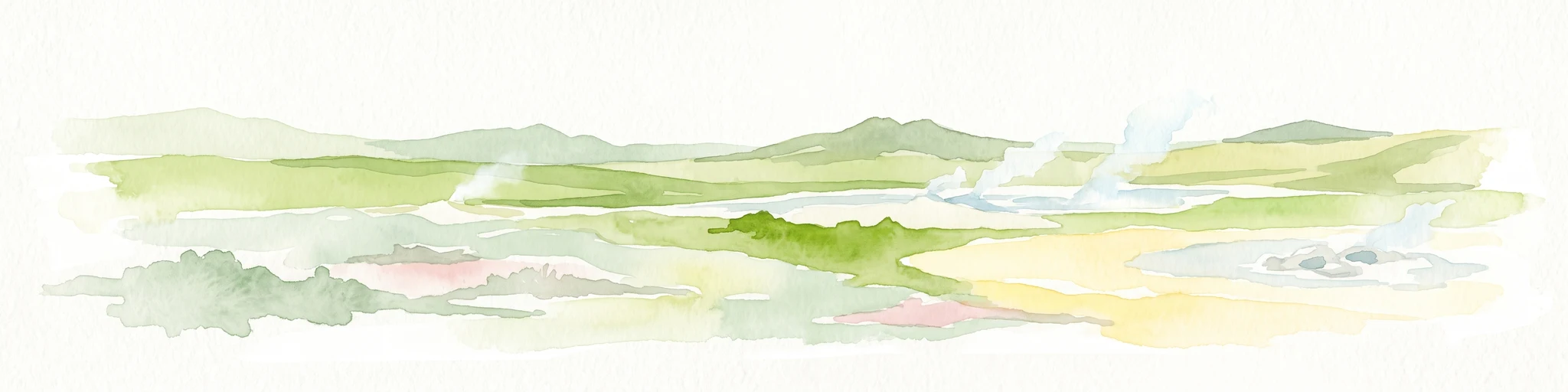
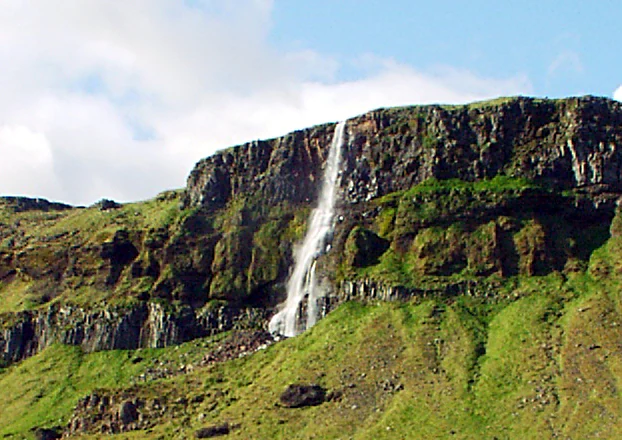
The high country around the volcano is shaped by past volcanic activity. Lava fields, rough basalt outcrops, and mossy volcanic cones spread across the peninsula, reflecting the underlying Snæfellsnes volcanic belt. Lower on the peninsula, the terrain softens into rolling grassy lowlands and boreal birch woodland, eventually dropping to coastal cliffs, sea stacks, and the broad black sand beaches characteristic of Iceland's shoreline.
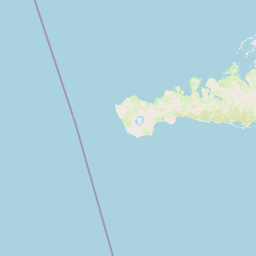
Along the southern coast, the landscape is defined by a sequence of small fishing villages, including Arnarstapi and Hellnar, which sit against towering cliffs and sheltered coves. To the north and west lies the broad, island-strewn bay of Breiðafjörður, which frames the peninsula and contributes its own seascape of low islands, tidal flats, and submerged ridges. The interplay between active volcanic geology, glacial ice, and the rugged sea coast makes Snæfellsjökull National Park a compact landscape of unusual variety.
Snæfellsjökull National Park ecosystems, habitats, and plant life
The park and surrounding peninsula fall within the Iceland boreal birch forests and alpine tundra ecosystem, a biome typical of western Iceland. Vegetation reflects both the cool maritime climate and the volcanic substrate: low birch woods and willow shrubs occupy sheltered areas, while higher and more exposed terrain gives way to tundra-like heaths and moss-dominated surfaces.
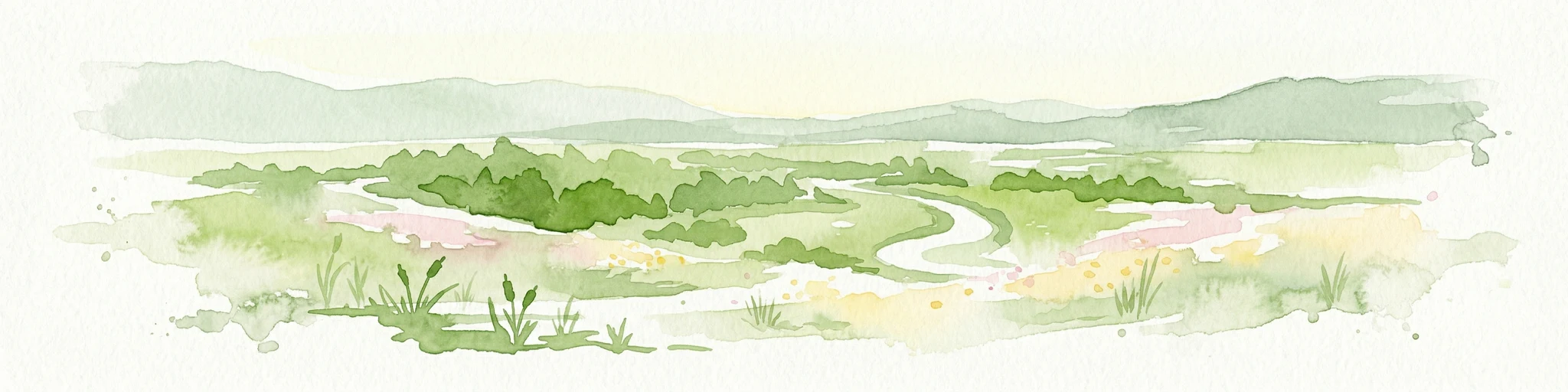
More than 300 species of flowering plants and ferns have been identified across the peninsula. Among the ecological specialties is Ligusticum scoticum, known as Scots lovage or Scottish licorice-root, an edible plant found in Iceland only on the western aspects of the Snæfellsnes Peninsula. The southern coast hosts relatively undisturbed wetland habitats, which harbor a notable diversity of plant communities. Thirteen species of wading birds make use of these wetlands, alongside many other aquatic birds that depend on the coastal shallows and freshwater sites.
At sea, the Breiðafjörður bay forms a major marine ecosystem adjacent to the park. Its seaweed and kelp forests support rich invertebrate communities and provide feeding grounds for seals and seabirds. Together, the terrestrial plant communities and the nearby marine ecosystem give Snæfellsjökull National Park a layered biological character shaped by both land and sea.
Snæfellsjökull National Park wildlife and species highlights
Snæfellsnes supports more than 60 nesting bird species. Puffins are particularly associated with the western part of the peninsula, although they are absent in winter. White-tailed eagles, protected in Iceland since 1913, began recovering their populations in the 1970s and are among the significant raptors of the area. Other birds of prey are present as well, and the short-eared owl, a protected species in Iceland, is common across parts of the peninsula.
The Arctic fox is the only land mammal native to Iceland and is the historic top carnivore of the ecosystem. Within Snæfellsjökull National Park, fox hunting has been banned since 2001, allowing the local population to develop in relative peace. Foxes on the peninsula are generally separated into highland and lowland populations, with lowland foxes displaying a reddish-brown coat year-round. The American mink, introduced after escaping into the wild in the early 1930s, has also become established, and among the four rodent species in Iceland, only the wood mouse is found in significant numbers on the peninsula.
The marine waters around the peninsula are an important part of its wildlife profile. Breiðafjörður hosts the largest seal and seabird populations in Iceland, though seal hunting has been banned nationally since 2019 following a steep decline after 1980. Killer whale pods are frequently observed off the western part of the peninsula, and other whale species are also recorded. Together, these marine mammals, seabirds, and terrestrial predators give the park a distinctive wildlife identity that reflects both Icelandic and Arctic influences.
Snæfellsjökull National Park conservation status and protection priorities
Snæfellsjökull National Park represents one of Iceland's four formally designated national parks, placing the volcano and the surrounding peninsula under the highest level of national environmental protection. The park's designation reflects the convergence of unusual ecological values: a glaciated volcano, coastal cliffs, intact lowland wetlands, and proximity to the highly productive marine environment of Breiðafjörður.
Within the park, targeted conservation measures have shaped wildlife management for decades. Fox hunting has been banned within park boundaries since 2001, offering protection to the resident Arctic fox population at a time when hunting of this species remains a topic elsewhere in Iceland. Wetland habitats along the southern coast remain relatively undisturbed, supporting wading birds and aquatic species that depend on these fragile systems.
The broader Snæfellsnes region has pursued an institutionalized path to environmental stewardship. The community committed to the EarthCheck programme in 2003 and in 2008 became the first EarthCheck-certified area in Iceland and Europe, joining a small global group of certified destinations at the time. In 2025, Snæfellsjökull National Park was designated a UNESCO Biosphere Reserve, acknowledging the park and its surrounding region as a model for balancing ecological protection, cultural heritage, and sustainable regional development.
Snæfellsjökull National Park cultural meaning and human context
Snæfellsnes is one of the principal stages of the Laxdœla saga, where it features as the homeland of major figures, including Guðrún Ósvífursdóttir, Bolli Þorleiksson, Bolli Bollasson, and Snorri Goði. According to the saga, Bolli Bollasson, said to have been born in the area, became the first West Norse member of the Varangian Guard, lending the region a notable place in the cultural memory of medieval Scandinavia.
In the 19th century, the volcano gained an additional layer of meaning through Jules Verne's 1864 novel Journey to the Center of the Earth, set in French as Voyage au centre de la Terre, and later retold and reinterpreted in Icelandic imagination under the title Leyndardómar Snæfellsjökuls. The Icelandic tradition has long associated the mountain with mystical or hidden forces, fusing indigenous folklore with the international literary fame that Verne's novel brought.
The modern cultural landscape of the peninsula is defined by its small coastal communities. Fishing villages such as Arnarstapi, Hellnar, Rif, Ólafsvík, Grundarfjörður, and Stykkishólmur have built their economies on the sea for generations, and in more recent decades have aligned their identity with sustainability and ecotourism, including the EarthCheck recognition achieved in 2008.
Top sights and standout views in Snæfellsjökull National Park
The standing landmark of the park is of course the glacier-topped Snæfellsjökull volcano, a 1,446-meter peak that ranks as one of Iceland's most recognizable natural features. Equally notable is the park's literary and folkloric heritage: the site of Verne's underground journey, and a landscape repeatedly traversed in the Laxdœla saga.
Beyond the mountain itself, the park's highlights include the dramatic southern coastline around Arnarstapi and Hellnar, the ecological richness of Breiðafjörður, and the presence of seabird cliffs where puffins nest in summer. The combined recognition of being one of Iceland's four national parks, an EarthCheck-certified community, and a 2025 UNESCO Biosphere Reserve gives the park a layered significance few Icelandic protected areas can match.
Best time to visit Snæfellsjökull National Park
Summer is the most accessible and ecologically revealing season at Snæfellsjökull National Park, when daylight extends late into the evening, coastal trails are most easily walked, and the cliffs and lowlands host their richest variety of breeding birds. Puffins are present along the western headlands during summer months and absent in winter, making this the season for the most celebrated seabird viewing in the area.
Autumn brings shifting light, the gradual retreat of migratory species, and often quieter conditions on the trails, while winter transforms the volcano into a stark white silhouette against dark skies, an ideal period for viewing the northern lights from the peninsula. Snow can limit access to some interior paths, and the summit glacier remains cold year-round, so visitors in colder months typically focus on the coastal villages and accessible scenic viewpoints rather than higher routes. Spring returns migratory birds and reawakens the lowland vegetation, offering a quieter experience before peak summer visitation.