
Why Südhang des Thüster Berges stands out
The reserve is especially notable for its calcareous semi-dry grasslands (Kalkhalbtrockenrasen) and dry scrub that survive on shallow, limestone-derived soils along a steep, sun-exposed slope. These habitats are relatively rare in the region and have been maintained by historical grazing and mowing practices, giving the protected area a strong open-habitat character uncommon in the surrounding wooded hills of the Weserbergland.
Südhang des Thüster Berges history and protected-area timeline
The Südhang des Thüster Berges was officially placed under nature protection on 10 August 1989, when it was designated as a Naturschutzgebiet with the code NSG HA 140. The designation recognized the scientific and conservation value of the site's calcareous grassland and dry scrub communities, which had developed through long-standing patterns of grazing and low-intensity land use on the steep limestone slope. Lower Saxony's state agency for water management, coastal protection and nature conservation (NLWKN) maintains the formal protection record, while the Landkreis Hameln-Pyrmont acts as the responsible lower nature protection authority for day-to-day oversight.
Südhang des Thüster Berges landscape and geographic character
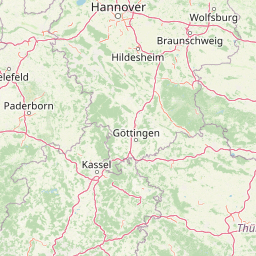
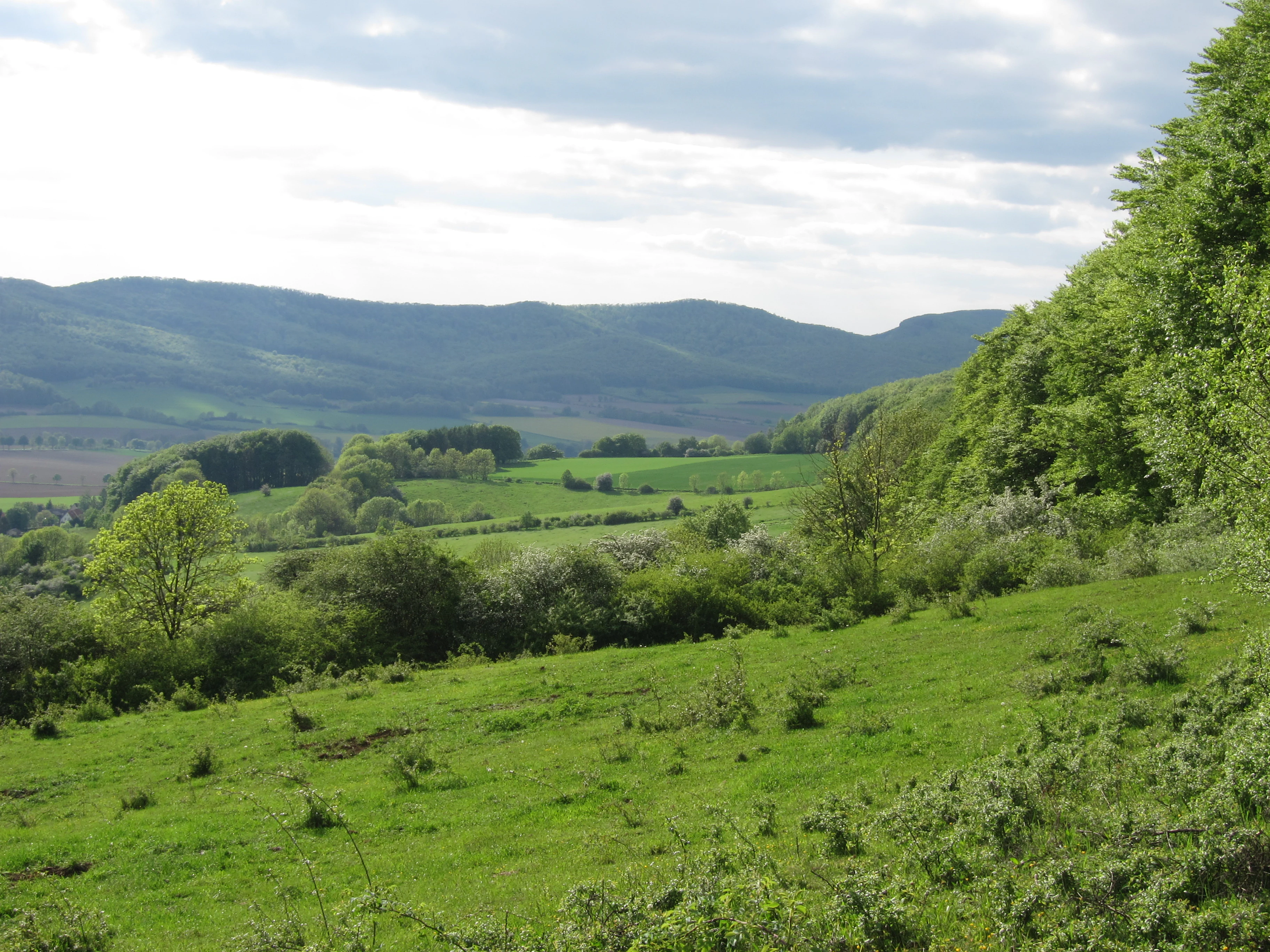
The reserve occupies the southern slopes of the Thüster Berg, a ridge in the Weserbergland range characterized by alternating wooded hills and valleys. Within the protected area, the terrain is notably steep and southwest-facing, exposing the hillside to strong sunlight throughout the day. Elevations within the reserve range from roughly 179 meters at the lower edge to about 337 meters higher up the slope.
The defining feature of the landscape is the contrast between the steep, open, grassy hillside and the surrounding forested ridges of the Weserbergland. Shallow soils over weathered limestone bedrock restrict tree growth on the slope, producing an unusual open character amid otherwise wooded terrain. The neighboring Ith ridge is visible from the protected hillside, reinforcing the sense of a small natural enclave set within the broader ridgelines of the Weser Uplands.
Südhang des Thüster Berges ecosystems, habitats, and plant life
Ecologically, the site is defined by its calcareous semi-dry grassland (Kalkhalbtrockenrasen) and the dry scrub communities associated with them. These habitats grow on shallow soils derived from limestone weathering, conditions that strongly limit moisture availability and favor drought-adapted plant species. The presence of these grassland communities today is closely tied to historical land use, as they typically depend on grazing or mowing to prevent succession into closed woodland.
Alongside the dry grassland and scrub, the reserve contains extensively managed grassland in the gentler parts of the area and near-natural deciduous forest on more stable soils. This combination of open calcareous habitat, traditionally used grassland, and broadleaf woodland creates a small but ecologically diverse mosaic within a single hillside. The reserve's IUCN Category IV status, Habitat/Species Management Area, reflects an active approach to maintaining the grassland and scrub communities that would otherwise revert to forest.
Südhang des Thüster Berges wildlife and species highlights
While the reserve is small and primarily known for its habitat type rather than for charismatic fauna, the combination of dry, sun-warmed slopes, scrub patches, and nearby woodland supports typical Weserbergland species associated with warm open ground and forest edge. Such mosaics are particularly important for invertebrates adapted to calcareous grassland, including butterflies, bees, and other pollinators that depend on the specialized flora of the dry slopes. The surrounding deciduous forest and the broader Weserbergland landscape provide additional habitat context for typical woodland birds and small mammals of the region.
Südhang des Thüster Berges conservation status and protection priorities
The conservation significance of Südhang des Thüster Berges lies in the preservation of calcareous semi-dry grassland and dry scrub on a steep limestone slope; a habitat type that has become increasingly rare as traditional grazing and mowing have been abandoned across Europe. By protecting both the open habitat and the associated extensive grassland and near-natural deciduous forest, the reserve maintains the ecological processes and habitat mosaic that sustain these specialized communities. Designated under Lower Saxony's nature protection framework and classified as an IUCN Category IV Habitat/Species Management Area, the site reflects a deliberate management-oriented approach to keeping the open habitats open, ensuring that a small but ecologically valuable piece of the Weserbergland's natural heritage is preserved for the long term.
Südhang des Thüster Berges cultural meaning and human context
The reserve's open habitats are a direct cultural artifact, shaped by generations of grazing, mowing, and other low-intensity agricultural practices that prevented woodland from reclaiming the thin, stony soils. These traditional land uses are typical of the Weserbergland and the wider Weser Uplands, where centuries of interaction between rural communities and the hilly landscape have produced a distinctive pattern of forest, grassland, and small protected slopes. The continuation of extensive agricultural management within the reserve is part of preserving this living cultural landscape as well as its ecological value.
Top sights and standout views in Südhang des Thüster Berges
A protected 60-hectare southwest-facing limestone slope in the Weserbergland preserving calcareous semi-dry grassland and dry scrub, complemented by extensive grassland and near-natural deciduous forest, and managed as a Habitat/Species Management Area within the regional nature park landscape of Lower Saxony.
Best time to visit Südhang des Thüster Berges
Late spring through early autumn is generally the most rewarding period to experience the reserve, when the calcareous grasslands and scrub are in active growth and the specialized flora of the dry slopes is most visible. Summer brings warm, dry conditions that highlight why this steep, sun-exposed hillside supports such unusual habitat, while the surrounding forested ridges of the Weserbergland remain appealing for walking at any season. Visitors should keep in mind that this is a protected nature reserve, and any time spent there should focus on quiet observation along the existing paths rather than active recreation.