Mori Atlas logo
National parkTapo-Caparo National Park

Discover the mapped boundaries and natural terrain of this significant Venezuelan national park.

Tapo-Caparo National Park: Protected Landscape Identity and Geographic Context in Barinas

(Parque nacional Tapo-Caparo)

Tapo-Caparo National Park stands as a key protected area within Venezuela's Barinas region, contributing significantly to the nation's atlas of natural landscapes. This page details the park's specific geographic setting and its role as a national park, providing context for its mapped boundaries and the surrounding terrain of the Llanos. Explore the protected land identity that defines Tapo-Caparo National Park and its place within the broader regional geography.

National ParksCloud ForestsAndean PiedmontWestern VenezuelaProtected AreasForest Conservation

Tapo-Caparo National Park

National park

Park overview

Structured park overview, official facts, and landscape profile for Tapo-Caparo National Park

Tapo-Caparo National Park park facts, protected area profile, and essential visitor context
Review the core facts for Tapo-Caparo National Park, including designation, size, terrain, visitor scale, habitats, and operating context in one park-focused overview.

About Tapo-Caparo National Park

Tapo-Caparo National Park occupies a strategic position in the Andean foothills of western Venezuela, where the mountain ranges of the Sierra de Mérida descend toward the Orinoco plains. The park's 2,050 square kilometer expanse spans three states, creating a trans-regional protected area that bridges ecological zones and protects watershed resources critical to regional development. The creation of the park in 1992 reflected growing recognition that the forests surrounding the Uribante-Caparo hydroelectric project held ecological value far beyond their role in water regulation and power generation. These forests host complex plant communities adapted to the moist, subtropical conditions of the piedmont zone, where rainfall patterns and cloud immersion create conditions favorable to epiphytic vegetation and diverse forest strata. The park's protected status ensures that these ecological communities remain intact despite surrounding pressures from agriculture and settlement in the fertile mountain valleys.

Quick facts and research context for Tapo-Caparo National Park

Tapo-Caparo National Park is located in the western Venezuelan states of Barinas, Mérida, and Táchira, positioned in the Andean piedmont region at approximately 8°08′N latitude. The park covers 2,050 square kilometers and was officially established by decree on January 14, 1992, during the second presidency of Carlos Andrés Pérez. The protected area corresponds to IUCN Category II status, designation as a national park. The park's landscape is characterized by numerous deep river gorges and a network of watercourses flowing through forested terrain. The elevation gradient and proximity to the Andes support exceptional plant diversity including ferns, mosses, lichens, and fungi.

Park context

Deeper park guide and search-rich context for Tapo-Caparo National Park

Tapo-Caparo National Park history, landscape, wildlife, and travel context
Explore Tapo-Caparo National Park through its history, landscape character, ecosystems, wildlife, conservation priorities, cultural context, and seasonal travel timing in a structured park guide built for atlas discovery and search intent.

Why Tapo-Caparo National Park stands out

Tapo-Caparo is best known for its exceptional forest diversity and its role in protecting the watersheds feeding the Uribante-Caparo hydroelectric system. The park contains some of the most extensive and well-preserved cloud forest habitats in western Venezuela, supporting a remarkable diversity of plant groups including ferns, mosses, lichens, and fungi. The protected area serves as a corridor for large mammals including jaguars, while its river systems and forest edges provide habitat for toucans and other tropical bird species. The dramatic gorges and river valleys cutting through the landscape create scenic beauty and ecological variety that distinguish this park from other protected areas in Venezuela.
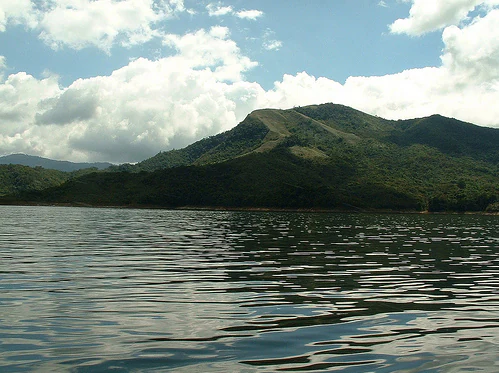
Calm lake water reflecting mountain peaks and a partly cloudy sky

Tapo-Caparo National Park history and protected-area timeline

Tapo-Caparo National Park was established by presidential decree on January 14, 1992, during the government of President Carlos Andrés Pérez in his second term. The park was created with the specific purpose of protecting the natural environment in the area surrounding the Uribante-Caparo hydroelectric complex, one of Venezuela's significant infrastructure projects for power generation in the western region. This establishment reflected a growing environmental consciousness in Venezuelan policy during the late 1980s and early 1990s, when several new protected areas were designated to address conservation concerns in rapidly developing regions. The hydroelectric project itself had altered the landscape, and the creation of the national park represented an attempt to balance development with environmental protection by preserving the remaining forest ecosystems in the watershed. The decree recognized that the forests, rivers, and biological diversity of the Tapo-Caparo region constituted a natural heritage worth protecting for future generations.

Tapo-Caparo National Park landscape and geographic character

The landscape of Tapo-Caparo National Park is defined by its position in the Andean piedmont, where mountain streams have carved deep valleys and gorges through the forested terrain. The park contains numerous river courses that descend from the higher elevations of the Mérida range, creating a network of watercourses that flow through the protected area. The terrain varies from steep-sided valleys to more gentle slopes as the land descends toward the plains, and this topographic variation creates diverse microhabitats within the park. The forest cover is continuous and dense, with the canopy reaching substantial heights in the more mature forest areas. The combination of river gorges, forest-covered slopes, and the transitional character between mountain and plains ecosystems gives the park a distinctive visual character that distinguishes it from both the higher Andean páramos and the savanna landscapes of the Orinoco region.

Tapo-Caparo National Park ecosystems, habitats, and plant life

The ecological character of Tapo-Caparo National Park reflects its position in the Andean piedmont, a zone of exceptional biological productivity and species diversity. The park features diverse forest types that include both evergreen and semi-deciduous species, with epiphytic vegetation especially well-developed due to the persistent moisture from cloud immersion. The park is notable for its extraordinary diversity of lower plants and fungi, including extensive fern communities, various moss species, lichens, and fungi that form an integral part of the forest ecosystem. These plant groups contribute to the ecological complexity of the park, supporting food webs and providing habitat structure for animals. The moisture regime of the piedmont zone supports this biological richness, creating conditions where plant growth is vigorous and decomposition rates produce rich soils that sustain complex ecological interactions.

Tapo-Caparo National Park wildlife and species highlights

Tapo-Caparo National Park supports a diverse fauna that includes several species of conservation significance. Large mammals are represented by jaguars, the largest cats in the Americas, which roam the forest floors and use the park's river corridors as movement routes. Birdlife includes toucans, characteristic inhabitants of Neotropical forests whose bright plumage and distinctive calls add to the park's natural soundscape. Reptiles are represented by boas, a group of large constrictor snakes that inhabit the forest understory and river margins. This faunal assembly reflects the park's role as a refugium for species that require extensive forest habitats and intact ecological corridors. The combination of forest, river, and gorge habitats within the protected area provides feeding, breeding, and shelter resources for these and many other species.

Tapo-Caparo National Park conservation status and protection priorities

Tapo-Caparo National Park represents an important conservation designation in western Venezuela, protecting forest ecosystems that would otherwise face significant pressure from agricultural expansion and infrastructure development. The park's establishment around the Uribante-Caparo hydroelectric project demonstrates a policy approach that attempts to reconcile development needs with environmental protection. The protected area preserves biodiversity, watershed function, and ecological processes in a region where forest conversion has been extensive. The diversity of plant groups found in the park, including ferns, mosses, lichens, and fungi, represents biological resources that are particularly sensitive to disturbance and benefit from formal protection. The park's large area and contiguity with other forested regions create a conservation unit that can support viable populations of wide-ranging species like jaguars.

Tapo-Caparo National Park cultural meaning and human context

Tapo-Caparo National Park exists within a region of western Venezuela that has been inhabited and used by human communities for generations. The three states encompassed by the park each have distinct regional cultures shaped by their Andean heritage and the traditions of Venezuelan llanero communities in the lower elevations. While the park itself is a modern protected area designation, the landscapes within its boundaries have been shaped by historical patterns of land use and settlement. Thepark's creation reflected evolving attitudes toward environmental protection in Venezuela during the late twentieth century, when the country began establishing more comprehensive protected area networks. The hydroelectric project that motivated the park's creation also reflects the developmental priorities of the region.

Top sights and standout views in Tapo-Caparo National Park

Tapo-Caparo National Park stands out for its exceptional forest diversity, particularly the rich communities of ferns, mosses, lichens, and fungi that characterize its cloud forest environments. The park protects significant populations of jaguars, toucans, and boas within a landscape of dramatic river gorges and intact forest corridors. Its position in the Andean piedmont gives it ecological significance as a transitional zone between high mountain and plains ecosystems. The park's creation around a hydroelectric project demonstrates an important model for integrating conservation with regional development needs.

Best time to visit Tapo-Caparo National Park

The optimal time to visit Tapo-Caparo National Park corresponds to the dry season typical of the Venezuelan Andean region, when precipitation is reduced and trail conditions are more favorable for exploration. The period from December through April generally offers more stable weather conditions, though the park's cloud forest environment means that moisture is present year-round. Visitors interested in wildlife viewing may find the dry season advantageous as animals concentrate around remaining water sources. However, the wet season brings its own rewards, with waterfalls at full flow and the forest at its most lush. Those planning visits should be prepared for the variable conditions typical of piedmont environments, where weather can change rapidly.

Park location guide

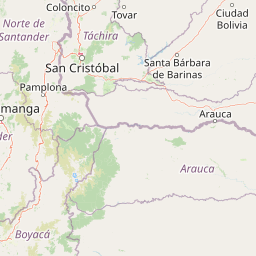
Geography guide, regional context, and park location map for Tapo-Caparo National Park

Tapo-Caparo National Park park geography, regions, and map view in Venezuela
Understand where Tapo-Caparo National Park sits in Venezuela through a broader geographic reading of the surrounding landscape, nearby location context, and its mapped position within the national park landscape.

How Tapo-Caparo National Park fits into Venezuela

Venezuela is a country in northern South America with coastline along the Caribbean Sea and Atlantic Ocean. It borders Colombia, Brazil, Guyana, and Trinidad and Tobago. The country has an area of approximately 916,445 km² and a population of about 31.8 million. Caracas is the capital and largest city. Venezuela consists of 23 states and the Capital District.

Wider geography shaping Tapo-Caparo National Park in Venezuela

Venezuela is located on the northern coast of South America. The continental territory is bordered by the Caribbean Sea and Atlantic Ocean to the north, Colombia to the west, Brazil to the south, and Guyana to the east. Trinidad and Tobago lies to the northeast. The country includes various islands and islets in the Caribbean Sea known as the Federal Dependencies.

Map view of Tapo-Caparo National Park

Use this park location map to pinpoint Tapo-Caparo National Park in Venezuela, understand its exact geographic position, and read its mapped placement within the surrounding landscape more clearly.

Pigeon | © OpenStreetMap contributors

Location context for Tapo-Caparo National Park

BarinasTáchira

Trace the distinctive geography of its cloud forest habitats, river valleys, and diverse forest ecosystems within this significant Venezuelan protected area.

Tapo-Caparo National Park: Visual Guide to Andean Piedmont Landscapes and Cloud Forest Scenery
View images showcasing Tapo-Caparo National Park's diverse cloud forest environments, dramatic river gorges, and continuous dense forest cover in the Andean piedmont. The visual references provide essential context for understanding the park's unique ecological character and its role as a vital protected area in western Venezuela.

Calm lake water reflecting mountain peaks and a partly cloudy sky

Park atlas

Browse neighboring protected areas and similar cloud forest landscapes across the Andean piedmont zone, tracing Venezuela's rich conservation geography.

Explore National Parks and Protected Areas Near Tapo-Caparo National Park, Western Venezuela
Expand your view from Tapo-Caparo National Park to discover other national parks and protected areas in Venezuela's western Andean piedmont, tracing regional conservation landscapes. Compare varied forest ecosystems, dramatic river gorges, and significant biodiversity hotspots to understand the broader protected geography surrounding Tapo-Caparo.
Watercolor painting showing green hills, a river, and distant mountains under a light sky
National parkVenezuela

Sierra Nevada National Park: Venezuela's Majestic Alpine Protected Landscape and Park Boundaries

Explore the highest peaks and glacial terrain of this Venezuelan national park.

Delve into Sierra Nevada National Park, a premier protected area situated in the high Venezuelan Andes. This national park protects a vast expanse of dramatic alpine terrain, including Pico Bolívar and numerous glacial valleys. Understand its mapped boundaries and the unique paramo and cloud forest ecosystems that define this significant natural landscape within Venezuela, offering rich context for atlas-style geographic discovery.

Area
2,764.46 km²
Established
1952
IUCN
II
Relief
Mountain
National parkVenezuela

Sierra La Culata National Park: Protected Landscape Atlas of the Venezuelan Andes

Explore the páramo ecosystems and mapped terrain of this Venezuelan national park.

Sierra La Culata National Park offers a profound look into the unique geography of the Venezuelan Andes. This protected national park is characterized by its expansive páramo ecosystems, dramatic mountain peaks, and glacial lagoons, creating a distinctive high-altitude wilderness. Use this atlas-focused entry to understand the park's mapped boundaries and its significant role within the region's natural landscape context.

Area
2,004 km²
Established
1989
IUCN
II
Relief
Mountain
National parkTáchira State

Chorro El Indio National Park: Protected National Park in Táchira State's Geography

Explore mapped boundaries and regional landscape context.

Chorro El Indio National Park serves as a key protected landscape within Táchira State, Venezuela. This national park offers users detailed insights into its specific geographic setting, mapped park boundaries, and the natural terrain it encompasses. Understanding Chorro El Indio National Park through the MoriAtlas platform provides a foundation for exploring regional protected areas and their ecological significance.

Area
170 km²
Established
1989
IUCN
II
Relief
Mountain
National parkTáchira State

El Tamá National Park: A National Park in Venezuela's Táchira State for Geographic Discovery

Mapped protected area boundaries and regional landscape context.

El Tamá National Park serves as a primary point of interest for understanding Venezuela's protected lands. Located within Táchira State, this national park offers a distinct geographic profile for atlas exploration. Users can investigate the park's mapped features and its position within the regional natural landscape, gaining insight into its role as a conservation area and a component of Venezuela's broader geography.

Area
1,390 km²
Established
1978
IUCN
II
Relief
Mountain
National parkNorte de Santander

Tamá National Natural Park: Colombia's Protected Landscape and Regional Geography

Explore mapped natural features and protected area context.

Delve into the protected landscape of Tamá National Natural Park, a key national park situated in Colombia's Norte de Santander region. This resource provides an atlas-style overview of the park's geographic setting, emphasizing its mapped boundaries and its role within the broader regional geography. Understand the inherent natural context and protected status of this significant Colombian conservation area through detailed landscape information.

Area
480 km²
Established
1977
IUCN
II
Relief
Mountain
National parkVenezuela

Dinira National Park: Protected Watershed and Andean Mountain Landscape

Explore its rugged terrain and páramo ecosystem.

Dinira National Park is a significant protected area in Venezuela, covering rugged Andean terrain vital for watershed protection. This national park features dramatic mountain landscapes, including the Humocaro Mountains and the Los Nepes páramo zone, supporting diverse cloud forest and high-altitude ecosystems. Understanding Dinira National Park offers insight into the geographic context of the Cordillera de Mérida and its hydrological importance.

Area
453.28 km²
Established
1988
IUCN
II
Relief
Mountain
Natural monumentColombia

Los Estoraques Unique Natural Area: Colombian Natural Monument of Eroded Pillars

Geographic Context and Landscape Atlas

Los Estoraques Unique Natural Area stands as a distinctive protected landscape within Colombia's Norte de Santander Department. This natural monument is renowned for its striking geological formations of eroded brownstone columns and pedestals, a unique erosional terrain set within the Andean foothills. The area's mapped boundaries encompass a complex ecosystem, bridging dry forest and cloud forest zones, offering significant value for understanding regional geography and the distribution of protected lands in South America.

Area
562 km²
Established
1988
IUCN
III
Relief
Mountain
National parkLara State

Yacambú National Park National Park: Protected Cloud Forest Landscape in Lara State

Mapped terrain and significant orchid diversity in Venezuela's Andean foothills.

Yacambú National Park is a significant national park in Venezuela's Lara State, protecting crucial humid cloud forest ecosystems in the Andean foothills. The park's terrain is defined by the mountainous topography of the Portuguesa Mountain Range, supporting a rich diversity of flora, including numerous orchid species. Its role in watershed protection for nearby regions underscores its importance as a conserved natural landscape with vital ecological functions.

Area
146 km²
Established
1962
IUCN
II
Relief
Mountain

Common questions about visiting, size, designation, and location context for Tapo-Caparo National Park

Tapo-Caparo National Park FAQs for park facts, access, geography, and protected area context
Find quick answers about Tapo-Caparo National Park, including protected-area facts, park geography, trail and visitor context, and how the park fits into its surrounding country and regional landscape.
MoriAtlas Explorer

Continue Your Protected Areas Search Across the Global Atlas

Deepen your exploration by continuing the structured search for national parks and protected areas worldwide. Utilize the comprehensive filtering capabilities to compare different conservation landscapes and refine your understanding of global park geography. Discover more about the distribution and characteristics of protected natural areas.

Global natural geography