Why Vũ Quang National Park stands out
Vũ Quang National Park is world-renowned as a living laboratory of biodiversity, having produced an extraordinary string of zoological discoveries since the early 1990s. The park is most famous for the saola, a forest-dwelling bovine that represents the first large mammal discovery in over half a century and remains known only from specimens and camera trap images, never formally observed in the wild by scientists. Equally remarkable is the giant muntjac, the largest species of muntjac deer in the world, discovered in Vũ Quang in 1994. These discoveries, along with several additional ungulate and fish species, have earned the park the nickname "the new species mine of Vietnam." The park's significance extends to conservation biology globally, as it represents one of the most important sites for endemic species in Southeast Asia.
Vũ Quang National Park history and protected-area timeline
Vũ Quang National Park traces its formal protection history to 1986 when the area was first designated as a forest reserve. The elevation to national park status came in 2002 under Decision 102/2002/QĐ-TTg by the Prime Minister of Vietnam,正式 establishing the current protected area framework. However, the park's global scientific significance was revealed in 1992 when a joint team from Vietnam's Ministry of Forestry and the World Wildlife Fund discovered the saola, a completely new species of forest-dwelling bovine that ranks among the most significant zoological discoveries of the twentieth century. This was followed in 1994 by the discovery of the giant muntjac, a new genus and species of deer. Subsequent surveys during the 1990s and 2000s revealed additional new fish species, bringing the total to five newly described species from the park's waters. The park achieved regional recognition in 2019 when it was designated as an ASEAN Heritage Park, acknowledging its exceptional biodiversity value and conservation importance at the regional level.
Vũ Quang National Park landscape and geographic character
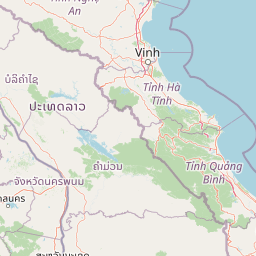
The physical landscape of Vũ Quang National Park consists of rugged mountainous terrain characteristic of the Annamite range, with elevations ranging from around 100 meters in the lower valleys to peaks exceeding 1,900 meters. The terrain is dominated by steep slopes, narrow ridges, and deep V-shaped valleys carved by numerous small streams and rivers that drain westward toward the Laos border. The park's location near the border creates an interface between the Vietnamese and Lao forest ecosystems, contributing to its ecological significance. The forest cover is continuous and relatively intact in the core protection areas, with the five distinct forest types distributed according to elevation and aspect. The landscape has historical significance as well, with the area serving as a base for the Hương Khê uprising led by Phan Đình Phùng in the late nineteenth century against French colonial forces, a legacy recognized by the site's designation as a historical monument in 1995.
Vũ Quang National Park ecosystems, habitats, and plant life
Vũ Quang National Park supports extraordinary ecological diversity across its elevational gradient. The five forest types range from evergreen forest on lowland soils below 300 meters, through submontane evergreen forest between 300 and 1,000 meters, to montane evergreen forest from 1,000 to 1,400 meters, upper montane forest between 1,400 and 1,900 meters, and forest above 1,900 meters. These habitats collectively support approximately 1,823 species of higher plants belonging to 202 families and 676 genera, including 131 rare species listed in Vietnam's Red Book and the IUCN Red List. The park contains remarkable plant wealth, with 686 medicinal plant species and 339 timber species documented. Among the economically significant timber species are pơ mu, vàng tâm, and giổi bà, though these valuable species have also made the region a target for illegal logging.
Vũ Quang National Park wildlife and species highlights
The wildlife of Vũ Quang National Park is extraordinarily significant, with the park holding global importance as a center of mammal discovery. The flagship species is the saola, a forest-dwelling bovine discovered in 1992 that remains one of the rarest large mammals on Earth, known only from occasional camera trap images and collected specimens. The giant muntjac, discovered in 1994, represents the world's largest muntjac species and required the creation of a new genus. The park supports 94 mammal species across 26 families, including 26 rare species requiring protection. Notable mammals include the northern white-cheeked gibbon, Asian elephant, large-antlered muntjac, and various primate and bat species. The bird fauna includes 315 species, with 10 considered rare. Reptile diversity encompasses 58 species including 16 rare forms, while amphibians number 31 species. The fish fauna includes 88 species, with five newly described from Vũ Quang waters. Over 316 butterfly species have been documented. The park contains 36 endemic species found nowhere else on Earth.
Vũ Quang National Park conservation status and protection priorities
Vũ Quang National Park represents one of Vietnam's most important conservation areas and holds global significance for biodiversity protection. The park was designated as an ASEAN Heritage Park in 2019, recognizing its exceptional ecological value at the regional level. The protection of the saola and giant muntjac is particularly crucial, as both species face severe threats from hunting and habitat loss across their limited ranges. The park operates with a zonal management approach, combining strict protection zones covering 38,800 hectares with ecological restoration areas encompassing 16,184.9 hectares. Conservation challenges include pressure from illegal logging driven by demand for valuable timber species and hunting for wildlife trade. The surrounding buffer zone contains rural communities with limited economic alternatives, creating ongoing tensions between conservation objectives and local livelihoods. Eco-tourism is promoted as a sustainable development strategy that can provide economic benefits to local communities while reducing pressure on natural resources.
Vũ Quang National Park cultural meaning and human context
Vũ Quang National Park contains significant cultural and historical heritage beyond its ecological value. The park area served as a base for the Hương Khê uprising led by military leader Phan Đình Phùng, who organized resistance against French colonial rule in the late nineteenth century as part of the Cần Vương movement. This historical significance was formally recognized in 1995 when the site was designated as a state-level historical monument. The surrounding region is home to local communities whose traditional livelihoods have shaped and been shaped by the forest environment over generations. The buffer zone population is primarily engaged in agriculture, and conservation efforts must balance protection objectives with sustainable development needs of these communities.
Top sights and standout views in Vũ Quang National Park
Vũ Quang National Park stands as one of Earth's most significant biodiversity discovery sites, having produced multiple new species that changed scientific understanding of Southeast Asian fauna. The saola, discovered in 1992, remains the most celebrated recent mammal discovery globally. The giant muntjac followed in 1994, establishing the park as a uniquely productive location for zoological discoveries. The park's five distinct forest types create a vertical gradient supporting diverse ecological communities across a relatively compact area. Recognition as an ASEAN Heritage Park in 2019 elevated the park's regional conservation profile. The combination of extraordinary biodiversity, ongoing species discoveries, and significant conservation challenges makes Vũ Quang a critical site for both scientific research and environmental protection in mainland Southeast Asia.
Best time to visit Vũ Quang National Park
The optimal time to visit Vũ Quang National Park coincides with the dry season, typically from November through April, when rainfall is reduced and trail conditions are more favorable for exploration. The cooler months from December to February offer the most comfortable conditions for trekking through the park's mountainous terrain. The wet season from May through October brings higher rainfall that can restrict access to certain areas and make trails more difficult to navigate, though the forest is at its most lush and waterfalls are most impressive during this period. Wildlife viewing opportunities exist year-round, though animal activity patterns may shift between seasons. Visitors should plan for the mountainous environment by bringing appropriate clothing for variable conditions regardless of season.