Why Beringia National Park stands out
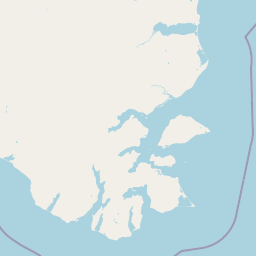
Beringia National Park is best known for protecting the tundra, coastal, and island ecosystems of the Chukotka side of the Bering Strait. It preserves landscapes strongly associated with the ancient Beringia land-bridge region, including Arctic seabird colonies and migrating wildlife. The park's multi-cluster composition gives it a distinctive combination of mainland coastal tundra, offshore islands, and inland river basins.
Beringia National Park history and protected-area timeline
The origins of Beringia National Park lie in a Soviet-American agreement signed in June 1990 by Mikhail Gorbachev and George H. W. Bush, which envisioned an international protected area around the Bering Strait. The IUCN General Assembly, with representatives from more than 100 states, recognized the special status of the Bering Strait region, helping to catalyze the creation of a Russian protected area on the Chukotka side.
On January 27, 1993, a resolution of the head of the Chukotka Autonomous Okrug administration established the Nature-Ethnic Park Beringia (Russian part) in the Providensky and Chukotsky districts. Two decades later, the park was expanded and elevated in status. On January 17, 2013, Prime Minister Dmitry Medvedev signed a decree formally establishing the national park, transferring it to the jurisdiction of the Russian Ministry of Natural Resources and Ecology.
The park has since been managed by a dedicated federal state budgetary institution. Its founding charter was issued by Russian government decree on June 10, 2013, and the institution's statute was approved in August 2013, formalizing its mandate to protect natural complexes and culturally significant sites across the Chukotka portion of Beringia.
Beringia National Park landscape and geographic character
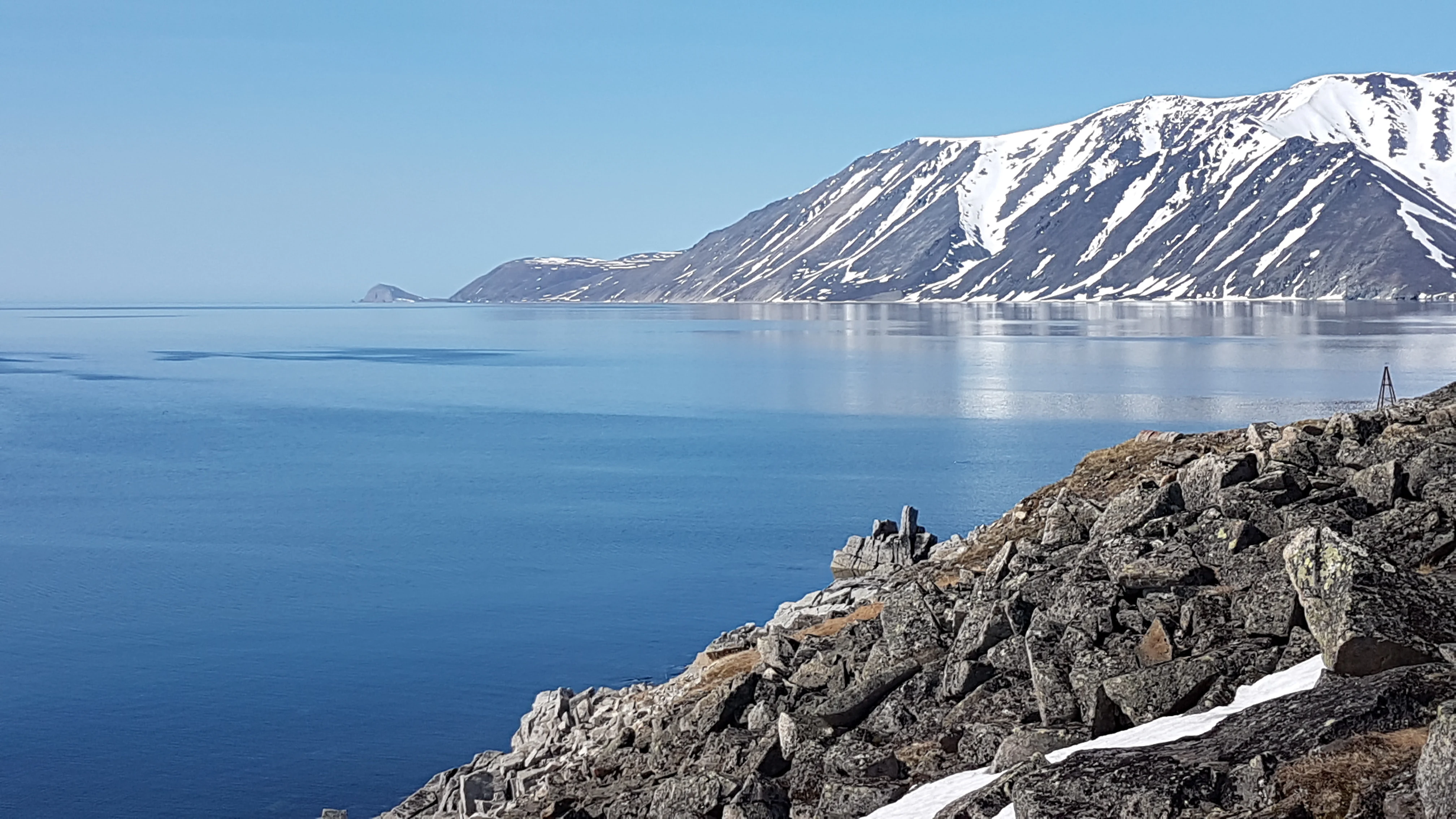
The landscape of Beringia National Park is defined by the meeting of Arctic tundra, rugged Bering Sea coastline, and scattered offshore islands. Mainland cluster areas feature open tundra plains, river valleys, and rocky headlands, while coastal sections near Cape Chukotsky and Cape Stoletia display the steep, exposed shoreline typical of the Chukotka Peninsula.
Offshore geography plays a major role in the park's character. Kolyuchin Island in the north and Nuneangan Island in the south contribute marine-influenced habitats and seabird nesting environments that differ ecologically from the inland tundra. Inland, the Inchoun cluster corresponds to the basin of the Uttyveem River, introducing broader lowland river-valley ecosystems into the park's structure.
Because the park is divided into six separate clusters, visitors and researchers move between strikingly different Arctic scenes, from tundra uplands and river systems to oceanic cliffs and remote island shores, all within one protected area.
Beringia National Park ecosystems, habitats, and plant life
Beringia National Park preserves a representative slice of Chukotka's Arctic and sub-Arctic ecosystems, combining coastal tundra, marine shoreline habitats, island vegetation, and inland river-basin environments. The ecological pattern is shaped by a harsh climate, short summers, and the interplay between continental Arctic conditions and the moderating influence of the Bering Sea.
Tundra dominates the mainland clusters, while coastal and island clusters support specialized habitats including seabird nesting areas and marine-influenced plant communities. The river basins, particularly around the Uttyveem, support wetland and riparian zones that act as important refuges for waterfowl and other migratory species. The diversity of habitats, from dry tundra uplands to brackish coastal flats, underpins the park's ecological value across its disconnected cluster areas.
Beringia National Park wildlife and species highlights
Wildlife in Beringia National Park reflects the richness of the Chukotka Arctic. The park supports around 47 mammal species, including Arctic fox, red fox, wolf, ermine, weasel, wolverine, brown bear, lynx, snowshoe hare, northern pika, moose, and reindeer. Fifteen of these mammal species are listed in the Russian Red Data Book.
The park's avifauna is particularly significant, with about 157 bird species recorded as nesting in the area, 23 of which are included in the Russian Red Data Book. Coastal cliffs and offshore islands provide nesting habitat for seabirds, while tundra and wetland areas support migratory waterfowl and waders. The combination of mainland tundra and island breeding grounds gives the park an important role in regional bird conservation, especially along the Bering Strait flyway.
Beringia National Park conservation status and protection priorities
From a conservation perspective, Beringia National Park is the cornerstone of Russia's contribution to protecting the ecosystems of the Bering Strait. It safeguards Arctic tundra, coastal habitats, and offshore island environments that are otherwise sparsely represented in the global network of protected areas. The large number of Red Data Book species, particularly among birds and mammals, signals its importance for the long-term survival of Arctic-adapted fauna.
The park's multi-cluster design is itself a conservation strategy, linking representative mainland ecosystems with key island and coastal sites rather than fencing off a single contiguous area. Its transboundary context, sitting opposite the U.S. Bering Land Bridge National Preserve in Alaska, also gives it international significance as part of the wider Beringian ecological corridor.
Beringia National Park cultural meaning and human context
The name Beringia carries deep cultural meaning, referencing the ancient land bridge that once connected Asia and North America and that gives the broader region its sense of shared natural and human heritage. The park's predecessor was specifically designated a nature-ethnic park, recognizing the importance of preserving the cultural landscape alongside the natural environment of the Chukotka coast.
This heritage is tied to the indigenous Chukchi people and other communities of the region, whose long-standing relationship with the tundra, coast, and sea is part of the human context of the protected area. The park's location on the western shore of the Bering Strait also gives it symbolic value across the Beringia Shared Heritage Program, a framework for cross-border cooperation between Russia and the United States.
Top sights and standout views in Beringia National Park
Beringia National Park stands out for the sheer scale of its protected Arctic landscapes and the diversity packed into its scattered cluster areas. The combination of mainland tundra, dramatic Bering Sea coastlines, and offshore island habitats makes it rare among Russian national parks.
Its ecological importance is reinforced by the presence of dozens of Red Data Book species, particularly nesting seabirds and Arctic mammals. The park also carries meaningful transboundary significance as the Russian counterpart in the shared Beringia conservation story.
Best time to visit Beringia National Park
The character of a visit to Beringia National Park is shaped by extreme seasonality. Short Arctic summers bring the most active wildlife, snow-free tundra, and accessible coastal and island environments, making this the most natural window for nature-focused visits and seabird viewing. Winters are long, harsh, and dominated by snow and ice, with very limited access and prolonged darkness at such a high latitude.