Why Gates of the Arctic National Park and Preserve stands out
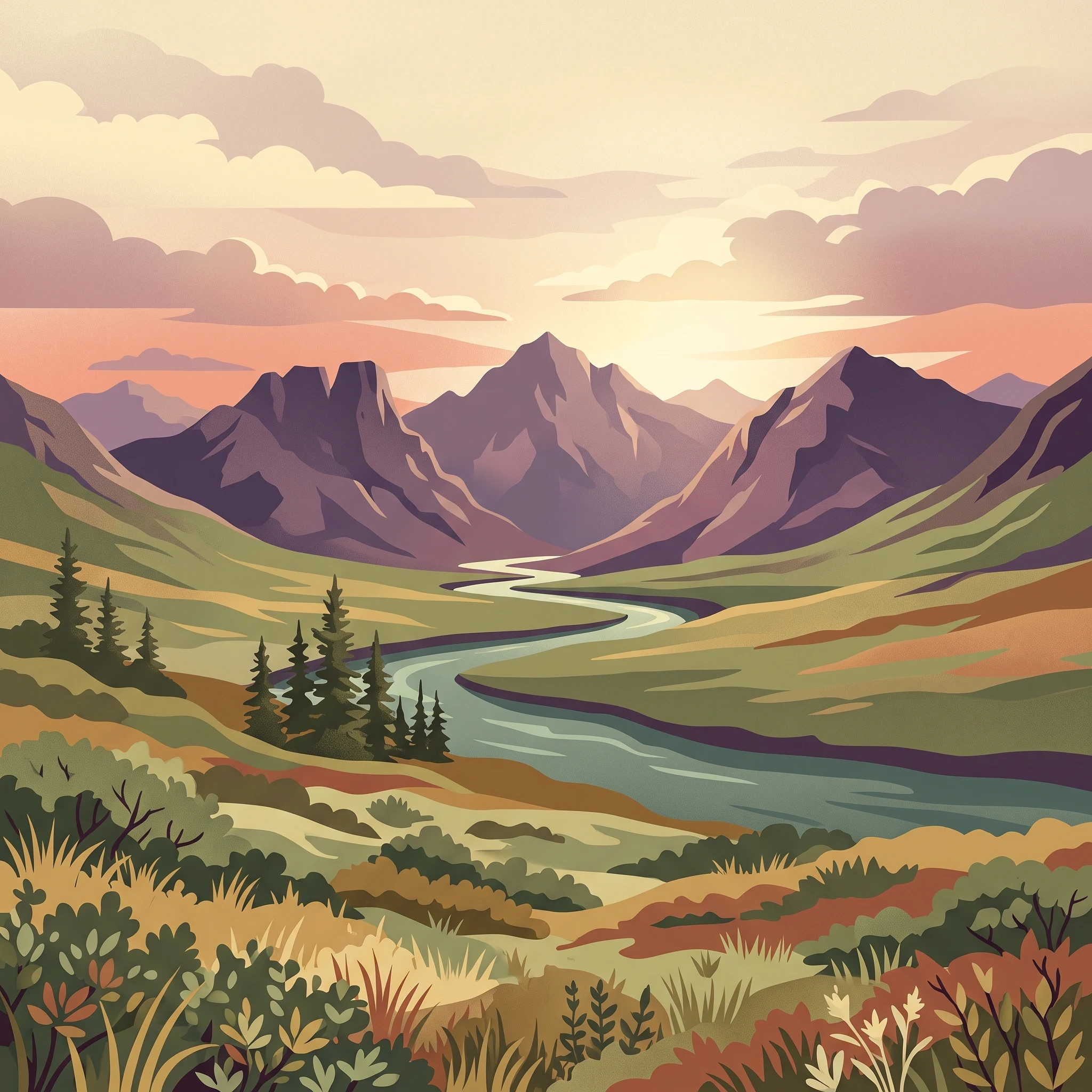
Gates of the Arctic is best known for its extraordinary remoteness and wild character, being the least visited national park in the United States despite its immense size. The park protects the Central Brooks Range, a spectacular mountain landscape carved by ancient glaciers, with dramatic rock formations including fins, pinnacles, and arches weathered from ancient seabed deposits. The Gates themselves, formed by Frigid Crags and Boreal Mountain flanking the North Fork Koyukuk River, serve as the symbolic portal to this arctic wilderness. The park encompasses the continental divide separating Pacific and Arctic Ocean drainages and contains six Wild and Scenic Rivers. Its significance is further enhanced by the migration of over half a million caribou from multiple herds through the central Brooks Range twice yearly, one of the most remarkable wildlife spectacles in North America.
Gates of the Arctic National Park and Preserve history and protected-area timeline
The human history of the Gates of the Arctic region spans at least 12,500 years, with nomadic peoples inhabiting the Brooks Range and living primarily on caribou. Archaeological evidence at sites like Iteriak Creek and Itkillik Lake documents occupation spanning from the Paleoindian period through the Arctic small tool tradition and later cultural phases. The Nunamiut Iñupiat people emerged in the Brooks Range around 1200 AD, becoming the primary indigenous residents of the area. The Gwich'in people also inhabited the region in the last millennium, with the two groups occasionally coming into conflict. The park's name dates to 1929 when wilderness activist Bob Marshall encountered Frigid Crags and Boreal Mountain flanking the North Fork Koyukuk River and named this dramatic portal the Gates of the Arctic. Marshall spent time in Wiseman during the early 1930s and published his influential account Arctic Village in 1933, helping to inspire the wilderness preservation movement. Proposals for a national park emerged in the 1960s, and after decades of consideration, President Jimmy Carter used the Antiquities Act in 1978 to establish Gates of the Arctic National Monument. In 1980, Congress passed the Alaska National Interest Lands Conservation Act, redesignating the monument as Gates of the Arctic National Park and Preserve.
Gates of the Arctic National Park and Preserve landscape and geographic character
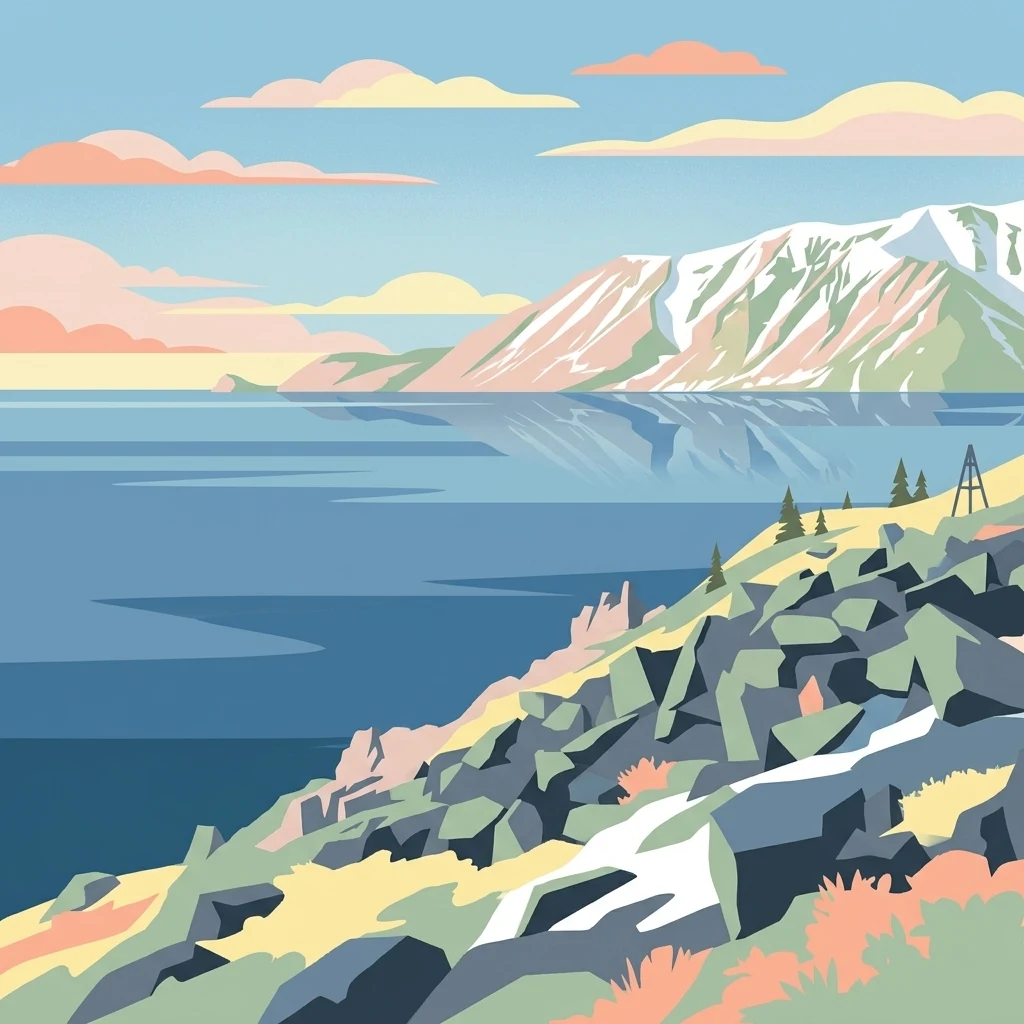
The landscape of Gates of the Arctic National Park and Preserve is dominated by the Central Brooks Range, a mountain system running east-west across northern Alaska. The park includes the Endicott Mountains and portions of the Schwatka Mountains, with ancient seabed formations that have weathered into dramatic cliffs, fins, pinnacles, and arches. Multiple glacier-carved valleys lie between the mountain ridges, dotted with alpine lakes formed in glaciated rock basins or as moraine-dammed bodies. Walker Lake, at 14 miles long and 1 mile wide, is the largest lake in the park, situated on the south slope of the Brooks Range. The northernmost section includes portions of the Arctic foothills tundra, while the southern portion encompasses the Kobuk-Selawik Lowlands with the headwaters of the Kobuk River. The park straddles the continental divide of the Americas, separating drainages flowing to the Pacific and Arctic Oceans. The region has experienced repeated glaciation, with the most recent major ice advance, the Itkillik glaciation, occurring from about 24,000 years ago to roughly 1500 to 1200 years before the present.
Gates of the Arctic National Park and Preserve ecosystems, habitats, and plant life
The ecological character of Gates of the Arctic is defined by the transition from boreal forest to tundra along the spine of the Brooks Range. The taiga, characterized by black and white spruce mixed with poplar, extends to approximately 68 degrees north latitude. North of this line, the landscape transitions to tundra, blanketed by mosses and lichens with patches of short, shrubby willows. This subarctic environment experiences extreme temperatures, with winter lows reaching minus 75 degrees Fahrenheit and summer highs occasionally reaching 90 degrees. The park lies entirely above the Arctic Circle, resulting in continuous daylight during summer and extended polar darkness in winter. Perennial snowfields and glaciers, crucial to various ecosystems within the park, are decreasing rapidly due to warming temperatures, with some areas losing over 13 square kilometers of snow cover between 1985 and 2017. The thawing of permafrost has also affected soil stability, leading to increased erosion and slope failures in some areas.
Gates of the Arctic National Park and Preserve wildlife and species highlights
Gates of the Arctic supports a remarkable diversity of wildlife adapted to arctic and subarctic conditions. Large mammals include brown bears, black bears, muskoxen, moose, Dall sheep, Interior Alaskan wolves, wolverines, and coyotes. The park is traversed twice yearly by more than half a million caribou from the Central Arctic, Western Arctic, Teshekpuk, and Porcupine herds, representing one of North America's great wildlife migrations and a critical food source for local indigenous communities. Smaller mammals include lynxes, Arctic ground squirrels, lemmings, voles, marmots, porcupines, river otters, red and Arctic foxes, beavers, wood frogs, snowshoe hares, collared pikas, and muskrats. The park is the northernmost range limit for Dall sheep, with approximately 132 brown bears residing in the park and preserve. Bird life is diverse, featuring Arctic terns, bald eagles, golden eagles, peregrine falcons, ospreys, great horned owls, and northern hawk-owls. The rivers contain grayling, Arctic char, and chum salmon, supporting both wildlife and subsistence fishing.
Gates of the Arctic National Park and Preserve conservation status and protection priorities
Gates of the Arctic represents one of the most significant conservation areas in the United States, protecting a vast tract of arctic and subarctic wilderness that remains largely unmodified by human activity. Approximately 85% of the combined park and preserve is designated as the Gates of the Arctic Wilderness, the third-largest designated wilderness area in the country. This wilderness designation provides the highest level of federal protection, prohibiting permanent structures, mechanized transport, and commercial enterprise. The park adjoins the Noatak Wilderness, and together they form the largest contiguous wilderness in the United States, creating a protected corridor spanning millions of acres. The six Wild and Scenic Rivers receive additional federal protection. The park's conservation significance is heightened by its position above the Arctic Circle, protecting ecosystems that are particularly vulnerable to climate change, as evidenced by shrinking snowfields and thawing permafrost. The migration corridor used by over half a million caribou twice yearly depends on the integrity of this landscape.
Gates of the Arctic National Park and Preserve cultural meaning and human context
The Gates of the Arctic region has been home to indigenous peoples for thousands of years, with the Nunamiut Iñupiat and Gwich'in peoples maintaining deep connections to this landscape. The Nunamiut, whose name means people of the land, have inhabited the Brooks Range since approximately 1200 AD, following caribou migrations and living as semi-nomadic hunters. In 1949, the last two semi-nomadic bands came together in the Anaktuvuk River valley, establishing the community of Anaktuvuk Pass, which remains an Iñupiat settlement within the park. Ten small communities surrounding the park are classified as resident zone communities, depending on park resources for food and livelihood. The park contains approximately 259,000 acres owned by native corporations or the State of Alaska. The Simon Paneak Memorial Museum in Anaktuvuk Pass features exhibits on the physical environment of the Brooks Range and the material culture of the Nunamiut, preserving cultural connections to this wilderness landscape.
Top sights and standout views in Gates of the Arctic National Park and Preserve
Gates of the Arctic offers extraordinary opportunities for wilderness solitude and backcountry travel in one of the most remote national parks in the world. The Arrigetch Peaks and Mount Igikpak are among the most trafficked destinations for hikers seeking dramatic granite formations. The Gates themselves, where Frigid Crags and Boreal Mountain frame the North Fork Koyukuk River, provide an iconic wilderness portal. Visitors can explore pristine river systems by pack-raft, hike through glacier-carved valleys, or climb to alpine passes with views spanning the continental divide. The park's least-visited status, with only about 7,000 to 12,000 visitors annually, ensures genuine wilderness solitude is achievable for those who make the journey. The annual caribou migration, with over half a million animals passing through the central Brooks Range, represents a wildlife spectacle unmatched in North American national parks.
Best time to visit Gates of the Arctic National Park and Preserve
The optimal time to visit Gates of the Arctic is during the brief summer season from late May through early September, when the Arctic Interagency Visitor Center in Coldfoot operates and conditions are most hospitable for backcountry travel. Summer brings continuous daylight, relatively warm temperatures, and access to the park's interior via bush plane or by hiking from the Dalton Highway. The shoulder seasons of late May and September offer fewer visitors and autumn colors but require more preparation for variable weather. Winter visits are possible but present extreme challenges given temperatures that can plunge to minus 75 degrees Fahrenheit and the absence of sunlight during polar night. Visitors should be self-sufficient and prepared for remote wilderness travel, as the park has no developed facilities, trails, or roads.