Why Kenai Fjords National Park stands out
Kenai Fjords is best known for its extraordinary glacial landscape, where the Harding Icefield serves as the dominant feature feeding dozens of glaciers that carve the dramatic fjords extending from the icefield to the sea. The park provides one of the most accessible opportunities to witness tidewater glaciers in Alaska, with Exit Glacier offering road-side viewing. The fjord ecosystem itself is unusual, formed from the mix of glacial freshwater and seawater, creating estuarine conditions that support rich marine life. The contrast between the massive icefield, the rugged Kenai Mountains, and the productive coastal waters makes this park a premier destination for understanding glacial ecology and witnessing the ongoing retreat of glaciers in a protected wilderness setting.
Kenai Fjords National Park history and protected-area timeline
The establishment of Kenai Fjords National Park followed more than a decade of proposals and negotiations during the 1970s. Early studies in the 1930s and 1940s examined potential Park Service units in Alaska, though the Kenai Fjords area was not initially considered a priority. The 1970s brought renewed attention, with various proposals for the area ranging from a National Recreation Area allowing logging and mining to a national monument protecting the icefield and coastline. President Jimmy Carter used the Antiquities Act to designate Kenai Fjords National Monument on December 1, 1978, pending final legislation to resolve Native land claims. The Alaska National Interest Lands Conservation Act, signed on December 2, 1980, converted the monument to a national park. Archaeological evidence has since revealed that the area supported human habitation far longer than initially believed, with village sites documented from approximately 950 AD to 1920. The park's history includes mining activity in Nuka Bay, with eleven mine sites documented and two eligible for the National Register. In 1989, the Exxon Valdez oil spill contaminated approximately 20 miles of the park's coastline, prompting extensive cleanup and restoration efforts that continued into the early 1990s.
Kenai Fjords National Park landscape and geographic character
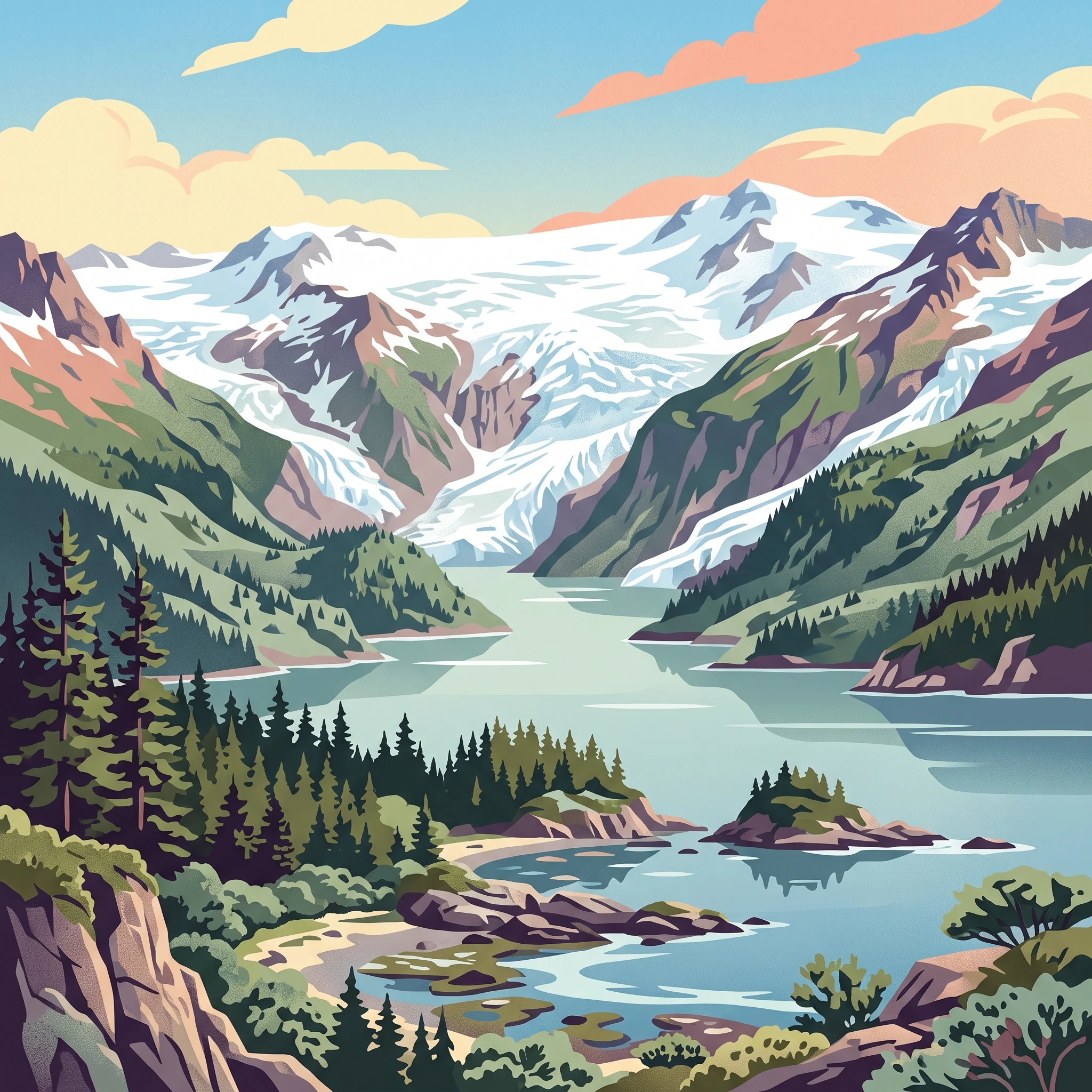
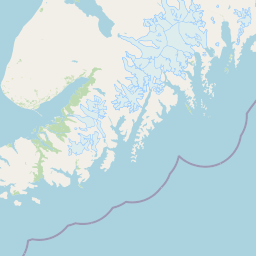
The landscape of Kenai Fjords National Park represents a masterpiece of glacial carving along the southeastern Kenai Peninsula. The Kenai Mountains rise from the coast, their peaks sculpted by the movement of the Harding Icefield, which blankets much of the interior. The glaciers emanating from the icefield have carved deep valleys into the mountains, and as these glacial valleys have been submerged by rising sea levels and ongoing land subsidence, they have become the fjords that define the park's coastal character. The floors of these fjords can reach 600 to 1,000 feet below present sea level. The geological foundation reflects the park's position at the boundary of the Pacific and North American plates, with a variety of terranes accreted against the shoreline. The predominant rock types include shale, graywacke, greenstone, tuff, and chert, creating a complex geological tapestry. The Harding Icefield itself covers a significant portion of the park's interior, while Bear Glacier stands as the longest glacier in the park. At the coast, the landscape transitions through a narrow band of forested land before meeting the sea, with the most significant fjords including Aialik Bay, Harris Bay, McCarty Fjord, and Nuka Bay.
Kenai Fjords National Park ecosystems, habitats, and plant life
The ecological character of Kenai Fjords reflects the ongoing interplay between glacial processes and biological succession. As glaciers have retreated through the twentieth century, new lands have been exposed for colonization, creating a dynamic succession sequence that begins with lichens and mosses on stony, soil-deficient substrate. Pioneer plants like dwarf fireweed and yellow dryas establish first, followed by nitrogen-fixing plants such as Sitka alder that enrich the developing soil. The progression continues through willow and cottonwood stages before reaching the mature forest of Sitka spruce and mountain hemlock. The forest understory features devil's club, Alaska blueberry, elderberry, baneberry, watermelon berry, and lady fern. Above the tree line, which sits between 750 and 1,000 feet elevation, alpine ecosystems support dwarf shrubs including bog blueberry, black crowberry, and Aleutian mountainheath. The marine environment features an unusual estuary ecosystem where glacial freshwater mixes with seawater, carrying rock flour that supports phytoplankton and the broader marine food web.
Kenai Fjords National Park wildlife and species highlights
Kenai Fjords supports a remarkable diversity of wildlife across both terrestrial and marine environments. Large terrestrial mammals include timber wolves, porcupines, Canadian lynx, brown bears, black bears, moose, and mountain goats, while smaller mammals such as coyotes, beavers, and river otters also inhabit the park. The marine mammals are particularly notable, with sea otters, harbor seals, and Steller sea lions commonly observed along the coast. The waters host an impressive array of cetaceans including orcas, fin whales, humpback whales, minke whales, Dall's porpoises, and Pacific white-sided dolphins. The bird community is diverse, with bald eagles and Peale's peregrine falcon nesting on the cliffs, while marine birds including tufted puffins, horned puffins, common murres, thick-billed murres, and marbled murrelets nest in the coastal areas. Black-billed magpies and Steller's jays are also present throughout the park.
Kenai Fjords National Park conservation status and protection priorities
Kenai Fjords National Park protects one of the most significant glacial ecosystems in the United States, preserving both the Harding Icefield and the surrounding fjord environment. The park's glaciers have shown retreat during the twentieth century, with a 3% reduction in icefield coverage documented over a 16-year study period, making the protected area valuable for understanding climate change impacts on glacial systems. The coastal waters support productive marine ecosystems that depend on the mixing of glacial fresh water and seawater. The 1989 Exxon Valdez oil spill affected approximately 20 miles of the park's coastline, highlighting both the vulnerability of this environment and the ongoing need for conservation vigilance. Restoration efforts following the spill, funded partially by the settlement with Exxon, have contributed to the park's ecological recovery. The park's protection of the icefield, coastal fringe, and marine waters creates a comprehensive conservation unit that preserves both geological processes and the biological communities they support.
Kenai Fjords National Park cultural meaning and human context
While Kenai Fjords is primarily known for its natural landscape, the park has revealed significant evidence of human occupation that challenges early assumptions about transient use of the area. Archaeological surveys have documented village sites spanning from approximately 950 AD to 1920, with evidence of long-term coastal habitation that provided rich resources for early peoples. A 1993 Park Service survey documented several village sites, and follow-up studies revealed occupation patterns including one site used from 950 AD to 1800. Geological evidence suggests an earthquake around 1170 AD lowered the shoreline by at least 1.8 meters, potentially inundating earlier sites. The park's establishment history includes ongoing relationships with Native village corporations that hold inholdings within the park, with subsistence rights established on approximately 9,000 acres following the 1990s land repurchases. A lodge developed by the Port Graham community on Aialik Bay reflects continued Native community connection to the park landscape.
Top sights and standout views in Kenai Fjords National Park
Kenai Fjords offers exceptional opportunities to experience glacial landscapes in a protected wilderness setting. The Harding Icefield Trail provides hikers access to the edge of the icefield, while boat tours from Seward allow visitors to view tidewater glaciers and marine wildlife including whales, sea otters, and Steller sea lions. Exit Glacier remains the most accessible glacier in the park, reachable by road and offering interpretive trails. The fjord ecosystem, with its mix of glacial and marine environments, supports remarkable biodiversity from mountain goats on the cliffs to humpback whales in the waters. The park's position relative to Anchorage makes it one of the most accessible Alaska national parks while maintaining a remote wilderness character. Kayaking, flightseeing, and wildlife viewing excursions provide diverse ways to experience the park's dramatic scenery and the ongoing glacial processes that continue to shape the landscape.
Best time to visit Kenai Fjords National Park
The best time to visit Kenai Fjords National Park depends on what visitors hope to experience. Summer months (June through August) offer the most accessible conditions, with the longest days, mild temperatures, and full availability of boat tours and trail access. The subarctic climate means cool, crisp conditions even during the warmest months, with average high temperatures in the 50s and 60s Fahrenheit. Late spring brings the melt season, with heavy water flows from the land helping to repel marine contamination such as oil from reaching the fjords. Fall can offer spectacular fall color in the coastal forest and fewer crowds, though conditions become more variable. Winter transforms the landscape, with significant snowfall and reduced access, though the park remains open for cold-season enthusiasts. The park's location along the Gulf of Alaska means year-round precipitation is common, so visitors should be prepared for rain regardless of season.