Why Kluane National Park and Reserve stands out
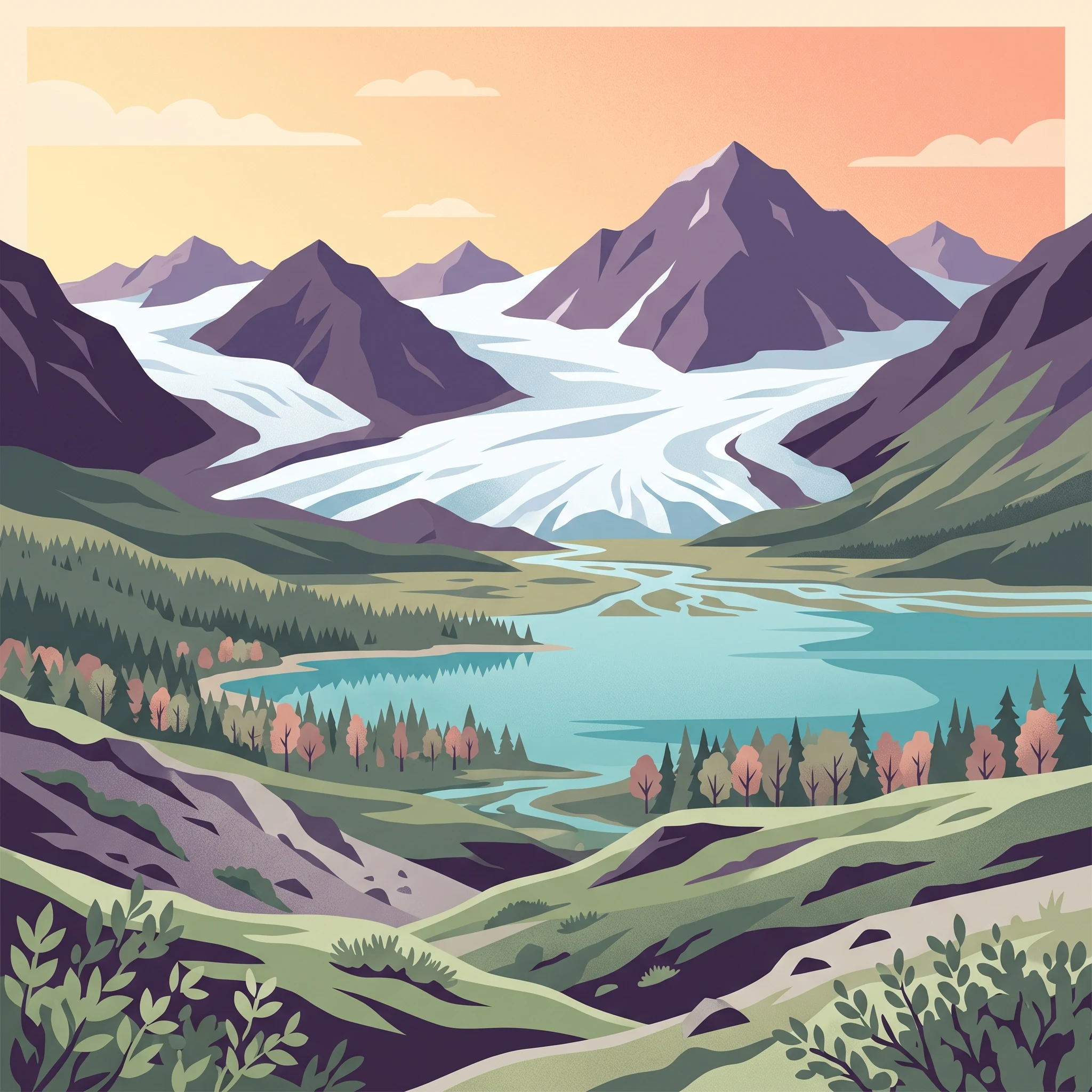
Kluane is best known for its extraordinary alpine and glacial landscape, representing the most extensive icefield complex in Canada outside the polar regions. The park contains the country's highest mountains and serves as critical habitat for significant populations of grizzly bears, Dall sheep, and mountain caribou. The Kluane icefields and glaciers form the source of major river systems and support ecological processes that extend across international boundaries. The Alsek River, designated as a Canadian Heritage River, flows through the park and provides one of North America's premier wilderness rafting experiences.
Kluane National Park and Reserve history and protected-area timeline
Kluane was designated as a National Park Reserve in 1972, establishing protection for this remote Yukon landscape pending resolution of outstanding First Nations land claims. The original reserve encompassed the full 22,013 square kilometre territory, reflecting the intent to protect the complete ecological unit of the Saint Elias Mountains and associated glacial systems. In 1993, after negotiation of a Final Agreement with the Champagne and Aishihik First Nations, the eastern portion of approximately 5,900 square kilometres achieved full national park status, becoming a fully administered unit of Canada's national park system managed cooperatively with Parks Canada. The western portion continues as a reserve while discussions proceed with the Kluane First Nation regarding their outstanding claims. The park was recognized internationally in 1979 when it became a founding component of the Kluane, Wrangell-St. Elias, Glacier Bay, Tatshenshini-Alsek World Heritage Site, later expanded in 1992 and 1994 to include additional protected areas across the Canada-United States border.
Kluane National Park and Reserve landscape and geographic character
The landscape of Kluane National Park and Reserve is defined by the towering presence of the Saint Elias Mountains, a mountain system that contains the highest peaks in Canada. Mount Logan dominates the northern skyline at 5,959 metres, while a succession of major glaciers including the Donjek Glacier and numerous other ice masses descend through glaciated valleys, carving the terrain over millennia. The glacial coverage is extensive, with ice and snow occupying approximately 83 percent of the park's extent, creating a stark white and blue environment against the dark rock exposures of peaks and ridges. At lower elevations, the terrain transitions to boreal forest and tundra, with white spruce, balsam poplar, and trembling aspen occupying the valley bottoms and lower slopes. The Slims River Valley and other glacial outwash plains provide distinctive flat terrain amidst the mountainous relief, while the Alsek River corridor offers a relatively gentle passage through the otherwise rugged landscape.
Kluane National Park and Reserve ecosystems, habitats, and plant life
The ecological character of Kluane reflects its position at the interface of several environmental zones, creating a mosaic of habitats that support remarkable biodiversity. The boreal forest communities at lower elevations are dominated by white spruce, with混交林 occasionally including balsam poplar and trembling aspen in more moist sites. Above the tree line, alpine tundra prevails with specialized vegetation adapted to harsh conditions, including cushion plants, dwarf shrubs, and associated alpine flora. The extensive glacial systems, while appearing barren, influence downstream ecosystems by providing consistent water flow and creating specialized habitats along river corridors. The combination of high elevation, latitude, and continental climate creates conditions that support unique assemblages of species at the southern edge of their range or isolated in alpine refugia.
Kluane National Park and Reserve wildlife and species highlights
Kluane supports a remarkable diversity of wildlife adapted to its varied habitats, from valley floors to alpine zones. The park contains significant populations of large mammals including grizzly bears, which utilize the full range of elevations and habitat types, Yukon moose occupying wetland and forest edges, Dall sheep concentrated on alpine cliffs and ridgelines, and woodland caribou of the northern mountain ecotype, with the Kluane herd numbering approximately 181 individuals according to the most recent census. Predatory species include wolves, coyotes, lynx, and wolverine, while smaller mammals such as beaver, river otter, snowshoe hare, and arctic ground squirrel complete the mammalian community. The avian fauna includes approximately 120 bird species, with notable populations of golden eagles and bald eagles, rock ptarmigan in alpine habitats, and numerous waterfowl species associated with the park's lakes and river systems.
Kluane National Park and Reserve conservation status and protection priorities
Kluane National Park and Reserve represents one of North America's most significant conservation areas, recognized internationally for both its outstanding natural values and the complexity of its management framework. The UNESCO World Heritage Site designation highlights the global significance of the glacier and icefield landscapes, which serve as critical indicators of climate change and are studied extensively by researchers. The park provides essential habitat for species of conservation concern, particularly the northern mountain caribou population and significant grizzly bear habitat that extends across international boundaries. The cooperative management approach developed with the Champagne and Aishihik First Nations represents an important model for integrating indigenous knowledge and rights into protected area governance, while ongoing negotiations with the Kluane First Nation continue to refine the relationship between conservation protection and indigenous self-determination.
Kluane National Park and Reserve cultural meaning and human context
The lands comprising Kluane National Park and Reserve have been inhabited by Indigenous peoples for thousands of years, with the Champagne and Aishihik First Nations and Kluane First Nation maintaining deep connections to this landscape. These nations have exercised rights to harvest and use the resources of the region throughout their histories, and these rights have been formalized through contemporary Final Agreements with the Canadian government. The park management operates under a cooperative framework that recognizes these indigenous rights and incorporates traditional knowledge into planning and decision-making processes. The region's cultural significance extends beyond the indigenous context to include the later phases of exploration and development, with historical routes such as the Alsek Pass serving as pathways for travel and trade that connected coastal and interior communities.
Top sights and standout views in Kluane National Park and Reserve
The Kluane experience centers on encounters with one of North America's most spectacular mountain environments, where vast glaciers descend from icefields visible from space and Canada's highest peaks rise above surrounding terrain. Visitors can explore the Kathleen Lake area with its day-use facilities, hike through diverse landscapes on trails ranging from valley bottom walks to alpine routes, or experience the wilderness by paddling the Alsek River, which has been designated as a Canadian Heritage River. The park provides habitat for iconic species including grizzly bears, Dall sheep, and mountain caribou, while the skyward gaze reveals a landscape where ice and rock dominate and ecological processes operate at a scale rarely found elsewhere on the continent.
Best time to visit Kluane National Park and Reserve
The most favorable conditions for visiting Kluane occur during the summer months, when the Kathleen Lake area operates from approximately mid-May through mid-September and trail systems become accessible. Summer brings relatively mild conditions in the valleys, though alpine zones remain cool, and offers extended daylight hours for exploration. Autumn can provide spectacular fall colors in the subalpine forest and reduced insect activity, though conditions become increasingly variable and some facilities close for the season. Winter transforms the park into a dramatically different landscape suitable for backcountry travel by experienced visitors, though access and services are severely limited. Spring arrives late in this northern environment and brings changing conditions as snowfields begin to melt and wildlife becomes more active.