
Mori Atlas logo
Nature reserveBokeyorda Nature Reserve

Mapping the vast open plains and conservation strongholds of the Ural saiga antelope range

Bokeyorda Nature Reserve: Protected Steppe Landscapes and Regional Geography in West Kazakhstan

(Bokeyorda State Nature Reserve)

Bokeyorda Nature Reserve represents a critical expanse of protected steppe and semi-desert terrain within the West Kazakhstan Region. Spanning across multiple administrative districts, the reserve functions as an autonomous conservation entity designed to secure vital habitat for the Ural saiga antelope population. This atlas documentation traces the landscape boundaries, ecological connectivity with the Ashchiozek Sanctuary, and the arid lowland features that characterize this significant Kazakh conservation area.

steppedry grasslandsemi-desertsaiga conservationsaiga antelopeIUCN Category VI
An illustrative, flat-style drawing of a lush green tree near a riverbank, surrounded by a flock of birds in a light green and pink landscape.

Bokeyorda Nature Reserve

Nature reserve

Park overview

Structured park overview, official facts, and landscape profile for Bokeyorda Nature Reserve

Bokeyorda Nature Reserve park facts, protected area profile, and essential visitor context

Review the core facts for Bokeyorda Nature Reserve, including designation, size, terrain, visitor scale, habitats, and operating context in one park-focused overview.

About Bokeyorda Nature Reserve

Bokeyorda Nature Reserve represents one of Kazakhstan's newer and most strategically important protected natural areas, established in the western lowlands where the country's steppe ecosystems meet the transboundary ranges of Russia. It covers an enormous territory across four districts of West Kazakhstan Province, making it one of the largest single protected-area units created in the country in recent years.

The defining purpose of Bokeyorda is the conservation of the Ural population of the saiga antelope, a species that has experienced catastrophic population decline across its historic range due to poaching, habitat fragmentation, and historical mass mortality events. By placing a substantial block of the saiga's traditional migratory range under formal protection, the reserve aims to stabilize one of the last viable populations of this distinctive steppe ungulate in the western part of its former distribution.

The reserve also reflects an important shift in conservation governance in Kazakhstan. As the first specially protected natural area in West Kazakhstan Province with the legal status of an independent entity, Bokeyorda is managed directly by a dedicated institutional body rather than being administered informally within a larger forestry or land-use structure. This gives it a degree of administrative autonomy that is relatively unusual among protected areas in the region.

Ecologically, the terrain protected by Bokeyorda is characteristic of the dry steppe and semi-desert landscapes that dominate northwestern Kazakhstan. Vast open plains, seasonal wetlands, and sparsely vegetated expanses shape both the scenery and the wildlife movement patterns of the area. The neighboring Ashchiozek Sanctuary, established concurrently, extends the managed conservation landscape outward from the core reserve, creating a larger connected zone for wildlife movement.

Quick facts and research context for Bokeyorda Nature Reserve

Bokeyorda Nature Reserve is located in West Kazakhstan Province, in the western part of Kazakhstan near the borderlands with Russia. It was created by government decree on 25 May 2022 and officially came into force on 1 July 2022. The reserve falls under the Committee for Forestry and Animal World of the Ministry of Agriculture of the Republic of Kazakhstan.

It is classified as a Category VI protected area under the IUCN system, identifying it as a sustainable-use area rather than a strictly no-use wilderness reserve. Bokeyorda is widely recognized as the first protected natural area in West Kazakhstan with the formal status of a legal entity, giving it distinctive institutional standing compared with other regional reserves.

Protection and recognition

Examine the terrestrial protected area designation and management scope for Bokeyorda Nature Reserve.

Bokeyorda Nature Reserve Protection Status and Governance Framework

Bokeyorda Nature Reserve maintains a documented terrestrial protection status within official conservation records. Structured geographic data tracks the management scope and designation history associated with this protected landscape.

Protection details

Protection scope
Terrestrial
Park context

Deeper park guide and search-rich context for Bokeyorda Nature Reserve

Bokeyorda Nature Reserve history, landscape, wildlife, and travel context

Explore Bokeyorda Nature Reserve through its history, landscape character, ecosystems, wildlife, conservation priorities, cultural context, and seasonal travel timing in a structured park guide built for atlas discovery and search intent.

Why Bokeyorda Nature Reserve stands out

Bokeyorda is best known as a dedicated stronghold for the Ural population of the saiga antelope, one of the most emblematic and threatened large mammals of the Eurasian steppe. The reserve was specifically designed around the needs of this migratory species, providing protected terrain during critical seasonal movements. Beyond saiga conservation, the reserve is also recognized for its sheer scale within the West Kazakhstan steppe zone. It functions as a major institutional step toward more structured, legally autonomous conservation management in the region, and its establishment alongside the adjacent Ashchiozek Sanctuary reflects an integrated approach to protecting wide-ranging steppe wildlife.
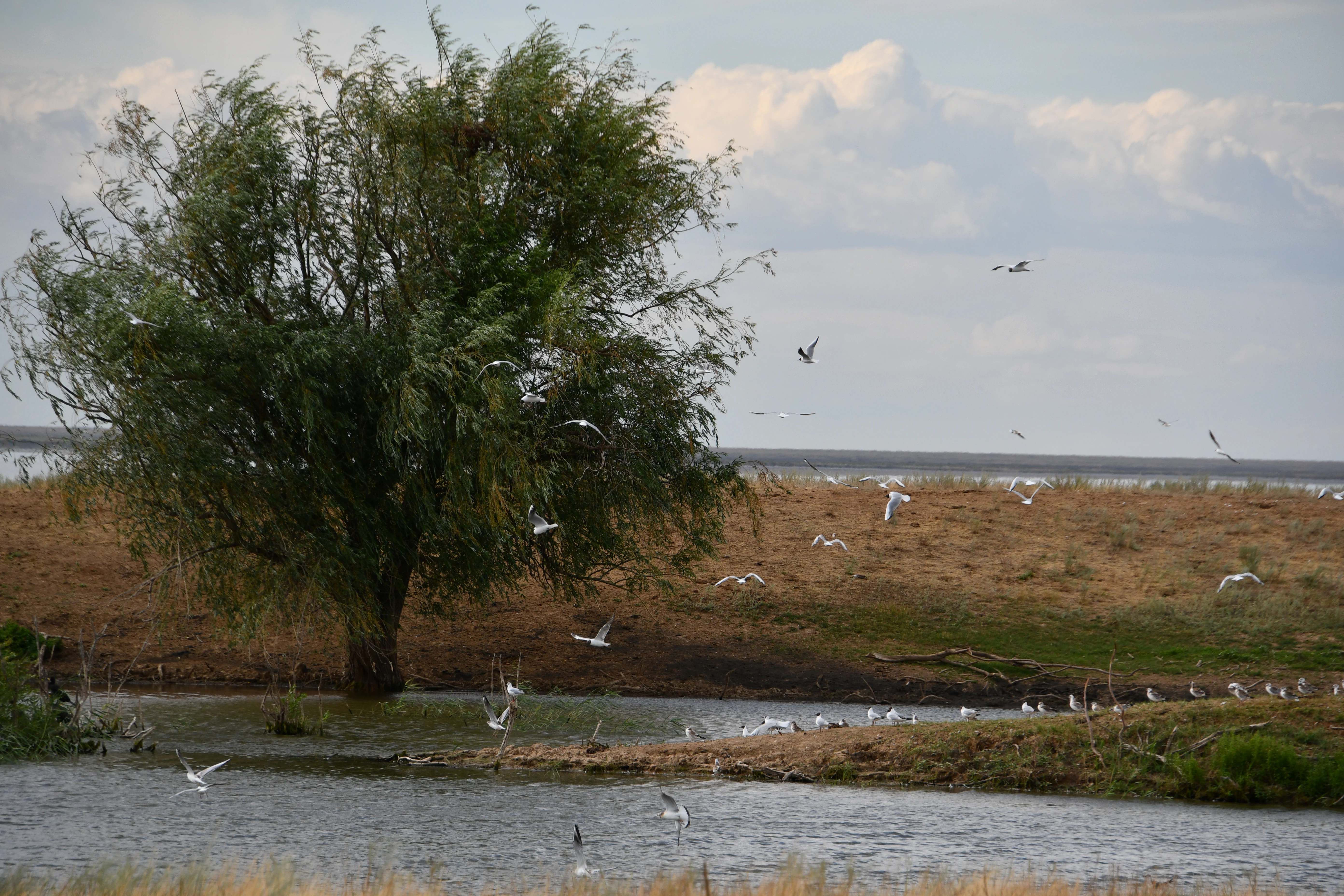
A medium shot of a large tree standing in shallow water or near a pond, surrounded by low, dry grassland and many white birds flying and gathered on the ground.
A lone tree stands near the water's edge in the Bokeyorda Nature Reserve, with many birds in flight.

Bokeyorda Nature Reserve history and protected-area timeline

Bokeyorda Nature Reserve was formally established in 2022 through an official decree of the Government of the Republic of Kazakhstan. Decree number 330, signed on 25 May 2022, provided the legal basis for the creation of the reserve, and the decree took effect on 1 July 2022, marking the official operational start of the protected area.

The establishment of Bokeyorda was driven primarily by an urgent conservation need: the protection of the Ural population of the saiga antelope, which had become increasingly vulnerable across its remaining range. Conservation planners saw the creation of a dedicated, large-scale reserve in West Kazakhstan as a decisive step toward stabilizing this population and giving it a protected core area in which to migrate, breed, and recover.

A particularly significant aspect of Bokeyorda's creation is that it became the first specially protected natural area in West Kazakhstan Province to hold the formal status of an independent legal entity. This institutional distinction set it apart from many other protected areas in the region and signaled a model of more autonomous, direct conservation management under the country's forestry and wildlife authorities.

At the same time as the reserve was formally created, an adjacent protected area, the Ashchiozek Sanctuary, was organized to extend conservation coverage around the reserve. Together, these complementary designations reflected an integrated approach to protecting wide-ranging steppe wildlife and ensuring that seasonal movements of species such as the saiga could continue across a broader, formally managed landscape.

Bokeyorda Nature Reserve landscape and geographic character

The landscape of Bokeyorda Nature Reserve is shaped by the wide, open character of the West Kazakhstan steppe. The terrain consists of vast plains that stretch across the flat and gently rolling lowlands typical of this part of the country, with elevations that remain relatively low across the entire protected area. These plains form part of the broader northwestern Kazakh landscape, where the steppe gradually transitions toward drier semi-desert conditions as one moves further south.

Vegetation across the reserve is sparse and adapted to the dry continental climate, dominated by grasses, low shrubs, and hardy steppe plants that can survive long, hot summers and harsh winters. The open character of the terrain means that sightlines extend for remarkable distances, and the landscape is one of broad horizons rather than enclosed valleys or dramatic relief.

Seasonal water features, including temporary streams, lowland depressions, and small wetland patches, punctuate the otherwise dry plains. These water features have a disproportionate influence on local wildlife patterns, concentrating animal movement during dry periods and supporting distinctive microhabitats in an otherwise arid matrix. The connection between the core reserve and the neighboring Ashchiozek Sanctuary further broadens this landscape continuity, allowing wildlife to move across a much larger managed area without crossing significant administrative or ecological barriers.

Bokeyorda Nature Reserve ecosystems, habitats, and plant life

Bokeyorda Nature Reserve protects a representative slice of the West Kazakhstan dry steppe and semi-desert ecosystems that have historically defined the region's natural character. The vegetation is dominated by drought-adapted plant communities, and the open terrain supports a relatively simple but ecologically significant landscape structure dominated by grasses, low shrubs, and scattered patches of more resistant vegetation.

Ecologically, the reserve plays an important role in preserving the continuity of natural steppe processes, including seasonal grazing dynamics, plant regeneration cycles, and the broader hydrological patterns that shape this arid environment. The inclusion of seasonal depressions and low-lying areas within the reserve adds a degree of habitat diversity that is particularly important for species that depend on access to water and moist ground during parts of the year.

The reserve's creation alongside the Ashchiozek Sanctuary significantly expands the functional ecological area available to wildlife. Together, the two units form a continuous landscape block that supports more natural movement patterns than either protected area could alone, helping to maintain the ecological processes that underpin steppe biodiversity in this part of Kazakhstan.

Bokeyorda Nature Reserve wildlife and species highlights

Wildlife is the central reason for the existence of Bokeyorda Nature Reserve. The reserve was specifically created to protect the Ural population of the saiga antelope, a once-abundant migratory ungulate of the Eurasian steppe whose numbers have declined sharply across much of its historic range. Saiga are uniquely adapted to the open steppe, using their distinctive large noses to filter dust and regulate temperature in the harsh continental climate, and the reserve provides them with a protected core area where seasonal migration and breeding can occur with reduced pressure from poaching and habitat disruption.

The vast open terrain of Bokeyorda also supports other steppe wildlife that shares the landscape with saiga, including various small mammals, birds of prey, and ground-nesting bird species characteristic of the dry grassland environment. Seasonal water sources within the reserve create temporary concentrations of life that attract both resident and migratory species at different times of the year.

By integrating the reserve with the adjacent Ashchiozek Sanctuary, wildlife managers have effectively created a larger functional area for wide-ranging species. Saiga in particular benefit from this expanded movement space, as their natural behavior involves long seasonal migrations that require extensive, connected landscapes to remain viable.

Bokeyorda Nature Reserve conservation status and protection priorities

Bokeyorda Nature Reserve was established with a sharply focused conservation mandate: the protection of the Ural population of the saiga antelope. This species has experienced dramatic population declines across its range, and the creation of a large dedicated reserve in its remaining western range represents a major conservation commitment by the government of Kazakhstan. By placing a substantial portion of the saiga's historic territory under formal protection, Bokeyorda aims to create a stable core area where this population can maintain its natural cycles.

Beyond saiga conservation, the reserve also reflects an important institutional development in Kazakhstan's protected-area system. It is the first specially protected natural area in West Kazakhstan Province to operate with the formal status of an independent legal entity, giving it a distinct administrative capacity and a more direct line of accountability under the Committee for Forestry and Animal World of the Ministry of Agriculture.

The concurrent creation of the neighboring Ashchiozek Sanctuary reflects an integrated conservation strategy. By combining a strict reserve with a sanctuary in an adjacent configuration, managers can protect both core breeding habitat and the broader movement corridors that wide-ranging species such as saiga require through the seasons.

Bokeyorda Nature Reserve cultural meaning and human context

The name Bokeyorda refers to the historical Bokey Horde, one of the traditional Kazakh tribal groupings whose territories historically lay in the western steppe regions of Kazakhstan. The reserve's name thus connects modern conservation directly to the long-standing cultural identity of the people who have inhabited these steppe landscapes for centuries.

The region's broader cultural identity is rooted in nomadic pastoralism, with local communities historically depending on the steppe's seasonal cycles for livestock grazing, movement, and livelihood. Today, the relationship between traditional land use and formal conservation remains an important dimension of life around the reserve.

Top sights and standout views in Bokeyorda Nature Reserve

Bokeyorda Nature Reserve is a landmark in Kazakhstan's modern conservation landscape, both for the size of the territory it protects and for the focused purpose of its creation. As a dedicated stronghold for the Ural population of the saiga antelope, it addresses one of the most urgent wildlife conservation priorities in the country, placing a major block of saiga range under formal protection.

Its status as the first specially protected natural area in West Kazakhstan Province with the formal standing of an independent legal entity adds a distinctive institutional dimension to its significance. The pairing of the reserve with the adjacent Ashchiozek Sanctuary creates a broader integrated conservation landscape, allowing wildlife such as saiga to move across a connected, well-managed expanse of steppe.

Best time to visit Bokeyorda Nature Reserve

The character of Bokeyorda Nature Reserve changes significantly with the seasons, even though the landscape is uniformly arid steppe. Spring typically brings the most active period of biological renewal, with new grass growth and the arrival of migratory birds, while also overlapping with the period when saiga and other large mammals are most visible across the open plains.

Summer in the reserve is hot and dry, with sparse vegetation and long distances between water sources, concentrating wildlife near seasonal wetlands and making the steppe feel especially open and exposed. Autumn offers cooler temperatures and often a more pleasant atmosphere for those interested in the broader landscape character. Winter brings cold temperatures and occasional snow cover, giving the plains a stark, minimalist appearance, though harsh conditions can make access and wildlife observation more difficult. As with most large steppe reserves, the practical accessibility of Bokeyorda depends on season-specific local conditions and is best approached through proper planning.
Monthly climate preview

Long-term representative point measurements tracking temperature and precipitation rhythm

Bokeyorda Nature Reserve Climate Normals and Annual Weather Patterns

Bokeyorda Nature Reserve records long-term monthly climate measurements spanning sub-zero winter minimums and high summer maximum temperatures alongside steady precipitation rates. Reviewing the complete twelve-month profile provides detailed meteorological data across the representative park coordinate.
Annual mean8 °C
-10 °C26 °C
Jan-10°
Feb-9°
Mar-1°
Apr
May17°
Jun23°
Jul26°
Aug24°
Sep17°
Oct
Nov-1°
Dec-7°
Warmest month
July

26.1 °C

Coolest month
January

-10 °C

Wettest month
October

1 mm/day

Driest month
August

0.5 mm/day

Park location guide

Geography guide, regional context, and park location map for Bokeyorda Nature Reserve

Bokeyorda Nature Reserve park geography, regions, and map view in Kazakhstan

Understand where Bokeyorda Nature Reserve sits in Kazakhstan through a broader geographic reading of the surrounding landscape, nearby location context, and its mapped position within the national park landscape.

How Bokeyorda Nature Reserve fits into Kazakhstan

Kazakhstan is a Central Asian country spanning vast steppes and plains, bordered by Russia, China, Kyrgyzstan, Uzbekistan, and Turkmenistan, with a coastline along the Caspian Sea. It gained independence from the Soviet Union in 1991 and has a population of approximately 20.5 million people. The country is officially secular but predominantly Muslim, with Kazakh and Russian as official languages.

Wider geography shaping Bokeyorda Nature Reserve in Kazakhstan

Kazakhstan occupies a vast territory in Central Asia, extending into Eastern Europe. Its terrain consists largely of hilly plateaus and plains, with lowlands covering about a third of the area. The southern and eastern regions are mountainous. The country borders Russia to the north and west, China to the east, Kyrgyzstan to the southeast, Uzbekistan to the south, and Turkmenistan to the southwest. It has a coastline along the Caspian Sea.

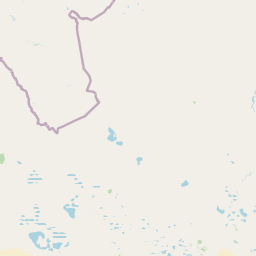
Map view of Bokeyorda Nature Reserve

Use this park location map to pinpoint Bokeyorda Nature Reserve in Kazakhstan, understand its exact geographic position, and read its mapped placement within the surrounding landscape more clearly.

Pigeon | © OpenStreetMap contributors

Location context for Bokeyorda Nature Reserve

West Kazakhstan Region

Explore protected area views, dry grassland habitats, and the vast terrain of a key saiga antelope stronghold.

Bokeyorda Nature Reserve Photos and Scenery: Visualizing the West Kazakhstan Steppe Landscape

Visual documentation captures the open plains, sparse vegetation, and wide horizons defining the West Kazakhstan lowlands. Photographic records reveal the natural environment and terrain characteristics supporting regional conservation efforts.

A medium shot of a large tree standing in shallow water or near a pond, surrounded by low, dry grassland and many white birds flying and gathered on the ground.

Park atlas

Compare regional conservation lands and adjacent steppe landscapes across West Kazakhstan.

Explore Parks Near Bokeyorda Nature Reserve and Surrounding Steppe Protected Areas

Browse other parks and protected areas near Bokeyorda Nature Reserve to examine connected wildlife corridors and regional steppe geography. Continuing the comparison reveals how neighboring conservation units support migratory ungulate populations across the surrounding lowlands.
A horizontal watercolor painting showing a soft, stylized landscape with rolling hills, distant mountains, forested areas, and a meandering stream or marshy foreground.
National parkSaratov Oblast
About 161 km away#1 closest

Northwest

Dyakovsky Forest National Park: Protected Forest Landscapes and Steppe Geography in Saratov Oblast

A rare woodland island mapping project in the Russian Trans Volga region.

Dyakovsky Forest National Park stands as a significant natural monument in Saratov Oblast, preserving a rare mosaic of forest patches on sand-plain terraces. As the southernmost natural forest massif in Europe, it provides an essential study in ecological resilience, where woodland habitats thrive against the backdrop of the extensive Eurasian steppe. The territory features a complex interplay of riverine environments, oak groves, and psammophyte vegetation.

Area
185.32 km²
Established
2023
Relief
Lowland
Climate
Arid
Wildlife reserveWest Kazakhstan Region
About 187 km away#2 closest

East

Zhaltyrkol Sanctuary: A Wildlife Reserve in the West Kazakhstan Steppe Mosaic

Mapping wetland habitats along the Kushum and Ural River basins.

Zhaltyrkol Sanctuary encompasses a unique steppe-and-wetland mosaic, featuring shallow lakes such as Zhaltyrkol and Itbatyr. It provides a protected habitat for waterfowl and game species, maintaining essential breeding grounds within the flat, open terrain of the West Kazakhstan Region.

Area
190 km²
Established
1967
IUCN
IV
Relief
Lowland
Watercolor illustration of green hills, a body of water, and pink and yellow vegetation
National parkSaratov Oblast
About 332 km away#3 closest

North

Khvalynsky National Park: Protected Landscape and Regional Geography Atlas

Discover mapped park boundaries in Saratov Oblast

Khvalynsky National Park is a significant protected area designated as a national park within the Saratov Oblast. This entry provides detailed atlas-based insights into its geographic scope, protected landscape features, and its context within the wider regional geography of Southeastern European Russia. Explore the mapped terrain and understand how this park contributes to the conservation landscape of the Volga region.

Area
255 km²
Established
1994
IUCN
II
Visitors
35K annual
A horizontal watercolor painting showing a stylized, layered landscape of rolling green hills, a calm river, and hints of forest, rendered in soft pastel tones against a white background.
Wildlife reserveWest Kazakhstan Region
About 390 km away#4 closest

Northeast

Kirsanov Sanctuary: Protected Floodplain Landscapes and Ural River Geography

Wildlife reserve and riverine corridor in West Kazakhstan

Spanning 50 kilometers along the Ural River, Kirsanov Sanctuary preserves a rich mix of floodplain meadows, gallery forests, and oxbow lakes. Originally established for beaver conservation, this wildlife reserve now functions as a complex ecosystem refuge, representing a key protected landscape within the West Kazakhstan regional geography.

Area
610 km²
Established
1967
IUCN
IV
Relief
Lowland
Nature reserveKazakhstan
About 401 km away#5 closest

Southeast

Akzhayyk Reserve: Wetland and Coastal Nature Reserve in Western Kazakhstan

Dynamic deltaic landscapes and migratory bird habitats

Akzhayyk Reserve spans the confluence of the Ural River and the northern Caspian Sea, encompassing extensive reed marshes, aquatic plant communities, and arid steppe. This nature reserve provides essential conservation land for migratory waterbirds and rare regional aquatic species, functioning as a major ecological intersection in western Kazakhstan.

Area
1,115 km²
Established
2009
Relief
Lowland
Climate
Arid
Watercolor illustration of a river flowing through a valley with green hills and scattered trees in the background
National parkSamara Oblast
About 419 km away#6 closest

North

Samarskaya Luka National Park: Mapped Geography and Protected Area Landscape Context

An atlas-focused overview of the Zhiguli Mountains and Volga River meander.

Samarskaya Luka National Park covers 134,000 hectares of diverse terrain in Samara Oblast. This overview examines the protected area's karst limestone uplands, dense forests, and river floodplains. Access map-integrated data on the Volga River bend and the unique geological formations defining this regional ecosystem.

Area
1,340 km²
Established
1984
IUCN
II
Relief
Mixed relief
A watercolor painting showing a panoramic landscape of green, rolling hills with light forest cover and a body of water in the middle ground.
National parkSamara Oblast
About 419 km away#7 closest

North

Samarskaya Luka National Park: Geography, Karst Terrain, and Volga River Boundaries

Protected mountain, forest, and floodplain landscapes in Samara Oblast

Samarskaya Luka National Park anchors the Middle Volga Biosphere Reserve with its rugged limestone cliffs, extensive karst sinkholes, and rare steppe-forest habitats. The park represents a key geographic transition zone where high-elevation mountain terrain meets the expansive Volga floodplains and reservoirs, providing a vital study area for regional forest-steppe ecosystems.

Area
1,319 km²
Established
1984
IUCN
II
Relief
Mountain
National parkRussia
About 488 km away#8 closest

Northeast

Buzuluksky Bor National Park: Mapping an Isolated Forest in the Russian Steppe

Examining the unique geomorphology and forest-steppe ecological boundaries.

Buzuluksky Bor National Park serves as an extraordinary natural laboratory in Russia, defined by its 106,000 hectares of pine forest set against a backdrop of open grasslands. This protected area features deep sandy substrates of marine origin, undulating dune landscapes, and the deeply incised Borovka River valley, providing a vital study site for forest-steppe dynamics and long-term conservation research.

Area
1,060 km²
Established
2007
IUCN
II
Relief
Lowland

Common questions about visiting, size, designation, and location context for Bokeyorda Nature Reserve

Bokeyorda Nature Reserve FAQs for park facts, access, geography, and protected area context

Find quick answers about Bokeyorda Nature Reserve, including protected-area facts, park geography, trail and visitor context, and how the park fits into its surrounding country and regional landscape.
MoriAtlas Explorer

Continue Your Protected Areas Search Across the Global Atlas

Deepen your exploration by continuing the structured search for national parks and protected areas worldwide. Utilize the comprehensive filtering capabilities to compare different conservation landscapes and refine your understanding of global park geography. Discover more about the distribution and characteristics of protected natural areas.

Global natural geography