Why Samarskaya Luka National Park stands out
Samarskaya Luka is best known for its extraordinary ecological blending, where northern and southern species occupy remarkably close quarters due to the park's position at the transition between the East European forest steppe and distinct habitat zones. The park's karst landscape is distinctive, featuring the limestone promontories of the Zhiguli Mountains and over 500 natural craters in its eastern sector. The Volga River's dramatic 200-kilometer detour around the mountains creates a peninsula of exceptional topographical and ecological diversity. The area also holds cultural importance as the region where painter Ilya Repin created his masterpiece Barge Haulers on the Volga, and the park preserves multiple archaeological and historical sites including burial mounds and ancient settlements.
Samarskaya Luka National Park history and protected-area timeline
Samarskaya Luka National Park was established in 1984 as a protected area recognizing both the exceptional ecological diversity and the profound cultural significance of the Samara Bend region. The creation of the park reflected growing awareness of the need to preserve the unique karst landscapes, forest-steppe ecosystems, and archaeological heritage found within the Volga's dramatic peninsula. Prior to national park status, the area had long been recognized for its natural and cultural value, with the Zhiguli Mountains serving as an important reference point in Russian geography and history. The park's establishment coincided with broader conservation efforts in the Soviet Union and later Russia, positioning the Samara Bend within the country's network of protected areas. The park is now managed by Russia's Ministry of Natural Resources and Environment and operates as part of the larger Middle Volga Integrated Biosphere Reserve system, coordinating conservation efforts across the region's ecological zones.
Samarskaya Luka National Park landscape and geographic character
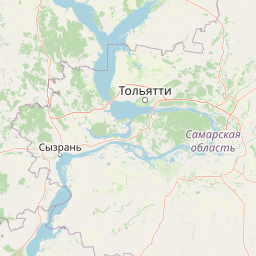
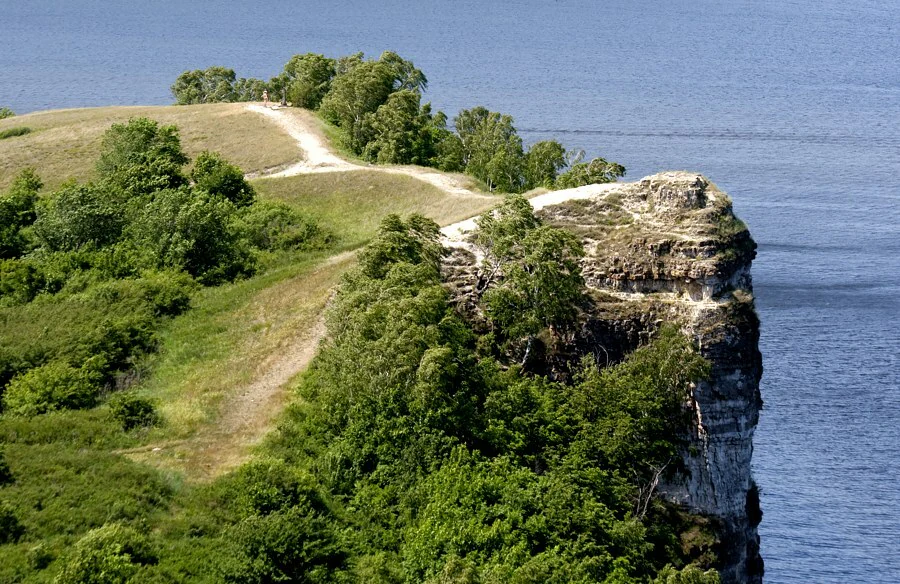
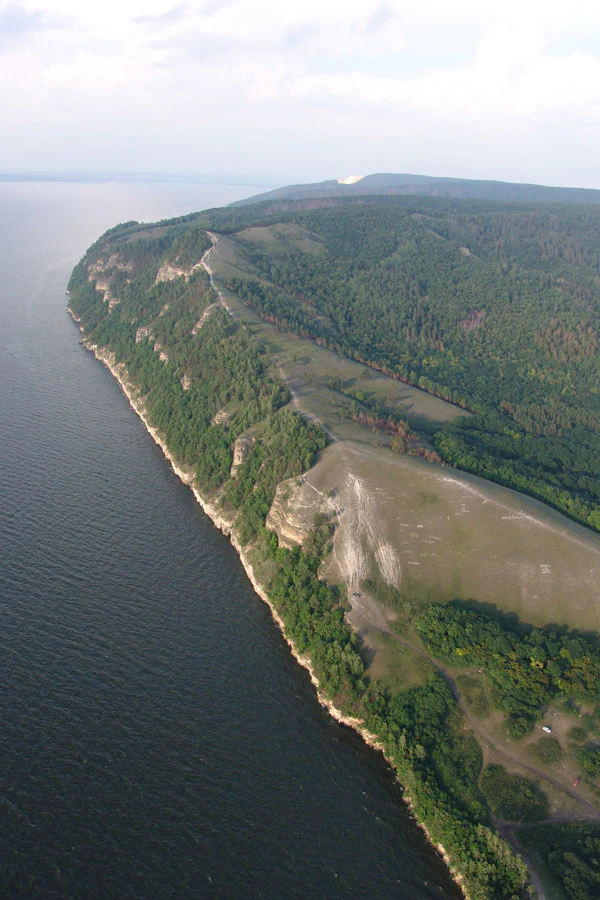
The Samarskaya Luka landscape is defined by the Volga River's sweeping 200-kilometer bend around the Zhiguli Mountains, creating a distinctive peninsula environment where water surrounds the land on three sides. The Zhiguli Mountains themselves represent a karst limestone formation rising approximately 300 meters above the surrounding terrain, their rocky outcrops and ridgelines providing the most prominent topographical features within the park. About 18% of the protected area comprises the mountainous Zhiguli terrain in the north, while roughly 8% consists of the Volga floodplains along the southern reaches. The remaining landscape consists of forested hills and forest-steppe zones. The eastern portion of the park contains a remarkable concentration of karst craters, with over 500 sinkholes ranging from one to one hundred meters in width and one to twenty meters in depth, formed through the weathering of limestone bedrock. The park's boundaries are largely determined by the reservoirs that flank it, with the Kuybyshev Reservoir forming the northern shore and the Saratov Reservoir defining the southern edge.
Samarskaya Luka National Park ecosystems, habitats, and plant life
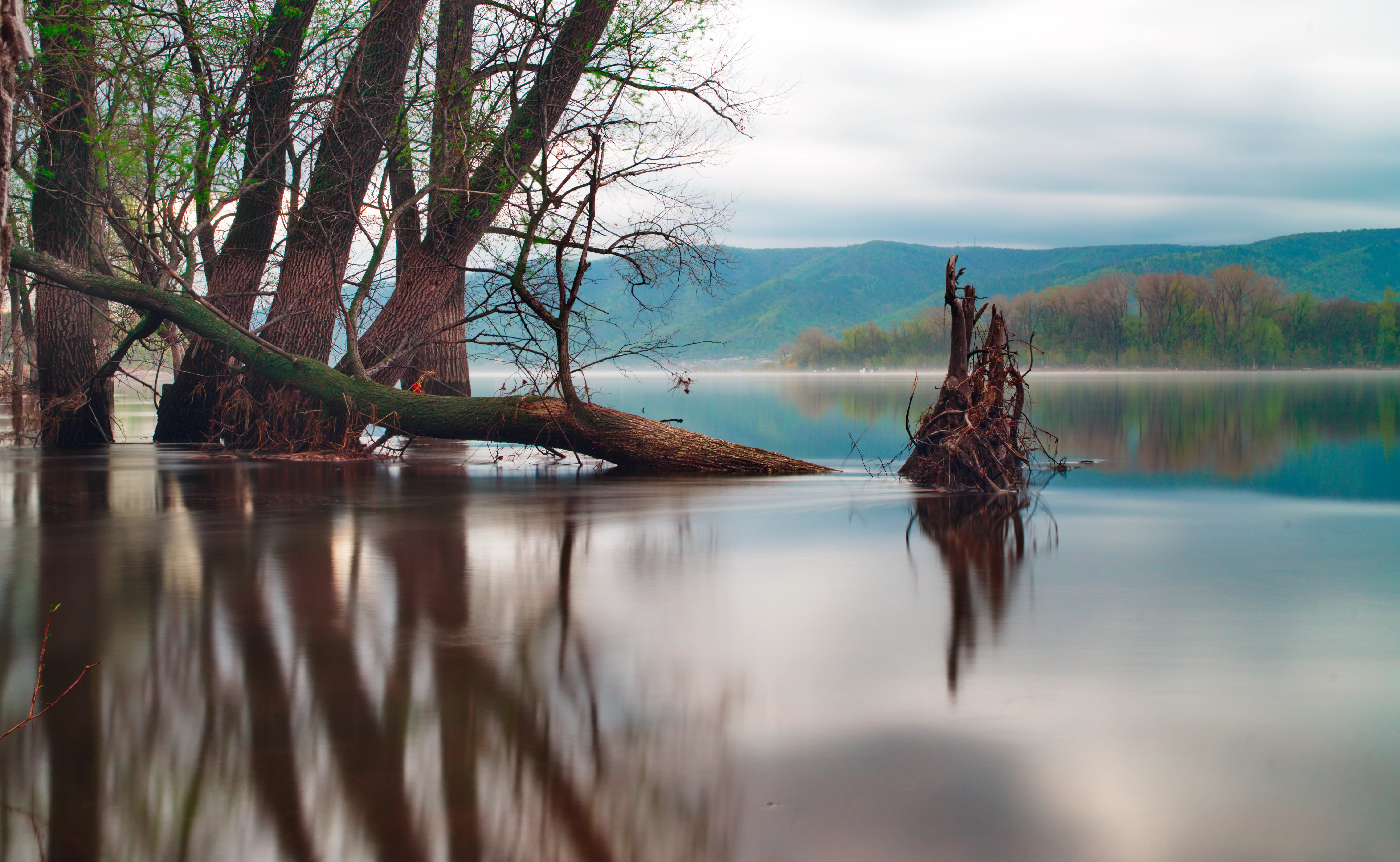
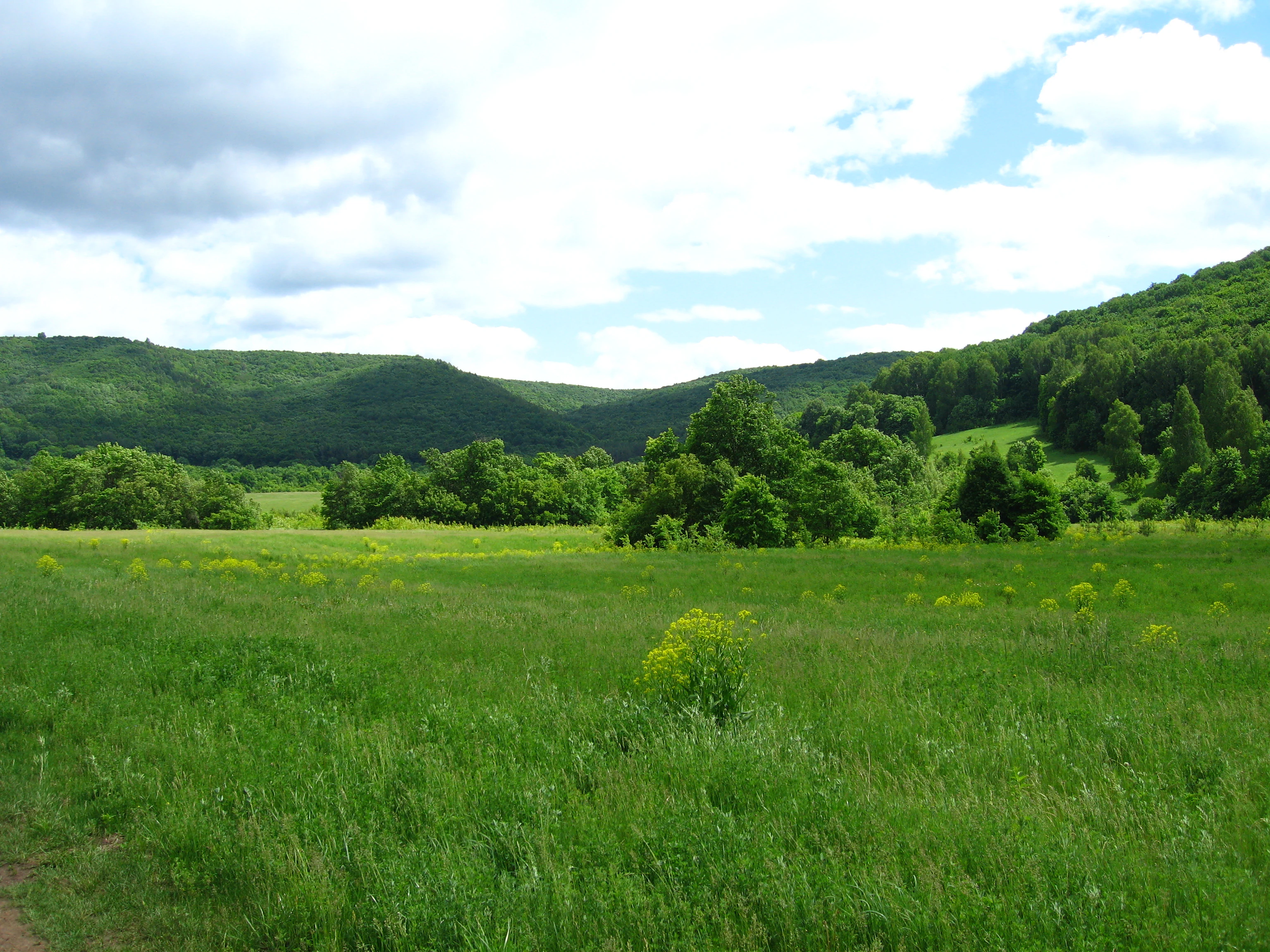
The ecological character of Samarskaya Luka reflects its position within the East European forest steppe ecoregion, a transitional zone that spans the middle of Eastern Europe and creates a mosaic of forest, steppe, and riverine wetland habitats. The park's plant communities encompass Eastern European steppe, steppe pine forests, Eastern European deciduous forests, grasslands, and floodplain ecosystems, supporting exceptional biodiversity for the region. Over 1,500 species of vascular plants have been recorded within the park's boundaries. The forest composition is overwhelmingly deciduous at 97%, with linden, oak, and birch serving as the dominant species. The remaining 3% consists of sparse Scots pine stands confined to higher slopes and limestone outcrops. The climate is classified as humid continental with warm summers, featuring average temperatures of -10°C in January and +20°C in July, with an annual precipitation of 556 millimeters and a frost-free period of 156 days.
Samarskaya Luka National Park wildlife and species highlights
The vertebrate fauna of Samarskaya Luka exhibits a remarkable characteristic: approximately 30% of species exist at the edge of their historical ranges, creating an unusual ecological assemblage where northern and southern species occur in close proximity. This phenomenon results in the presence of northern taiga species such as the Ural owl alongside southern steppe species like the European bee-eater within the same general area. This ecological blending reflects the park's position at the biogeographical crossroads and contributes to its significance as a location for studying species distribution patterns and ecological interactions. The diverse habitats within the park, ranging from forested uplands to floodplain wetlands and steppe grasslands, support a corresponding variety of wildlife adapted to these different environmental conditions.
Samarskaya Luka National Park conservation status and protection priorities
Samarskaya Luka National Park holds significance within Russia's protected area network as an IUCN Category II national park, designating it as a protected area where conservation of ecosystems takes priority while allowing for sustainable visitation and environmental education. The park forms an integral part of the Middle Volga Integrated Biosphere Reserve, a coordination framework that brings together multiple protected areas and conservation initiatives across the broader Volga region. The protection of this landscape preserves both the karst geological features unique to the Zhiguli Mountains and the forest-steppe ecosystems that have been largely converted to agricultural use throughout surrounding areas. The conservation value is enhanced by the presence of the adjacent Zhiguli Nature Reserve, which provides additional strict protection for core areas of biodiversity.
Samarskaya Luka National Park cultural meaning and human context
The Samara Bend has been a center of human activity since ancient times, with the region's strategic position along the Volga River supporting continuous habitation and cultural development across many historical periods. Archaeological sites within the park include burial mounds and ancient settlements that reflect the area's importance to various peoples throughout history. The park contains six museums dedicated to the cultural and natural features of the Samara Bend and its history. Of particular note is the house of painter Ilya Repin in the village of Shiryaevo, located on the right bank of the Volga within the park's vicinity. Repin spent several months in this village and began work there on his renowned painting Barge Haulers on the Volga, establishing an important connection between the landscape and Russian artistic heritage. Traditional pilgrimage routes traverse the park, including paths leading to the small chapel of St. Nicholas at the Stone Bowl Tract.
Top sights and standout views in Samarskaya Luka National Park
The park offers diverse attractions including the Molodetsky Kurgan, a 200-meter ridge running along the Volga's northwestern edge; Deviat Hill, a limestone promontory marking the western terminus of the Molodetsky Ridge; and the Usinsk Mound, known locally as Cake Hill, overlooking a small bay opposite Deviat Hill. The Stone Bowl Tract features limestone depressions, mineral springs, and a chapel included on regional pilgrimage routes. Visitors can explore six museums on-site, notably Ilya Repin's house in Shiryaevo where the famous painter created Barge Haulers on the Volga. The Witch Lake Trail provides a 2-kilometer family-friendly ecological path with interpretive signs about local natural features and ancient myths. Stepan Razin's Caves offer limestone formations tied to historical legend. Hiking and recreation are popular activities, though camping and fires are prohibited along trails and in protected zones.
Best time to visit Samarskaya Luka National Park
The optimal time to experience Samarskaya Luka National Park aligns with the warm summer months of June through August, when average temperatures reach around 20°C and the frost-free period permits full access to the park's trail systems. Summer offers the most favorable conditions for hiking, wildlife observation, and exploring the various landmarks and museums within the park. The spring and autumn seasons also present opportunities to observe the transitional character of the forest-steppe environment, though visitors should anticipate the continental climate's pronounced temperature variations. Winter visitation is possible but limited by cold conditions, with January averages reaching -10°C and significant snow cover typical of the humid continental climate. The park's website provides visitor information and requirements for entry, with group tickets and guided tours available through the Samara office.