
Why Buchertsgräben bei Schlierbach stands out
The reserve is best known for its stylized combination of a beech woodland on the ridges and slopes with deep, eroded loess gullies that cut through the terrain. These loess ravines create sheltered microhabitats and expose valuable geological sections, while the surrounding forest retains fragments of former semi-dry grassland that now harbor rare wild orchids, gentians, and other unusual plants. The presence of eight orchid species together with a notably species-rich butterfly community makes this small reserve a disproportionate stronghold for invertebrate and herbaceous biodiversity within the southern Hesse landscape.
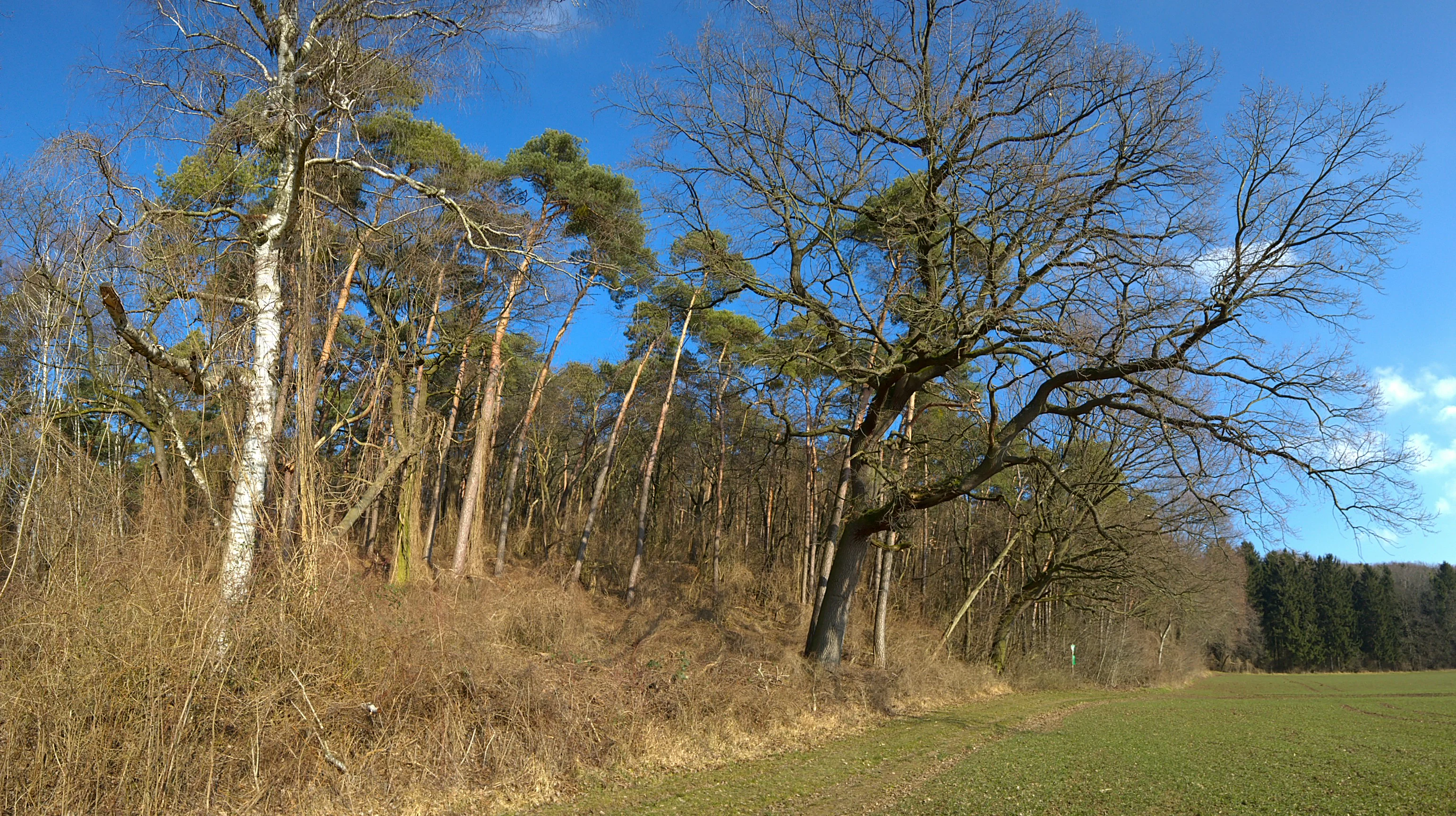
Buchertsgräben bei Schlierbach history and protected-area timeline
The Buchertsgräben bei Schlierbach nature reserve was established by legal ordinance on 21 January 1986, formalizing decades of recognition of the area's ecological and geological value. Its designation reflects a broader German conservation movement of the 1980s, when many small but ecologically distinctive sites in Hesse were integrated into the Naturschutzgebiet network to safeguard remaining fragments of traditional cultural landscape.
The area's character, however, predates modern conservation. The loess gullies themselves are products of long-term erosion along historical paths, field boundaries, and formerly grazed slopes, meaning that much of what is now protected woodland was once part of an agricultural frontier between open fields and forest. Over time, as grazing pressure declined and forest re-expanded on the slopes, former dry grasslands transformed into the closed-canopy structure visible today, while the deepest and most erosion-prone slopes retained open vegetation patches. The 1986 designation sought to halt further changes and to actively preserve the remaining mosaic of habitats.
Since designation, the reserve has continued under the general protection of German federal and state nature conservation law. Its recent history has been shaped by climate-related stress, particularly the dry summer of 2018, which triggered significant dieback in the spruce stands within the area and is likely to influence future forest composition.
Buchertsgräben bei Schlierbach landscape and geographic character
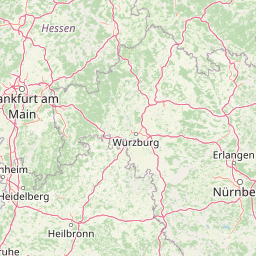
The landscape of Buchertsgräben bei Schlierbach is defined by the contrast between forested ridge tops and deeply incised loess ravines. The reserve sits on the northern reaches of the Odenwald, where the highlands descend toward the Rhine-Main lowlands, and belongs to the Kleine Bergstraße natural area, a transitional strip of terrain that combines gentle hills, agricultural land, and stiffer forested slopes. Within the protected area, the most striking landforms are the deep loess gullies that run through the forest, locally referred to as Hohlwege or hollow ways.
These gullies create steep-sided valleys within the forest, with vertical or sharply sloped walls of fine, pale loess that visibly contrast with the surrounding woodland. The ravines break the hill slope into a network of crests, shoulders, and hollows, giving the otherwise modest terrain a strikingly varied topography. In places where the loess layer is thinnest or most eroded, the underlying transition toward Odenwald geology becomes visible, and small semi-open patches and former grassland relicts remain at the margins.
Surrounding the gorge-like interior, the broader countryside is dominated by open agricultural fields on flatter ground, which isolate the reserve as a wooded island in an otherwise cultivated landscape. This juxtaposition between enclosed, structurally complex forest and the surrounding open farmland is one of the defining visual qualities of the area.
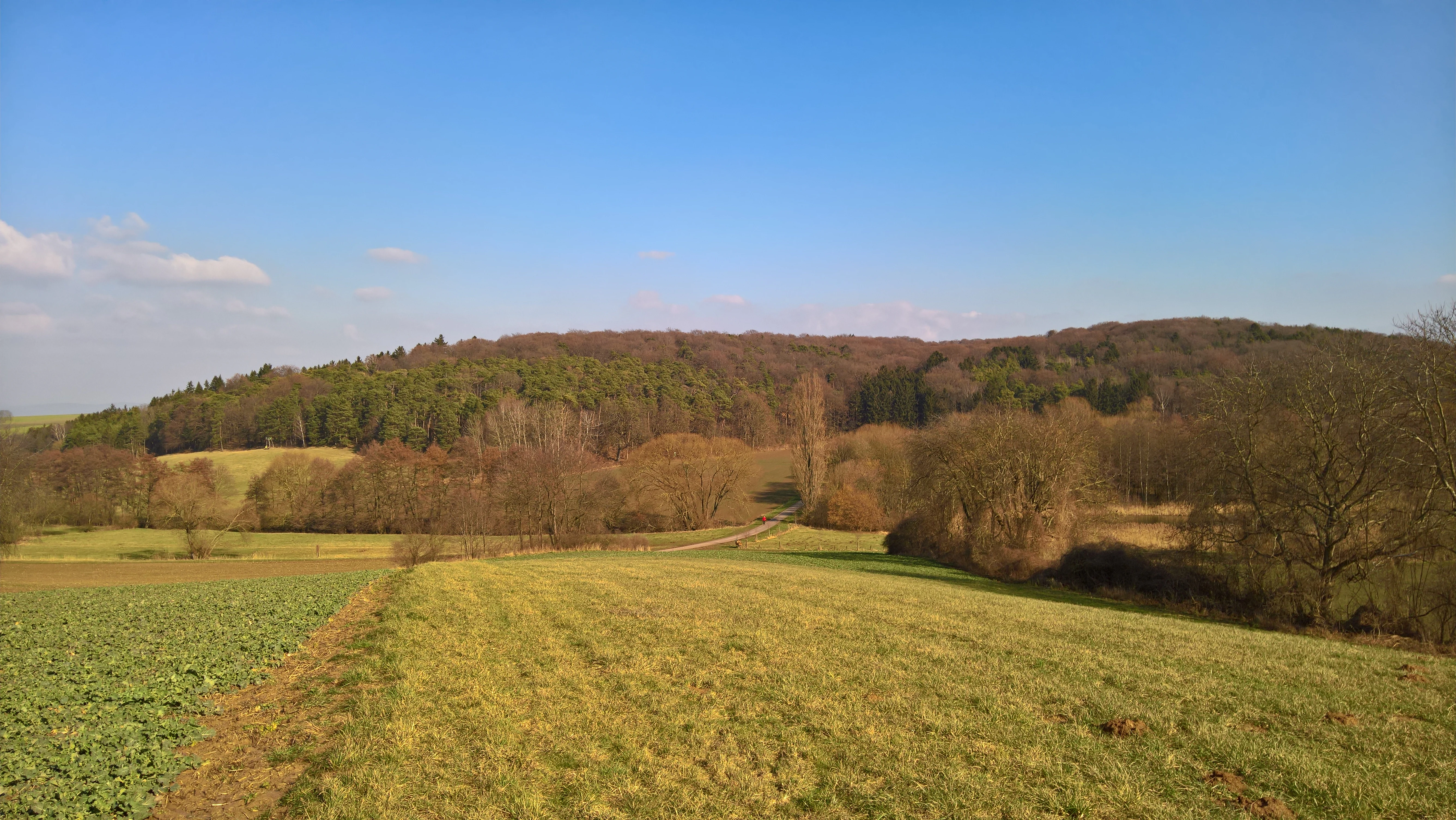
Buchertsgräben bei Schlierbach ecosystems, habitats, and plant life
Ecologically, Buchertsgräben bei Schlierbach is shaped by the unusual coexistence of mature woodland, dry grassland relicts, and loess-slope habitats within a single compact reserve. The dominant vegetation is a Luzulo-Fagetum, or Hainsimsen-Buchenwald, an association of beech forest typical of slightly acidic, moderately dry soils, which carpets most of the ridges and slopes. In small patches, planted spruce stands add an additional coniferous element, although these spruces have suffered significant dieback in response to the dry conditions of recent years.
On the sun-exposed loess slopes, the closed forest gives way to an open or semi-open vegetation that preserves fragments of the once more widespread Kalkmagerrasen, or calcareous dry grasslands. These patches harbor the botanical heart of the reserve. They support a suite of uncommon species typical of nutrient-poor, calcareous substrates, including the wild orchids for which the area is best known, along with plants such as Cross Gentian, Dwarf Elder, Adder's-tongue Fern, Wood Barley, and Round-leaved Bedstraw.
The combination of forest interior, open dry slopes, and steep loess walls creates the structural diversity that sustains the reserve's unusually rich invertebrate fauna, particularly butterflies, which benefit from the juxtaposition of sheltered woodland and warm, flowery open ground within a very short distance.
Buchertsgräben bei Schlierbach wildlife and species highlights
Although the reserve is small, its mosaic of habitats supports a strikingly rich fauna relative to its size. The combination of mature beech forest with sunny, herb-rich slopes and warm loess walls produces conditions that are favorable for invertebrates, and the reserve is particularly notable for its butterfly diversity. Visitors and surveyors have documented an unusually species-rich community of Lepidoptera, reflecting the favorable mix of larval food plants and microclimates.
The woodland itself provides habitat for typical central European forest fauna associated with old beech stands, including common forest birds, small mammals, and a range of insects tied to dead wood and herbaceous understory. The dry, exposed slopes also support specialized insects, including species that depend on the open, warm conditions that historically occurred across much larger areas of the Rhine-Main region.
The reserve's importance for wildlife is best understood in terms of habitat heterogeneity rather than charismatic large fauna. It functions as a refuge for many uncommon invertebrates and plants that have declined sharply across the broader agricultural landscape of southern Hesse, and it preserves a functional ecological network for species that move between forest and open ground.
Buchertsgräben bei Schlierbach conservation status and protection priorities
Conservation at Buchertsgräben bei Schlierbach is focused on maintaining the structural and biological complexity of a small but ecologically dense site. The legal designation of 21 January 1986 anchors the area within Germany's Naturschutzgebiet system, providing protection against land-use change, forestry intensification, and other direct threats. At the international level, the reserve is classified as IUCN Category IV, a Habitat/Species Management Area, reflecting its role in active conservation of specific habitats and species rather than purely passive protection.
The core conservation aim is to preserve the loess gullies and the associated woodland mosaic as a functional habitat complex. This includes safeguarding the dry-grassland relicts and orchids that depend on open, sun-exposed loess slopes, while also protecting the forest interior, the geological exposures, and the transitions between them. Because the site lies in a heavily agricultural setting, the reserve also serves as an important refugium for species that have largely disappeared from surrounding farmland.
A growing concern for the site is climate-driven forest change. The dry summer of 2018 triggered notable dieback in spruce stands within the reserve, pointing to a future in which forest composition will shift and management may need to respond. Ongoing conservation thus increasingly involves monitoring climate impacts, supporting the regeneration of more drought-tolerant native woodland, and ensuring that the open loess-slope habitats are not lost through either tree encroachment or erosion.
Buchertsgräben bei Schlierbach cultural meaning and human context
The reserve sits within a long-settled rural landscape on the southern fringe of the Odenwald, and its character reflects generations of interaction between people and terrain. The loess gullies themselves are partly cultural in origin, having been deepened and shaped by historical trackways, livestock paths, and the slow erosion of repeatedly walked slopes. Many of the dry grassland fragments that survive on the loess walls are remnants of a much more open landscape in which grazing, hay cutting, and low-intensity land use extended right up to the woodland edge.
Village and cadastral names in the surrounding area, including Schlierbach and Schaafheim itself, point to the agricultural communities whose traditional land use shaped both the surrounding fields and the forest edge. The reserve today represents the surviving wooded portion of that historical mosaic, preserving a landscape pattern that was once widespread across the Reinheimer Hügelland but has since been simplified by modern agriculture. The protected status of the area is in part a recognition of that historical and cultural dimension, not only of its biological value.
Top sights and standout views in Buchertsgräben bei Schlierbach
The reserve's most striking features are the deep loess gullies that cut through the beech forest, the unusual botanical richness of the dry-grassland relicts, and the geological significance of the exposures along the ravine walls. It is also notable for combining eight orchid species and an exceptionally rich butterfly fauna in a single compact site, functioning as a small but disproportionately valuable refugium for biodiversity in southern Hesse.
Best time to visit Buchertsgräben bei Schlierbach
Late spring and early summer are generally the most rewarding period to experience the reserve, when the orchid-rich dry slopes come into flower and the butterfly community is most active. The loess gullies are also easiest to appreciate visually when there is good light contrast between the pale loess walls and the surrounding green canopy, which tends to occur in late spring and early autumn. Winter visits can still reveal the topographic drama of the ravines, though the flora is largely dormant. The site should be approached in calm, dry weather, as the loess slopes can become slippery after rain and the deep gullies make for uneven walking at any time of year.