
Mori Atlas logo
Wildlife reserveBuskett Gardens

A sheltered valley landscape and ecological woodland refuge within the Maltese archipelago

Buskett Gardens Wildlife Reserve: Mapping the Geography and Protected Woodland of Malta

Buskett Gardens stands as a significant protected woodland located within the fertile valley of Wied il-Luq, on the edge of the Siġġiewi plateau in central Malta. This 30 hectare site provides a rare, lush environment composed of broadleaved trees, native conifers, and Mediterranean shrubland, contrasting sharply with the surrounding limestone terrain. Recognized as an Important Bird Area, the reserve acts as a vital sanctuary for both resident and migratory species, while its historic connection to the Verdala Palace and local cultural traditions underscores its deep roots in the Maltese countryside.

woodlandmediterraneanprotected-areaimportant-bird-areamaltese-islandshistoric-garden
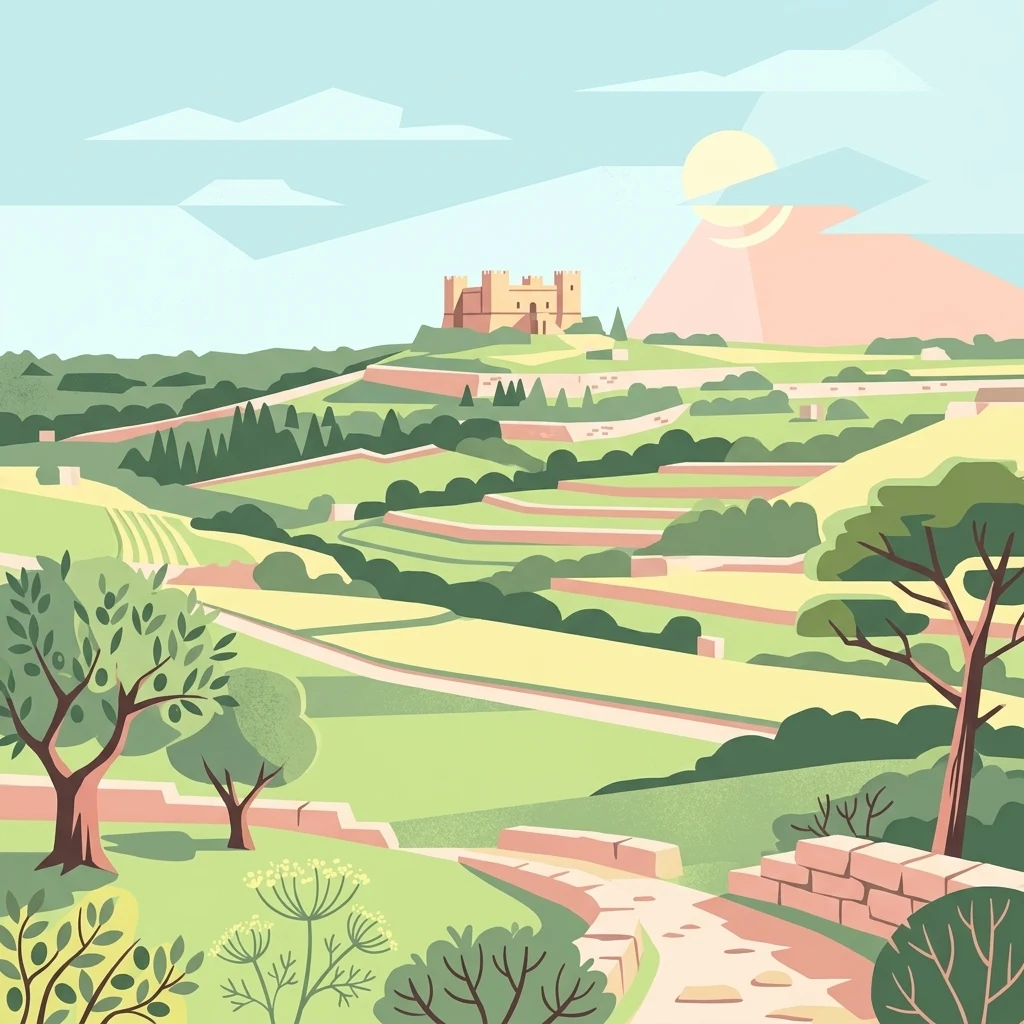
A flat-style vector illustration depicting a Mediterranean landscape with terraced hills, trees, a stone pathway, and a historic palace on a hilltop under a pale sun.

Buskett Gardens

Wildlife reserve

Park overview

Structured park overview, official facts, and landscape profile for Buskett Gardens

Buskett Gardens park facts, protected area profile, and essential visitor context

Review the core facts for Buskett Gardens, including designation, size, terrain, visitor scale, habitats, and operating context in one park-focused overview.

About Buskett Gardens

Buskett Gardens occupies a place in the Maltese landscape that is as much cultural as it is ecological. Located in the fertile Wied il-Luq valley west of Siġġiewi, the site offers an unusually dense concentration of vegetation in a country where woodland is otherwise scarce. Its character draws on a long history of planted shelter, beginning with the Knights Hospitaller's use of the area as a hunting reserve and continuing through centuries of public enjoyment as a place for shaded walks, family outings, and seasonal celebration.

Ecologically, Buskett is a patchwork of broadleaved deciduous woodland, native conifers, Mediterranean sclerophyllous shrubland, and cultivated fruit groves. Oak, Aleppo pine, carob, olive, white poplar, ash, and elm contribute to a complex canopy structure unusual for Malta. Underneath and around the trees, the shrub layer carries the unmistakable scent and texture of garrigue and maquis: tough, aromatic Mediterranean plant communities adapted to dry summers and mild winters. The combination of mature plantings and naturalised vegetation gives the gardens a layered quality that is rare on the Maltese islands.

For wildlife, the gardens are particularly important. BirdLife International has formally identified Buskett as an Important Bird Area, recognising both its resident birdlife and its role as a refuge for migratory species crossing the central Mediterranean. In addition to birds, the site supports reptile populations, including the painted frog, an amphibian closely associated with Maltese freshwater and woodland habitats. The presence of these species underscores the conservation value of maintaining a wooded refuge in an otherwise heavily developed island environment.

Socially, Buskett remains something of a national outdoor living room. On warm Sundays and public holidays, locals picnic under the broad canopy, and on the eve of 29 June the valley fills with people attending the traditional Imnarja festival, a night of rabbit stew, wine, folk music, and song, followed by an agricultural fair in the gardens the next morning. The Verdala Palace, perched on the hilltop just above the western edge of the woodland, ties the natural setting to the island's institutional and architectural heritage, having served first as a Grand Master's hunting lodge and later as a presidential residence.

Quick facts and research context for Buskett Gardens

Buskett Gardens is located in the valley of Wied il-Luq, west of Siġġiewi and east of Dingli in central Malta, and is one of the few notable woodland areas in the country. It was established as a hunting reserve by the Knights Hospitaller and has been in continuous use since at least the post-Roman period, evolving from a site of pagan celebration to a Christian-tradition venue tied to the Feast of Saints Peter and Paul.

The gardens contain broadleaved deciduous woodland, native coniferous species, Mediterranean garrigue and maquis shrubland, and fruit tree groves. Recognized as an Important Bird Area by BirdLife International, Buskett supports substantial bird populations, including migratory species passing through the Maltese archipelago. The adjoining Verdala Palace, today the President's summer residence, was built in 1586 by Grand Master Hugues de Verdalle.

Protection and recognition

Analysis of terrestrial protected area scope and official designation records

Buskett Gardens Protection Status and Documented Conservation Context

Records for Buskett Gardens assemble foundational details concerning terrestrial conservation scope and protected area boundaries. Systematic evaluation highlights established management frameworks without assuming external international recognition sources.

Protection details

Protection scope
Terrestrial
Park context

Deeper park guide and search-rich context for Buskett Gardens

Buskett Gardens history, landscape, wildlife, and travel context

Explore Buskett Gardens through its history, landscape character, ecosystems, wildlife, conservation priorities, cultural context, and seasonal travel timing in a structured park guide built for atlas discovery and search intent.

Why Buskett Gardens stands out

Buskett Gardens is best known for being one of the very few substantial woodlands in Malta, set in the sheltered valley of Wied il-Luq. It is also recognized for its role as an Important Bird Area, supporting both resident and migratory birdlife across the Maltese archipelago, and for its centuries-old association with the Imnarja festival, which brings traditional Maltese food, folk music, and an agricultural show together beneath the trees each June. The gardens are equally known for their layered vegetation: a combination of broadleaved trees, conifers, Mediterranean shrubland, and fruit-bearing groves that produces one of the greenest, most shaded environments on the island. As a quiet retreat from Malta's intense sun and exposed limestone terrain, Buskett has long served both as a natural refuge for wildlife and as a recreational retreat for locals, with the Verdala Palace watching over the valley from the adjacent hilltop.
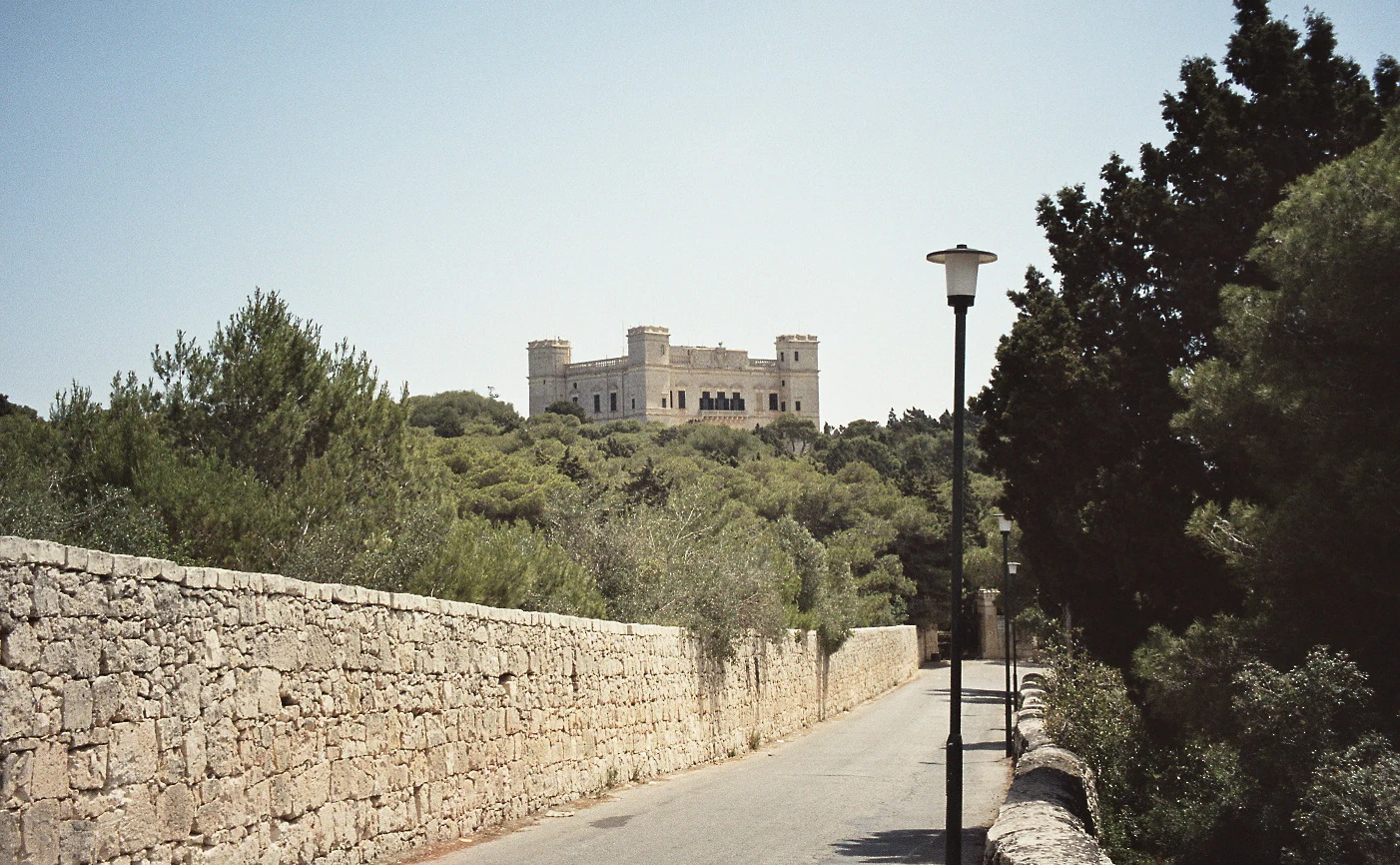
A stone road leads through a tree-lined area in Buskett Gardens toward the prominent stone Verdala Palace in the background.
Verdala Palace overlooking the woodland of Buskett Gardens.

Buskett Gardens history and protected-area timeline

The cultural presence of Buskett dates back at least to the post-Roman Republic period, when the site was used for seasonal ritual celebrations associated with pagan religious traditions. With the spread of Eastern Christianity through Malta, these older gatherings were gradually replaced by Christian observance connected to Saints Peter and Paul, a transformation that eventually gave rise to the modern Imnarja festival still held in the gardens.

By the time of the Knights Hospitaller, Buskett had taken on a more formal character. The Order planted the gardens as a hunting reserve, taking advantage of the sheltered valley to grow trees in a country that had already lost most of its indigenous forest to shipbuilding and agriculture. In June 1557, Grand Master Claude de la Sengle retreated to Buskett as his health declined, remaining there before eventually dying at Mdina two months later. The decision of a reigning Grand Master to seek recovery in this wooded valley speaks to Buskett's perceived value as a cool, restorative refuge.

In 1586, Grand Master Hugues de Verdalle further anchored the area's prestige by building the Verdala Palace on the hilltop above the gardens. Originally constructed as a summer residence and hunting lodge, the palace has since been repurposed as a state residence, today serving as a summer residence of the President of Malta. This continuity of use, from pagan ritual ground to Christian festival site to Knights' hunting reserve to presidential retreat, gives Buskett an unusually layered historical identity for a relatively compact natural area.

Buskett Gardens landscape and geographic character

Buskett sits within the valley of Wied il-Luq, a fertile depression that contrasts strongly with the surrounding Maltese limestone plateau. The valley collects runoff and supports deeper soils than most of the island's terrain, which is one reason the site could historically sustain dense vegetation at a time when much of Malta's natural woodland had been depleted. Within this setting, the gardens form a soft, green depression enclosed by low ridges and plateau edges.

The landforms around Buskett include the gentle valley floor, higher agricultural terraces on its flanks, and the prominent hilltop on which the Verdala Palace is perched. To the west rises the Dingli plateau, while the town of Siġġiewi lies just to the east. This geography gives the gardens a sheltered microclimate relative to the exposed coastal and plateau landscapes elsewhere on the island, and produces the dappled, shaded character that defines the visitor experience.

The garden's vegetation dramatically softens the underlying terrain. The combination of mature broadleaved trees, native pines, and low Mediterranean shrubland transforms what would otherwise be a warm, dry valley into a landscape of vertical greenery, walks under filtered light, and receding shadows. The result is a landscape that reads as lush and almost temperate in feel, despite sitting squarely within the central Mediterranean.
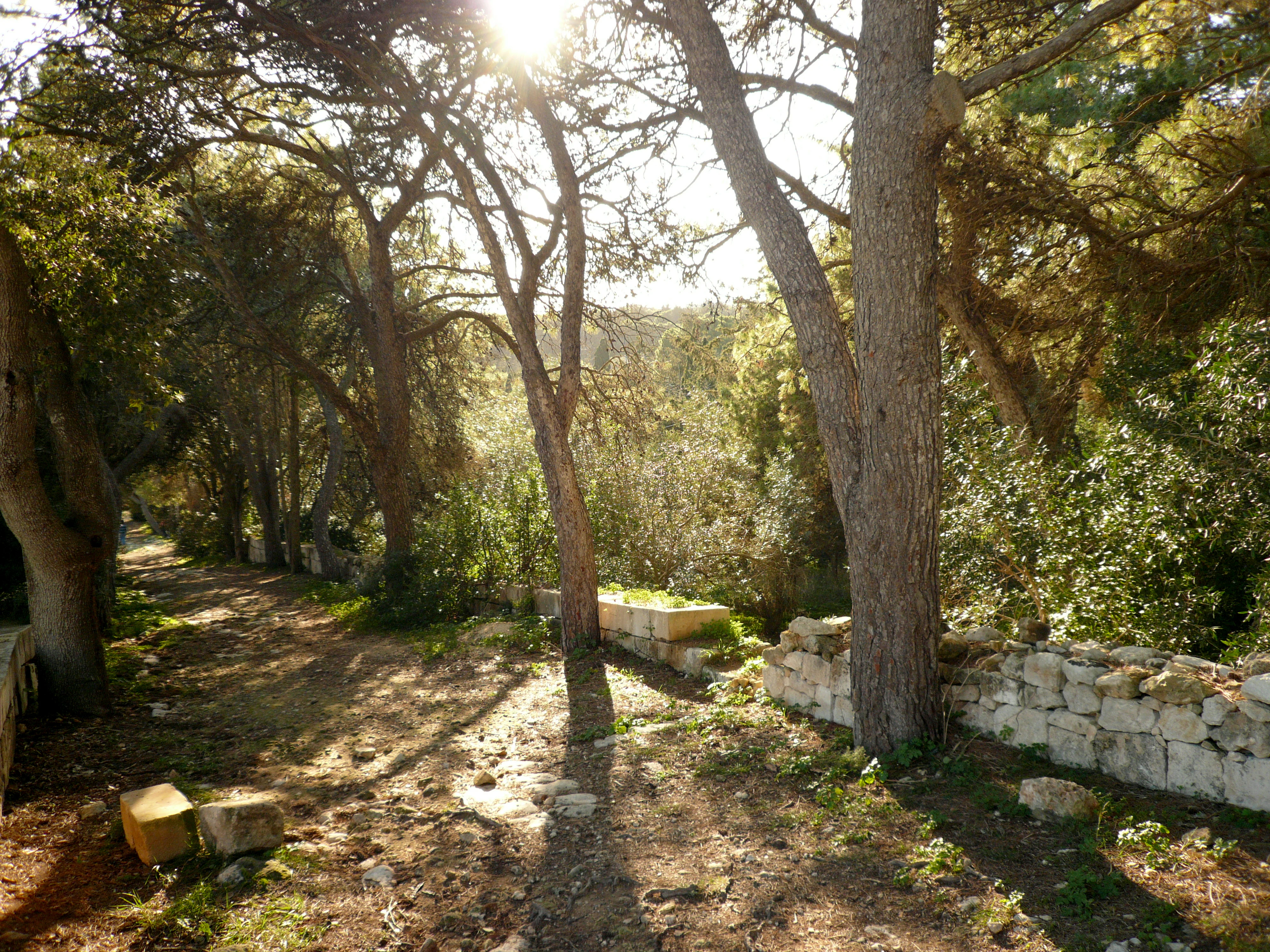
A path winds through a wooded area with tall pine trees and a low limestone retaining wall on the right.
Sunlight filtering through the mature pine trees of Buskett Gardens.

Buskett Gardens ecosystems, habitats, and plant life

Ecologically, Buskett represents one of the best-preserved examples of mixed Mediterranean woodland on the Maltese islands. Its vegetation layers reflect both natural Mediterranean ecosystems and deliberate historical planting, with the result that a single short walk can move between broadleaved deciduous canopy, native pine woodland, low sclerophyllous shrubland, and more domestic orchards of fruit-bearing trees.

The dominant woodland character comes from long-lived species such as oak, Aleppo pine, carob, olive, white poplar, ash, and elm. Together, these form a structurally diverse canopy that supports nesting birds, shade-loving insects, and a richer understory than is typical for Malta. Between the larger trees, the shrub layer carries the classic Mediterranean garrigue and maquis communities: aromatic, drought-adapted plants that thrive in the dry summer climate and recover with the cooler, wetter months.

Fruit tree groves intersperse the more naturalistic areas, creating transitional habitats that blend cultivation and wild vegetation. The presence of water in the Wied il-Luq valley further supports this ecological mix, sustaining moister microhabitats that contrast with the dry, exposed plains around the site. The result is a hybrid landscape: simultaneously a planted historical garden and a working example of Mediterranean woodland ecology.

Buskett Gardens wildlife and species highlights

Buskett's wildlife profile is closely tied to its status as one of the largest surviving patches of trees in the Maltese archipelago. The gardens support a notably diverse bird community, both resident and migratory, which led BirdLife International to formally recognize the site as an Important Bird Area. Raptors, songbirds, and other species use the woodland as a refuge during seasonal movements across the central Mediterranean, and as a nesting and feeding habitat throughout the year.

Among non-avian fauna, the gardens are known to host the painted frog, an amphibian native to Malta and a species emblematic of the island's limited but distinctive freshwater and woodland fauna. Reptiles, insects, and small mammals also benefit from the shaded, vegetated conditions that the gardens provide, in stark contrast to the more open and developed landscapes that surround them.

The combination of varied vegetation, water presence, and relative seclusion creates favourable conditions for a wide range of species, even within a relatively compact site. This is a key reason why conservation organisations regard Buskett as disproportionately important to Malta's overall biodiversity, despite its modest size compared to continental protected areas.

Buskett Gardens conservation status and protection priorities

Buskett Gardens carries substantial conservation significance because of the historical scarcity of woodland on the Maltese islands. The site is among the very few areas in Malta where mature trees, mixed native shrubland, and moist valley conditions still coexist, and it functions as a de facto refuge for species that would otherwise find little suitable habitat on the heavily developed islands. Its designation as an Important Bird Area by BirdLife International underlines its value not only for resident wildlife but also for migratory species that rely on the central Mediterranean as a migration corridor.

The gardens are administered by the Government of Malta, which has maintained the site as a public natural area for generations. Continuous management under this framework has preserved the planted woodland, retained traditional grove structures, and protected the valley's role as a green lung for the surrounding communities. The site's combination of habitat preservation, public recreation, and biodiversity support makes it one of the most ecologically meaningful protected green spaces in Malta.

In the broader Maltese context, where indigenous forest cover was largely lost centuries ago to shipbuilding and agriculture, surviving woodland like Buskett is ecologically disproportionate. The conservation value of the gardens therefore extends well beyond their 30-hectare footprint, helping to maintain ecological processes and species populations across the wider archipelago.

Buskett Gardens cultural meaning and human context

Buskett Gardens carries a layered cultural identity that stretches back more than a millennium. The valley's earliest documented associations are with seasonal celebrations held during the post-Roman Republic period, when the site hosted gatherings tied to pagan religious practice. The later Christianisation of these traditions, redirected toward Saints Peter and Paul, gave the valley a continuous role in Maltese public life and laid the foundation for the Imnarja festival still celebrated there today.

The Imnarja festival, held on the eve and morning of 29 June, has become one of the most recognisable expressions of traditional Maltese culture. Hundreds of people converge on the gardens each year to share rabbit stew cooked in wine, listen to traditional folk music, and attend the agricultural show the following morning. This event transforms Buskett from a quiet woodland into a stage for folk identity, foodways, and rural heritage.

The presence of the Verdala Palace adds an institutional and architectural dimension to the site's character. Originally built as a Grand Master's hunting lodge, the palace still serves as a presidential residence, embedding Buskett within Malta's broader narrative of statecraft and elite retreat. The pairing of woodland and palace gives the site a distinctive cultural texture that combines natural leisure, religious tradition, and national heritage in a single compact setting.

Top sights and standout views in Buskett Gardens

One of the very few substantial woodlands in Malta, set within the fertile valley of Wied il-Luq, west of Siġġiewi. A layered mix of broadleaved deciduous trees, native conifers, Mediterranean garrigue and maquis shrubland, and fruit groves, producing an unusually green and shaded environment.

Recognised by BirdLife International as an Important Bird Area for its role in supporting resident and migratory birdlife across the Maltese archipelago, and known habitat for the painted frog. Home to the centuries-old Imnarja festival, with rabbit stew, folk music, and an agricultural show each June. Overlooked by the historic Verdala Palace, originally a Knights Hospitaller hunting lodge and now a presidential residence.

Best time to visit Buskett Gardens

Spring is widely regarded as the most rewarding time to experience Buskett Gardens, when fresh growth brings out the greenest character of the woodland and the air is filled with birdsong. Cooler temperatures and softer light make the valley especially pleasant for walking and observation during this period, and the mixed vegetation reads at its richest.

The gardens also have a distinct character during the Imnarja festival around 29 June, when the evening and following morning fill with traditional food, folk music, and an agricultural show. While this is one of the most culturally vivid times to visit, it is also one of the busiest, and visitors looking for quieter woodland atmosphere may prefer other dates. In midsummer, the dense canopy provides valued shade from strong Mediterranean sun, and in winter the gardens offer a calm, contemplative setting that contrasts with the more exposed landscapes elsewhere on the island.
Monthly climate preview

Trace the measured annual temperature rhythm and monthly precipitation patterns across representative coordinates

Buskett Gardens Climate Normals and Long Term Temperature Records in Malta

Historical NASA Power climatology from 1991 to 2020 documents the long term average temperature and monthly precipitation rhythm recorded at a representative coordinate in Buskett Gardens. Reviewing the complete twelve month profile provides granular baseline statistics for analyzing sustained climatic variations across the protected terrain.
Annual mean20 °C
14 °C27 °C
Jan15°
Feb14°
Mar15°
Apr16°
May19°
Jun22°
Jul25°
Aug27°
Sep25°
Oct23°
Nov19°
Dec16°
Warmest month
August

26.6 °C

Coolest month
February

13.9 °C

Wettest month
November

3 mm/day

Driest month
July

0.1 mm/day

Park location guide

Geography guide, regional context, and park location map for Buskett Gardens

Buskett Gardens park geography, regions, and map view in Malta

Understand where Buskett Gardens sits in Malta through a broader geographic reading of the surrounding landscape, nearby location context, and its mapped position within the national park landscape.

How Buskett Gardens fits into Malta

Malta is a small island nation in the Mediterranean, located between Italy, Tunisia, and Libya. With a population of about 520,000 spread over 316 km², it is one of the world's most densely populated countries. The country has a long history of foreign rule and is known for its strategic position, historic sites, and membership in the EU, Commonwealth, and UN.

Wider geography shaping Buskett Gardens in Malta

Malta is located in the Mediterranean Sea between Sicily and North Africa, approximately 80 km south of Italy, 284 km east of Tunisia, and 333 km north of Libya. The archipelago sits at coordinates 35°54′N 14°31′E.

Map view of Buskett Gardens

Use this park location map to pinpoint Buskett Gardens in Malta, understand its exact geographic position, and read its mapped placement within the surrounding landscape more clearly.

Pigeon | © OpenStreetMap contributors

Explore protected area views, valley terrain, and the layered forest environment of Buskett Gardens.

Buskett Gardens Photos and Landscape Scenery: Visualizing Malta Woodland Habitats

Visual documentation of Buskett Gardens reveals the dense canopy, fertile valley floor, and shaded Mediterranean habitats defining this Maltese woodland. Examining park photography and landscape terrain provides clear insight into the ecological character and protected character of the region.

A stone road leads through a tree-lined area in Buskett Gardens toward the prominent stone Verdala Palace in the background.

A distant shot showing a lush green valley with scattered trees and a prominent historic palace building perched on a distant hilltop.

A path winds through a wooded area with tall pine trees and a low limestone retaining wall on the right.

Park atlas

Compare valley woodland geography with surrounding regional protected areas

Explore Parks Near Buskett Gardens and Related Maltese Protected Landscapes

Visitors exploring Buskett Gardens can browse neighboring protected landscapes and woodland reserves across the surrounding region. Comparing adjacent terrain helps trace ecological diversity and regional conservation patterns throughout the archipelago.
National parkMalta
About 4 km away#1 closest

Northeast

Ta' Qali National Park: Malta's Largest Urban Protected Landscape and Recreation Hub

Mapped Gardens, Event Venues, and Recreational Zones

Ta' Qali National Park serves as a vital green lung in central Malta, showcasing a landscape transformed from a wartime airfield into a modern urban protected area. This national park is recognized for its extensive recreational zones, meticulously designed formal gardens, and a prominent open-air concert venue that hosts major cultural events. Its relatively flat terrain and planned infrastructure offer a distinct map-based perspective on urban parkland, highlighting its significance as a major public amenity and a key feature of Malta's landscape.

Area
0.35 km²
IUCN
V
Relief
Lowland
Climate
Mediterranean
A horizontal watercolor painting depicting a soft-toned, abstract coastal landscape with gentle green hills, grassy foreground patches, and a calm, pale pool of water against a white background.
Marine protected areaMalta
About 8.1 km away#2 closest

Northwest

Ras ir-Raħeb Marine Protected Area: Geographic Profile and Mapped Coastal Landscape

Coastal cliffs and protected marine zones in north western Malta.

Ras ir-Raħeb serves as a pivotal marine protected area along the Malta coastline, where high limestone cliffs meet complex underwater habitats. This site links historical archaeological remnants with modern ecological conservation, offering a unique geographic snapshot of the Rabat plateau edge. Its mapped boundaries encompass both the terrestrial promontory and the essential seagrass meadows beneath the surface, providing a critical reference point for Mediterranean coastal geography and protected land status.

Established
2005
Relief
Upland
Climate
Mediterranean
Access
Moderate access
A pale, minimalist watercolor illustration showing soft, rolling green and yellow hills against a white background.
Nature reserveMalta
About 8.3 km away#3 closest

South

Filfla Nature Reserve: The Protected Limestone Plateau and Geography of Malta

Tracing the limestone cliffs and seabird sanctuary of the Maltese archipelago

Filfla is a small, uninhabited limestone islet lying 4.5 kilometres south of the main island of Malta. Defined by its 60-metre sea cliffs and flat plateau, this protected nature reserve functions as a crucial Important Bird Area and a landmark for regional Mediterranean biodiversity. Examine the mapped boundaries and geological profile of this site to understand its status as the southernmost extremity of the Maltese archipelago.

Area
0.06 km²
Established
1980
Relief
Upland
Climate
Mediterranean
A pale, minimalist watercolor painting depicting St Paul's Island in Malta, showing green rolling landforms and a hint of a structure against a light background.
Protected areaMalta
About 12 km away#4 closest

North

St Paul's Island Protected Landscape and Maltese Coastal Geography Overview

Uninhabited Mediterranean island and heritage landmark

St Paul's Island represents a unique Mediterranean limestone islet featuring maritime garigue habitat and historic ruins. Located near the Mellieħa coastline, this protected area provides a compact example of Maltese coastal geography, defined by exposed cliffs and an enduring connection to local maritime history.

Area
0.101 km²
Relief
Lowland
Scope
Mixed
Water
Water-dominated
A horizontal watercolor illustration showing soft, blended washes of green, yellow, and pale pink depicting an abstract rolling landscape or horizon line against a white background.
Natural monumentMalta
About 12 km away#5 closest

East

Għar Dalam Natural Monument: A Protected Maltese Cave and Paleontological Landmark

Geological and prehistoric landscape context in southeastern Malta

Għar Dalam is a protected natural monument in Malta that preserves a complex phreatic cave passage and essential fossil records of extinct dwarf species. This cave site acts as a major cornerstone for understanding the prehistoric Mediterranean, documenting the arrival of early Neolithic cultures and the long-term evolution of island-bound animal life through stratified sediment analysis.

Established
1933
Relief
Lowland
Climate
Mediterranean
Access
Easy access
A watercolor painting showing a soft landscape with green rolling hills, low vegetation, and a calm water surface against a pastel sky.
Nature reserveSouth Eastern Region
About 14 km away#6 closest

East

Il-Ballut ta' Marsaxlokk Nature Reserve: Geography and Protected Wetland Landscapes

Essential salt marsh habitat in Malta's South Eastern Region

Il-Ballut ta' Marsaxlokk serves as a critical protected area, preserving a rare salt marsh landscape within the coastal environment of Malta. This reserve features a compact mosaic of muddy canals, halophytic vegetation, and Mediterranean coastal terrain. Its inclusion in the Natura 2000 network highlights its regional importance as a refuge for migratory birds and a focal point for environmental conservation in the South Eastern Region.

Area
0.23 km²
Established
2018
IUCN
IV
Relief
Lowland
Nature reserveMarsaxlokk
About 16 km away#7 closest

East

Xrobb l-Għaġin Nature Park: Protected Coastal Landscape in Marsaxlokk, Malta

A compact peninsula of protected cliffs and historic archaeological sites

Xrobb l-Għaġin Nature Park spans a low-lying coastal peninsula near Marsaxlokk, combining rocky Mediterranean shoreline with significant prehistoric temple remains. This protected area serves as a focal point for environmental education and coastal terrain analysis, showcasing the integration of natural heritage and historical coastal defense within a compact geographic boundary.

Area
0.155 km²
Relief
Lowland
Scope
Terrestrial
Water
Minor water
A horizontal watercolor painting showing soft green hills, grassy marshland, and a calm water channel under a light, hazy sky.
Nature reserveGozo
About 18 km away#8 closest

North

Comino Nature Reserve: Geography, Protected Marine Areas, and Karst Terrain in Gozo

Island ecology and coastal landscape mapping

Examine the protected geography of Comino, an island nature reserve near Gozo defined by limestone plateaus and sheltered bays. This overview covers the ecological boundaries of the Natura 2000 marine area, the distribution of coastal sea caves, and the topographic patterns of this Important Bird Area.

Area
3.5 km²
Relief
Lowland
Climate
Mediterranean
Access
Moderate access

Common questions about visiting, size, designation, and location context for Buskett Gardens

Buskett Gardens FAQs for park facts, access, geography, and protected area context

Find quick answers about Buskett Gardens, including protected-area facts, park geography, trail and visitor context, and how the park fits into its surrounding country and regional landscape.
MoriAtlas Explorer

Continue Your Protected Areas Search Across the Global Atlas

Deepen your exploration by continuing the structured search for national parks and protected areas worldwide. Utilize the comprehensive filtering capabilities to compare different conservation landscapes and refine your understanding of global park geography. Discover more about the distribution and characteristics of protected natural areas.

Global natural geography