Why Chojnowski Park Krajobrazowy stands out
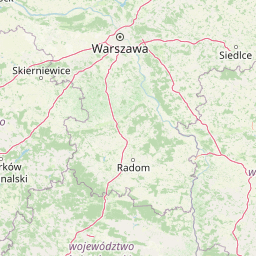
The park is best known for protecting the Chojnów Forests, a large complex of lowland mixed woodland near Warsaw, together with the diverse river-valley landscape of the Jeziorka and a scenic stretch of the Vistula including its characteristic escarpment. It is recognized for the unusual ecological richness around the capital, including protected orchid species, fen habitats, and the mare's tail pondweed communities that thrive in the small ponds and oxbows of the park. The combination of forest, river-scarp, and rural-cultural landscape makes it a compact but rich example of central Polish lowland nature within reach of a major city.
Chojnowski Park Krajobrazowy history and protected-area timeline
Chojnowski Park Krajobrazowy was formally established on 1 June 1993 by regulation of the Voivode of Warsaw (Rozporządzenie Wojewody Warszawskiego z dnia 1 czerwca 1993 r., published as Dz.Urz.Woj.War. Nr 9, poz. 100). Its creation responded to the need to protect the Chojnów Forests and the associated Jeziorka valley, as well as a fragment of the Vistula valley with its prominent escarpment and historic palace park.
When the Polish nature conservation law was reformed, the park's status was reaffirmed in 2005 by a regulation of the Voivode of Masovia. In 2010 it was incorporated into the Mazowiecki Zespół Parków Krajobrazowych (Masovian Landscape Parks Complex), joining the Mazowiecki, Brudzeński, Kozienicki, and Nadbużański parks. The Chojnowski Park has long been part of the Green Ring of Warsaw (Zielony Pierścień Warszawy) and of a band of protected landscape parks reaching from the Mazowiecki Park Krajobrazowy to the Bolimowski Park Krajobrazowy.
Conservation actions within the park have developed over time. In 2007 and 2008, a small retention programme addressed the consequences of earlier drainage, improving water relations across parts of the park. The 'Akcja Żaba' (Frog Action) engages local schoolchildren in safeguarding amphibians during their spring migrations, while ongoing efforts to restore bat populations involve the installation of bat boxes and an active programme to reintroduce the peregrine falcon (sokół wędrowny).
Chojnowski Park Krajobrazowy landscape and geographic character
The landscape of Chojnowski Park Krajobrazowy is a quintessential expression of central Polish lowland topography: flat to gently undulating glacial terrain on the Warsaw Plain, transitioning sharply at the edge of the Middle Vistula Valley. The plain part is shaped by sandy outwash deposits, left by retreating ice and reworked by wind into dunes and dry terraces. Across much of the park, this terrain is heavily forested, creating wide, open woodland vistas, small clearings, and stands of varied age and composition.
The most visually distinctive landscape element is the Vistula escarpment, the steep edge (skarpa) that separates the upland from the Vistula valley floor. The park contains a stretch of this scarp together with the lower Jeziorka river valley and the historic estate landscape associated with it. The Jeziorka valley introduces a softer, more varied topography: floodplain meadows, wet depressions, and a system of ponds and former water features that contrast with the dry forest plain.
Within the forest, the terrain includes dune hollows (such as the Biele Chojnowskie reserve), boggy depressions with peat and alder, and pockets of riverine forest along the smaller waterways. Together these features produce a mosaic of dry pinewood, moist mixed forest, riparian woodland, and open meadowland, all within a relatively compact area close to Warsaw.
Chojnowski Park Krajobrazowy ecosystems, habitats, and plant life
Ecologically, Chojnowski Park Krajobrazowy is dominated by mixed and broadleaf forest types, classified predominantly as fresh mixed coniferous forest (bór mieszany świeży) and fresh mixed broadleaf forest (las mieszany świeży). Although the classified habitat types are mixed, the actual stands in the Chojnów Forest District (Nadleśnictwo Chojnów) are dominated by Scots pine, the species best adapted to the sandy lowland soils of the Warsaw Plain.
The park hosts a wide range of legally protected plant species, spanning strict and partial protection categories. Strictly protected species recorded here include common periwinkle, common ivy, yellow water-lily, white water-lily, Martagon lily, ostrich fern, mezereon, large-flowered wintercress, snowdrop, fragrant orchid, and various clubmoss species (Lycopodium). Among partially protected plants, the park supports lily of the valley, common cowslip, oxlip, fragrant bedstraw, and blackcurrant, among many others. The lichen flora also includes notable species, such as Icelandic lichen and a range of reindeer lichens (Cladonia).
Aquatic and wetland habitats are an integral part of the park's character. Stawy w Żabieńcu within the park preserve ponds and marshy habitats rich in pondweeds, including the strictly protected Salvinia natans, while the Łąki Soleckie site protects Molinia meadows (quaking-grass swards), a habitat type of high conservation value in Poland. Wet ground, drainage channels, and former floodplain pools together sustain amphibian populations and a distinctive insect fauna, including two rare large blue butterfly species (Phengaris nausithous and P. teleius).
Chojnowski Park Krajobrazowy wildlife and species highlights
Faunal diversity in the park is rich for a lowland protected area so close to a major city. Around one hundred bird species have been recorded, supported by the combination of mature forest, open meadows, ponds, and riverine habitats. The breeding avifauna includes white stork, black stork, white-tailed eagle, lesser spotted eagle, red and black kites, common crane, bittern, marsh harrier, hen harrier, kingfisher, hoopoe, wryneck, and a full suite of woodpeckers (black, great spotted, middle spotted, grey-headed, green, and lesser spotted). Migratory and wetland species add further seasonal richness, including various dabbling ducks such as garganey, shoveler, and common teal.
The park also supports bats (with active conservation measures through installed bat boxes), as well as larger mammals such as European beaver, otter, wild boar, roe deer, and smaller species like European hedgehog, stoat, least weasel, hazel dormouse, and red squirrel. The invertebrate fauna includes protected butterflies such as the scarce large blue (Phengaris nausithous) and the Alcon blue (Phengalis teleius), associated especially with the Łąki Soleckie site.
Amphibians are a particular focus of the park's conservation work. The recorded species include fire-bellied toad, common spadefoot toad, common toad, green toad, natterjack toad, common frog, moor frog, pool frog, edible frog, and the strictly protected northern crested newt and smooth newt. Reptiles encompass viviparous lizard, sand lizard, slow worm, grass snake, and common European adder. The park's fish fauna includes more than twenty species, supported by the Jeziorka river and the various ponds and oxbows of the Vistula valley.
Chojnowski Park Krajobrazowy conservation status and protection priorities
The conservation significance of Chojnowski Park Krajobrazowy stems from its ability to preserve a large, ecologically diverse lowland landscape under intense suburban pressure from Warsaw. The park is a multi-tiered protection site: at the national level it is a landscape park with its own buffer zone; within it sit eleven nature reserves protecting especially valuable forest, bog, escarpment, and riverside habitats; and at the European level it includes two Natura 2000 sites (Stawy w Żabieńcu and Łąki Soleckie) designated for habitats and species protected under the EU Habitats Directive.
The park combines strict legal protection with active management. Beyond standard landscape park regulations, it has implemented active conservation measures: a small retention programme (Mała retencja) in 2007–2008 to counteract the effects of historic drainage; the 'Akcja Żaba' initiative to protect migrating amphibians, run jointly with local schools; the installation of bat nesting boxes to support bat populations; and a reintroduction attempt for the peregrine falcon (sokół wędrowny). More than forty natural monuments (pomniki przyrody) have also been designated, generally in the form of individual trees or tree groups.
Additionally, the park is integrated into broader landscape-scale conservation frameworks: the Mazowiecki Zespół Parków Krajobrazowych links it to other Warsaw-area landscape parks, the Green Ring of Warsaw frames it within the metropolitan protected-area strategy, and the Leśny Kompleks Promocyjny Lasy Warszawskie (Warsaw Forests Forest Promotion Complex) connects its forests to wider silvicultural and forest-promotion aims. A wildlife rehabilitation centre for injured birds operates on the park's territory, adding a recovery role to its conservation portfolio.
Chojnowski Park Krajobrazowy cultural meaning and human context
Cultural context is integral to the identity of the Chojnowski Park Krajobrazowy. The park's own protection rationale explicitly includes historical and cultural values alongside natural ones, encompassing suburban and village architecture, palace-and-park ensembles (zabudowa podmiejska i wiejska, zespoły pałacowo-parkowe), historic monuments, and memorial sites. The Vistula valley fragment in particular includes an old palace park and estate landscape.
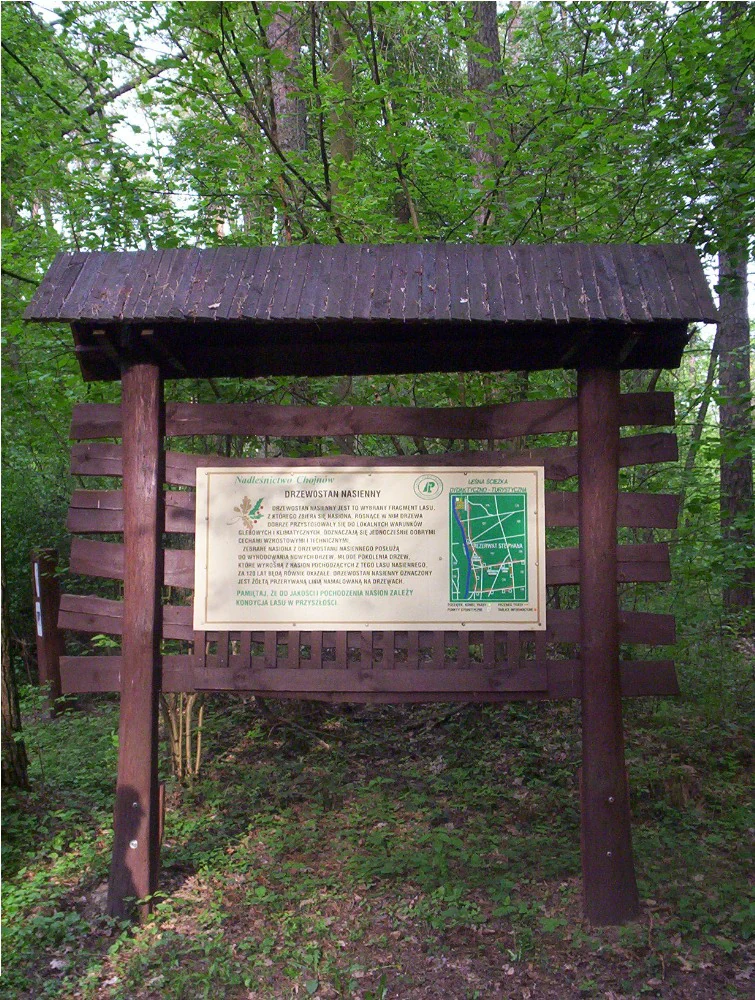
Memorial landmarks such as the Kamień Stephana (Stephan's Stone), dedicated to a forester, link the landscape to forest heritage and personal histories of people who shaped the area. Education programmes run by the park frequently combine natural and cultural themes: the walking trails explore both habitats and historical points of interest (such as the Piast-era roots route 'Do piastowskich korzeni'), while local schools collaborate with the park on contests, exhibitions, and field sessions.
At a wider level, the park belongs to the Green Ring of Warsaw, an explicitly metropolitan-scale concept that integrates landscape, recreation, ecology, and cultural identity around Poland's capital, positioning the park as both an ecological reservoir and a cultural-green corridor for the southern suburbs of Warsaw.
Top sights and standout views in Chojnowski Park Krajobrazowy
Chojnowski Park Krajobrazowy's strongest identity lies in the diversity it packs into a small, accessible area: extensive Chojnów pine-mixed forests, the Vistula escarpment and river valley, the Jeziorka valley with ponds and meadows, eleven nature reserves, and two Natura 2000 sites. It is one of the closest substantial lowland forest landscapes to Warsaw, with consistent ecological value (protected orchids, lily-of-the-valley meadows, clubmoss patches, rare blue butterflies, northern crested newt) and active conservation projects (peregrine falcon reintroduction, amphibian protection, bat boxes, and a small retention programme).
Best time to visit Chojnowski Park Krajobrazowy
Late spring and early summer are particularly rich for biodiversity observation in Chojnowski Park Krajobrazowy: this is the period when the park's many orchid and lily species flower, when the 'Akcja Żaba' amphibian migration events take place, and when the deciduous forest canopy reaches its fullest green. Birdwatching is rewarding across spring and early summer for both breeding species and migrants, while autumn brings classic lowland forest colours across the Chojnów pine-mixed stands and quieter trail conditions for walking and cycling. Winter visits are calmer and still offer vast, undisturbed forest scenery, though some smaller nature reserves and educational facilities may have reduced activity.