Mori Atlas logo
National parkCrystal Mountains National Park

Mapping the protected landscape and regional terrain of Crystal Mountains National Park.

Crystal Mountains National Park: National Park Protected Area and Geographic Context

(Parc National des Monts de Cristal)

Crystal Mountains National Park stands as a significant protected area, offering a distinct geographic identity within Woleu-Ntem Province. This page serves as your primary atlas entry point, detailing the park's protected landscape, its place in regional geography, and its mapped boundaries. Engage with the structured data to understand the natural terrain and conservation context of this national park.

National ParkMontane ForestBiodiversity HotspotPleistocene RefugiumCentral AfricaButterfly Habitat

Crystal Mountains National Park

National park

Park overview

Structured park overview, official facts, and landscape profile for Crystal Mountains National Park

Crystal Mountains National Park park facts, protected area profile, and essential visitor context

Review the core facts for Crystal Mountains National Park, including designation, size, terrain, visitor scale, habitats, and operating context in one park-focused overview.

About Crystal Mountains National Park

Crystal Mountains National Park represents one of Gabon's most ecologically significant protected areas, established in 2002 as part of the country's commitment to preserving its extraordinary biodiversity. The park is located in the Monts de Crystal, a mountainous region that forms the western edge of the Woleu-Ntem Plateau in northern Gabon, positioned strategically between the border with Equatorial Guinea and the Ogooué River. The twin park system, which also includes Mbe National Park and Mt Sene National Park, was created specifically to protect the exceptionally high plant biodiversity found in this region. The area's ecological significance stems from its history as a Pleistocene rain forest refugium, a geographical refuge where forest species survived climatic oscillations during the ice ages, allowing for the development and preservation of unique plant communities that are found nowhere else on Earth. The montane forest environment of the Monts de Crystal supports species adapted to the cooler, moister conditions found at higher elevations, creating distinct ecological zonation within the park's boundaries.

Quick facts and research context for Crystal Mountains National Park

Crystal Mountains National Park covers 1,200 square kilometers in northern Gabon within the Monts de Crystal range. The park was formally established on September 4, 2002, and is managed by the National Agency for National Parks. It holds IUCN Category II protection status as a national park. The park sits on the Woleu-Ntem Plateau between Equatorial Guinea and the Ogooué River, protecting what was once a Pleistocene rain forest refugium with exceptionally high plant biodiversity.

Protection and recognition

Analyzing the terrestrial designation and transboundary framework of the protected wilderness

Crystal Mountains National Park Protection Status and Transboundary Geography

Factual records outline the official terrestrial designation, management scope, and conservation status of Crystal Mountains National Park. Verifiable data highlights the transboundary cooperative frameworks designed to align protection efforts and habitat continuity across regional borders.

Protection details

Protection scope
Terrestrial
Transboundary protection
Yes
Park context

Deeper park guide and search-rich context for Crystal Mountains National Park

Crystal Mountains National Park history, landscape, wildlife, and travel context

Explore Crystal Mountains National Park through its history, landscape character, ecosystems, wildlife, conservation priorities, cultural context, and seasonal travel timing in a structured park guide built for atlas discovery and search intent.

Why Crystal Mountains National Park stands out

Crystal Mountains National Park is best known for its remarkable plant biodiversity and its status as a former Pleistocene rain forest refugium, which has allowed unique species to persist in the montane forest environment. The park is distinguished by its twin park arrangement with Mbe National Park and Mt Sene National Park, all sharing the exceptional biodiversity of the Monts de Crystal region. The park is also renowned for its significant butterfly populations, with hundreds of species documented including rare varieties such as euphaedra brevis, cymothoe, and graphium angrier.

Crystal Mountains National Park history and protected-area timeline

Crystal Mountains National Park was officially established on September 4, 2002, as part of Gabon's national park system expansion. The creation of the park, along with its twin designations of Mbe National Park and Mt Sene National Park, was driven by scientific recognition of the region's exceptional plant biodiversity and the urgent need to protect this montane forest ecosystem. The establishment was coordinated through Gabon's National Agency for National Parks, which continues to manage the protected area. The selection of this region for protection reflected growing understanding of the Monts de Crystal's significance as a former Pleistocene rain forest refugium, making it a critical area for conservation of Central African biodiversity.

Crystal Mountains National Park landscape and geographic character

The landscape of Crystal Mountains National Park is defined by the Monts de Crystal, a range of forested mountains that form the western boundary of the Woleu-Ntem Plateau. The terrain is characterized by rolling upland hills and steeper mountain slopes typical of Central African montane environments. The park sits at the transition between the coastal lowlands of Gabon and the inland plateau regions, creating a complex topography that supports diverse microhabitats. The forest-covered mountains rise from the surrounding landscape, with the vegetation transitioning from lowland rainforest at lower elevations to montane forest communities as elevation increases. The proximity to the Ogooué River and the Equatorial Guinea border gives the region geopolitical and ecological significance within Central Africa.

Crystal Mountains National Park ecosystems, habitats, and plant life

The ecological character of Crystal Mountains National Park is defined by its status as a former Pleistocene rain forest refugium, which has resulted in exceptionally high plant biodiversity. This refugium history means the Monts de Crystal has served as a stable environment where forest species could survive during periods of climate change, allowing for the evolution and persistence of unique plant species. The montane forest ecosystem supports a complex layered structure with canopy trees, understory species, and ground-layer vegetation adapted to the cooler, more humid conditions at higher elevations. The forest communities in the park represent some of the most botanically diverse in Central Africa, with many species found only within this limited geographic area.

Crystal Mountains National Park wildlife and species highlights

Crystal Mountains National Park supports diverse wildlife populations despite the primary focus on plant biodiversity protection. The park is home to many animal species including elephants and various monkey species that inhabit the forest canopy and forest floor environments. Of particular note is the park's significant butterfly diversity, with hundreds of species documented within its boundaries. Some of these butterfly species are very rare and include euphaedra brevis, cymothoe, and graphium angrier, representing groups that are particularly associated with intact forest environments. The combination of forest structure, humid microclimate, and historical refugium status has allowed these species communities to persist and diversify within the park.

Crystal Mountains National Park conservation status and protection priorities

Crystal Mountains National Park holds significant conservation importance due to its exceptionally high plant biodiversity and its role as a former Pleistocene rain forest refugium. The protected area is part of Gabon's network of 13 national parks, representing the country's commitment to preserving its unique ecological heritage. The twin park arrangement with Mbe National Park and Mt Sene National Park reflects a conservation strategy that recognizes the interconnected nature of the Monts de Crystal ecosystem. The park's IUCN Category II designation provides a framework for protecting both the forest ecosystem and the species that depend on it, while allowing for sustainable management through the National Agency for National Parks. The preservation of this Pleistocene refugium is particularly important for understanding past and future climate impacts on Central African biodiversity.

Top sights and standout views in Crystal Mountains National Park

The park's defining highlights include its status as one of Gabon's most botanically significant protected areas, protecting species from a former Pleistocene rain forest refugium. The montane forest environment of the Monts de Crystal supports exceptional plant diversity found nowhere else. The rare butterfly populations, including species such as euphaedra brevis, cymothoe, and graphium angrier, represent a distinctive wildlife feature. The twin park designation with Mbe and Mt Sene National Parks reflects the connected ecological identity of the region.

Best time to visit Crystal Mountains National Park

Crystal Mountains National Park can be visited throughout the year, though the optimal period generally coincides with the drier seasons when trail conditions are more favorable for exploration. The equatorial climate of northern Gabon means that rainfall occurs in all seasons, but the December to May period typically experiences reduced precipitation. Visitors interested in wildlife observation and butterfly viewing should consider that the wetter months may offer better opportunities to observe some species, while the drier periods provide easier access to forest trails and viewpoints.
Monthly climate preview

Mapping thirty-year precipitation rhythms and temperature averages in Woleu-Ntem Province

Crystal Mountains National Park Average Temperature and Monthly Climate Normals

Long-term climatology for Crystal Mountains National Park shows average temperatures ranging from 22.87 to 25.19 degrees Celsius, with daily precipitation peaking in Month 10. Expanding to the complete twelve-month profile reveals detailed daily rainfall averages and historical coordinate trends mapped across Woleu-Ntem Province.
Annual mean24 °C
23 °C25 °C
Jan25°
Feb25°
Mar25°
Apr25°
May25°
Jun24°
Jul23°
Aug23°
Sep24°
Oct24°
Nov24°
Dec25°
Warmest month
April

25.2 °C

Coolest month
July

22.9 °C

Wettest month
October

14 mm/day

Driest month
July

1.5 mm/day

Park location guide

Geography guide, regional context, and park location map for Crystal Mountains National Park

Crystal Mountains National Park park geography, regions, and map view in Gabon

Understand where Crystal Mountains National Park sits in Gabon through a broader geographic reading of the surrounding landscape, nearby location context, and its mapped position within the national park landscape.

How Crystal Mountains National Park fits into Gabon

Gabon is a Central African country on the Atlantic coast, positioned on the equator. It gained independence from France in 1960 and is governed as a unitary presidential republic. The country has significant oil wealth and one of the highest Human Development Index rankings in Africa, though wealth distribution remains uneven.

Wider geography shaping Crystal Mountains National Park in Gabon

Gabon is situated on the Atlantic coast of Central Africa, positioned along the equator. It borders Equatorial Guinea to the northwest, Cameroon to the north, and the Republic of the Congo to the east and south. The terrain includes coastal plains along the Atlantic, mountain ranges in the center (the Cristal Mountains and Chaillu Massif), and savanna zones in the east.

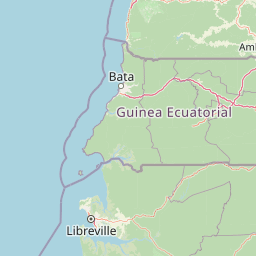
Map view of Crystal Mountains National Park

Use this park location map to pinpoint Crystal Mountains National Park in Gabon, understand its exact geographic position, and read its mapped placement within the surrounding landscape more clearly.

Pigeon | © OpenStreetMap contributors

Location context for Crystal Mountains National Park

Woleu-Ntem Province
Natural feature types

Explore Geographic Landmarks Within Crystal Mountains National Park

Continue your study of Crystal Mountains National Park by browsing this dedicated collection of natural landmarks. MoriAtlas maps the mountain ranges, forest zones, and riverine features that constitute the ecological significance of this Gabonese protected area.
Park atlas

Trace the regional spread and ecological characteristics of protected areas within Gabon's Monts de Crystal and adjacent zones

Discover National Parks and Protected Areas Surrounding Crystal Mountains National Park, Gabon

Discover other national parks and protected areas situated near Crystal Mountains National Park, allowing for a broader view of the Monts de Crystal range and surrounding Central African protected landscapes. Explore the regional spread of conservation efforts, compare ecological features, and understand the geographic context of diverse montane forest environments.
National parkGabon
47 km away#1 closest

Southwest

Pongara National Park: Protected Landscape and Geographic Exploration in Gabon

Mapped boundaries and regional natural context.

Pongara National Park is a designated national park within Gabon, offering a unique opportunity for structured exploration of protected lands. Users can investigate its specific geographic setting, understand its mapped boundaries, and appreciate its place within the regional landscape context. This entry provides a factual foundation for understanding the park's identity as a protected natural area and its contribution to Gabon's geography.

Area
929 km²
Established
2002
IUCN
II
Relief
Lowland
National parkGabon
48 km away#2 closest

West

Akanda National Park: A Key Protected Landscape on Gabon's Atlantic Coast

Explore Gabon's vital mangrove ecosystems and coastal protected areas.

Akanda National Park in Gabon is a significant protected area celebrated for its expansive mangrove forests and critical role in supporting migratory bird populations. Located along the Atlantic coast, this park's unique landscape at the nexus of tidal waters and coastal terrain makes it a valuable site for understanding regional ecology and mapped protected lands. It serves as a primary destination for exploring the natural geography and conservation significance of West African coastal environments.

Area
540 km²
Established
2002
IUCN
II
Relief
Lowland
National parkEquatorial Guinea
About 59 km away#3 closest

North

Monte Alén National Park National Park: Mapped Protected Landscape in Equatorial Guinea

Explore regional geography and park boundaries.

Monte Alén National Park, a designated national park in Equatorial Guinea, offers a unique focal point for understanding protected landscapes. This entry provides detailed geographic context, highlighting the park's mapped boundaries and its significance within the atlas of Central African natural terrain. Investigate the terrain and regional setting of Monte Alén National Park for structured geographic discovery.

Area
2,000 km²
Established
1990
IUCN
II
Relief
Mountain
National parkEquatorial Guinea
About 70 km away#4 closest

East

Altos de Nsork National Park: Equatorial Guinea's Protected Landscape and Map Context

Explore the mapped boundaries of this national park.

Altos de Nsork National Park stands as a designated national park within Equatorial Guinea, offering a distinct protected landscape. This entry provides essential atlas-driven details, emphasizing its geographic setting and mapped park boundaries. Understand its regional context and its significance as part of the conservation network in Central Africa, contributing to a richer understanding of mapped natural terrains.

Area
700 km²
Established
2000
IUCN
II
Relief
Highland
Wildlife reserveEstuaire
93 km away#5 closest

Southwest

Réserve de Wonga Wongué: Atlantic Coastal Protected Landscape and Wildlife Map

Explore the geography of Gabon's expansive lowland coastal reserve

Examine the geographic boundaries and protected landscape of Réserve de Wonga Wongué, a crucial site in Gabon that features a blend of forest, hill, and plateau terrain. This reserve provides a comprehensive look at coastal river systems, marshes, and the habitats of central African megafauna along the Atlantic shore, highlighting its role as a Ramsar Wetland of International Importance and its evolving identity as a conservation area.

Area
4,281 km²
Established
1972
Watercolor painting of a landscape with grassy areas, a lake, and distant hills under a light sky
National parkGabon
109 km away#6 closest

Southeast

Lopé National Park: Gabon's Protected Landscape and National Park Geography

Explore mapped boundaries and natural terrain in Central Africa.

Delve into Lopé National Park, a designated national park situated in Gabon. This protected area serves as a crucial point for understanding the nation's geography and the distribution of its conservation landscapes. As an entry in the MoriAtlas, it offers a detailed view of its mapped territory and its contribution to the broader regional context of Central Africa, emphasizing its role in protected area atlas exploration.

Area
4,910 km²
Established
2002
IUCN
II
Relief
Mixed relief
National parkCameroon
126 km away#7 closest

North

Campo Ma'an National Park: Essential Protected Landscape in Cameroon's Atlantic Biafran Forest

Mapped evergreen canopy and vital great ape habitat in a key conservation area.

Campo Ma'an National Park is a crucial protected area in Cameroon, spanning 2,680 square kilometers of dense Atlantic Biafran forest. Established for environmental compensation, it safeguards critical habitat for western lowland gorillas and central chimpanzees, alongside forest elephants and diverse birdlife. The park's landscape is defined by a persistent evergreen canopy ecosystem, offering a unique context for understanding Central African rainforest geography and protected land status.

Area
2,680 km²
Established
2000
IUCN
II
Climate
Tropical
Marine protected areaCameroon
153 km away#8 closest

North

Parc national marin Manyange na Elombo-Campo: Marine Protected Area and Regional Geography

Coastal conservation mapping in the South Region of Cameroon

Spanning a vast offshore territory in the Atlantic Ocean, Parc national marin Manyange na Elombo-Campo represents a major step in Central African marine conservation. The park boundary encompasses complex seafloor topography and river-mouth influences that provide essential habitat for vulnerable marine species. This atlas entry provides a detailed look at its marine extent and its integration into the larger Gulf of Guinea protected corridor.

Area
42,364 km²
Established
2021
Relief
Lowland
Climate
Tropical

Common questions about visiting, size, designation, and location context for Crystal Mountains National Park

Crystal Mountains National Park FAQs for park facts, access, geography, and protected area context

Find quick answers about Crystal Mountains National Park, including protected-area facts, park geography, trail and visitor context, and how the park fits into its surrounding country and regional landscape.
MoriAtlas Explorer

Continue Your Protected Areas Search Across the Global Atlas

Deepen your exploration by continuing the structured search for national parks and protected areas worldwide. Utilize the comprehensive filtering capabilities to compare different conservation landscapes and refine your understanding of global park geography. Discover more about the distribution and characteristics of protected natural areas.

Global natural geography